
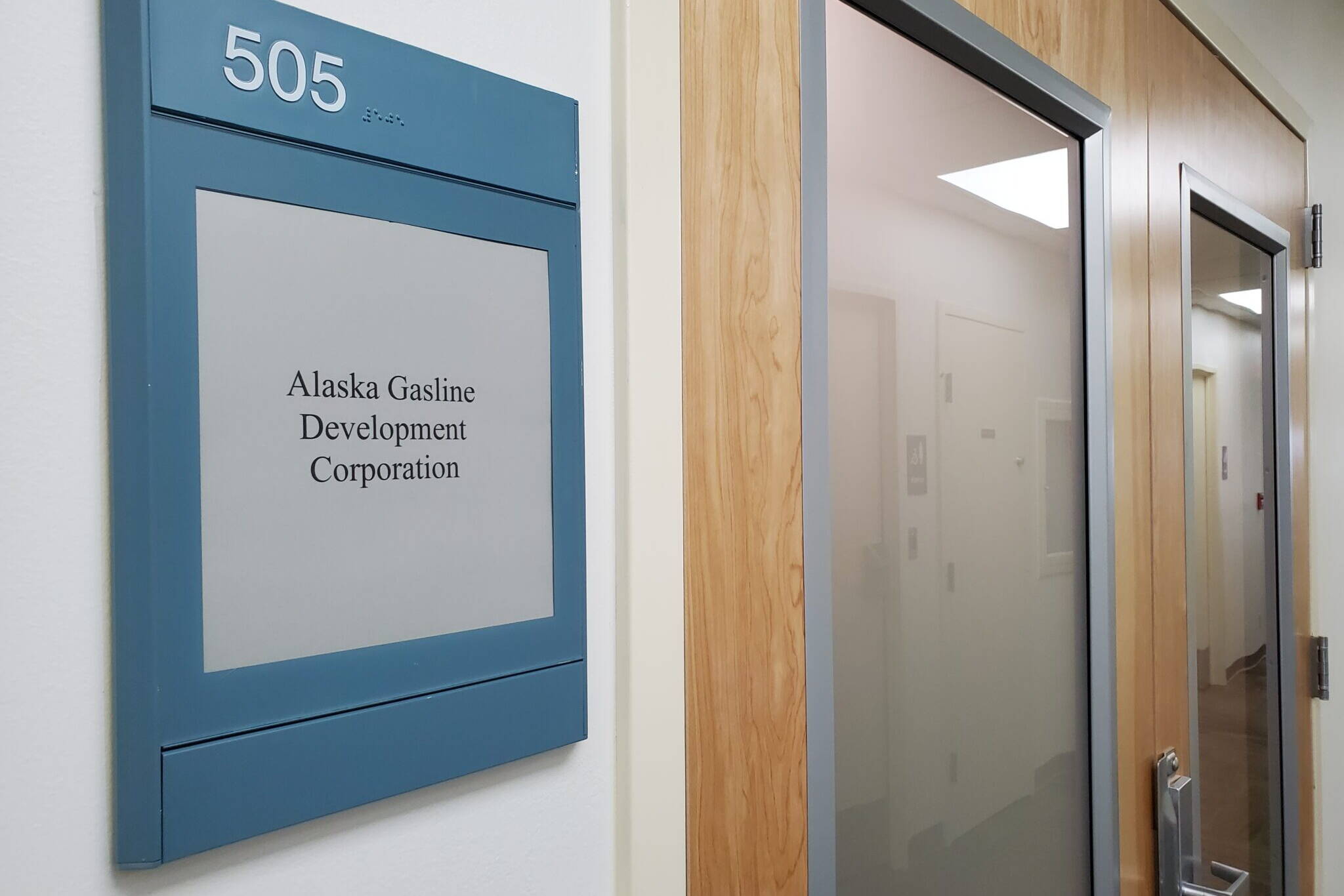
A group of young Alaskans, backed by an out-of-state nonprofit legal firm, is suing the state of Alaska and the state-owned Alaska Gasline Development Corp. in an attempt to block construction of the corporation’s long-planned trans-Alaska natural gas pipeline.
In a complaint filed Wednesday in Anchorage Superior Court, the eight plaintiffs argue that the corporation’s founding laws are unconstitutional because the gas pipeline would result in so much climate-altering greenhouse gas that it would endanger their constitutionally guaranteed ability to access Alaska’s fish, wildlife and other natural resources.
The plaintiffs, who range in age from 11 to 22, are being supported by Our Children’s Trust, a nonprofit that has supported climate-related lawsuits in state and federal courts across the country.
Two years ago, the Alaska Supreme Court ruled against plaintiffs in a broader but similar lawsuit supported by the group. That suit, filed by 16 youth plaintiffs, argued that the state’s policy on fossil fuels violates their constitutional rights. Some of the plaintiffs in that case are parties to the new one.
The decision in the prior case was 3-2 against the plaintiffs, and two of the judges who ruled in favor of the state have since retired.
Last year, the Montana Supreme Court ruled in favor of youth plaintiffs in a similar lawsuit filed in that state.
In the new Alaska lawsuit, plaintiffs contend that the Alaska Constitution contains an implicit right to a livable climate. That issue was raised as a hypothetical in 2022 by the two Alaska Supreme Court justices who dissented from the prior climate lawsuit.
“The right to a climate system that sustains human life, liberty, and dignity is both necessary for and foundational to the explicitly enumerated rights reserved by the Alaska Constitution,” the lawsuit says in part. “Without a climate system that sustains human life, liberty, and dignity, Youth Plaintiffs cannot grow to adulthood in safety, live long healthy lives, provide for their basic human needs, safely raise families, learn and practice their religious and spiritual beliefs, learn and transmit their cultural traditions and practices, maintain their personal security and bodily integrity, or lead lives with sufficient access to clean air, water, shelter, and food.”
Tim Fitzpatrick, a spokesperson for AGDC, said by email that the corporation will review the claim and respond accordingly.
“AGDC is directed by Alaska statute to commercialize North Slope natural gas because of the substantial environmental, economic, and energy security benefits it unlocks for our state. Alaska LNG has withstood intensive environmental scrutiny by two successive administrations because of its obvious and abundant benefits, which include reducing global emissions by up to 2.3 billion tons and finally ending longstanding air quality problems plaguing Interior Alaska villages and communities,” he said.
Attorney General Treg Taylor, by email, said that the state Department of Law had just received the lawsuit and will be reviewing it carefully.
“On its face, we can see that it is an attempt to block the development of Alaska’s natural gas reserves based on a purported environmental safety rationale. It is a misguided effort,” he wrote.
Taylor said that AKLNG, the pipeline project, is one of several similar projects being considered globally, and shutting down the project here means development in other places with lighter environmental regulation.
“This challenge to the project also comes when there’s a supply shortage for Alaska, and importing natural gas is now a consideration, he wrote. “We are confident that the courts will uphold the Alaska Legislature’s laws providing for the development of an LNG project in Alaska.”
The lawsuit arrives at a key moment for the natural gas pipeline project. State legislators have become increasingly skeptical of AGDC’s plans for a large pipeline that ends in an export terminal, and a plan to defund AGDC was narrowly defeated in this year’s state budget process.
AGDC now appears to be pivoting toward a plan that would involve construction of a smaller gas pipeline for in-state use, with a larger pipeline and export terminal to come later.
Either idea would be dependent upon the availability of construction funding, and to date, neither the state nor any private-sector funders have said they are willing to pay for construction.
• James Brooks is a longtime Alaska reporter, having previously worked at the Anchorage Daily News, Juneau Empire, Kodiak Mirror and Fairbanks Daily News-Miner. This article originally appeared online at alaskabeacon.com. Alaska Beacon, an affiliate of States Newsroom, is an independent, nonpartisan news organization focused on connecting Alaskans to their state government.
