
A summer development plan for Eaglecrest Ski Area that’s been decades in the making, and now features a range of projects including a gondola with a Summit House Lodge, got a conditional use permit from the Juneau Planning Commission on Tuesday.
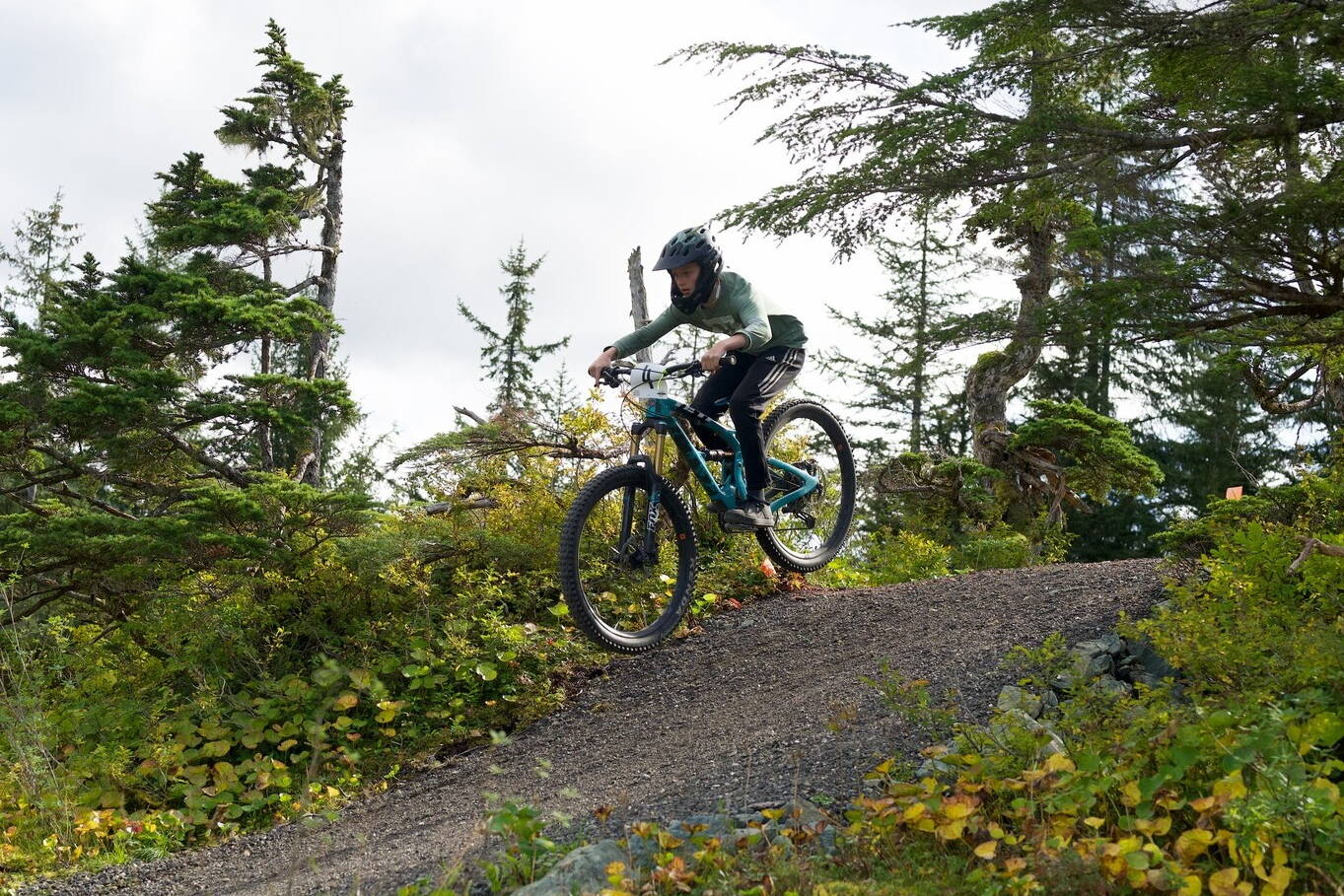
The plan also includes mountain bike trails, a snowtubing park, a picnic pavilion and other upgrades, according to an overview presented to the commission. The summary notes summer facilities “have been contemplated in planning documents for nearly 40 years” since the ski area is typically open only five months each year.
“The overall design of the summer development plans involves keeping commercial summer activities (at) the far west side of the (Eaglecrest Ski Area) property, thereby preserving local residents experience of hiking the road to the top of the Ptarmigan or Black Bear chairlifts,” the overview notes.
The hope is to begin operating the gondola during the 2025-26 ski season and have it fully operational by the summer of 2026, Eaglecrest General Manager Dave Scanlan told the commission. Initial work including access roads to building sites is scheduled to start this May, with full-scale construction and installation occurring next year.
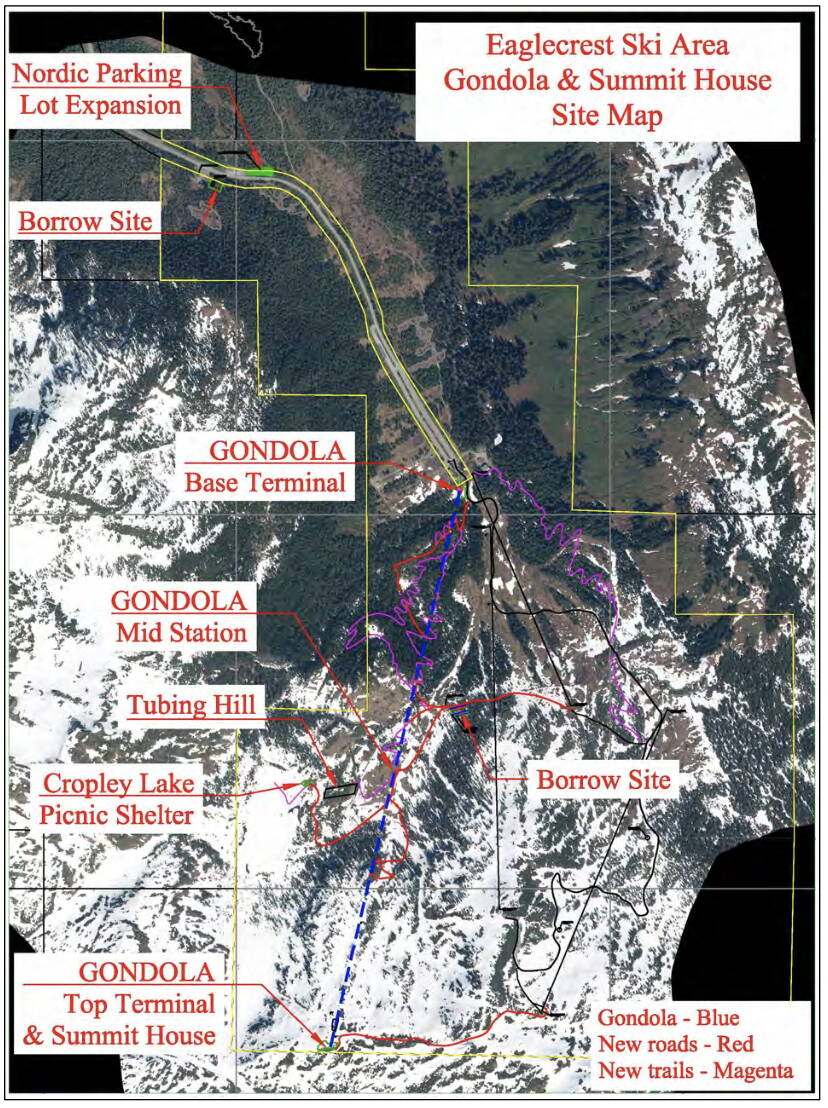
A site map shows Eaglecrest Ski Area’s summer development plan for facilities it hopes to have operating by 2026. (City and Borough of Juneau)
Scanlan said the summer upgrades will make the city-owned ski area more sustainable in multiple ways, including requiring less municipal funding due to additional summer revenue and ensuring it remains a popular destination as warming winters take their toll on the ski season.
“The main focus of the gondola project, obviously, is creating a new durability to climate change, a more resilient revenue stream that’s not so winter dependent,” he said. Work on the current plan began in 2018 “looking at activities that could fit at the mountain and could also support the visitor industry, but designing it in a way where we’re not encroaching on the local use of the mountain in the summertime — as we know, there’s a lot of folks that love using the mountain summer and winter season.”
The upgrades will also improve winter use since a midway loading station for the gondola “essentially is going to allow us to raise the base elevation of the ski area by 600 vertical feet,” Scanlan said.
”We’ve had some challenging winter with warm weather where it’s too warm to even make snow,” he said. “So this is really going to help us in those instances.”
Extra summer revenue will also help Eaglecrest update aging facilities and infrastructure, as well as make other operational improvements, Scanlan said.
“We’re really looking forward to having this new ability to fund some of the improvements we’re going to need to do to the core facility to keep it running smoothly,” he said. Also, the income will help “address our wages for staff so we can be sure we’ve got more year-round staff, which will make the seasonality of our staffing a lot easier.”
The used gondola previously located in Austria that was purchased by the city in 2022 for $2 million has been the subject of considerable controversy, most recently when Scanlan said it will need nearly $2 million in parts — far more than originally projected — so it can be used as Eaglecrest intends.
Concerns have also been expressed about the initial funds the city spent on the gondola, an operating agreement with Goldbelt Inc. where the Native corporation is paying a $10 million lump sum for installation costs in exchange for a share of revenues for at least 25 years, and potential traffic and environmental impacts of large-scale summer tourism on the mountain.
One question raised during Tuesday’s meeting was about summer parking capacity since, unlike winter where most visitors arrive by car, Scanlan estimates “we anticipate 90 to 95% of our visitors are going to be coming on motor coaches” during the summer.
“It’ll be likely that we’re going to be rotating buses through and not have a lot of buses parked there, so it will likely be rotating buses from the cruise board to the mountain and back,” he said, adding there will be plenty of parking capacity if several busses need to be staged at the resort.
Furthermore, Scanlan said in response to a question about possible additional traffic from non-residents during the winter, the plan includes adding 30 additional spaces near the Lower Nordic Trail.
The only person who signed up to testify at Tuesday’s meeting was Dave Hanna, who said he’s worked on various projects at the resort for more than 40 years and supports the summer expansion.
“Some people might be afraid to change, but this is going to be so good for the community,” he said.
The main components of the summer development project, according to planning documents, are:
• A Summit House lodge for summer and winter use with about 4,000 square feet of indoor space including restrooms, banquet-style food service, a small bar for beer and wine sales, a general indoor seating area, and outdoor decks on the south, west and north sides.
• A snowtubing park on the slope between the gondola midway station and Cropley Lake. Eaglecrest’s existing handle-tow tubing surface lift and snowmaking equipment will be utilized at the site.
• Three new access roads for the construction of the gondola and Summit House lodge. While the roads will also be used for post-construction access and maintenance needs, “many of the gondola tower access trails and construction roads will be converted into mountain bike and hiking trails,” the project overview notes. “In addition, a new trail will be constructed that bisects the gondola line in as many locations as possible to provide a summer egress route if the gondola ever needs to be evacuated.”
• An approximately 1,250-square-foot picnic pavilion near Cropley Lake, primarily for summer use. “The structure will have design elements similar to the picnic pavilions installed at Auke Recreation Area, Lena Cove, and Auke Lake,” the project overview notes. “The pavilion will have a large propane-fueled fire pit available to guests. A concrete vault privy will be constructed adjacent to the pavilion site. The site will not have electrical service.”
• Two bridge crossings over Upper Fish Creek.
The planning commission unanimously approved the conditional use permit for the project. However, other agencies such as the Alaska Department of Environmental Conservation will also need to approve aspects of the project such as wastewaster disposal and drinking water facilities at sites such as the summit lodge.
• Contact Mark Sabbatini at mark.sabbatini@juneauempire.com or (907) 957-2306.
