Eaglecrest gondola needs more parts than expected as prices for them soar
Published 9:30 pm Monday, December 18, 2023

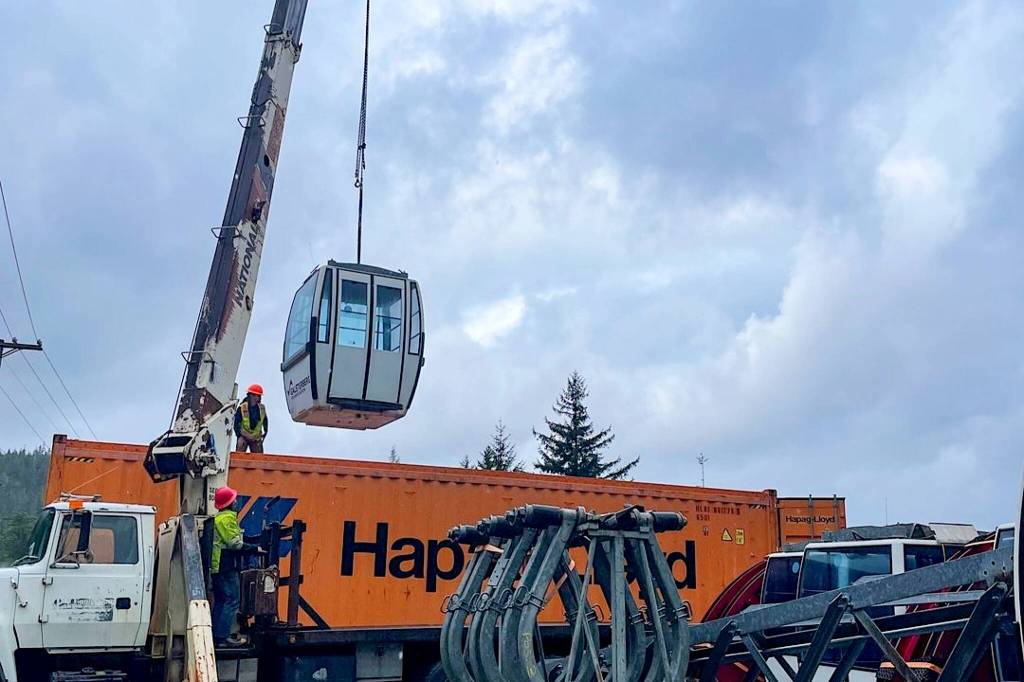


The used gondola at Eaglecrest Ski Area needs lots of extra parts to be installed as desired, which are going to cost more than expected due to a price surge — but officials said that also means the gondola itself is worth lots more than when city bought it a year and a half ago.
Those assertions — placing the gondola’s current value at roughly twice the $2 million the city invested in it — were made during a Juneau Assembly Committee of the Whole meeting Monday night. However, Eaglecrest General Manager Dave Scanlan told Assembly members he believes the project with its additional parts can still be completed with the $6.5 million currently available for construction from other funding sources, without asking for extra city funds.
In part that is due to Assembly members agreeing to a request from Eaglecrest’s board of directors for “alternative procurement,” which Scanlan said will allow more efficient use of funds than the city’s conventional contracting process. The process allows qualifications-based selection of contractors instead of traditional bids, allows portions of work to proceed prior to 100% completion of project documents, and allows for the setting of a negotiated guaranteed maximum price
“Juneau is a very unique community that is full of extremely passionate Eaglecrest users with a diverse professional skill set,” he wrote in a Dec. 13 letter to Assembly members and other city leaders. “Utilizing alternative procurement will allow a team of very experienced contractors to come together and work with project engineers and Eaglecrest staff to find the most efficient way to utilize Eaglecrest specialized equipment and knowledge to find the most effective and efficient way to execute all phases of construction.”
Using alternative procurement should also ensure Eaglecrest stays on schedule for opening the gondola during the 2025-26 ski season, Scanlan told Assembly members. He said that will allow time to make adjustments and ensure the gondola is fully ready for heavier traffic during the summer tourism season in 2026
“In summer we anticipate a full load of passengers going up the line and down the line,” he said.
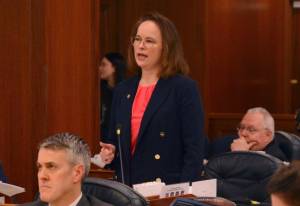
Assembly member Wade Bryson, while being among those during Monday’s meeting expressing concerns about whether the inflated costs might mean more city money to install the gondola, also offered a form of congratulations to those involved in the purchase.
“I don’t think that we’ve bought a single thing as an Assembly since I’ve sat here that has gone up in value 100% from the cost that we bought it,” he said. “So while it was a tough challenge, there were a couple of opportunities that if you bought right before everybody understood the impact of inflation — which is when we bought this gondola — we got a $4-million-plus dollar asset for $2 million bucks because we bought it before everybody appreciated what inflation was going to do. So we’ve scored on this one.”
The vast majority of funds for the gondola’s installation are coming from a $10 million lump-sum payment by Goldbelt Inc. In exchange, Goldbelt will receive a share of between 10% and 25% of the gondola’s anticipated future summer revenue made over 25 years — or beyond, if necessary — until the corporation is paid back a minimum of $20 million in compensation for the initial investment.
The gondola as previously used at Galsterberg Ski Area in Austria has a 2,430-meter-long ropeway, 15 fire-galvanized towers, 12 cabins with room for 15 people each and can transport up to 600 people an hour. But it will be configured differently at Eaglecrest, including more towers to support a midway loading station for riders to board/disembark, Scanlan said.
“We were aware that we would need additional towers at the midway station,” he said. “We didn’t anticipate as many — we thought we were probably looking at five towers. (But) because of the heavy loading going up the line and down the line we actually need to support the cable a little bit more down in the lower section.”
The cost of both new and used such items is far higher than at the time of the inspection in Austria due to current market conditions, Scanlan said. That also means the gondola purchased by the city would now cost between $4 million and $4.5 million used, and over $30 million new, “without other roads or buildings” that could elevate the cost to nearly $40 million.
In addition to the cost, “it was really hard to determine exactly where we are going to be able to source those towers,” Scanlan said. “The cross arms and the size of the sheave wheel assemblies are bigger than most lifts in North America.”
Eaglecrest and other city officials who inspected the gondola in Austria were impressed with quality of machinery, but “we didn’t have capital to pay the engineer to have done our full profile alignment, which is a very long process and a very expensive process,” Scanlan said. Instead, “we discussed with the engineer that we wanted to design and fabricate a midway loading station, and then the engineer was able to sign off that, yes, the nature of the componentry of this lift would allow us to do that.”
In his letter to the Assembly, Scanlan detailed planned agreements with supplier Steelhead Systems under the alternative procurement process.
“Steelhead Systems assured us that they would be able to supply any of the critical components that we needed to complete the installation as designed,” he wrote. “We are now ready to move forward with the purchase of eight additional towers, nine sheave wheels sets, eight door opener assemblies, 12 sets of grips and hangers for a 56mm haul rope and 2700 meters of 56mm haul rope for $1.86M as noted in the Alternative Procurement Ordinance. After accounting for our Engineering expenses and other work to be performed we have $6.5M to go toward erecting the Gondola.”
• Contact Mark Sabbatini at mark.sabbatini@juneauempire.com or (907) 957-2306.