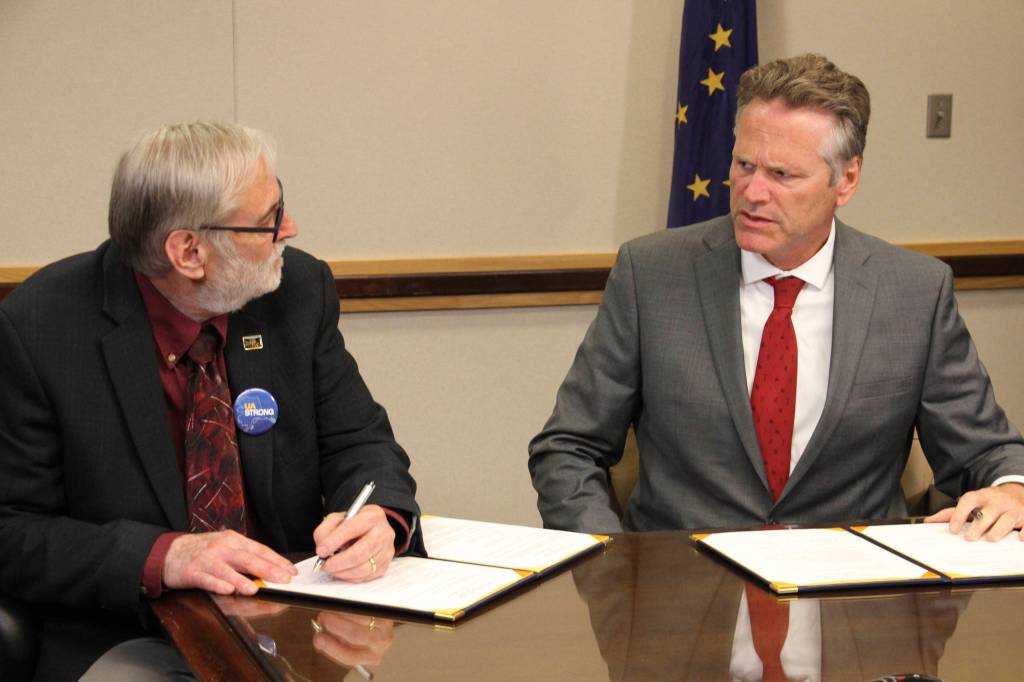
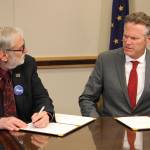
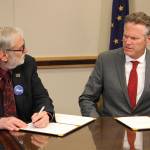
University of Alaska Board of Regents chairman John Davies, left, and Gov. Mike Dunleavy sign an agreement, Tuesday, Aug. 13, 2019, in Anchorage, Alaska, that will spread $70 million in cuts to the university system over three years. That is a sharp reversal from the $135 million cut Dunleavy earlier proposed for this year. (AP Photo/Mark Thiessen)

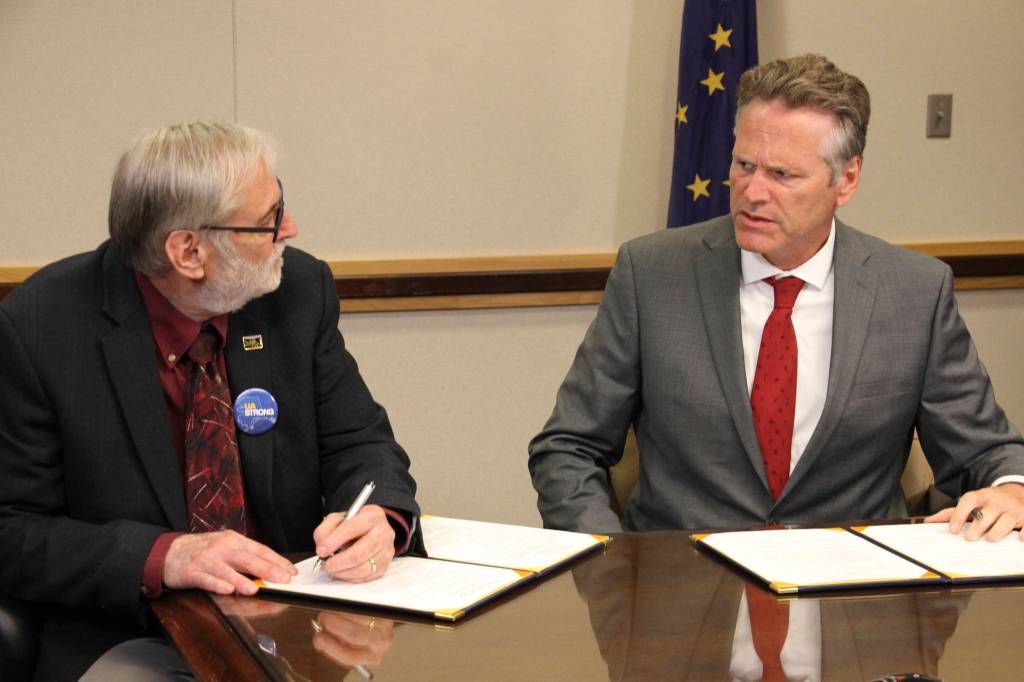
University of Alaska Board of Regents chairman John Davies, left, and Gov. Mike Dunleavy sign an agreement, Tuesday, Aug. 13, 2019, in Anchorage, Alaska, that will spread $70 million in cuts to the university system over three years. That is a sharp reversal from the $135 million cut Dunleavy earlier proposed for this year. (AP Photo/Mark Thiessen)

Dunleavy signs ‘step-down’ compact with University of Alaska

Plan will introduce cuts over three years rather than one

Gov. Mike Dunleavy and University of Alaska Board of Regents Chair John Davies signed an agreement Tuesday afternoon that would reduce the university’s budget a total of $70 million over three years instead the $136 million in one year as originally proposed.

The agreement was a result of negotiations between the governor’s administration and the Board of Regents which ended in both sides agreeing to a number of commitments.

On the university side, the Regents agreed to a number of cost-cutting and streamlining measures such as the reduction of administrative overheads and increased focused on remote-access, or online, education.

Dunleavy’s office agreed to support “budgeted amounts agreed upon,” and the Alaska Performance Scholarship and Alaska Education Grant programs, according to the text of the agreement.

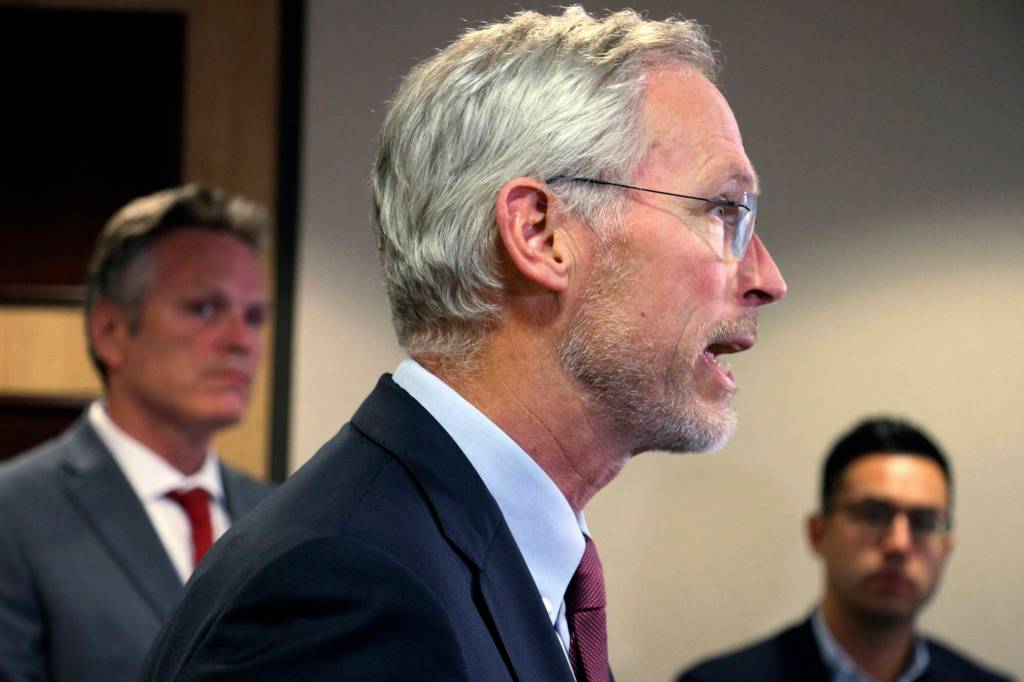
“A $70 million reduction, even over three years is a serious reduction. It will require careful review and streamlining of administrative structure, academic programs, and services to ensure that resources are focused on student access and achievement,” University of Alaska President Jim Johnsen said. “But by restoring the legislature’s appropriated funding for this fiscal year, and by spreading reductions out over the next two years, the required restructuring can be done more methodically, with less impact on students.”

University of Alaska President Jim Johnsen speaks at a news conference in Anchorage, Alaska, Tuesday, Aug. 13, 2019, where Gov. Mike Dunleavy, back left, announced he would support a $25 million cut this year to the University of Alaska system. That is a sharp reversal from the $135 million cut Dunleavy earlier endorsed. In background at right is Dunleavy’s spokesman Matt Shuckerow. (AP Photo/Mark Thiessen)

University of Alaska President Jim Johnsen speaks at a news conference in Anchorage, Alaska, Tuesday, Aug. 13, 2019, where Gov. Mike Dunleavy, back left, announced he would support a $25 million cut this year to the University of Alaska system. That is a sharp reversal from the $135 million cut Dunleavy earlier endorsed. In background at right is Dunleavy’s spokesman Matt Shuckerow. (AP Photo/Mark Thiessen)

The governor does not have power to appropriate funds for the university, only the Legislature can do that. However, the governor can veto items where he sees fit. According to the agreement, the governor will support the university’s proposed budget so long as the Board of Regents maintain a commitment to cost reductions and and revenue increases.

The agreement states that the Regents will report to the governor’s office and the legislature each year for three years in order to demonstrate the commitment to the strategic goals and 11 enumerated priorities.

Among the priorities stated in the agreement are, operating cost reductions, administrative overhead reductions, growth in monetization of university assets, research income increases and technology investments to lower costs and increase access.

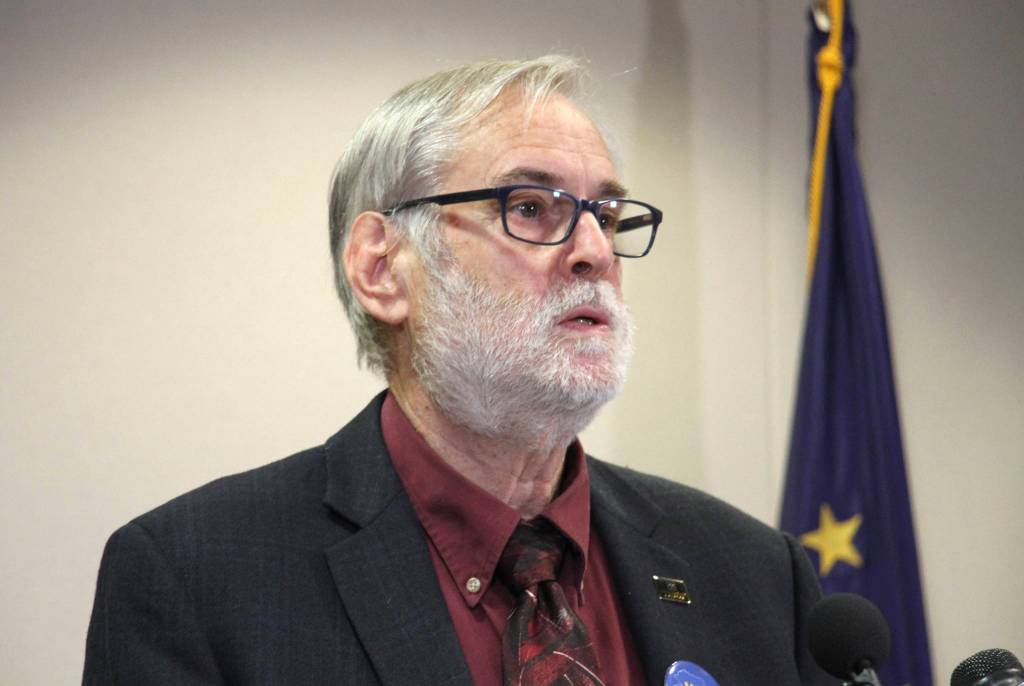
Davies said that while this agreement still constituted a significant reduction for the university, the supplemental operating budget provided, “much more certainty and confidence for our students, staff, faculty and the communities we serve.”

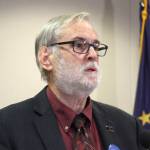
University of Alaska Board of Regents chairman John Davies speaks at a news conference in Anchorage, Alaska, Tuesday, Aug. 13, 2019, where Gov. Mike Dunleavy announced he would support a $25 million cut this year to the University of Alaska system. That is a sharp reversal from the $135 million cut Dunleavy earlier endorsed. (AP Photo/Mark Thiessen)

University of Alaska Board of Regents chairman John Davies speaks at a news conference in Anchorage, Alaska, Tuesday, Aug. 13, 2019, where Gov. Mike Dunleavy announced he would support a $25 million cut this year to the University of Alaska system. That is a sharp reversal from the $135 million cut Dunleavy earlier endorsed. (AP Photo/Mark Thiessen)

On July 31, the Board of Regents voted to transition the university to a single accreditation model which would create a much more slimmed down version of the current university system.

Johnsen maintains that model is the best option for maintaining the university’s focus on student programs and providing the quality education the state needs.

“As an educator, a father, and a graduate of the University of Alaska, I believe in a strong university,” Dunleavy said. “I also believe we must balance state support for the UA system with the very serious fiscal situation we face today. This agreement, which comes after extensive conversations and work with the university, is an honest attempt at balancing both realities.”

Several legislators responded to the announcement with mixed emotions. In a letter sent out by the House Majority, several lawmakers said that they were pleased to see the funds restored, but that they intend to ensure UA receives adequate funding.

“The prospect of removing $135 million from the University of Alaska budget created an unnecessary crisis,” Rep. Adam Wool, D-Fairbanks, said in the statement. “While I am relieved to see a level of certainty for the university system, the possibility of $70 million in additional cuts in the coming years is troubling and needs to be closely examined.”

House Speaker Bryce Edgmon, I-Dillingham, said he was concerned by the governor seeming to act as an appropriator, something which only the legislature is allowed to do.

“While I am supremely grateful that the University of Alaska will not face such drastic cuts today,” Edgmon said, “these vetoes never should have happened in the first place. I remain concerned about the potential impacts of future reductions, and I firmly stand by the legislature’s role as the appropriating body.”


• Contact reporter Peter Segall at 523-2228 or psegall@juneauempire.com.

More in News

The emergency cold-weather warming shelter is seen in Thane on Thursday, April 10, 2025. (Jasz Garrett / Juneau Empire file photo)
Man charged for alleged rape at warming shelter

Staff have increased the frequency of safety rounds, and are discussing potential policy changes.

Photo by James Brooks/Alaska Beacon 
Alaska Gov. Mike Dunleavy speaks during a news conference in Juneau on Thursday, April 27, 2023. To his side is a screen displaying significant budget deficits and exhausted savings accounts if oil prices perform as expected.
Disasters, dividends and deficit: Alaska governor unveils first-draft state budget

In his final year, Gov. Dunleavy again proposes to spend from savings in order to pay a larger Permanent Fund dividend

Eaglecrest Ski Area as seen in a photo posted to the hill’s Facebook page on Tuesday, Dec. 11, 2025. (Eaglecrest Ski Area photo)
Eaglecrest boots up for a limitted opening this weekend

15 degree highs usher in the hill’s 50th season.

Sen. Jesse Bjorkman, R-Nikiski, speaks Wednesday, April 23, 2025, on the floor of the Alaska Senate. (Photo by James Brooks/Alaska Beacon)
State senators express skepticism about proposed Juneau ferry terminal backed by Dunleavy

In a Friday hearing, members of the Alaska Senate spoke critically about… Continue reading

SouthEast Alaska Regional Health Consortium is one of the primary health care providers in Juneau, accepting most major public and private insurance plans. (Mari Kanagy / Juneau Empire)
Marketplace health premiums set to rise in 2026

Here’s what you need to know about how coverage is changing, and for whom.

Capital City Fire/Rescue completes last season’s ice break rescue training at the float pond near Juneau International Airport. (photo courtesy of Capital City Fire/Rescue)
On thin ice: Fire department responds to season’s first rescue at Mendenhall Lake

This week’s single digit temperatures have prompted dangerous ice ventures.

Brenda Schwartz-Yeager gestures to her artwork on display at Annie Kaill’s Gallery Gifts and Framing during the 2025 Gallery Walk on Friday, Dec. 5. (Mari Kanagy / Juneau Empire)
Alaska artist splashes nautical charts with sea life

Gallery Walk draws crowds to downtown studios and shops.

A totem pole, one of 13 on downtown’s Totem Pole Trail in Juneau, Alaska, Nov. 27, 2024. (Christopher S. Miller/The New York Times)

Most Read