
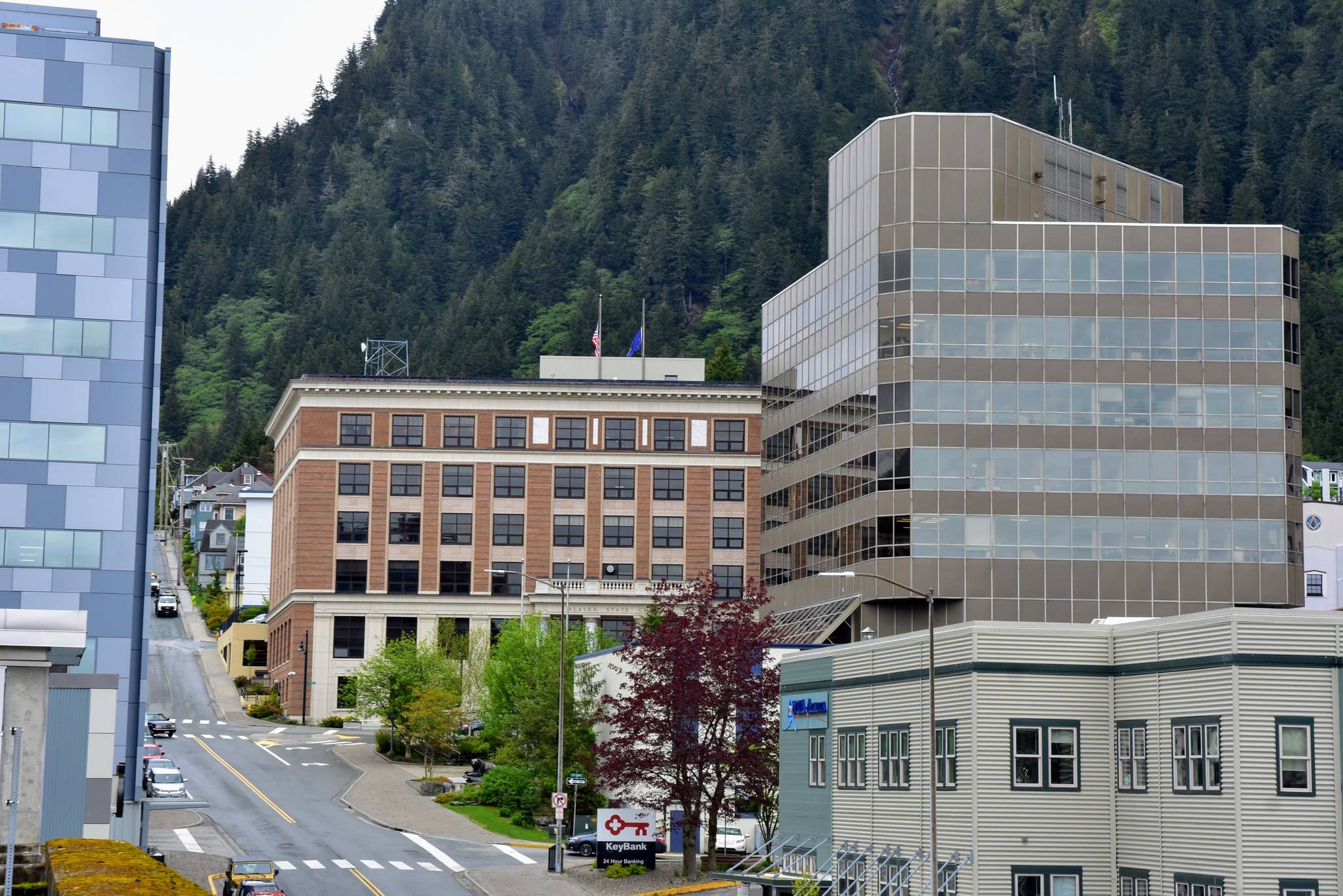
Most Alaska state lawmakers went home for the holiday weekend, and won’t meet again to continue negotiations on the state’s budget until Tuesday.
The state’s fiscal year begins on July 1, which is the ultimate deadline for the budget. If the budget is not passed by that date state accounts will have little or no money to operate and will trigger mass layoffs. The state’s collective bargaining agreement requires the state to give adequate notice of pending layoffs, meaning state employees will receive termination notices even though they haven’t necessarily been fired.
The notices are technically sent out by the Department of Administration which is overseen by the governor. In an email, spokesperson for Gov. Mike Dunleavy, Corey Young, said the state’s collective bargaining agreements require 10 days notice before a layoff. Young said in past years notices had gone out earlier because the agreements also require the state to make an effort to provide 30 days’ notice. Because the 30 days notices in the past caused confusion between management and staff, Young said the administration had followed the 10-day requirement since 2019.
“None of the items being negotiated by conference committee will result in the layoff of an existing employee. The budget deliberations are not, from a procedural standpoint, at a stage where it could on its own trigger a government shutdown,” Young said.
The current special session is set to expire June 19, and according to Young, there is still enough time for the Legislature to pass a budget before the 10-day notice deadline.
After two meetings the conference committee was about one-third of the way through the operating budget, said Brodie Anderson, staff to Rep. Neal Foster, D-Nome, chair of the committee. Tuesday’s meeting is to discuss the capital budget and American Rescue Plan Act funding, Anderson said.
Some lawmakers expressed frustration with the slowness of the process, but members of the conference committee and others pointed to deep political divisions embedded in the budget. The Senate’s version of the budget included a Permanent Fund Dividend of $2,300, larger than the $1,000 proposed by the Senate Finance Committee. The larger amount would require the state to draw more than the statutory 5% of market value draw from the Earnings Reserve Account of the Alaska Permanent Fund.
But overdrawing the ERA has staunch opponents in both bodies, as does paying a larger PFD, said Sen. Bert Stedman, R-Sitka, on Monday, and negotiations were still taking place among lawmakers.
“As we know and we can see in the past, really difficult decisions don’t get made until they have to be made,” Stedman said. “If you don’t have an agreement, you don’t have an agreement.”
[Budget negotiations begin, will likely continue into June]
Dunleavy has proposed three constitutional amendments he says will help solve those divisions, but lawmakers don’t intend to fully debate those amendments until a second special session in August. Outside the conference committee, lawmakers heard presentations from the Department of Revenue on the governor’s fiscal plan for his amendments.
Meeting with reporters Wednesday, Senate President Peter Micciche, R-Soldotna, said the administration’s projections assumed continued growth of the stock market, something that made some lawmakers uncomfortable. Micciche and other lawmakers have said they would support a one-time overdraw of the ERA if lawmakers were also able to resolve the state’s long-term deficit, but have also expressed frustration with Dunleavy’s proposals. Earlier this month Foster noted the potential conflict between the governor’s call for additional revenues as well as an amendment that would require all new taxes to be put to a vote.
The state’s fiscal deficit and how to resolve it has been divided lawmakers or years, but longtime legislators say this year there seems to be a greater willingness than ever before to compromise.
Still, Micciche said, those conversations were difficult to have.
“It’s really difficult to have those discussions, rhetorically, philosophically,” Micciche said. The actions by some have led some to believe a full statutory dividend, believe a back payment (PFD) is still a possibility. We’ve all tried for cuts, we’ve had some, there’s no way to get there by cutting.”
The conference committee is planning to include a measure in the budget bill to reverse a state accounting mechanism known as the sweep. Without a vote to reverse the sweep, several critical state accounts will go unfunded. But a reverse sweep vote needs two-thirds in each body, which no single caucus in the Legislature has enough members to do.
• Contact reporter Peter Segall at psegall@juneauempire.com. Follow him on Twitter at @SegallJnuEmpire.
