
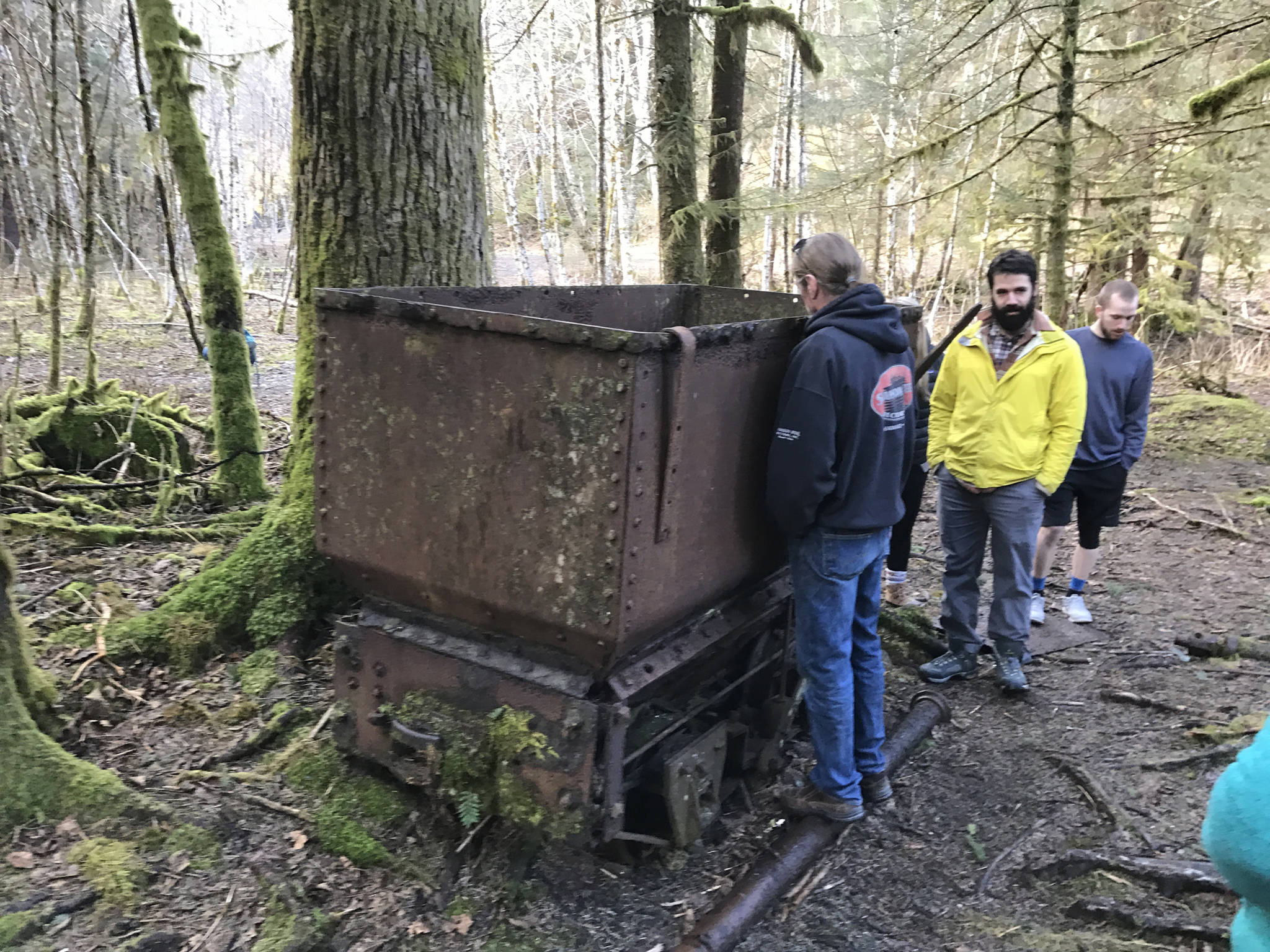
DOUGLAS — Today, the site of what was once the largest gold mine in the world looks merely like a small natural bay.
Where hundreds of miners used to pull the valuable mineral up from depths that were unimaginable at the time, young couples go to walk their dogs. Middle school cross-country runners trot slowly through here when the sport is in season.
The temperate rainforest has reclaimed this area on Douglas Island, moss grasping to crumbling foundations that once supported buildings that composed the mining village that put this area on the map.
From this spot, one can look across the Gastineau Channel and see Juneau, which was built both literally and figuratively on mining (downtown rests on mine tailings, basically the leftover ore from mines). The original mining town in this area, however, had once been here.
The Treadwell Mine earned nearly $70 million in its 30 years of production from 1882-1922, drawing thousands of workers and their families to the area and building a town on Douglas Island. At the time, it was the biggest gold mine in the world.
That is, until April 21, 1917.
Late that night, three of the four mine shafts filled with water and collapsed. There was just one missing person reported in the paper afterward, and though production continued on a small scale until 1922, the collapse signaled the end of the mine’s successful run.
This small bay is where the mine caved in. This place serves as the end of the Treadwell era, but it also marks the beginning of the era that shifted the power from one side of the Gastineau Channel to the other. Treadwell’s demise, one could argue, helped kick-start Juneau’s rise.
Passing the baton
The account of the cave-in in the April 23, 1917, issue of the Daily Alaska Empire reads almost like something out of a science-fiction story. The article speaks of two buildings being sucked into the earth, spinning “around and around” before plunging into a “watery abyss.” There is also a paragraph about a 300-foot geyser of water that shot out of one of the mine shafts.
The cave-in had occurred around 11:30 p.m. April 21 and had continued through the night, causing what the paper estimated as $15 million in damage. It put around 1,000 miners out of work, and as Charlotte L. Mahaffy wrote in her memoir “I Remember Treadwell,” the event was cataclysmic for everyone.
“That cave-in not only brought the demise of the big mine,” Mahaffy wrote, “but for many of us it fragmented our yesterdays – our home base was gone.”
[Douglas marks 100-year anniversary of the Treadwell Mine cave in]
Sheila Kelly, a historian whose book “Treadwell Gold” serves as the principal text for understanding the mine and its demise, sees the cave-in more as the beginning of the story than as the end.
“It’s like a relay race,” Kelly said, “where they laid a lot of groundwork and technology and all of that happened in Treadwell, and then the baton was passed across the channel and Juneau goldbelt stayed as the top producing gold-mining area in the world for quite a while. Treadwell was kind of the beginning of it all.”
That metaphorical baton went quickly from one side of the Gastineau Channel to the other.
The Alaska-Juneau Mine had begun tunneling for gold on the Juneau side of the channel in 1912. Those at the AJ Mine wasted no time in seizing the opportunity that the Treadwell cave-in presented. J.H. Mackenzie, one of the principal stockholders and owners of the AJ, was quoted at the end of the Daily Alaska Empire account of the cave-in, asking the freshly unemployed miners to head across the channel.
“We have been short of men and have needed more power, all of which we will now secure,” Mackenzie said, “at least until some arrangements are made to start work again on the other side. The Alaska-Juneau will co-operate with the Treadwell people in every way possible to keep the men employed and to assist them in readjusting conditions for the good of the employees, the working men and community in general.”
Moving to Juneau
That happened, as the AJ Mine took off starting after the cave-in. Gary Gillette, the President of the Gastineau Channel Historical Society, said it’s hard to accurately estimate how many of the miners from Treadwell headed to the AJ Mine, but he was sure to point out that the AJ Mine ended up being an even bigger production than Treadwell.
In “Treadwell Gold,” Kelly writes that when the Treadwell Mine officially closed in December 1922, the AJ Mine reached its highest output. The AJ Mine eventually bought all of Treadwell’s property in 1928, so the production physically moved from one side of the channel to the other.
[How the Treadwell Mine collapsed 100 years ago]
“They took apart all the buildings in Treadwell, too,” Kelly said, “so it got deconstructed and the people and the management and everything like that feeding the mining activities in Juneau and all over the world really.”
At its peak, the AJ Mine employed 3,000 people and became the driving force around which Juneau was built. When World War Two began, many mining operations were closed down as employees headed to war. Juneau, Gillette said, was allowed to keep its mine open because the economy was so tied to the mine.
The mine still ended up closing in 1944, but Juneau’s identity remains tied with the mining industry. Gillette, who helps run the Last Chance Mining Museum, pointed out that with the Greens Creek Mine and the Kensington Mine in the area, mining still plays an important role in the identity of Southeast Alaska.
[100 years ago, Treadwell came to a spectacular end]
That identity began with the Treadwell Mine. Though Joe Juneau and Richard Harris get credit for discovering gold in the area in 1880, it was John Treadwell whose operation on Douglas Island brought wealth, people and tourism to the area. It quickly became what both Kelly and Gillette agree was the most famous gold mine in the world, and came to a sudden end.
It’s hard to predict what would have happened had the Treadwell Mine remained in business. Perhaps the balance of population and wealth would have been a bit more equivalent between Douglas Island and Juneau. As it happened, though, Treadwell’s success built a foundation for growth in the area, and its demise served as one of the most important moments in the region’s history.
“I think that Treadwell was the start of a whole lot of things,” Kelly reiterated. “It wasn’t that things ended with the cave-in. It was a great part of the pass of the relay.”
• Contact reporter Alex McCarthy at alex.mccarthy@juneauempire.com or 523-2271
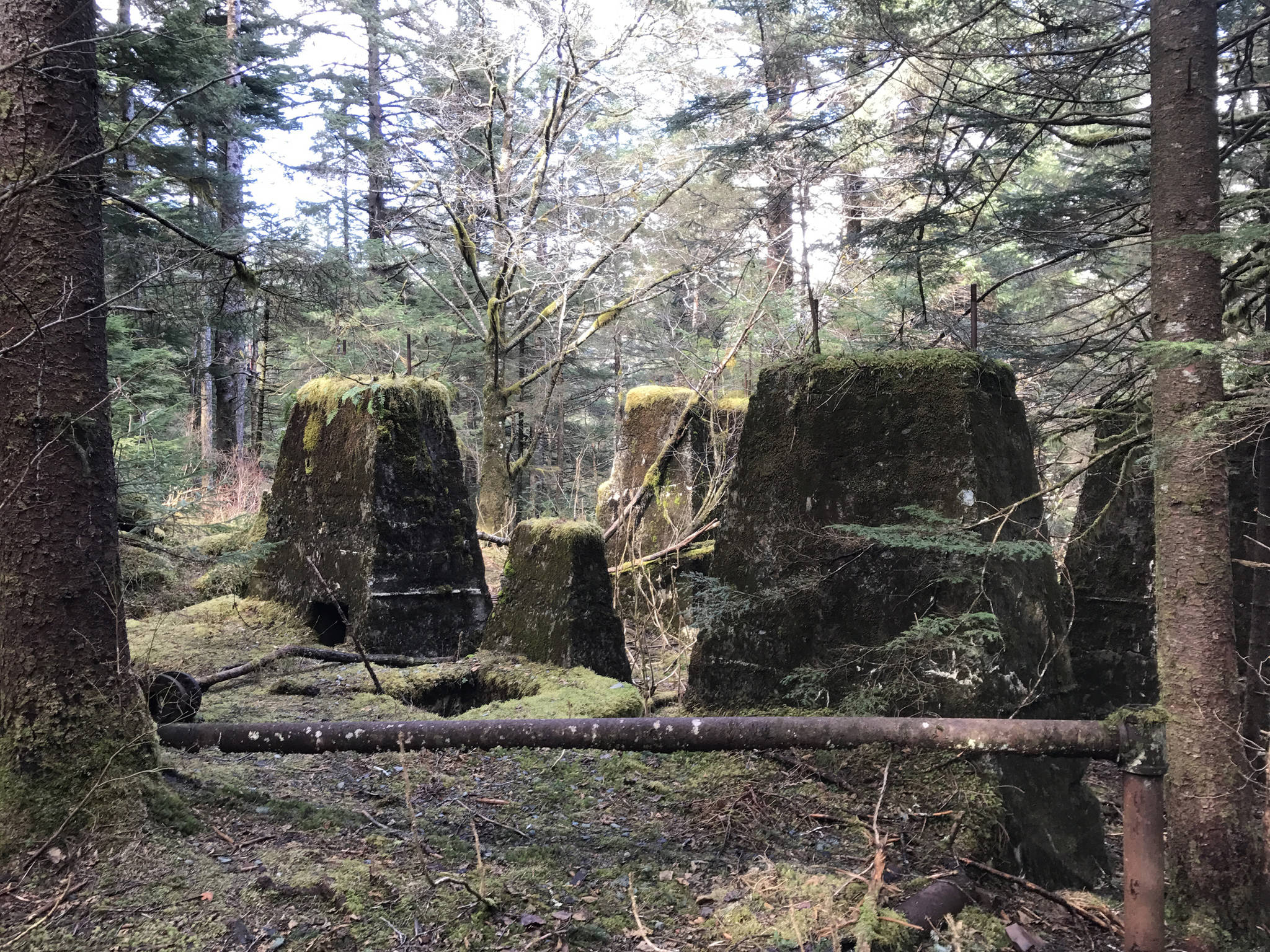
Most of the buildings of the town of Treadwell have crumbled, now overgrown as the temperate rainforest has reclaimed the land. (Alex McCarthy | Juneau Empire)
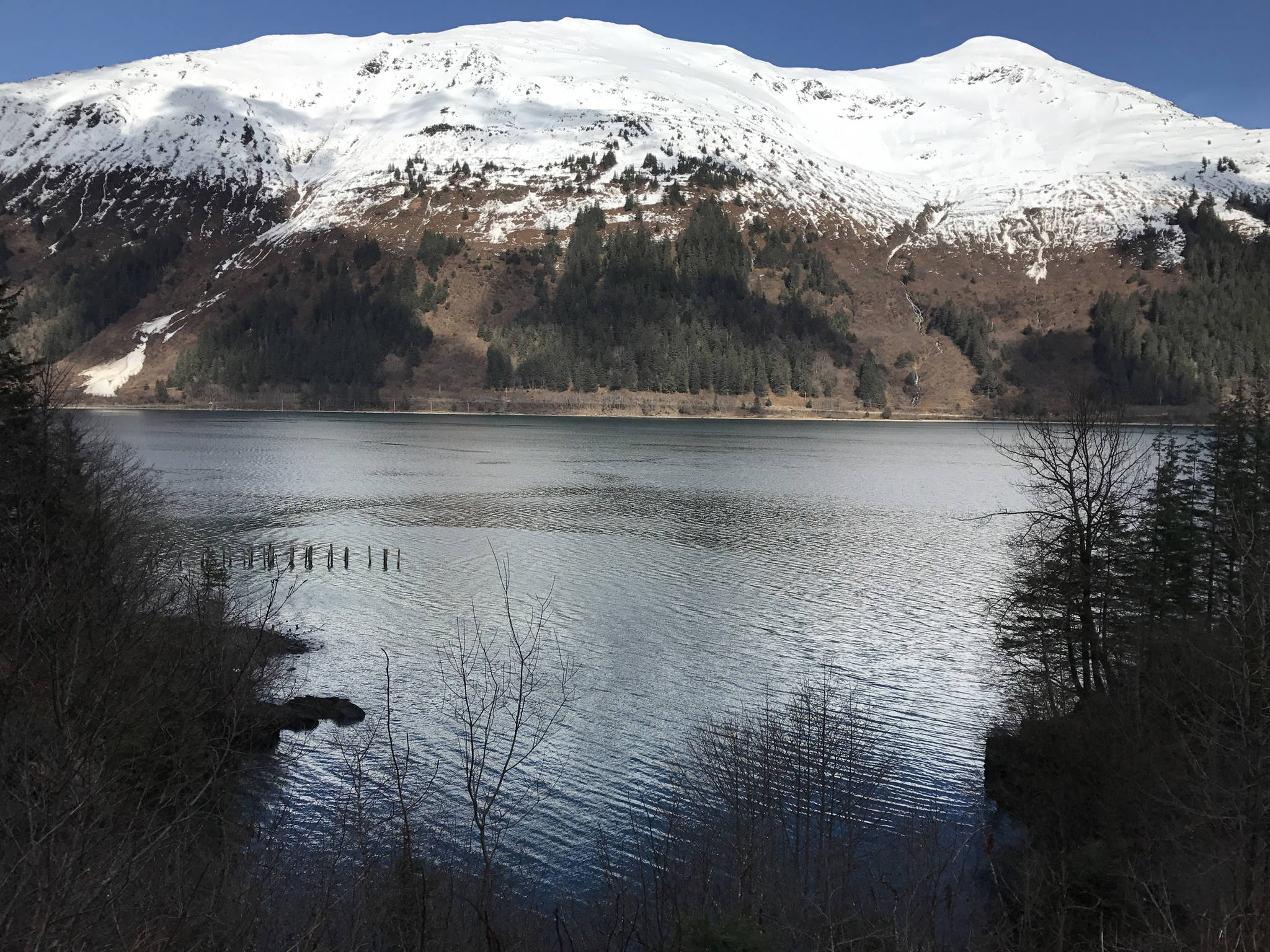
The site of the Treadwell Mine cave-in is unassuming, looking like a small natural bay. (Alex McCarthy | Juneau Empire)
