
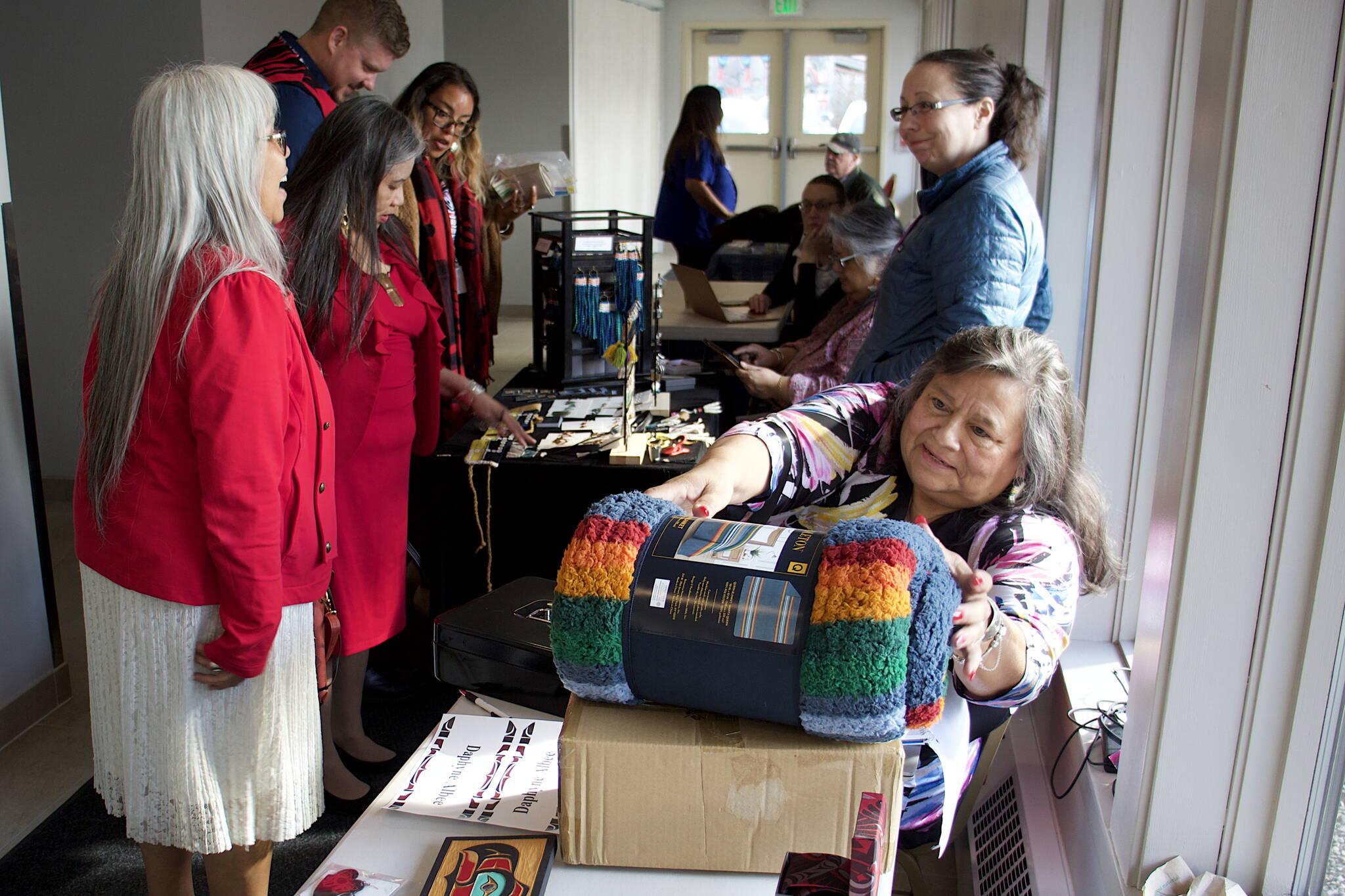
Cindy Pederson had just left her corporate job for a lower-paying nonprofit cause nearly 20 years ago when a now longtime friend asked her about getting involved in the Central Council of the Tlingit and Haida Indian Tribes of Alaska.
“I didn’t really know who I was until that time,” she said Thursday afternoon, shortly after she was named the tribe’s Delegate/Citizen of the Year.
Pederson, who became a delegate in 2004 before stepping down last year to take a job with the tribe as an eligibility technician in the tribe’s COVID-19 relief program, said the honor, which she received amid the 88th Tribal Assembly underway this week in Juneau, was unexpected.
“I was surprised because typically on the floor when they have the election process it typically goes to an elder,” said Pederson, who said she has in recent years referred to herself as an “elder in training.”
She was born in Hydaburg and spent her first years in Ketchikan, but moved with her family to Seattle at about the age of 5. She returned to attend the University of Alaska Anchorage, and said she still makes frequent trips to visit people she knows here.
The biggest change Pederson said she’s seen since joining the tribal council is its size and the scope of its activities, with about 7,400 of its more than 35,000 citizens now in the Seattle area. When she first started the goal was simply to revive fast-fading traditions and culture.
“We need to get this back to this and carry this forward,” she said, noting that since then seven tribal dance groups have been formed in Seattle.
But she said there remains plenty of substantial work to be done.
“I would like to bring services to Seattle in my lifetime and I think we’re getting close,” she said.
Improving and expanding a bevy of services were the subject of morning remarks from several tribal officials.
Energy efficiency, community partnerships and financial independence are how the Central Council of the Tlingit and Haida Indian Tribes of Alaska will be able to strengthen the affordable housing available to Southeast Alaska residents and communities, according to Jacqueline Pata, president and CEO of the Tlingit and Haida Regional Housing Authority.
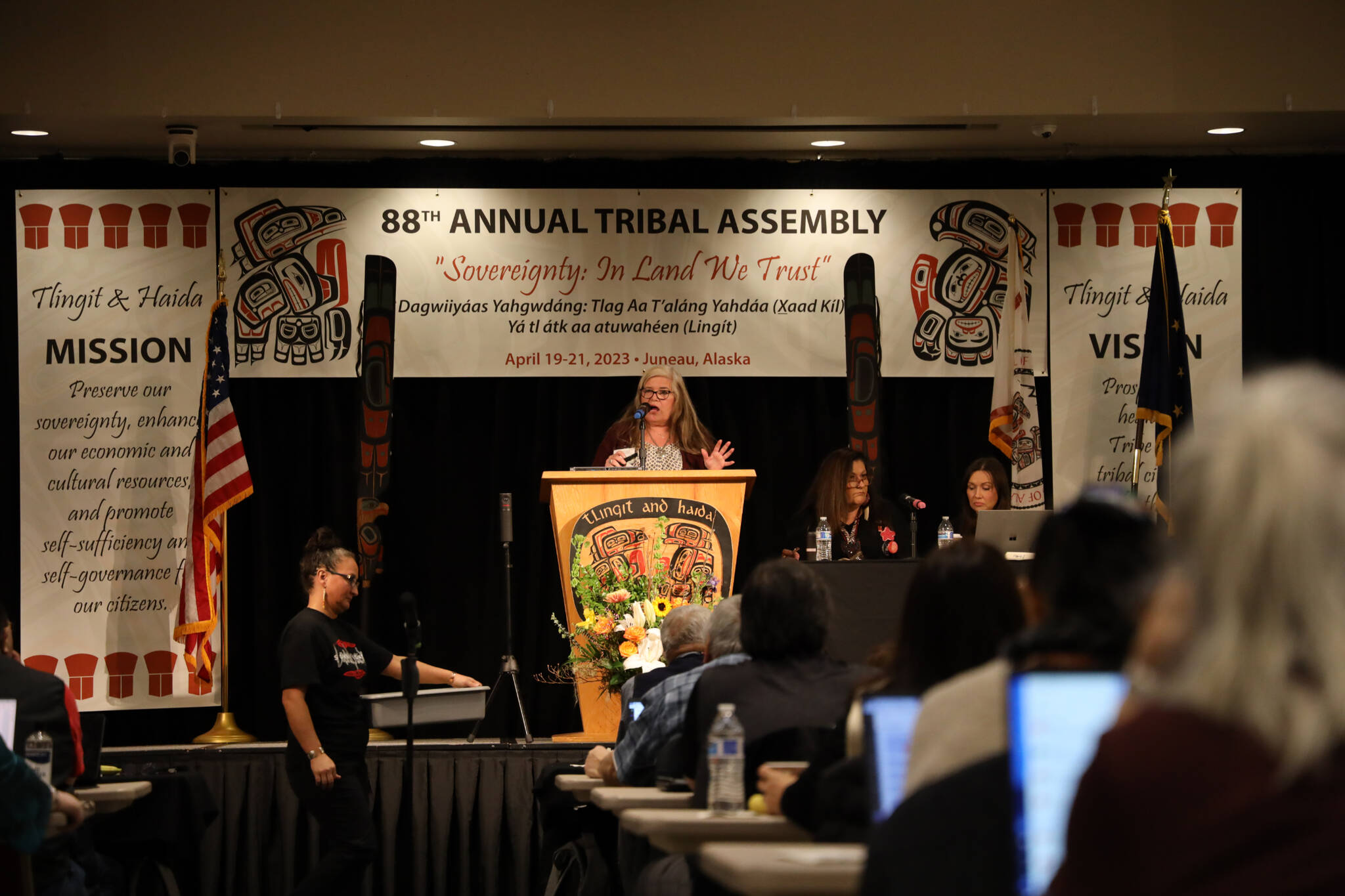
Jacqueline Pata, president and CEO of the Tlingit and Haida Regional Housing Authority, speaks to the Central Council of the Tlingit and Haida Indian Tribes of Alaska Tribal Assembly Thursday morning about long-term sustainable housing and financial education of Southeast Alaska residents. (Clarise Larson / Juneau Empire)
Pata spoke Thursday morning on the second day of the 88th annual Tribal Assembly. She discussed the state of the authority’s mission to offer affordable housing, financial and emergency services to Alaska Native residents and community members in Southeast Alaska.
Pata said as Alaska Native communities continue to grow and strengthen, so does the need to provide support for individuals.
“We’re not thinking about moving away, we’re thinking about moving home, and what does that mean? That we need more housing,” she said.
Pata said THRHA, which is celebrating its 50th anniversary since it was established, currently offers 410 rental units and 44 homeownership opportunity homes to Southeast Alaska families and last year provided more than $8 million in rent assistance to residents.
It also provided repairs to 84 households, including those owned by elders, to offer mold mitigation and create increased access.
Pata said the housing authority is working on a homeowners assistance program for homeowners, who due to COVID-19-related reasons, need assistance paying their mortgages.
She said finding solutions to grow housing can’t come from relying solely on federal funding, but it comes from the people in the community who come together to partner in this effort. She said the financial education of tribal citizens plays a pivotal role in changing the narrative of how to create long-term sustainable housing.
“We are at a point where we’re changing the trajectory, because through financial education of our citizens and investing in our citizens to understand their housing options, we provide those other services that they need.”
Also delivering remarks was Charles Clement, president and CEO of Southeast Alaska Regional Health Consortium, who spoke of the continuing growth of the SEARCH via its current construction of a $300 million hospital in Sitka, and other projects in the works in Juneau and Southeast Alaska.

Charles Clement, president and CEO of Southeast Alaska Regional Health Consortium, speaks to the Tlingit and Haida Indian Tribes of Alaska Tribal Assembly Thursday morning about new updates and changes happening for the health consortium this year and in the future. (Clarise Larson / Juneau Empire)
Anthony Mallott, President and CEO of Sealaska Corp. and Dr. Tina Woods, senior director of Community and Behavioral Health Services spoke to the Assembly as well. Topics addressed included landless legislation and healing through culture, respectively.
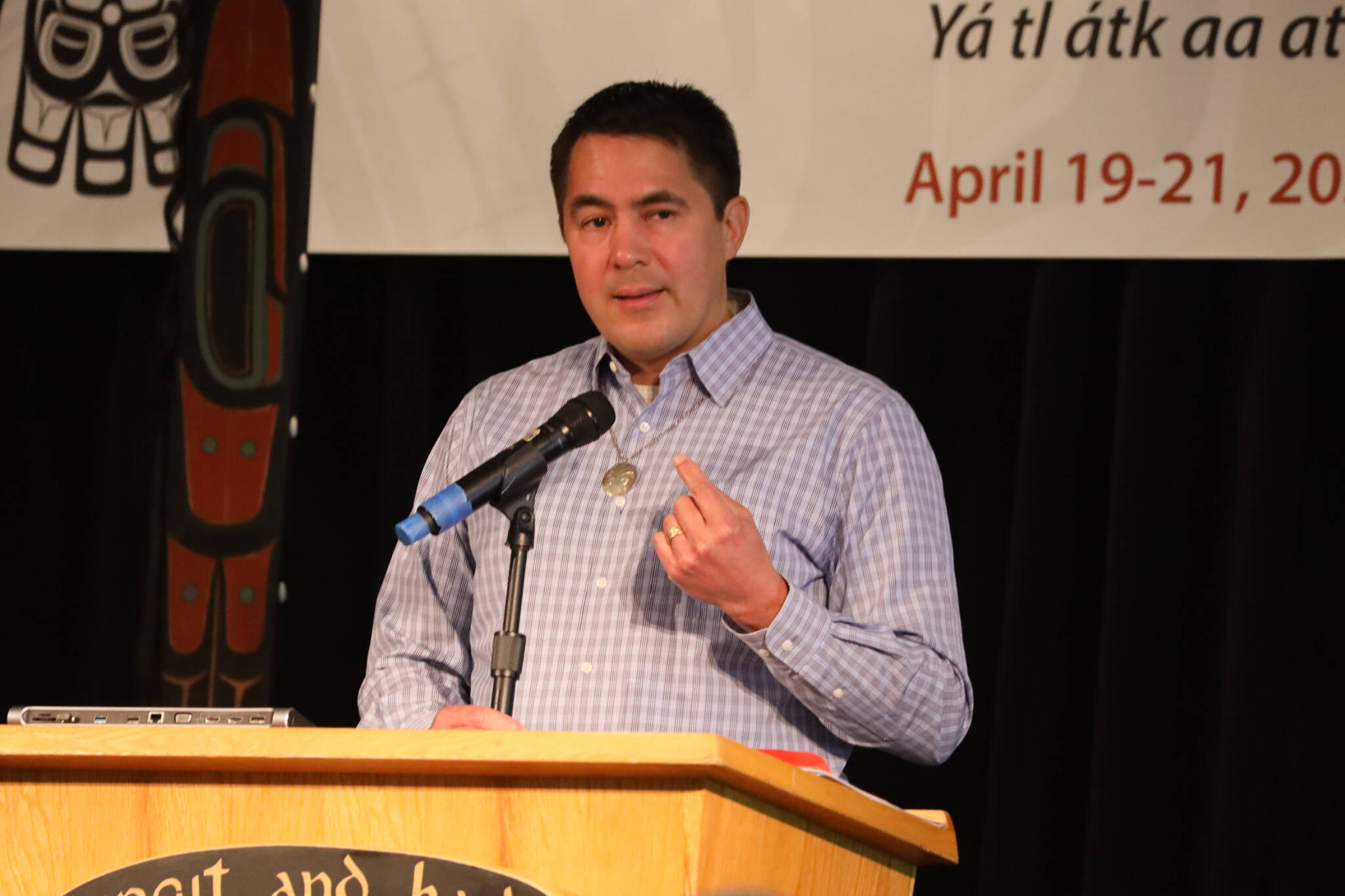
Anthony Mallott, president and CEO of Sealaska Corp., speaks to the Tlingit and Haida Indian Tribes of Alaska Tribal Assembly Thursday morning. (Clarise Larson / Juneau Empire)
Tribal Assembly is being livestreamed online at the Tlingit & Haida Facebook page.
• Contact reporter Clarise Larson at clarise.larson@juneauempire.com or (651)-528-1807. Follow her on Twitter at @clariselarson. Contact Mark Sabbatini at mark.sabbatini@juneauempire.com.
