
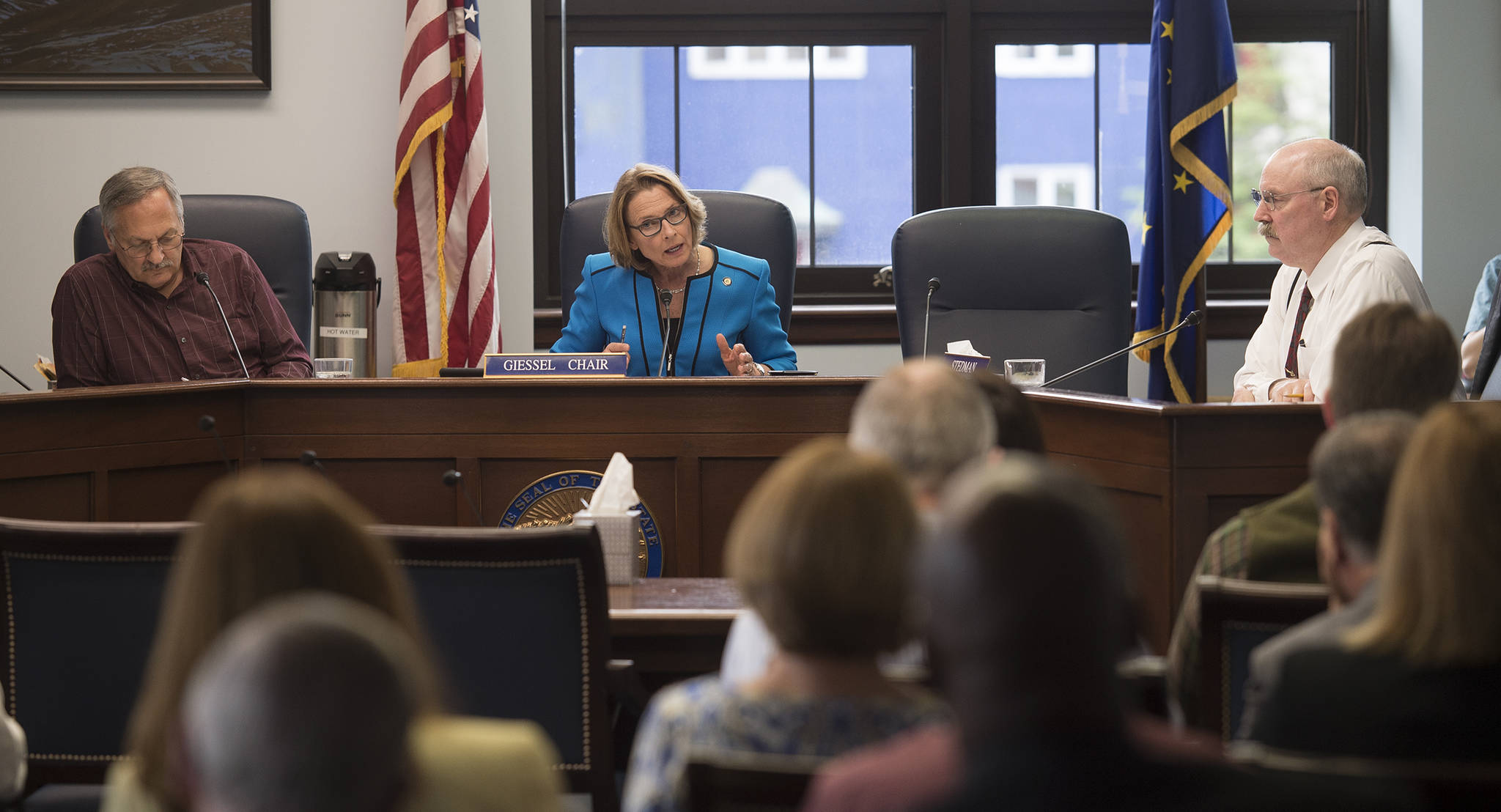
A deal to cut the state subsidy of oil and gas drilling appears to be mortally wounded if not already dead.
In a bizarre hearing Wednesday afternoon, members of a House and Senate conference committee offered two versions of a subsidy-cutting bill before adjourning with no votes taken.
Alaska’s partisan divide was physically visible during the committee hearing: House and Senate Democrats participated from Anchorage, while House and Senate Republicans were physically present in Juneau.
Saturday is the final day of the Legislature’s second special session this year, and if some version of the subsidy-cutting bill does not pass before midnight Sunday morning, the measure — one of four core pillars of the House’s deficit-elimination program — will die.
If that happens, the Legislature will have failed to pass any bill addressing Alaska’s $2.5 billion annual deficit.
“I remain optimistic until there’s no time left, and that’s how I’m going to operate if others will,” said Rep. Geran Tarr, D-Anchorage and chairwoman of the conference committee.
Gov. Bill Walker and members of the House and Senate agree that the state’s existing subsidy program is too costly and must be replaced. They don’t agree on the replacement.
“The point of agreement is on the end of the cash credits. The point of disagreement is on what the cash credits would be replaced with,” Tarr said.
There are 40 sections of House Bill 111, which contains the subsidy cut. The latest House version and latest Senate version agree in 35 of those sections.
“It’s only on five sections that we disagree,” said Sen. Cathy Giessel, R-Anchorage and the Senate’s lead negotiator on the bill.
Those five sections are key.
If oil and gas drillers lose money on the North Slope, they can deduct a portion of their losses from future tax bills. Small companies that don’t have oil production (because they’re still exploring and drilling) can instead receive what are known as “cashable credits.”
These credits can be sold to other companies, used when there is production, or sold to the state (when the Legislature appropriates money to buy them).
Lawmakers now agree that the state can’t afford the cashable credit program.
The Senate has proposed a system of tax write-offs to replace it.
The House has proposed nothing.
The latest version of HB 111 offered by the House would end the system and call for a legislative working group to draw up a plan for a replacement.
That was a surprise for the Senate, and Senate President Pete Kelly, R-Fairbanks, called it a “radical departure” from the House’s previous offering and a step backward in negotiations.
The House on Tuesday adjourned until 11 a.m. Friday, another sign that an agreement is a distant possibility.
On Wednesday, Rep. Scott Kawasaki, D-Fairbanks, Rep. Sam Kito III, D-Juneau, and Rep. Justin Parish, D-Juneau, were the only members of the House’s majority coalition in the Capitol. Late Wednesday, Kawasaki said on Twitter that he was planning to fly back to Fairbanks on Thursday.
Even with the House and Senate still at loggerheads, there is the faint possibility that an agreement could come about in the limited time remaining if one side or the other changes its position.
“There’s still a chance with the good work of Sen. Giessel and Rep. Tarr if they respect how far we came on a compromise from the other side,” said Senate Majority Leader Peter Micciche, R-Soldotna.
• Contact reporter James Brooks at james.k.brooks@juneauempire.com or call 523-2258.
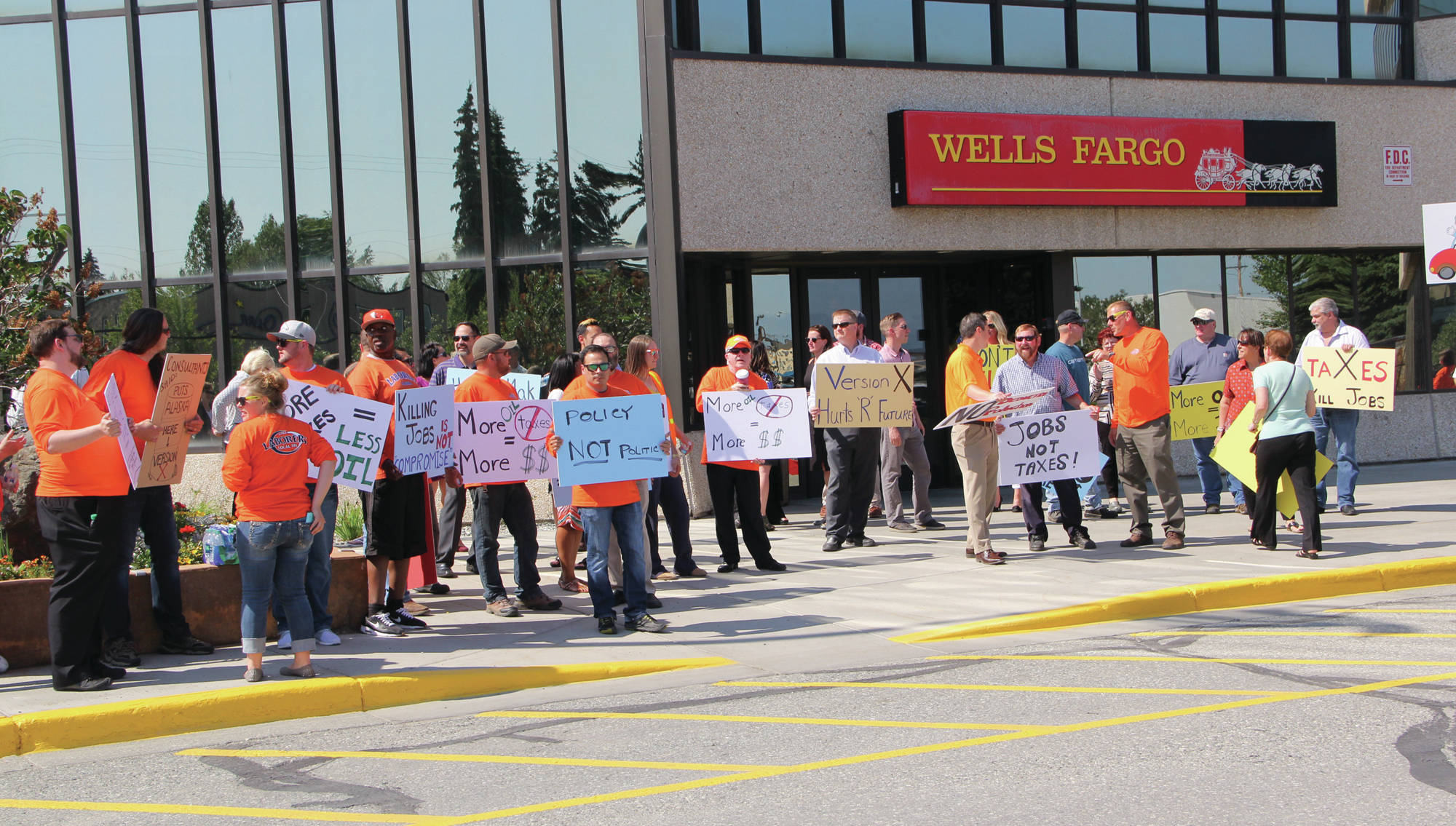
Members of Laborers Local 341 in orange shirts and others supporting the Alaska oil industry rallied against House Majority proposals to raise taxes before a hearing at the Legislative Information Office in Anchorage on July 12, 2017. (Photo/Elwood Brehmer/AJOC)
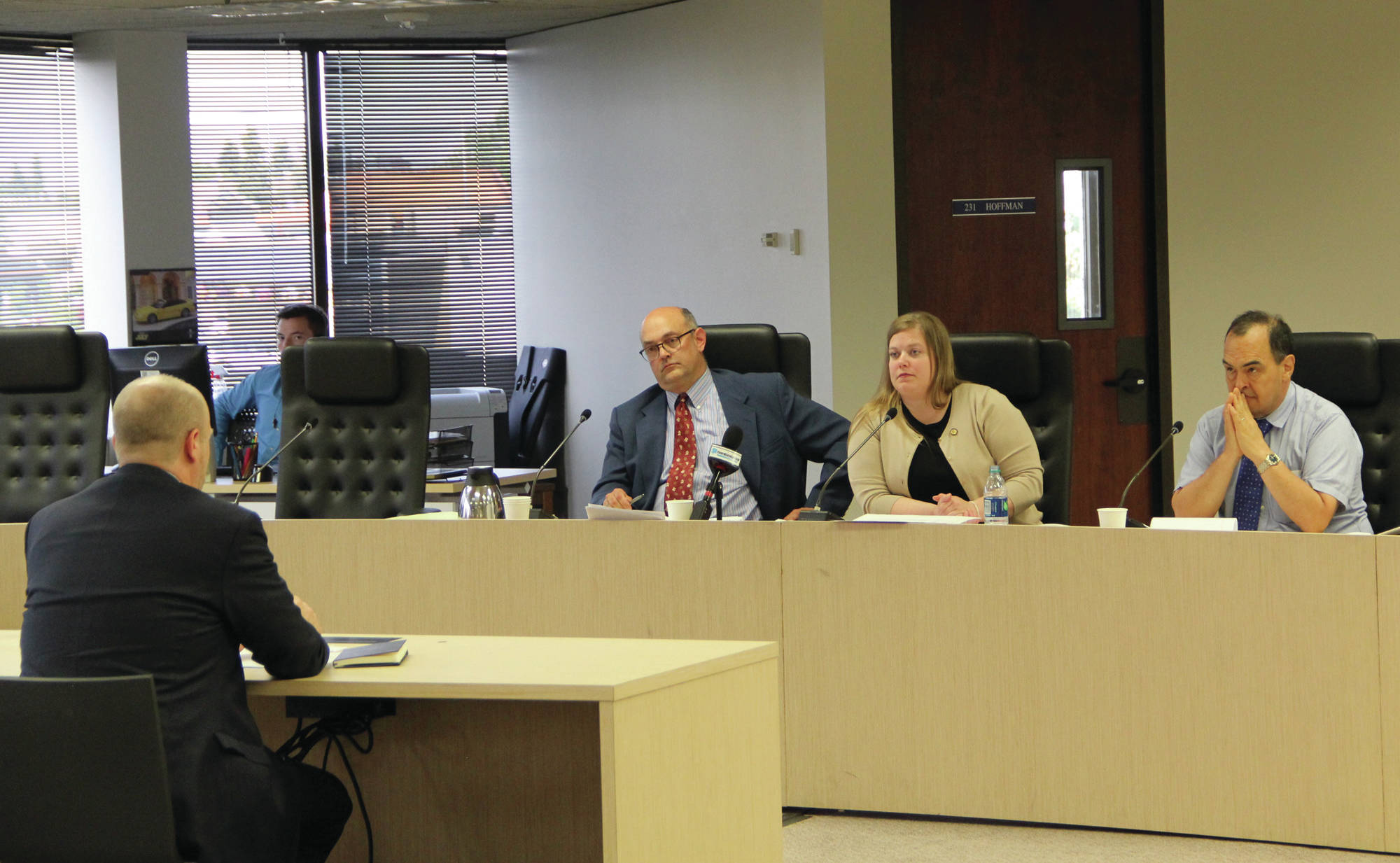
From left to right, Rep. Andy Josephson, Rep. Geran Tarr and Sen. Donny Olson listen to Tax Division Director Ken Alper at a conference committee hearing on House Bill 111 dealing with oil tax credits at the Anchorage Legislative Information Office in Anchorage on July 12, 2017. (Photo/Andrew Jensen/AJOC)
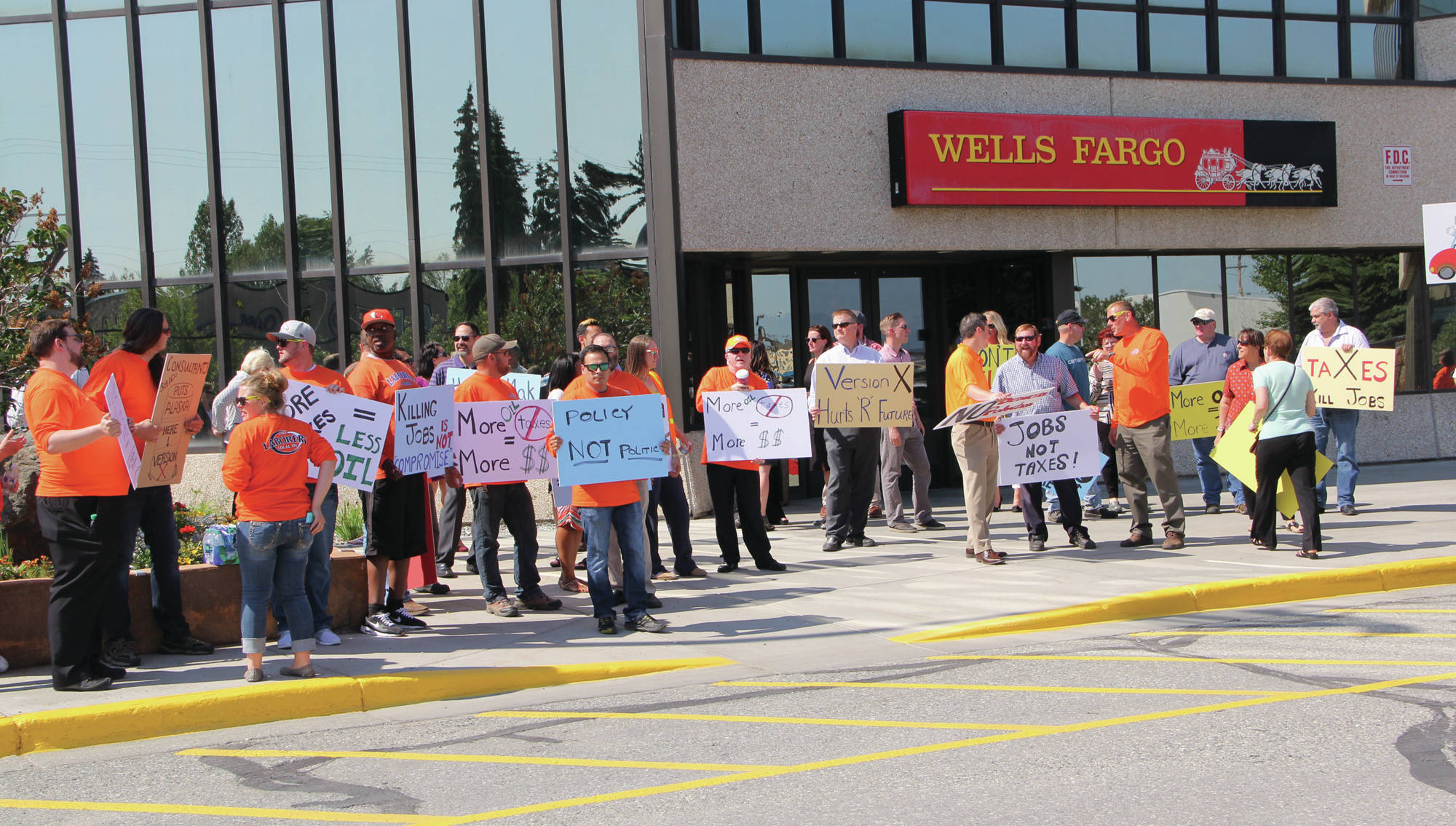
Elwood Brehmer | alaska journal of commerce Members of Laborers Local 341 in orange shirts and others supporting the Alaska oil industry rallied against House Majority proposals to raise taxes before a hearing at the Legislative Information Office in Anchorage on Wednesday.
