
The Alaska Marine Highway System held an open house Tuesday night that was part status update on AMHS’ current plans and part launch of Phase 2, its long-range planning effort, which included a comment and question period.
The meeting covered a lot of territory in 90 minutes. The first part was the status report by ferry manager Craig Tornga, who was candid about ongoing challenges in hiring licensed crew to work on the ferry and reliability issues that come with an aging fleet.
Tornga told the online gathering that crew shortages, particularly recruitment, remains “a real problem,” as do reliability issues surrounding the fleet. Having “five of our vessels being over 45 years old, really does present a challenge.”
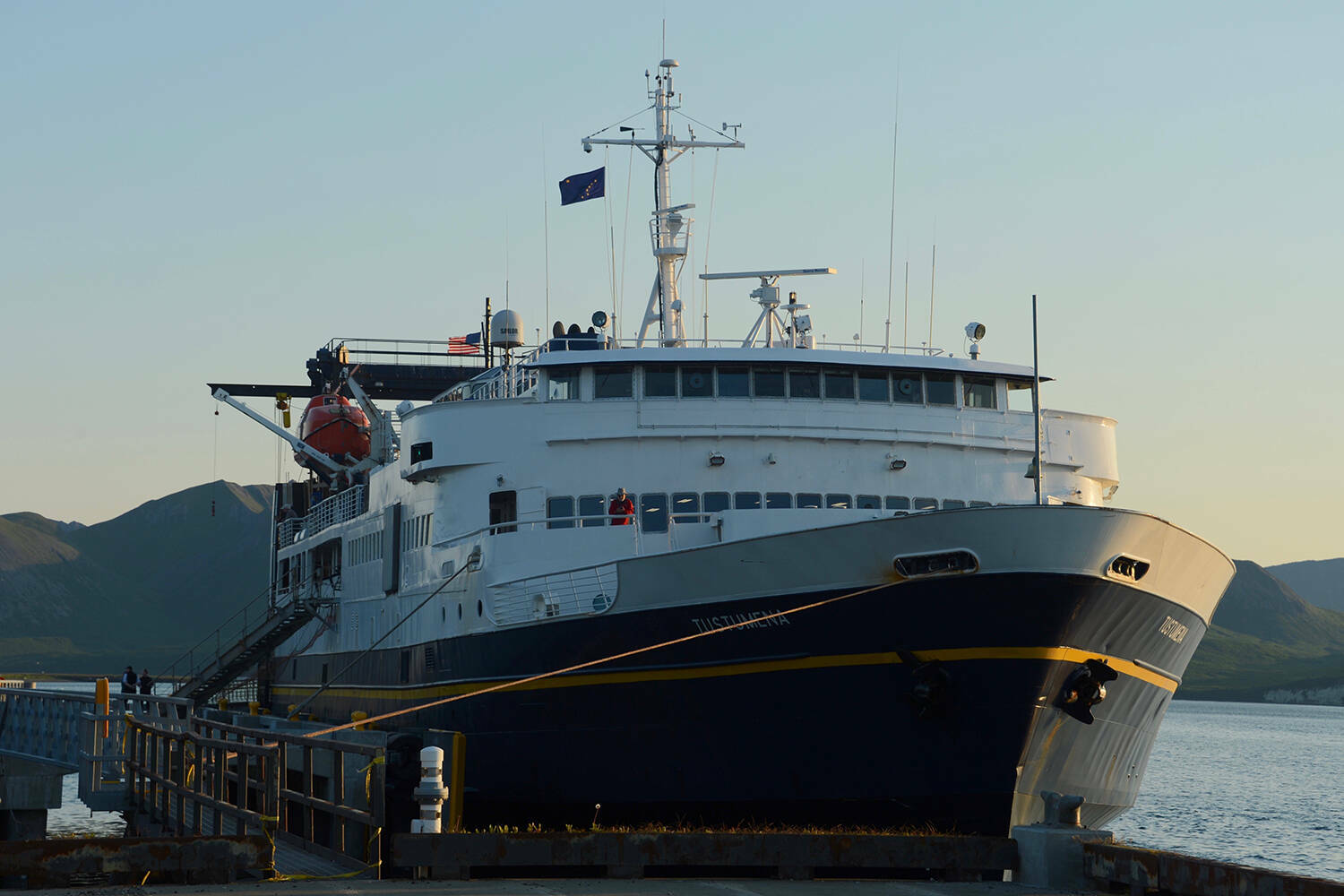
“The Tustumena just went back into service after being out the last four days due to wasted steel” which required work in Seward, Tornga said. “But these reliability issues due to age are not going to improve for us until we build replacement vessels.”
Requests for bids from shipbuilders for the Tustumena Replacement Vessel — the first mainliner in decades for the fleet — are expected to go out in early November. Tornga went into some technical details about state-of-the art aspects of the TRV, which is finishing up a $10 million design phase. It is expected to cost at least $325 million.
If that sounds like a repeat, it’s because bids have been requested before for the TRV. What’s different this time is that special features unique to the ferry — like the car elevator — are no longer included, said Sam Depcevich, spokesperson for AMHS. That will make the project more desirable to shipbuilders who didn’t respond before.
The fate of the Matanuska “remains uncertain,” Tornga said. AMHS officials have met with the U.S. Coast Guard, but they don’t have a determination yet on the extent of upgrades to retain SOLAS (Safety of Life at Sea). The first step is knowing the condition and safety of the hull.
“I have seen statements about obtaining a SOLAS waiver but that’s not available for the Matanuska today. The 60-year-old vessel is past that time,” Tornga said.
The next step is drydock scheduled for November, which will include an assessment of “steel wastage,” among other things, which can only be done with the ship out of the water, he said.
The next segment was led by Kristen Kissinger, a consultant with KPFF who is working with AMHS on Phase 2, which covers 2025-2045. She presented a broad outline of how the planning process will be conducted and stressed the importance of people weighing in now on what service they want to see going forward. They have published a survey at www.surveymonkey.com/r/QP6RB8F
The last segment included about 15 questions from people attending the online meeting. Several asked about the crew shortage, such as what AMHS was doing to recruit and the status of retention pay for existing crew, which Tornga said was still under consideration. The rest of the questions were about scheduling and service to various communities.
One caller asked whether AMHS planned to “improve consistency” with regard to the release of the summer and winter schedules. “They’re not consistent, making it impossible for visitors to plan.”
Tornga called that a “fair comment” and said officials are working on it. He noted the same core issue — the crew shortage — made it challenging in terms of knowing how much the system can accommodate. He noted, for example, there are enough crew to run six ships, but not seven.
Dapcevich said members of the ferry’s operations board had advised that summer schedules come out in November and winter schedules in June, “so that’s what we’re working towards.”
A persistent question has been whether ferry service would be restored to Prince Rupert — if not by AMHS, perhaps by BC Ferries.
Tornga said they had met with the CEO of BC Ferries to ask if they would cover the route. “Their response was, ‘No, we’re not doing anything foreign.’ They’re just not going to get into outfitting for SOLAS and the expense of that. So they’re going to stay internal to Canada.”
The main point of the open house was to look toward the future. AMHS is part of the state Department of Transportation and Public Facilities, so any timeline will ultimately be coordinated with the department, Tornga said.
“So if the DOT plan includes a road somewhere that affects our plan, we’ll make the adjustments.”
For more information about the long-range plan, check the website: https://dot.alaska.gov/amhs/operations.
• Contact Meredith Jordan at meredith.jordan@juneauempire.com or (907) 615-3190.
