
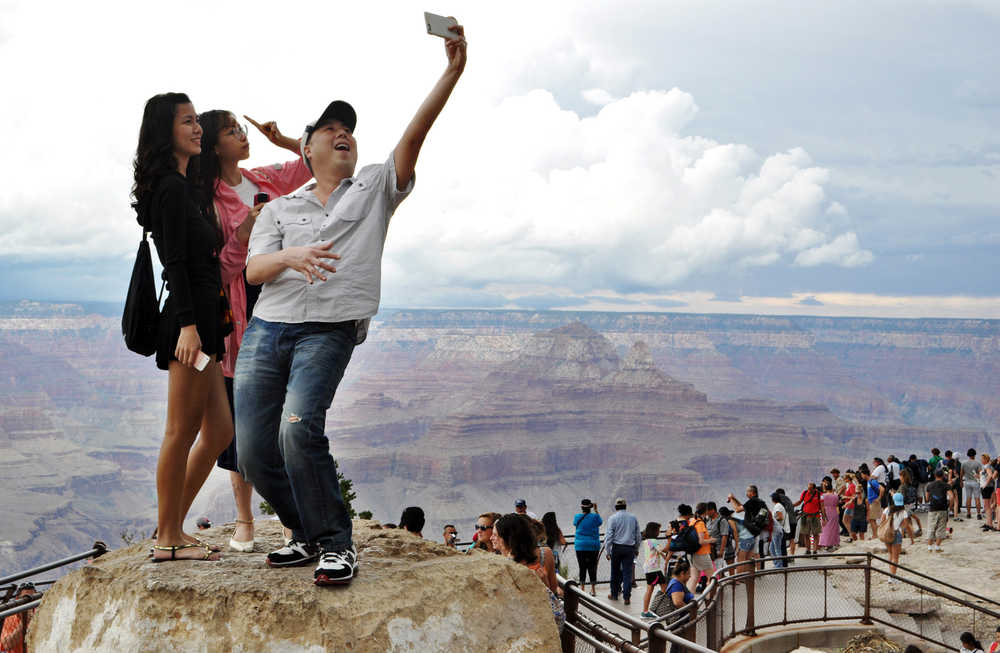
FLAGSTAFF, Ariz. — Many of the country’s most prominent national parks, including Grand Canyon, Yellowstone and Zion, set new visitation records in 2015 and are bracing for what could be an even busier new year.
The National Park Service celebrates its 100th birthday in 2016 and has been urging Americans to rediscover the country’s scenic wonders or find new parks to visit through marketing campaigns that include giving free passes to every fourth-grader and their families.
So the attendance records could be short lived, with even bigger crowds expected next year.
“Everybody’s getting psyched and ready for it,” Yellowstone spokeswoman Sandra Snell-Dobert said. “We want people to have a good experience when it comes to our national parks. We’re trying to keep that wonderful experience while managing large numbers of people.”
Overall visitation to national parks is on track to hit 300 million in 2015, besting last year’s all-time high of nearly 293 million. Absent December totals, Grand Canyon in northern Arizona hit almost 5.3 million visits. Zion in Utah is over 3.5 million. Yellowstone, which stretches into Wyoming, Montana and Idaho, is nearing 4.1 million. Yosemite in California is about 220,000 visits shy of the 1996 record — 4.2 million — with November and December still left to count.
The past year has meant some adjusting for parks as they manage the crowds. Yosemite lowered the entrance fees during the late fall and winter partly to encourage visitors to consider times other than the busy summer. Zion extended its shuttle bus service when the parking lots became too full for people to access the canyon. It also brought in interns to help study peak times.
The Grand Canyon opened up its residential and employee entrance at the South Rim to those who already had passes over holiday weekends and plans to do the same in 2016. It’s also ramped up hiring for entrance gate employees but will move them around jobs so they don’t get burned out, said Grand Canyon revenue and fee business manager Marlon Avantyr.
“We survived this year pretty much unscathed, just tired, but in a good way,” he said. “We have a good plan and a good idea of what to expect, so we’re hoping to stay ahead of the curve.”
More signs around national parks will help direct traffic and officials plan to use social media to help visitors better plan their trips. Park officials say they’ll rely more on seasonal workers, interns and volunteers who might suggest less-busy areas to visit or alternate times. The Park Service’s fiscal year 2016 budget includes $8 million for seasonal employees during the centennial, the agency said.
Some decisions on crowd-management will be made on the fly, said Zion spokeswoman Aly Baltrus.
“We’re constantly looking for what’s needed,” she said. “But at this point we don’t have an influx of funds, so we’re rearranging things as best as we can.”
At nearly 2,000 square miles, the Grand Canyon has plenty of room for visitors to branch out for river trips, backcountry hikes and to dozens of lookout points. However, the South Rim remains the most popular tourist spot. Just this year, the park proposed charging at least $5 for day hikes beyond 5 miles on major trails from the north and south rims to ease congestion.
The upcoming year will bring dark skies programs, a Theodore Roosevelt impersonator and historical steam engines to the Grand Canyon. But it won’t be all about the Grand Canyon. Workers will be talking up other Arizona parks that don’t get as much attention.
“Grand Canyon promotes itself,” said Vanessa Ceja-Cervantes, the park’s centennial community outreach assistant. “We have to do very little to get people to come out to the park.”
