
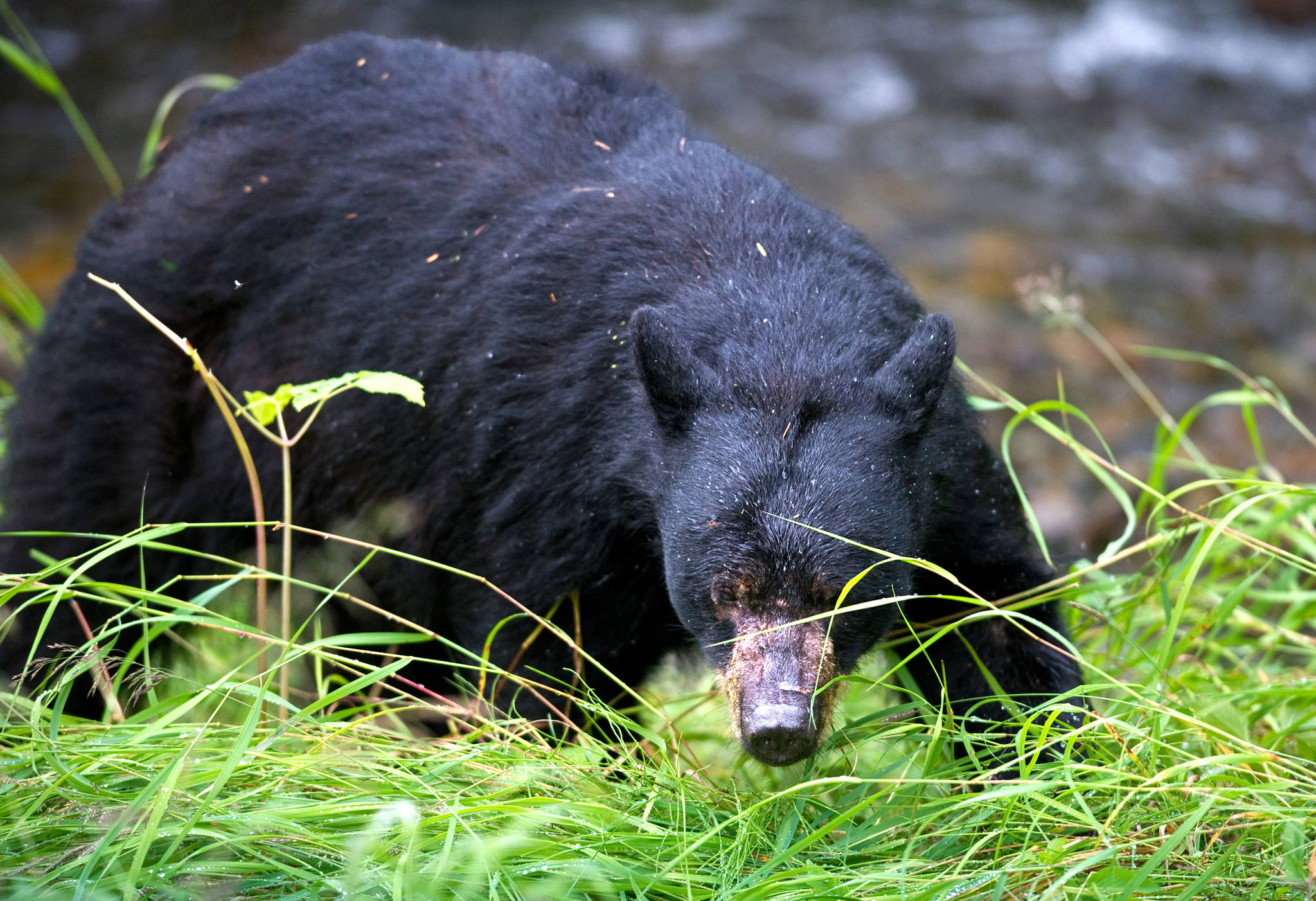
In this July 2013 photo, a black bear hunts for salmon in Juneau. (Michael Penn | Juneau Empire File)

In this July 2013 photo, a black bear hunts for salmon in Juneau. (Michael Penn | Juneau Empire File)

Council: Subsistence trappers don’t need tags, proposal would allow bear baiting in Southeast

A proposal passed Thursday that would no longer require subsistence hunters to mark their traps with identifying numbers in Southeast Alaska.

The measure was one of three proposals that the Southeast Alaska Subsistence Regional Advisory Council voted on Thursday to send to the Federal Subsistence Board. If approved by the board in an April 2018 meeting, the new rules would go into effect July 1, 2018.

The proposal to no longer require hunters to mark their traps aligns regional subsistence trapping rules, which still required trap marking, with looser state trapping rules which don’t require them.

“I see this as a bit of housekeeping to align us with state regulations,” council member Robert Schroeder put it during the Thursday meeting.

In 2006, the state Board of Game, which manages non-subsistence hunting in the Alaska, passed a law to require trappers to attach a metal tag to their snares and traps. The tags were required after Alaska Wildlife Troopers and the Alaska Department of Fish and Game expressed concern that a lack of trap identification made hunting enforcement difficult.

In 2016, the Board of Game removed that requirement under the rationale that trappers were generally responsible and trap markings did not prevent illegal trapping.

The Office of Subsistence Management supported the council’s decision to no longer require trap marking, stating that, because the state no longer requires trap marking, subsistence trappers could in most cases avoid required marking by simply trapping under state rules. In other words, law enforcement wouldn’t be able to fine a hunter without required marking, because that hunter could simply claim they were trapping under state guidelines, and not subsistence guidelines.

In addition to passing a proposal to modify trapping rules, the council also forwarded a proposal to allow the small town of Gustavus to harvest goat for traditional reasons and to allow bear baiting in Southeast.

Bear baiting, a popular method of hunting where large drums full of rotting animal parts to lure bear, was previously not available for subsistence hunters in Southeast. If the council’s proposal passes at the Federal Subsistence Board meeting in April, subsistence hunters will be able to operate bear baiting stations.

Several other proposals were passed Tuesday and Wednesday, including one to increase the maximum harvest level of once-struggling Alexander Archipelago wolves on Prince of Wales.

The council also turned down a proposal to establish a subsistence moose hunting season in Berners Bay, north of Juneau, after some confusion over the proposal’s language led them to back off the proposal.

The problem came from a sentence in the proposal that would have closed federal lands to all but subsistence users for a moose hunt from Sept. 15 to Oct. 15. The council tried to amend the proposal’s language but couldn’t find a way to pass the proposal without fear of taking hunting time or territory away from non-subsistence hunters.

That proposal was voted down 7-4 in the tightest vote of the week for the council.


• Contact reporter Kevin Gullufsen at 523-2228 or kevin.gullufsen@juneauempire.com.
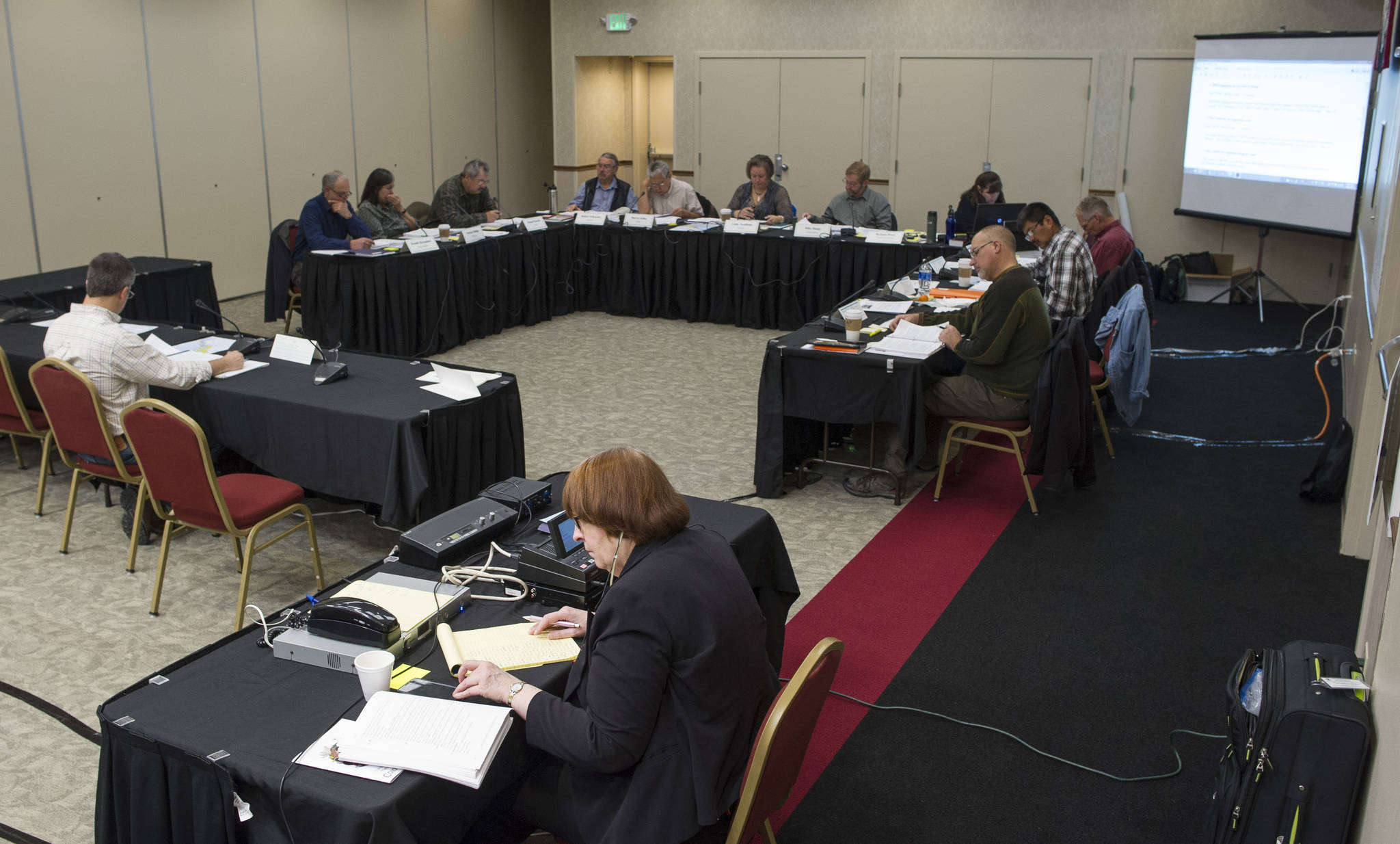

Members of the Southeast Alaska Subsistence Regional Advisory Council hold its meeting in Elizabeth Peratrovich Hall on Wednesday, Nov. 1, 2017.

Members of the Southeast Alaska Subsistence Regional Advisory Council hold its meeting in Elizabeth Peratrovich Hall on Wednesday, Nov. 1, 2017.

More in News

A Capital City Fire/Rescue truck drives in the Mendenhall Valley in 2023. (Clarise Larson / Juneau Empire file photo)
Juneau man found dead following residential fire

The cause of the fire is still under investigation.

CBJ sign reads “Woodstove burn ban in effect.” (City and Borough of Juneau photo)
Update: CBJ cancels air quality emergency in Mendenhall Valley Sunday morning

The poor air quality was caused by an air inversion, trapping pollutants at lower elevations.

A dusting of snow covers the Ptarmigan chairlift at Eaglecrest Ski Area in December 2024. (Eaglecrest Ski Area photo)
Update: Waterline break forces closure at Eaglecrest Friday, Saturday

The break is the latest hurdle in a challenging opening for Juneau’s city-run ski area this season.

Patrick Sullivan stands by an acid seep on July 15,2023. Sullivan is part of a team of scientists who tested water quality in Kobuk Valley National Park’s Salmon River and its tributaries, where permafrost thaw has caused acid rock drainage. The process is releasing metals that have turned the waters a rusty color. A chapter in the 2025 Arctic Report Card described “rusting rivers” phenomenon. (Photo by Roman Dial/Alaska Pacific University)
Ecosystem shifts, glacial flooding and ‘rusting rivers’ among Alaska impacts in Arctic report

NOAA’s 2025 report comes despite Trump administration cuts to climate science research and projects

The U.S. Capitol in Washington, D.C., on Oct. 1, 2025. (Photo by Jennifer Shutt/States Newsroom)
Moderate US House Republicans join Dems to force vote on extension of health care subsidies

WASHINGTON — Republican leaders in the U.S. House will face a floor… Continue reading

The National Weather Service Juneau issues a high wind warning forDowntown Juneau, Southern Douglas Island and Thane due to increased confidence for Taku Winds this afternoon. (National Weather Service screenshot)
Taku winds and dangerous chills forecast for Juneau

Gusts up to 60 mph and wind chills near minus 15 expected through the weekend.

Chloe Anderson for the Juneau Empire
Fallen trees are pictured by the Mendenhall river on Aug. 15, 2025. Water levels rose by a record-breaking 16.65 feet on the morning of Aug. 13 during a glacial outburst flood.
Lake tap chosen as long-term fix for glacial outburst floods

The U.S. Army Corps of Engineers and Juneau leaders agreed on the plan.

Gift card displays, such as this one in a CVS in Harlem, N.Y., have been a source of concerns for lawmakers hoping to combat gift card fraud. “Card draining,” or stealing numbers from poorly packaged cards, is one of the costliest and most common consumer scams, and states are trying to combat it with consumer alerts, arrests and warning signs on store displays. (Photo by Robbie Sequeira/Stateline)
Alaskans targeted by scammers posing as government officials, FBI warns

The FBI reports Alaskans lost over $26.2 million to internet-based scams in 2024, with $1.3 million of those losses due to government impersonation scams

A buck enters the view of an Alaska Department of Fish and Game trail camera on Douglas island in November 2020. (Alaska Department of Fish and Game courtesy photo)
Douglas deer: The island’s hunt faces calls for new rules

Board of Game is seeking public comment on regulation changes that would affect Juneau.

Most Read