
If there’s a one-word slogan one that’s fitting for both sides of a proposed constitutional convention it’s “potential.”
As in the potential to be bold and right many perceived wrongs such as short-funded Permanent Fund Dividends and a wayward courts system, for those in favor. For those opposed it’s the potential for disasters ranging from financial wreckage due to uncertainty during the years-long process to the loss of fundamental rights such as abortion.
Then, there are folks on both sides who share mutual concerns about some issues and believe a majority of Alaskans can agree on reasonable solutions, and the potential of the lone ballot measure in the Nov. 8 general election is determining if a constitution convention is the right method.
“The fear-mongering can go too far on some of the bad things that can happen because we’ll be constrained by reasonable folks,” said John Coghill Jr., a former state lawmaker who is one of the co-chairs of No On 1: Defend Our Constitution, the primary group opposing the convention.
Coghill said he agrees modifying some aspects of Alaska’s Constitution are worth considering such as judiciary reforms, but a convention opening the document to wholesale changes isn’t necessary. Individual amendments can be made if each chamber of the Alaska State Legislature approves the change and a majority of voters subsequently approve it during the next general election.
A constitutional convention can mean discussing and approving radical changes, but the suggestion by opponents such a gathering will open Pandora’s box is unlikely since a majority of delegates and then Alaskans will need to approve a revised constitution, said former Lt. Gov. Craig Campbell, one of the leaders of the Convention Yes campaign.
“Our whole mission is just to convince people there’s enough issues now to make it worth calling a constitutional convention,” he said.
The primary issue of many favoring a convention is establishing a “statutory” Permanent Fund Dividend, arguing changes made several years ago by then-Gov. Bill Walker and the Alaska State Legislature — and upheld by the Alaska Supreme Court — have resulted in smaller divided payments to residents. Jim Minnery, president of the Alaska Family Council which is one of the main backers of the measure, cites in a prepared statement three primary goals for his organization and some others.
“One, to remove the Alaska Supreme Court from manufacturing a ’right to abortion’ in our State Constitution,” wrote. “Two, to provide for more educational choice for Alaskans. Three, to implement much-needed judicial reform and create more accountability to a court that has continually abused its authority.”
The No On 1 group, in one of its statements about the measure, warn issues far beyond attention-getting headliners such as abortion and PFDs are at stake.
“The principles contained in our Constitution, such as common use of our natural resources, sustained yield management, public domain, access to fisheries, mineral and water rights, and access to navigable waters could all be put in jeopardy,” according to the group.
Supporters will have to defy history, along with current poll and fundraising numbers that are heavily skewed against a convention.
Filings show the No On 1 group has raised about $3.6 million as of mid-October — nearly all of it from a so-called “dark money” organization that doesn’t disclose its donors that’s based in Washington, D.C. — while the last campaign finance report from the pro-convention group shows them in debt after raising about $21,000.
Residents have rejected the measure — usually soundly — every time its been on the ballot except in 1970, but a lawsuit by opponents claiming the ballot text was misleading led to a vote on a reworded question in 1972 that voters rejected. About 67% of voters rejected the measure a decade ago.
Two recent polls have shown the measure failing this year 31%-54% and 30%-46%.
Proponents of a convention say they believe there’s a stronger chance of approval this year due to increasing political dissatisfaction on national issues such as abortion and state issues such as how Permanent Fund dividends are calculated. Also, for the first time a sitting governor has endorsed a convention as Gov. Mike Dunleavy, after declining to provide a definitive yes or no answer during much of the campaign, backed the measure during a candidate forum earlier this month.
“I disagree with the argument being made that there is something to fear from a convention,” he told the media in September, before his formal endorsement of the measure.
Opponents looking to alarm a majority of voters refer to a revised constitution proposed by the Alaskan Independence Party, one of the biggest supporters of the ballot measure, which is filled with language critics call radical.
Among the most drastic proposals, including essentially making the state a theocracy by establishing natural law (“from whom God is the Author”) as the highest legal authority, are eliminating boroughs and give country sheriffs the highest authority including federal government, and making all non-elected officials and people receiving public aid (other than Social Security) ineligible to vote.
Those are hardly the agenda items for all supporters of a convention, but Campbell said he does believe it is appropriate all interested parties to offer their ideas about what should be included.
“I believe the voters are intelligent people who can make wise decisions about the future of our state,” he said.
Aside from some questioning if voters would act prudently on some certain issues, such as opting to give themselves bigger PFDs regardless of potential impacts elsewhere, exactly how residents will get to weigh in on a revised constitution is unclear. Legal opinions vary on if voters will be asked to approve all changes from a convention as a whole or on each specific modification.
The timeline for a convention is also unclear — and that period of uncertainty is one of the alarms raised by convention opponents who say businesses potentially affected by changes would be reluctant to invest resources during the interim.
The Legislature would be required to pass a law establishing a constitutional convention process and voters would then need to choose delegates, meaning such a vote might come during the next statewide election cycle in 2024. The selection of delegates is controversial among people on both sides, with pro-convention people expressing concern about “establishment” policymakers who support the purportedly flawed constitution getting chosen, while opponents fear the most active of the “radicals” will put up the biggest efforts to secure a spot.
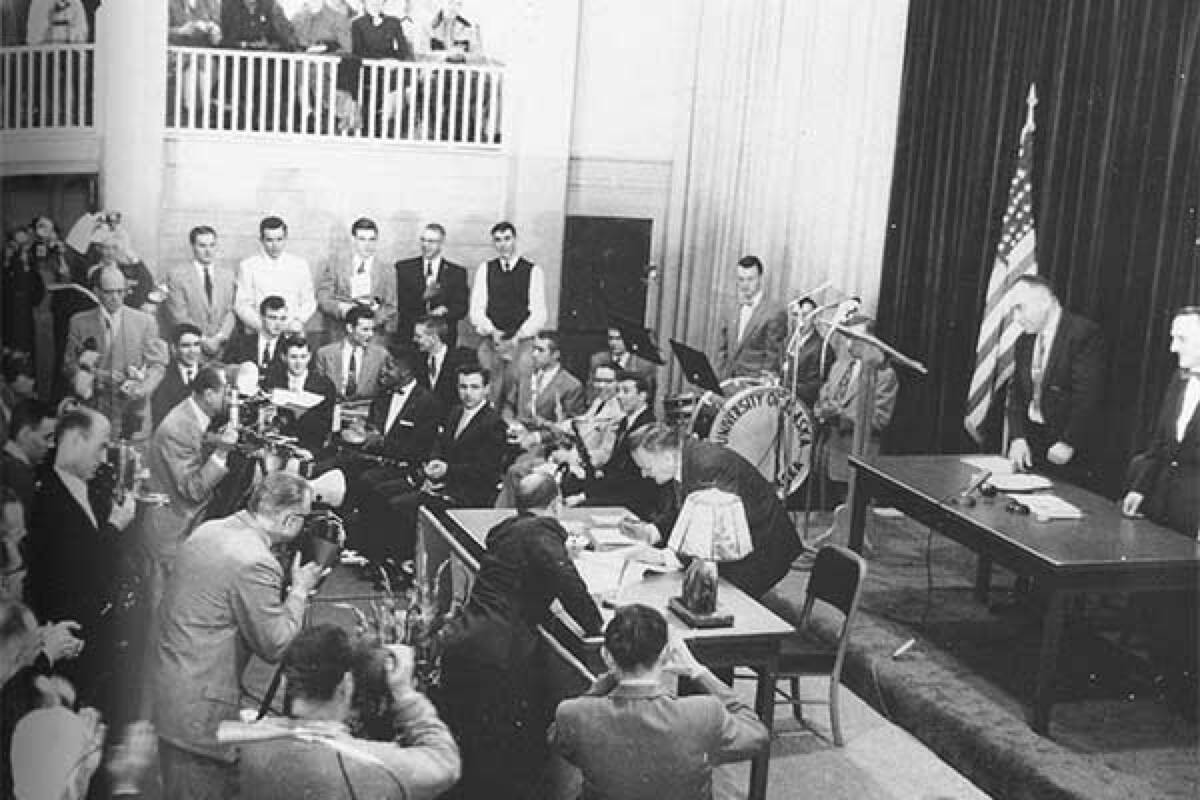
Coghill, whose father John B. Coghill was one of the delegtes at the original constitutional convention, said that despite his opposition to a convention and concerns by some people about current-day policymakers being selected as delegates he would likely seek to be one of the participants.
“If Alaska voters vote yes I’m going to suit up,” he said.
• Contact Mark Sabbatini at mark.sabbatini@juneauempire.com
