
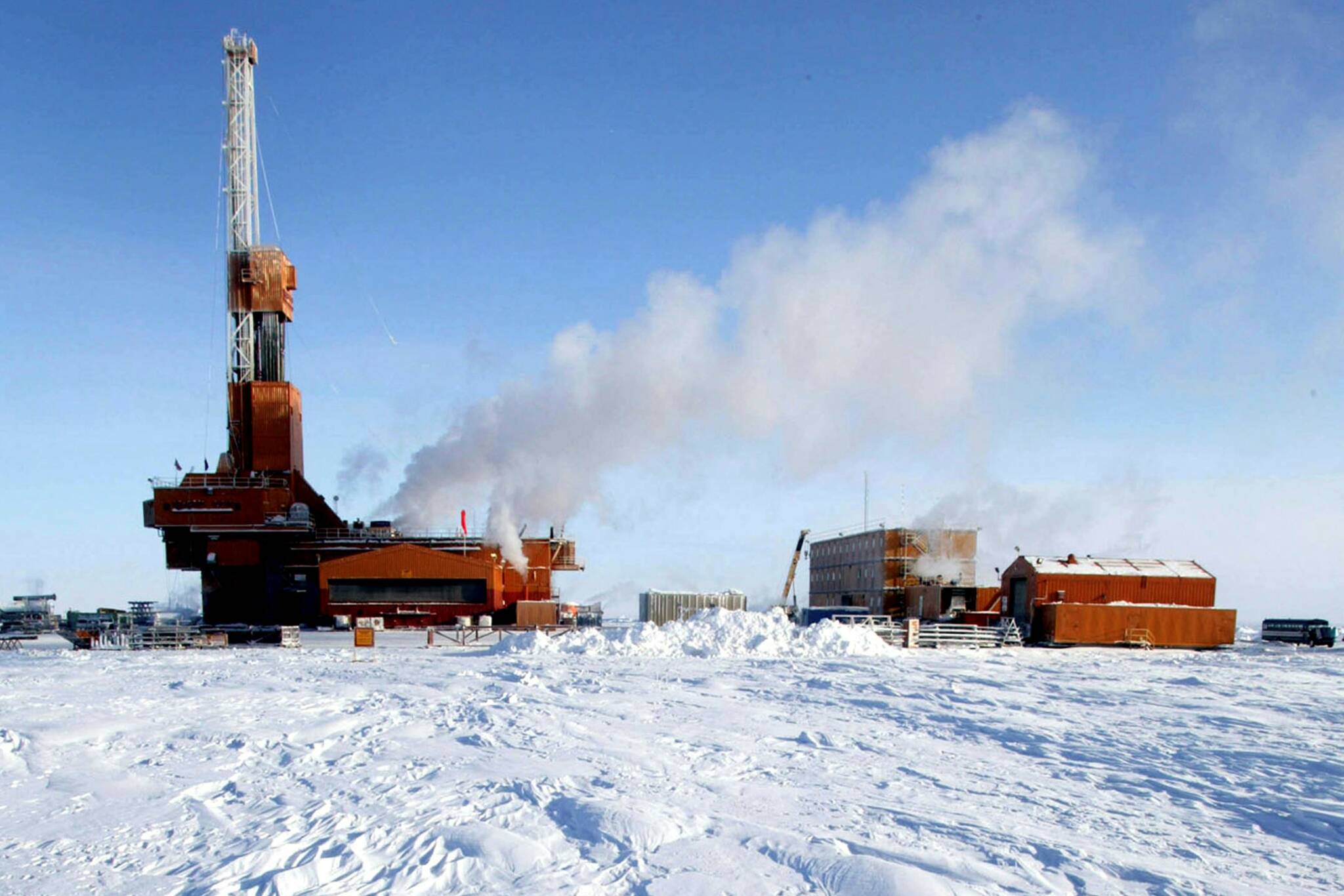
Alaska’s congressional delegation released a statement condemning President Joe Biden and the Bureau of Land Management’s decision not to pursue development of the National Petroleum Reserve in Alaska in a reversal of a decision made by the Trump Administration.
In a joint statement, Alaska’s congressional leaders said the decision would hurt the state’s economy and failed to provide opportunities for responsible resource development.
“With zero analysis or consultation with Alaskans, the Biden administration has decided to upend the NPR-A’s current management plan to return to an outdated policy that is worse for our state’s economy, worse for our nation’s energy security, and contrary to federal law,” Sen. Lisa Murkowski, R-Alaska, said in the statement.
The bureau announced Monday the agency selected Alternative A —the “no action” alternative — as its preferred alternative from the 2020 Integrated Activity Plan Environmental Impact Statement. If confirmed, the Bureau of Land Management, said in a statement, the alternative would revert management of the NPR-A to the 2013 activity plan while including certain more protective lease stipulations and operating procedures for threatened and endangered species from the 2020 plan.
[City reports 2 buildings collapse as continuing rain stresses infrastructure]
“This decision reflects the Biden-Harris administration’s priority of reviewing existing oil and gas programs to ensure balance on America’s public lands and waters to benefit current and future generations,”the bureau said.
Alaska’s federal lawmakers said the move was counterintuitive to a balanced approach to environmental conservation and resource development.
“Our state has proven that conservation and energy development can go hand in hand,” said Rep. Don Young, R-Alaska. “Despite this, the Administration continues working to stifle American energy production and economic opportunity in Alaska.”
In a statement, environmental group the Center for Biological Diversity lauded the move but said the administration needed to do more to protect the environment.
“This is better than the Trump-era plan it replaces but far short of what’s needed to address the climate emergency,” said Kristen Monsell, a senior attorney at CBD. “No amount of mitigation measures can change the fact that more Arctic drilling means more climate chaos, more oil spills and more harm to local communities and polar bears.”
Sen. Dan Sullivan, R-Alaska, said the decision reflected an ongoing assault by the Biden Administration on Alaska’s way of life.
“Reverting back to the 2013 management plan is not only arbitrary and contrary to good science, it will be harmful to the very people and issues the Biden administration purports to care most about—indigenous communities, and racial and environmental equity, Sullivan said. “Instead, the Biden White House is taking its orders from radical extreme environmental groups who care nothing about Alaskans.”
The Biden administration’s decision was also criticized by Gov. Mike Dunleavy, who issued a statement saying the move would make the nation more dependent on foreign oil.
“This is another sign of the federal government turning its back on Alaska and hampering domestic energy production,” Dunleavy said.
The bureau said the decision will be confirmed in a status report filed Monday with the U.S. District Court for the District of Alaska. The agency also said it will advise the court it has prepared a draft Determination of National Environmental Policy Act Adequacy finding that the existing 2020 IAP/EIS and its subsistence evaluation are adequate, and additional analysis is not necessary for the Department to select the preferred alternative.
• Contact reporter Peter Segall at psegall@juneauempire.com. Follow him on Twitter at @SegallJnuEmpire.
