Column: What’s the dollar value of wild salmon produced by the Tongass and the Chugach?
Published 3:00 am Friday, December 27, 2019
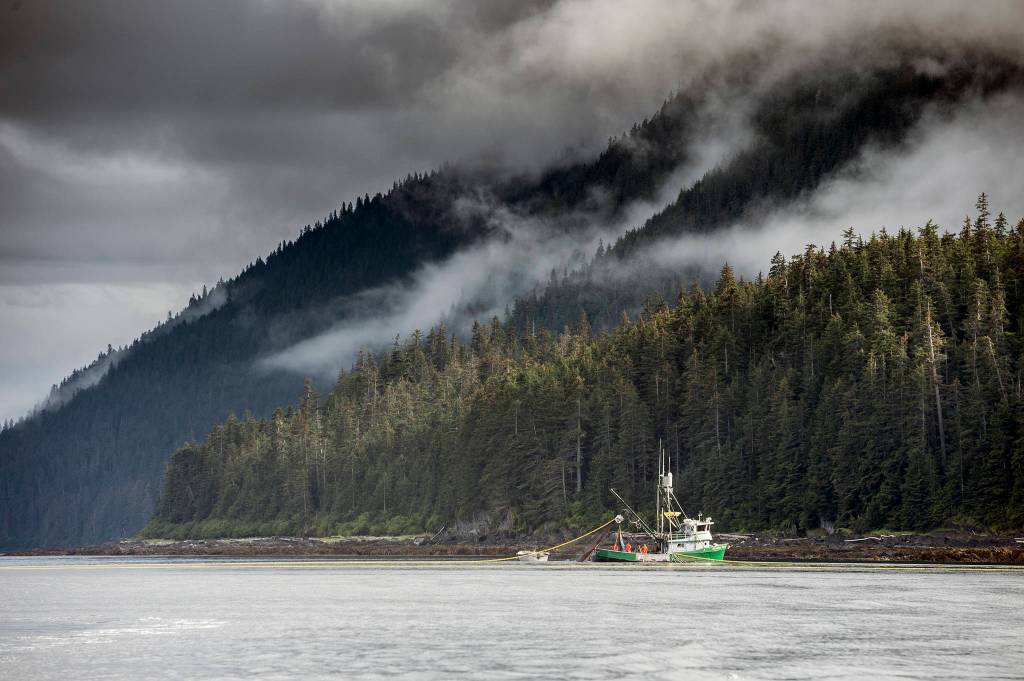
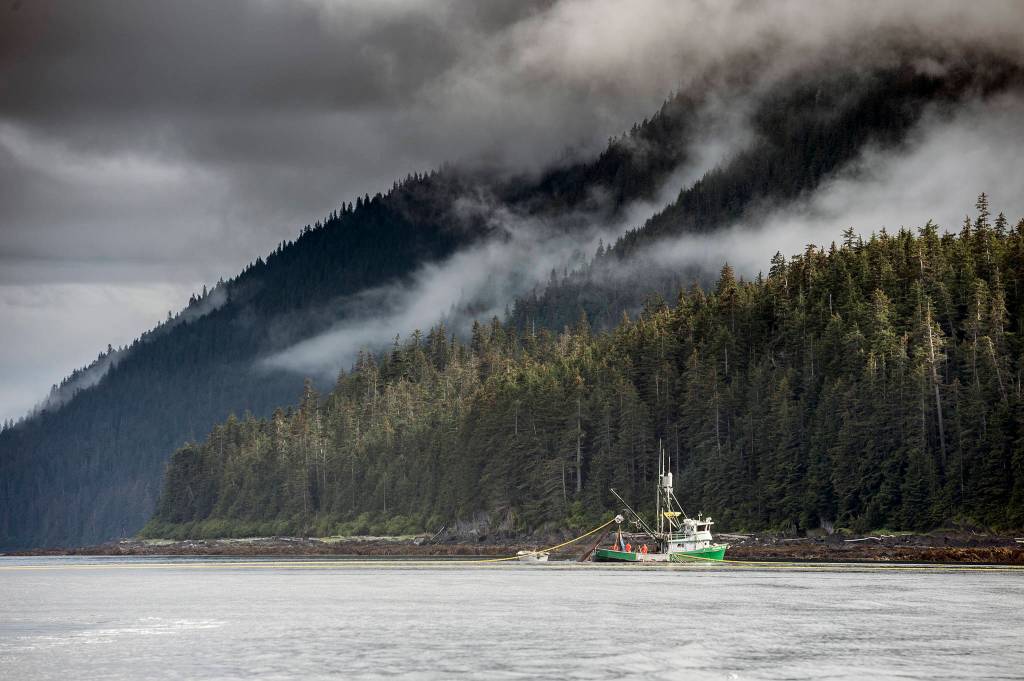

Clean air. Clean water. Deer. Moose. Blueberries. Salmon.
Alaska’s Tongass and Chugach National Forests provide many different things to the people who rely on them for food, recreation or a living. But because the forests work for free, the value of the services they provide is sometimes hard to recognize. As part of a growing movement to figure out the dollar value of those forest “products,” however, scientists for the first time have estimated the value of the Tongass and the Chugach National Forests to Alaska’s commercial salmon industry.
The short version of their findings: the forests contribute a lot, and even that is a known underestimate.
Combined, wild salmon born within the boundaries of the Tongass and the Chugach average a quarter of Alaska’s commercial Pacific salmon catch and 16% of the total commercial value of salmon caught in Alaska each year. For the 10-year study period, Alaska commercial fishermen caught an average 48 million “forest salmon” each year. All together, those forest salmon’s annual dockside value averaged $88 million.
“One of the things that the Forest Service is interested in doing is estimating the value of the different activities and services that national forests provide,” said study co-author, research fish biologist J. Ryan Bellmore. “And the Tongass and the Chugach provide a lot of salmon.”
Bellmore and hydrologist Adelaide C. Johnson were lead co-authors on the study, “Quantifying the Monetary Value of Alaska National Forests to Commercial Pacific Salmon Fisheries,” recently published in the North American Journal of Fisheries Management.
Figuring out the value of “forest fish”
This is the first time anyone has attempted to quantify what the Tongass and the Chugach National Forests, specifically, contribute to the commercial fishing economy. In order to do it, the authors excluded salmon born outside the streams, rivers and lakes within Tongass and the Chugach National Forest boundaries, like the Canadian portions of the transboundary Taku, Stikine and Unuk Rivers, state land, private land, and Native corporation land. They also, of course, excluded hatchery-produced fish.
Even focusing on commercial salmon, the number “is actually a significant underestimate of the value of national forests to salmon fisheries,” said Bellmore. “Chinook salmon are a perfect example. Many Chinook in this region spawn in transboundary rivers upstream of national forests, but juveniles eventually migrate downstream, and can be supported by habitat and food webs within national forests boundaries.”
The same is true, Johnson pointed out, for the importance of the Chugach National Forest to the Copper River.
The study also underestimates the value of salmon produced by the forest, the authors said, as it only takes into account commercial harvest — not recreational, subsistence, cultural, etc. Finally, it counts only dockside value, not, for example, the economic impact of local fish processing.
Still, it’s a start to have commercial dockside value of salmon produced by the Tongass and the Chugach quantified and isolated.
“Suffice to say, there’s still a lot of work to do,” Bellmore said.
Upcoming management decisions
The U.S. Forest Service took public comment until Dec. 17 on a proposed removal of Roadless Rule protections for more than 9 million acres of the Tongass National Forest, which would open up currently protected areas for logging roads, clearcuts and industrial development. The study could inform current decision-making, but the scientists declined to comment on the study’s relevance to a specific management decision.
“It’s a goal to be doing relevant research,” Johnson said.
Still, the study acknowledges the role that sometimes competing resources have played in the decline of salmon across the West Coast.
“Within a century of European colonization many of these runs (in the Pacific Northwest) were critically imperiled, due in part to logging activities that deteriorated freshwater spawning and rearing habitat. This legacy of forest management—combined with dam construction, overharvest, mining and urbanization—has resulted in billions spent on hatcheries and other restoration actions aimed at maintaining recreational, commercial, and subsistence fisheries that were once provided by intact ecosystems,” reads the study. In spite of modern practices meant to address these kinds of impacts, like stream buffers, “strong economic pressures still exist that may be at odds with maintaining healthy Pacific salmon habitat, such as intensive timber harvest, mining, and urbanization.”
Ultimately, the study authors indicate that their findings can be used in informing forest management.
“We provide this information, and it’s up to society to decide what decisions we make,” Bellmore said.
Studying the monetary value of these “free” products allows managers to better anticipate what the cost to society would be if the forest no longer provided those free services.
“Different river systems produce fish in different ways and at different times,” Bellmore said. “If you have a diversity of habitats that are productive at different times, that’s really important in a place like Southeast Alaska, that is changing rapidly…. We may have more adaptive capacity than other places in the world because we still have a lot of intact land.”
BY THE NUMBERS
The Tongass:The Tongass is the largest national forest in the U.S., at about 26,600 square miles
Average rainfall on the Tongass is between 59 and 197 inches per year
The most lucrative “forest salmon” in the Tongass is pink salmon, averaging $42 million for commercial fishermen each year
Coho average: $14.8 million
Chum average: $8.8 million
Sockeye average: $2.2 million
Chinook average: $676,000
The Chugach:The Chugach is the second largest forest in the U.S., at around 10,800 square miles
Average rainfall in the Chugach is between 20 and 236 inches per year
The most lucrative “forest salmon” for the Chugach is sockeye, averaging $10.5 million for commercial fishermen each year
Pink average: $6.2 million
Coho average: $2.3 million
Chum average: $694,000
Chinook average: $107,000
• SalmonState is a free column provided by the namesake organization, which is an advocacy group that works to keep Alaska a place where wild salmon thrive. Mary Catharine Martin is the communications director of SalmonState.