Chancellor: UAS is ‘open for business’ for the fall, but tuition hikes and layoffs are ahead
Published 7:15 am Friday, August 2, 2019
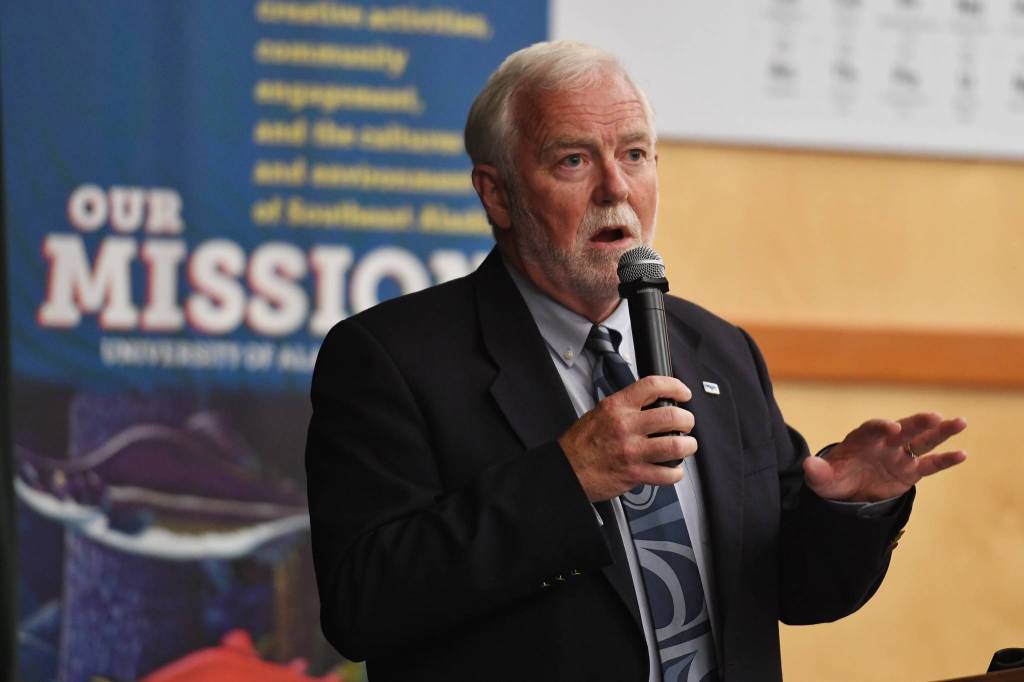
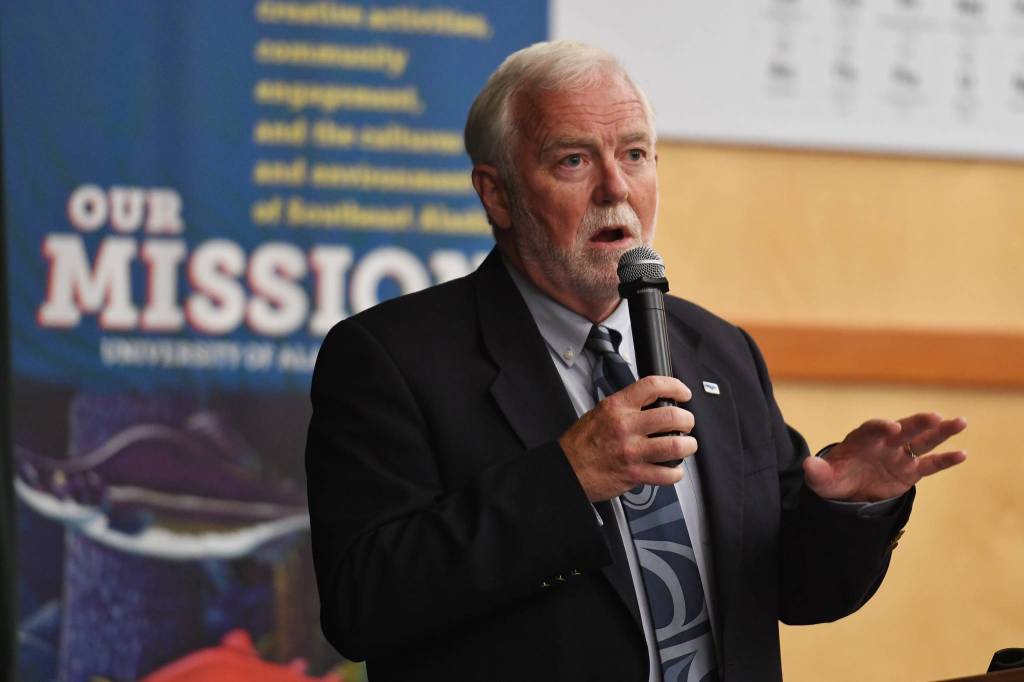
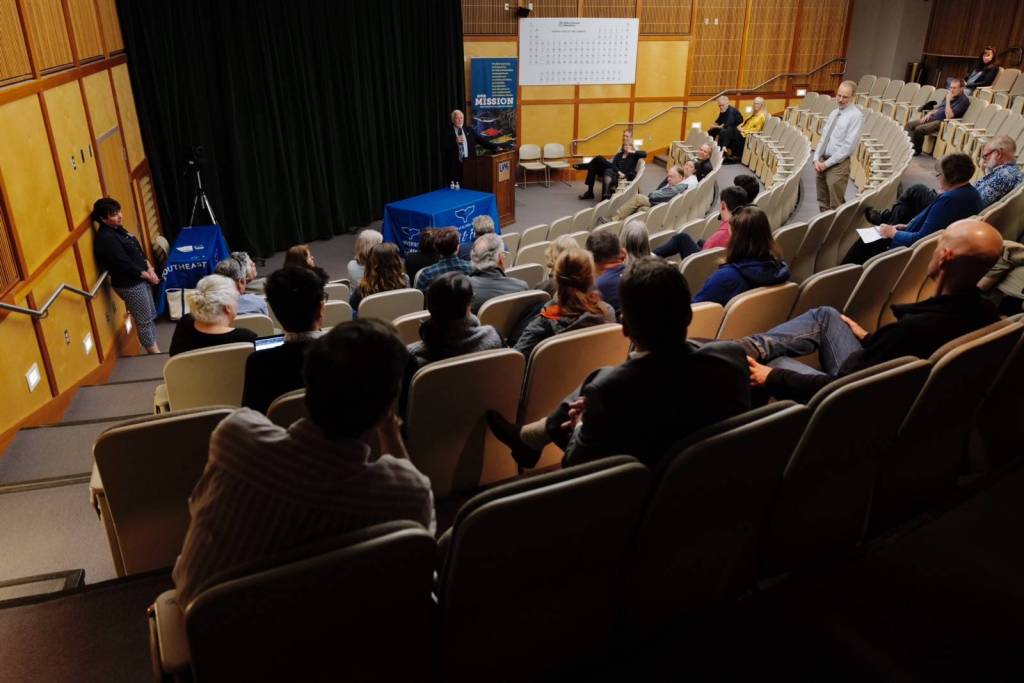


The University of Alaska Southeast is open for business, according to Chancellor Richard Caulfield speaking at a forum in UAS’s Egan Lecture Hall Thursday evening.
“We’re excited to welcome new students for our fall semester,” he told the crowd of mostly staff, faculty and older community members.
He thanked the public for the enormous outpouring of support the university has received since February when Gov. Mike Dunleavy announced $136 million in cuts to University of Alaska’s budget.
But while Caulfield said he was an optimist and the UAS would continue to do its best to provide a quality education to it students and the people of Alaska, the forum came on the heels of a drastic announcement to UA’s structure.
On Monday, the Board of Regents voted to begin drafting a plan which would reorganize UA into a single accreditation model, meaning that the University of Alaska’s current three independent university’s would no longer function as they have for decades. Quite what the new UA would look like is not yet defined. The regent’s vote was for UA President Jim Johnsen to begin drafting a plan that will be presented at the next regent’s meeting in September.
Caulfield assured the audience that fall semester at UAS would be “business as usual” but the same could not be said for the next several years. He said UA will be working closely with the Northwest Commission on Colleges and Universities, the body recognized by the U.S. Department of Education which accredits institution of higher learning through the the northwestern United States. Working with the commission will ensure that UA maintains the necessary standards for accreditation while it works through the transition.
The transition process will take time, Caulfield said, “several years at least,” but that Johnsen intends to work “expeditiously” on the process.
Audience members questioned Caulfield on how UAS would seek to retain its individual culture and local administration. That, Caulfield said, was a challenge that all three university chancellors had been considering.
“That’s one of our biggest challenges,” he said. “Students are not a number at UAS.”
He said that because of UAS relatively small size, it was able to provide unique opportunities to its undergraduates, like internships and work programs with local businesses, that are generally only available to graduate students.
“As we go forward, what is distinctive about individual universities will need to be preserved,” Caulfield said. He added, “there may be ways to collaborate with faculty at other units that doesn’t happen now,” as a potential positive of the reorganization.
In an interview with the Empire after the presentation, Caulfield said that he expected the three campuses in Southeast — Juneau, Sitka and Ketchikan — to remain open.
“I have every expectation that we will continue to have those campuses here in Southeast,” he said. “We work very hard to integrate the course, the degree programs, the work of faculty and staff to provide a richer opportunity for our students.”
But while he believes the regional campuses will remain open, “but will we still have the opportunity to work coherently together as a regional group or will the primary allegiance be to the system as a whole, I think that’s an open question,” he said.
Asked when UAS staff could expect layoffs, Caulfield said that he was not yet able to answer that question because of the dual appropriations system currently in place for the university. Currently appropriations made by the state fall on UAS and the other two universities differently, and that the bulk of cuts made by Dunleavy’s vetoes fell on UA Anchorage and Fairbanks. Johnsen felt it was appropriate that UAS pay for services it receives from other entities, such as the statewide office. UAS has asked for clarification of whether it would be responsible for paying a proportional rate of the cuts, which would amount to roughly $10 million, or if it would only be asked to pay for the services it receives which would only cost about $1.2 million.
There is pending legislation currently before the governor, SB 2001, which if signed into law, would mean a cut of only $25 million rather than $136 million to UA’s budget.
“I think it’s anyone’s guess if the governor will sign that because it’s accompanied by a Permanent Fund Dividend amount of $1,600,” Caulfield said, noting the governor’s preference for a larger PFD.
Caulfield said during the presentation that students at UAS would receive a 5 percent tuition hike in the fall, and that the possibility of a 10 percent hike in the spring has been discussed. He said that the 5 percent increase has been known for some time but added that when university systems in other states had experienced financial troubles, tuition increases had been part of the solution.
Caulfield said that he wanted to communicate that the university was open for business. Caulfield told the audience that a website was being created where the public could receive updates on the consolidation plan, saying the site would have a place for public comment and that documents would be made available.
“Even with all the uncertainty,” he said, “I have no doubt that University of Alaska will have a strong presence in Southeast as we move forward.”
• Contact reporter Peter Segall at 523-2228 or psegall@juneauempire.com