
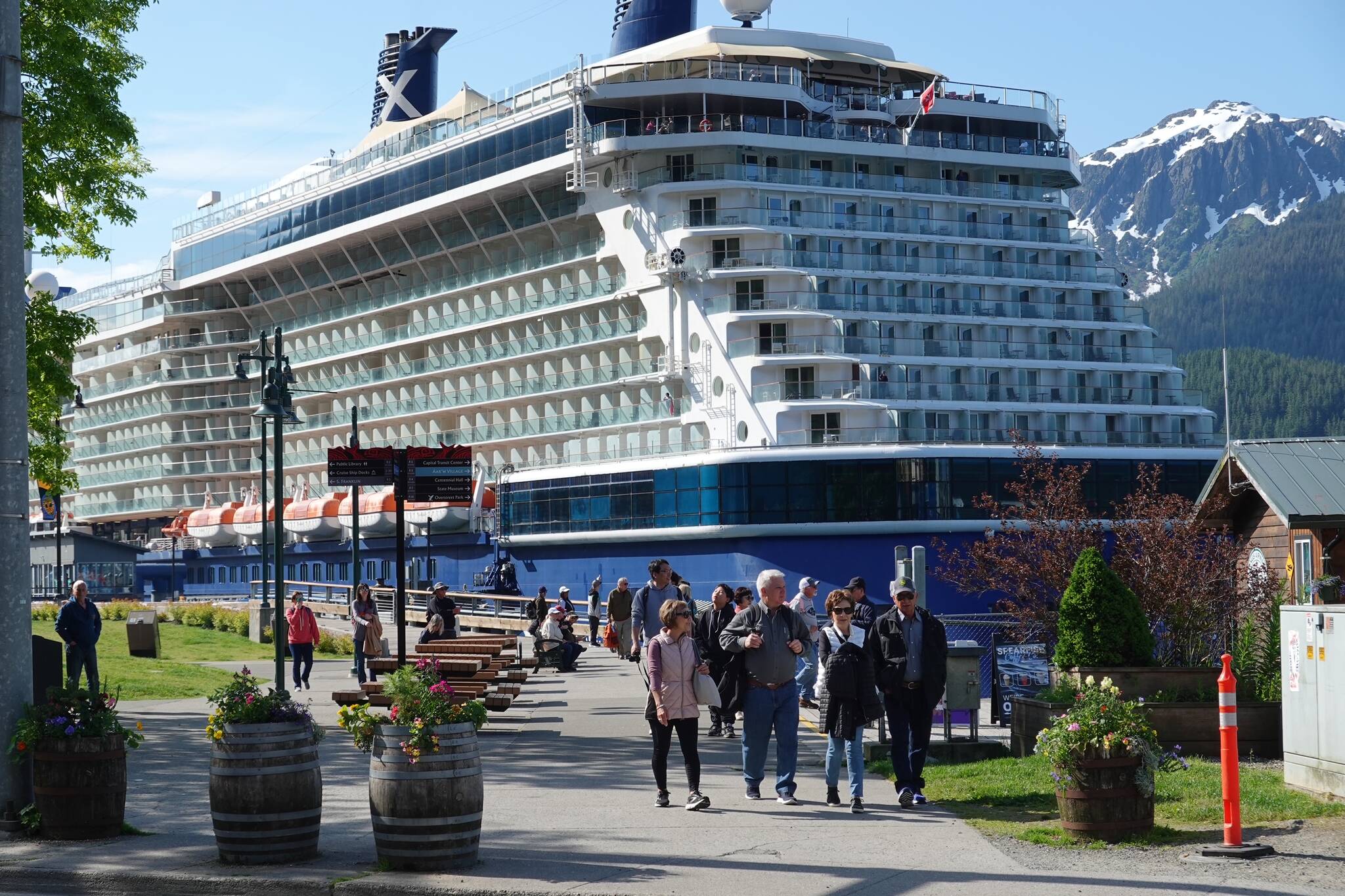
Juneau residents can weigh in on how the city spends the tens of millions of dollars it collects each year in cruise passenger fees. The City and Borough of Juneau’s public comment period is open for all of December.
For every cruise passenger who arrives in Juneau, the city collects $13. Of that, $5 comes from the state’s commercial passenger vessel excise tax, while the city has its own $5 marine passenger fee and $3 port development fee.
With over 1.7 million passengers visiting last season, the city’s marine passenger fee budget totals over $22 million. But a lawsuit limits how that money can be used.
The Cruise Lines International Association sued the city in 2016, arguing Juneau’s spending of the passenger fees didn’t focus closely enough on services that directly benefit cruise ships and their passengers, and a judge agreed in 2019. Since then, the city must allocate fees based on the settlement agreement with the CLIA.
CLIA also argued the fees violated the U.S. Constitution’s Tonnage Clause, which bars states from levying taxes on a vessel based on its cargo capacity. The judge rejected that claim in his 2019 ruling.
“Because cruise ships have human cargo and that human cargo impacts the area around where the cruise ship docks, there’s a shared need for us to be more flexible with how we use those fees,” said Alix Pierce, the city’s visitor industry director.
Juneau has long gathered public input on how to use the money. Last year, Pierce said residents pushed the city to address overloaded public Wi-Fi and poor cell service during peak tourism season. They also requested a Mendenhall Loop Road bus stop and better signage and lighting.
This year, the city expects to prioritize installing more downtown bathrooms. Rebuilding Marine Park — extending the Juneau Seawalk to the rock dump — is also planned and will be funded through passenger feees.
The settlement agreement requires ongoing communication and collaboration between CLIA and the city.
“I think our relationship with the cruise lines over passenger fees has been fraught in the past — you know, they sued us,” Pierce said. “But I think we’ve found kind of a balance in how we structure those conversations and that has improved the way that the process works in the past couple years.”
Public comments on how to use marine passenger fees for 2026 are open until Dec. 31. Comments are accepted online or in-person at the City Manager’s Office. The city will compile the comments to be presented before the Assembly finance committee.
