
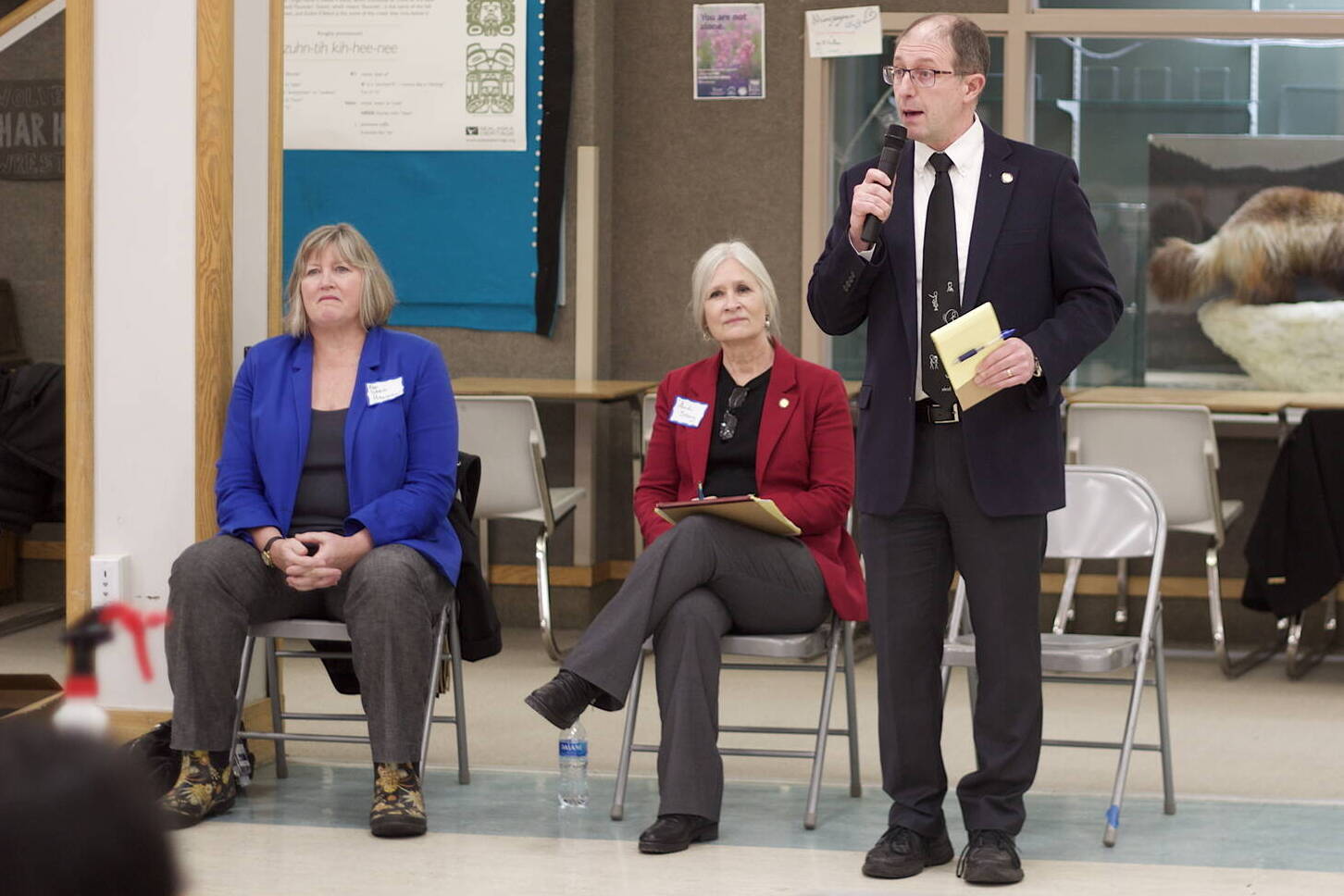
With the state Legislature starting on Tuesday, Jan. 20, the policymakers from across the state have returned to Alaska’s capital city.
Juneau’s legislators weighed in on their expectations for the second Regular Session of the state’s 34th Legislature.
This Q&A has been edited for length and clarity.
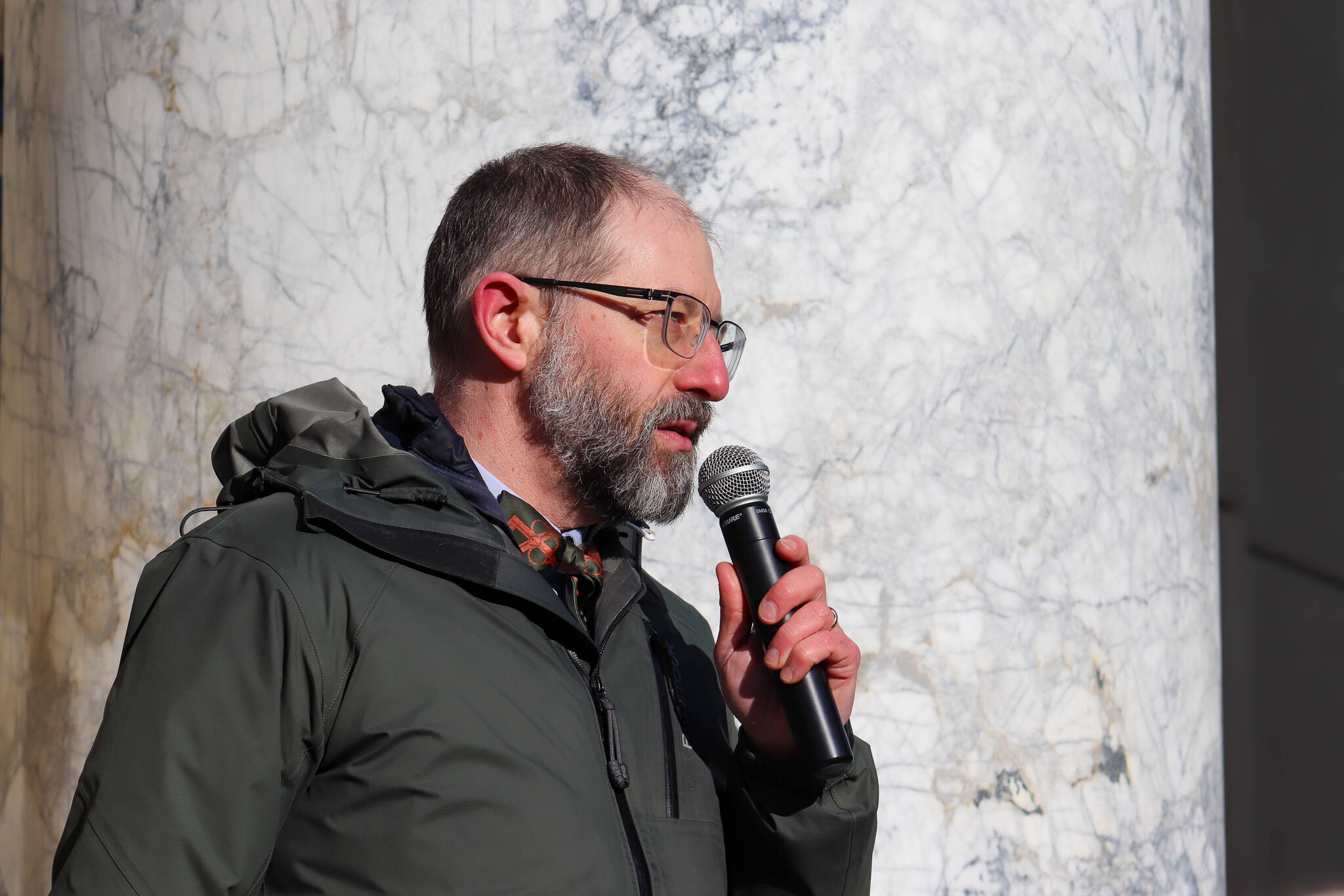
Sen. Jesse Kiehl (D-Juneau) speaks at a rally where state employees ask for higher pay on Friday, Feb. 14, 2025. (Jasz Garrett / Juneau Empire file photo)
Senator Jesse Kiehl
Could you talk about your committee membership and how that sets your goals for this session?
I’m on a whole fistful of committees.
I get to serve on Senate Finance. At the federal level, or in most states, you split your taxing and income committees from your spending committees, and in the Alaska legislature, we don’t do that.
With the governor’s commitment to submit a fiscal plan, if what he submits is serious and stands any chance of actually being enacted, that will take a huge amount of time at the Finance Committee. And of course, even if it doesn’t, he submitted a budget that was $1.5 billion shy of balancing. And so it’s going to fall to the Legislature to write the whole budget as a result. So that will take a colossal amount of time at the Finance Committee.
But that doesn’t mean there isn’t also other work to do. I serve on the Judiciary Committee. We will have a lot of issues come in front of us. Proposed constitutional amendments, anything to with crime, and then issues that have big civil liberties implications.
I serve on the Education Committee, as well as the Special Education Funding Task Force. Last year we stabilized the BSA (Base Student Allocation), but the increase was negligible — 0.3% from the prior year. And we all know inflation was a whole lot more than that.
We stopped the giant yo-yo of education funding. It’s a down. Is it up? Is it down? Is it up? Do you cut massively? Do you just cut a little by stabilizing? We didn’t make up for past cuts or keep up with inflation. But all the education policy issues go through that committee as well.
How do you expect the governor’s proposed budget to change throughout session, especially as it works its way through Finance?
So, obviously the giant, gaping financial hole has to change. Past history tells us that the single biggest lever we can turn or twist is the size of the PFD (Permanent Fund Dividend).
I just want to be 100% honest with people: Of all the programs and services that the state of Alaska provides, the one that is easiest to reduce is the size of a PFD check. And if we don’t deal with the state’s long term structural revenue shortfall — which is a whole lot worse this coming year, because the price of oil is down and still falling — we are on track not to have a PFD.
That’s a bad outcome. I don’t want that.
Now the math ain’t ever gonna to work to go back up to thousands of dollars in every PFD check. The governor’s proposal would require draining half or more than half of our savings, or out tax rates that would make California choke in shame.
We’re not going to do that, but without some revenue, just to stabilize the PFD about where it is now, it’s going away.
What do you consider Alaska’s biggest issue to address this session?
I do think that it’s solving our structural fiscal problem.
Back in 2017, when we started using some of the sustainable draw for the Permanent Fund, that was colossal. That was a huge step. If we hadn’t done that, we’d be bankrupt years ago. So, believe it or not, as dire as the picture looks right now, it’s better than it used to be.
But unless we want that to be the only thing — PFDs to go away — we also have to address the revenue side.
Can you talk about the biggest concerns facing Juneau that will be relevant during this session?
The State of Alaska employs 3,800 people here in this community. So, again, stabilizing the state budget really does matter here.
Another thing that would help tremendously is bringing back the possibility to earn a defined benefit pension. Most states offer that.
When you take that giant issue off the table, we have very much the same suite of issues in front of us in Juneau that we have long had. We continue to make very slow progress on stabilizing the Marine Highway System. School funding and teacher supply remain massive challenges for Juneau, just like any community.
Because it is the second session, legislators have to get their bills passed, or they go back to square one next year — assuming the voters even send you back next year — so a lot of pressure comes on to deal with some of those challenges and opportunities.
How would you say being in the second year changes the tone of the session?
The more urgency and pressure people feel, the grumpier they can get. It is really important that we continue to work carefully and not make careless mistakes, because the pressure is on.
The other thing that will shift is that, because it’s an election year, some of my colleagues will be heavily focused on issues of perception, on some of the matters that incites passion among voters.
I don’t want to suggest it’s bad, right? It’s a democratic republic form of government, so you should care what the voters want and need. It’s supposed to matter. It’s when occasionally someone starts playing games, when someone starts introducing or demanding votes on stuff to embarrass somebody and beat them at the polls next time, even though it’s not a serious proposal that that stuff gets in the way.
Do you have one bill that you can classify as the most important on your docket?
Actually, the most important of my bills is one I’m not pushing because I’m helping colleagues with a different version, and that is a pension bill (Senate Bill 28). Mine provides a more stable retirement benefit with better retiree health care, but I’m helping them push the one that’s got more votes.
When it comes to a bill with my name on it that I’m pushing, it’s Senate Bill 86. It modernizes our money transmission laws and includes companies that move or hold your cryptocurrency in Alaska’s money services regulations. And that’s really important because, because right now they’re basically unregulated.
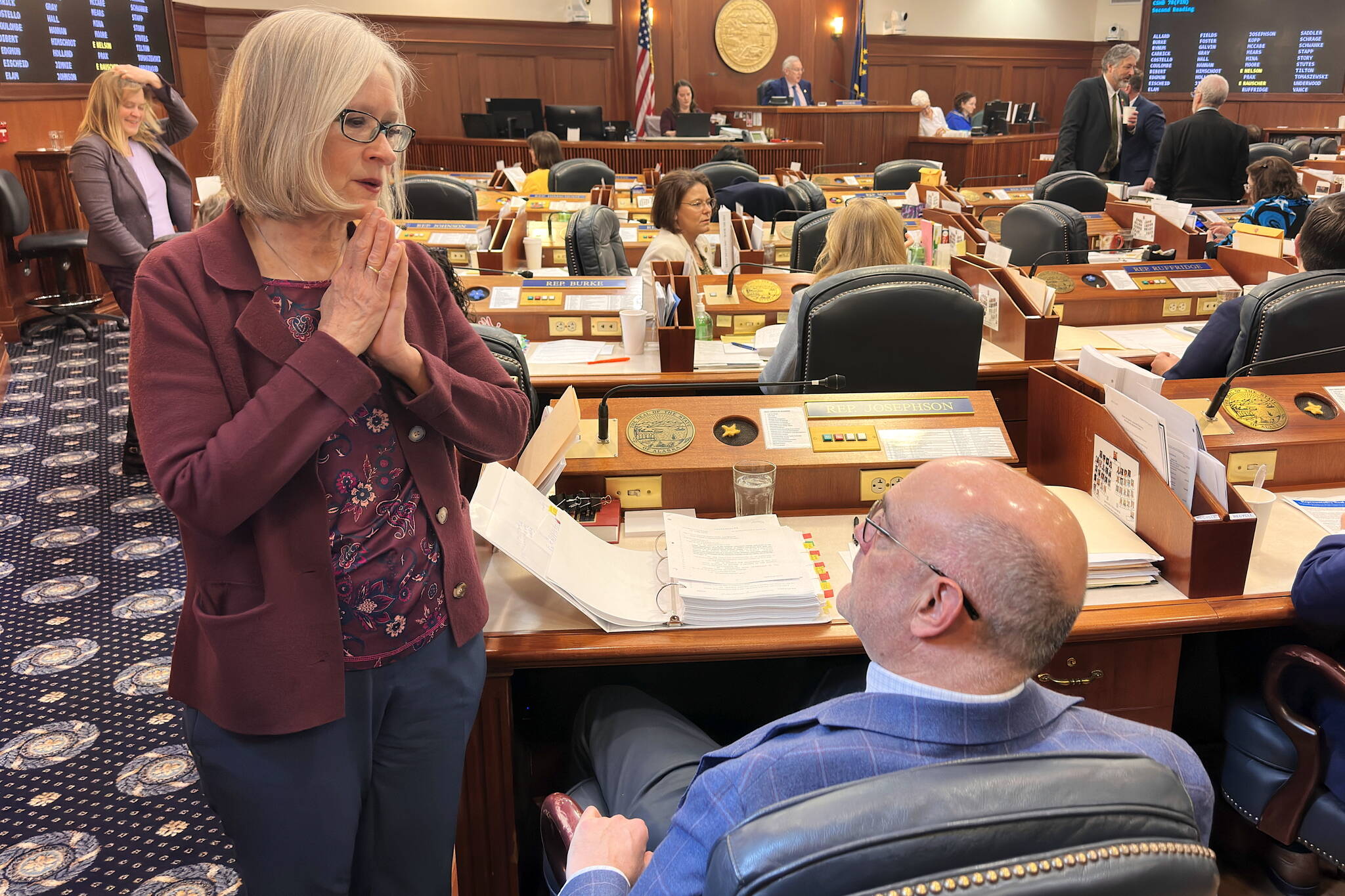
State Rep. Andi Story (D-Juneau) discusses a legislation affecting retirement benefits for public employees during a House floor session on May 10, 2025. (Mark Sabbatini / Juneau Empire file photo)
Representative Andi Story
Can you tell me about your committee membership, and how that sets your priorities for the session?
Education is an economic issue. We have got goals from our community and businesses and families, and they want to keep our younger people in the state, and what they look to is a good education system.
We made a big investment last year, increasing the BSA to $700 per student. We did that permanently, and that was an excellent policy change to make it permanent. The year prior, we paid $680 in one time funding. So, districts are getting $20 more per student than they got the year before.
I am hoping that we do an inflationary adjustment for the BSA this year. I’m part of the task for education funding, and we’re looking at many components this year, and we’ll be making a recommendation to the legislation next year, in fiscal year ‘27.
It’s just so important for the future of our state to know that, yes, we’re going to take care of our kids. And that’s the wonderful thing too, about the policy that made it permanent, the $700 increase we’re saying, yes, Alaskans, we care about your kids. Your legislature has got their back, and we’re going to fund their school system. And we need to keep, we need to keep delivering on that promise and showing them with our actions. So I’m going to be a passionate voice for that.
In terms of education funding, can you talk a little bit about how the Legislature worked on this issue, especially going back and forth on vetoes?
So what drives our work is the power of the people. It really does. I cannot stress enough how we had so many communications — emails, calls, letters to the editor — supporting education funding. People really tip the favor of doing the permanent increase. We could talk a long time to many legislators, but when they’re hearing from their public, their constituents, ‘It’s representative democracy that we want you to fund an increase in education,’ that’s what tips the scales.
We’ve talked about education so far. Can you talk about some of the other big issues facing the state?
Well, the big issue is the budget. We don’t have to pass one new policy change, but we have to pass a balanced budget, that’s the one thing the Legislature has to do.
Our money’s tight. It’s been tight for several years. You know, we’ll be looking at what we’re doing. We always look for efficiencies. We’ve been cutting at the heart of what we do a lot, and we have to make sure that what we’re investing in is the right thing to do.
Can you lay out some of the biggest issues facing Southeast Alaska, and how can the Legislature address those?
The biggest issue facing Southeast is our high cost of living and our transportation.
For ferries, that is about getting more employees for the Alaska Marine Highway System. Let’s make sure we’re compensating those employees well, that we have a good pension for them. We have to build the staff up, and we have to make sure our policies are ones that were built the staff up.
The marine highway is like our road for our communities here. And I represent Haines, Skagway, Klukwan and Gustavus and it’s so important to them, for medical visits, food, groceries — lots of things come through the ferry system.
Which of your bills are top priorities for you this session?
One of my first goals is making sure that we fund matches for our capital projects. We have to do the 10% state match for the 90% of federal fund dollars that we get for our roads and our bridges (and other infrastructure). We’ve got to do that early, because we’ve got to get the supplies ordered in on the barge and up here so we can have a summer workload. So that’s about a $57 million allocation, and then we’ll get nine times that in federal dollars.
House Bill 184, that’s a priority for me this session. It’s a bill that I’m hoping I’ll be able to get on the floor, that allows the developers to access the ADA’s (Americans with Disabilities Act) loan participation program for the construction of new workforce housing facilities.
Our education system is a little bit backwards. We do not give our districts funding until after their budgets are due to municipalities. And I have a bill that would have districts get their money the year beforehand. So they can sign their staff contracts, which is really important, because then we’re going to get the most qualified teachers. It will help with public confidence, morale building.
I also think that (Senate Bill 28), a bill for pension reform, makes it. I really think Alaska right now needs to concentrate on making investments in our people. You know. We’re a resource development state, and one of those resources is people, and oftentimes we have to have the right environment for people who are working here and living here and loving it here.
Is there anything else you’d like to add about the session?
I work for the people. If there’s something that they’re concerned about, it’s really important to hear from everybody.
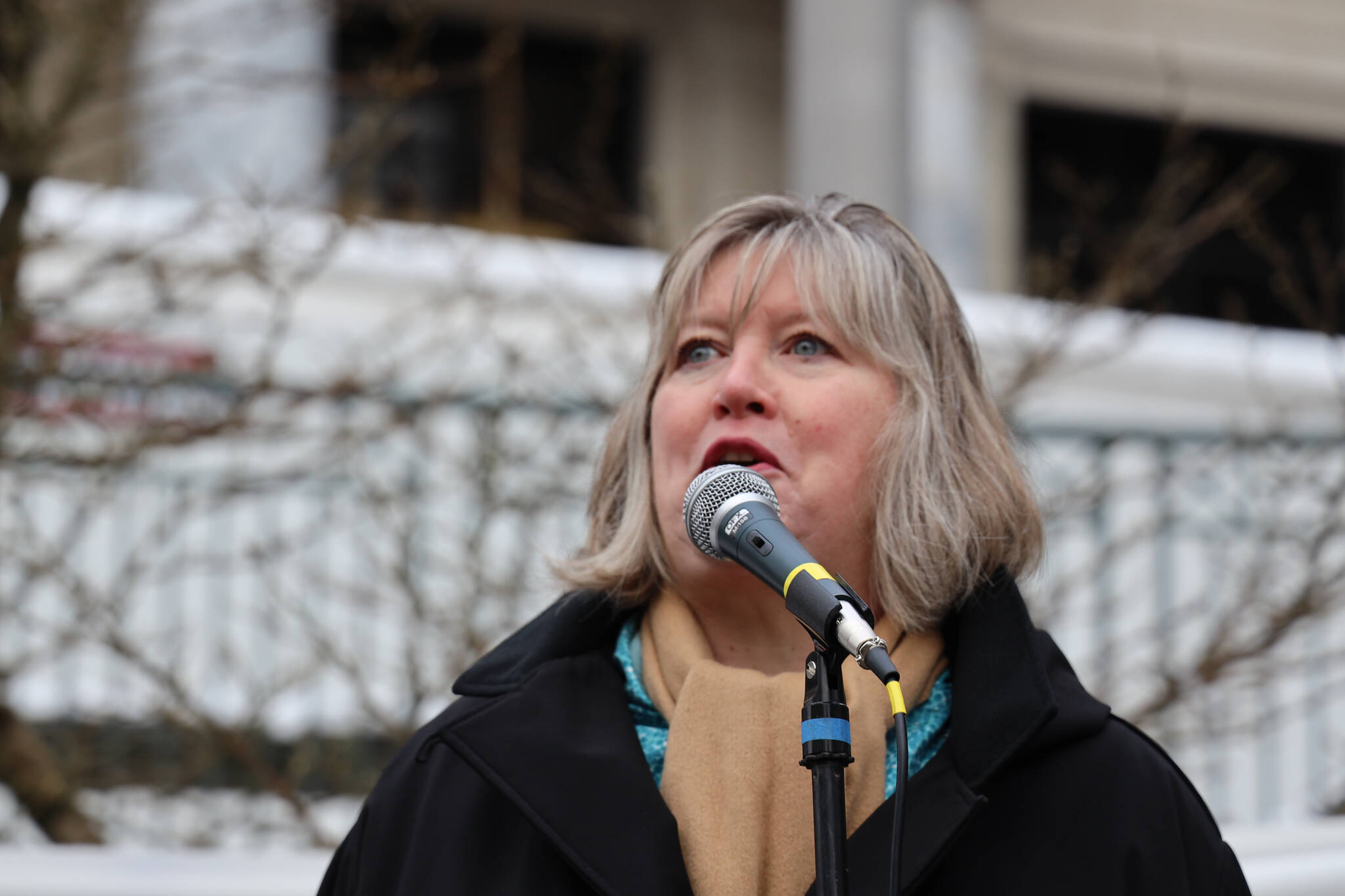
Rep. Sara Hannan, D-Juneau addresses a crowd during a rally outside the Alaska State Capitol in 2023. Hannan sponsored a bill during the 33rd Legislature that sought to ban licensed practitioners from performing “conversion therapy” in the state. (Clarise Larson / Juneau Empire file photo)
Representative Sara Hannan
Can you about some of your committee memberships, and how that’s shaping your priorities for this year?
I serve on the Finance Committee. In the House, when you are on the Finance Committee. That’s your only policy committee. Finance and the budget of the state is the focus, and will remain the focus.
From the time of my first campaign, the fiscal policy of Alaska getting to the point where we are not deficit spending and drawing from savings has been a top priority for me.
I am an advocate of an income tax. Every first-class city and borough in all of Southeast has sales taxes, but I am not a supporter of a sales tax, because I think it kind of intrudes on local government and is a regressive burden. A struggling single mother of four kids is going to pay more in weekly sales tax groceries than I am, as an older retiree with no children in the house. So, I’m much more in favor of an income tax.
I think there’s room for a property tax discussion statewide. But I think that we should focus property taxes on areas outside of organized boroughs that already exercise property tax values, because we have a lot of properties through Alaska that are outside of government jurisdiction.
The Legislature serves as the local government if you are outside of an organized borough or city. And there is a lot of property wealth there — lodges and developments — that should, I believe, should be taxed and contribute to Alaska’s economy.
Can you talk about, not only the legislative process, but the conversations and agreements that would need to be made to put in place an income tax. Is that something that you foresee happening in the next decade, say?
Oh, within the next decade? Absolutely. We are down to the point where we don’t have the savings to pay all our bills on an ongoing basis if we deficit spend. This year’s budget calls for another almost $2 billion to be drawn out of savings to just pay the bills as they are now.
Some people will say, ‘Well, we still have $5 billion in savings.’ And I think that’s over-generous of what we truly have in savings. We need about $3 billion just to float the bills on an annual basis.
Our annual budget, I don’t think, truly reflects our annual spending, for instance. So we expect there to be a very large supplemental budget that needs to be passed for the current fiscal year, because we did not fund, for instance, our emergency services at a level that is even average to what we spend on a year. So we’re underfunding those, and we need to pay it out of supplemental.
We know in this current fiscal year, we have had huge disaster and emergency responses across the state that we don’t have money in a fund to pay for.
In all these discussions, I am not talking about what we have at the Permanent Fund. We could draw out of the Permanent Fund, but I think that is a really, really, really bad idea. Most of my constituents in Juneau, I hear frequently, they’re willing to be taxed and pay for services that they want.
How do you think the formula for the Permanent Fund Dividend should be set?
In 2017, we changed how we took money [from the Permanent Fund], and we’re now drawing 5% of the market value that can be used for state funding.
When that law was passed, the proposal and the political belief was to change the statutory formula for the dividend payout at the same time. That didn’t happen, and that’s put us into this conflict with conflicting state laws.
It’s not the only law about payments that the state has on the books that we are not following.
State law says that, for senior citizens, the first $150,000 of property tax value is not taxable by a local government. And the state reimbursed cities for that to offset that lack of taxable property tax. Well, the state stopped doing that at the beginning of our fiscal crisis, when we had declines in revenue.
The statute is still there, but it means, in a city like Juneau, where seniors are our largest demographic — I’m one of them — and now I’ll enter that category of tax exemption on $150,000 of the property tax that I have been paying to the city.
We have a lot of statutes that we don’t comply with paying out. They’re all discretionary payments that the state Legislature has. The one we hear the most about is the Permanent Fund Dividend formula. You know, free money is very hard to give up, so people feel very passionately about it.
We’ve talked a lot about finance so far. I’m wondering if we’ll talk more about it with this next question: What would you say is the biggest issue facing the state session this year?
Oh, I think that’s it. I think it’s money, because everything else follows. If you want to change policy, it takes money. It takes a little bit of money to change regulations, because you have to write new regulations.
What are the biggest concerns facing this region that you hope can be addressed in this session?
Again, everything ties back to money. But for instance, the Marine Highway System, we have both the need for increased investment in the capital side there — docks and boats — but one of our big dilemmas is the inadequate wages. We compete for mariners on a global market. But when we cut back winter sailings dramatically about 10 years ago, we started losing mariners to global competition, because with that mariner license, you could go to work anywhere in the world at a much higher wage.
Then, when we started ramping back up, we can’t hire those people, tempt them back because our wages are not competitive.
And, you know, and that’s true in every state job, whether it’s law enforcement, CPAs, teachers; every public sector job that you can think of, we do not currently offer competitive wages to other states where the cost of living might be less, where there is a retirement system.
So I think another priority that we will fill is the retirement system bills, the defined benefit bill. But that gets pretty complicated, and has a price tag, and there’s still some policy debates to happen, but I’m a supporter of us returning to the defined benefit system.
Which bills are your top priority for this session?
Vaped tobacco in Alaska is not currently taxed. I’ve run a bill proposing to do that since I first got elected. It’s not taxed because our tax statute on tobacco specifies tobacco by type, so it literally says, snuff, chew, cigar, cigarettes. And the last time we changed that tax, vaping didn’t exist.
So now our Department of Revenue has asserted it’s still covered in the law, but the vape industry has successfully argued against it and fought back, and we have not exercised taxation on them.
We did get a vape tax bill passed three years ago, and the governor vetoed it, and said ‘No new taxes.’ I view that as, that’s not a new tax, that’s just a tax on a new type of product.
I also hope that the bill that I’ve just pre-filed, House Bill 242, on sexual assault by health care workers, is a bill that we can get passed.
We changed our consent laws in Alaska about sexual assault four years ago. This is an area where we didn’t change it, for medical providers. So if someone is being sexually assaulted by a medical provider and they know at the time of the assault that it is assault, and they did not fight back or attempt to stop it, it’s not currently a crime in Alaska.
There was a very high-profile case the summer of a former chiropractor that had served in Southeast. The case ended in a mistrial, and some of the charges had to be dismissed.
Alaska was one of the states where it was hard to prosecute sexual assault in many cases, because we required the victim to have actively fought back, so if you froze in fear or shock or it wasn’t a prosecutable crime. We closed that loophole, but we didn’t with medical providers.
So, this bill is a high priority for me to get that through. And policy-wise, I don’t think it’s very controversial.
This story has been updated since its original version to correct a typo in a subheading and correct an outdated photo caption.
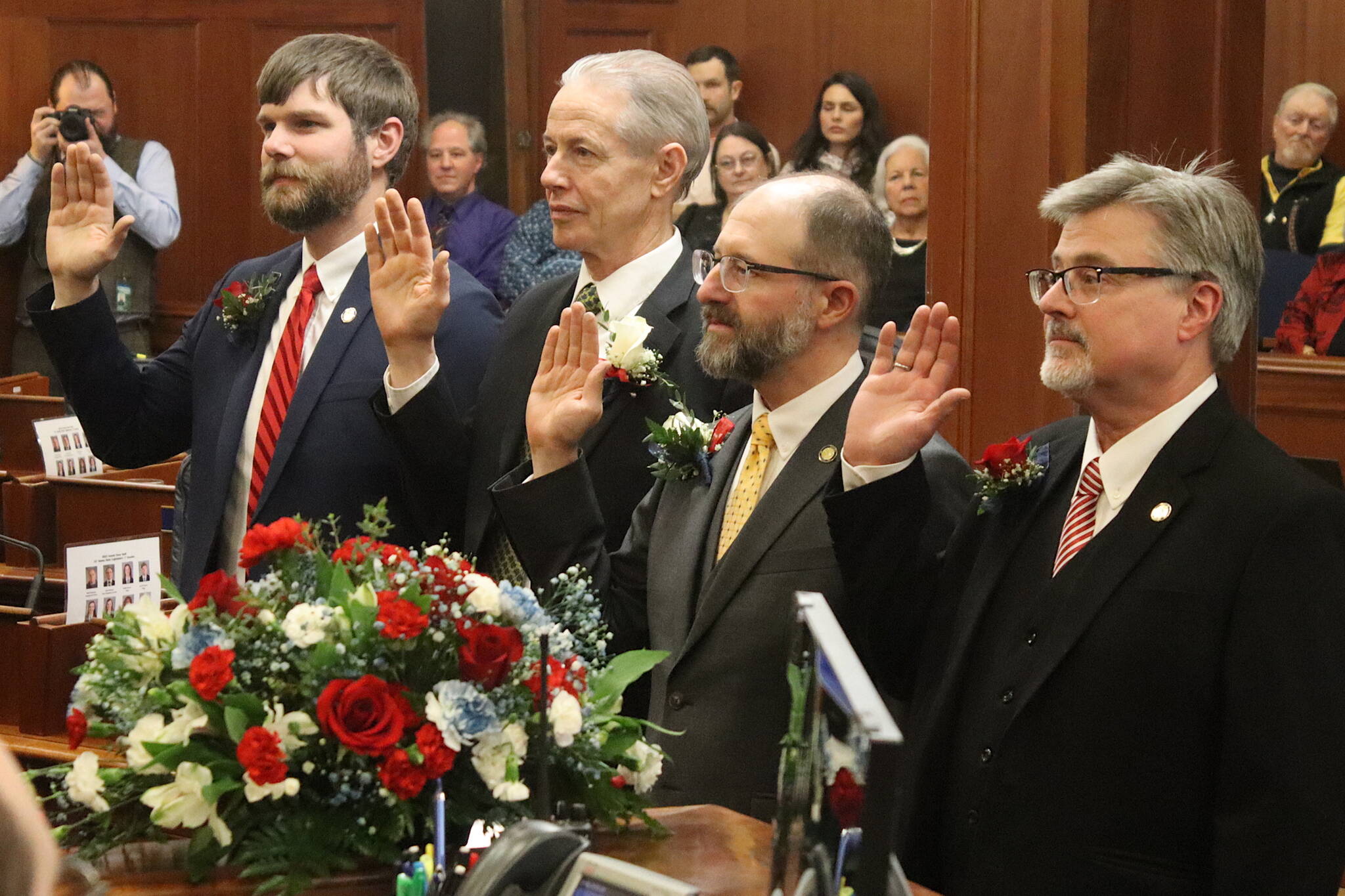
State Sens. Jesse Bjorkman (R-Nikiski), Matt Claman (D-Anchorage), Jesse Kiehl (D-Juneau) and Sen. James Kaufman (R-Anchorage) are sworn in by Lt. Gov. Nancy Dahlstrom during the opening day of the 34th Alaska State Legislature on Tuesday at the Alaska State Capitol. (Mark Sabbatini / Juneau Empire file photo)
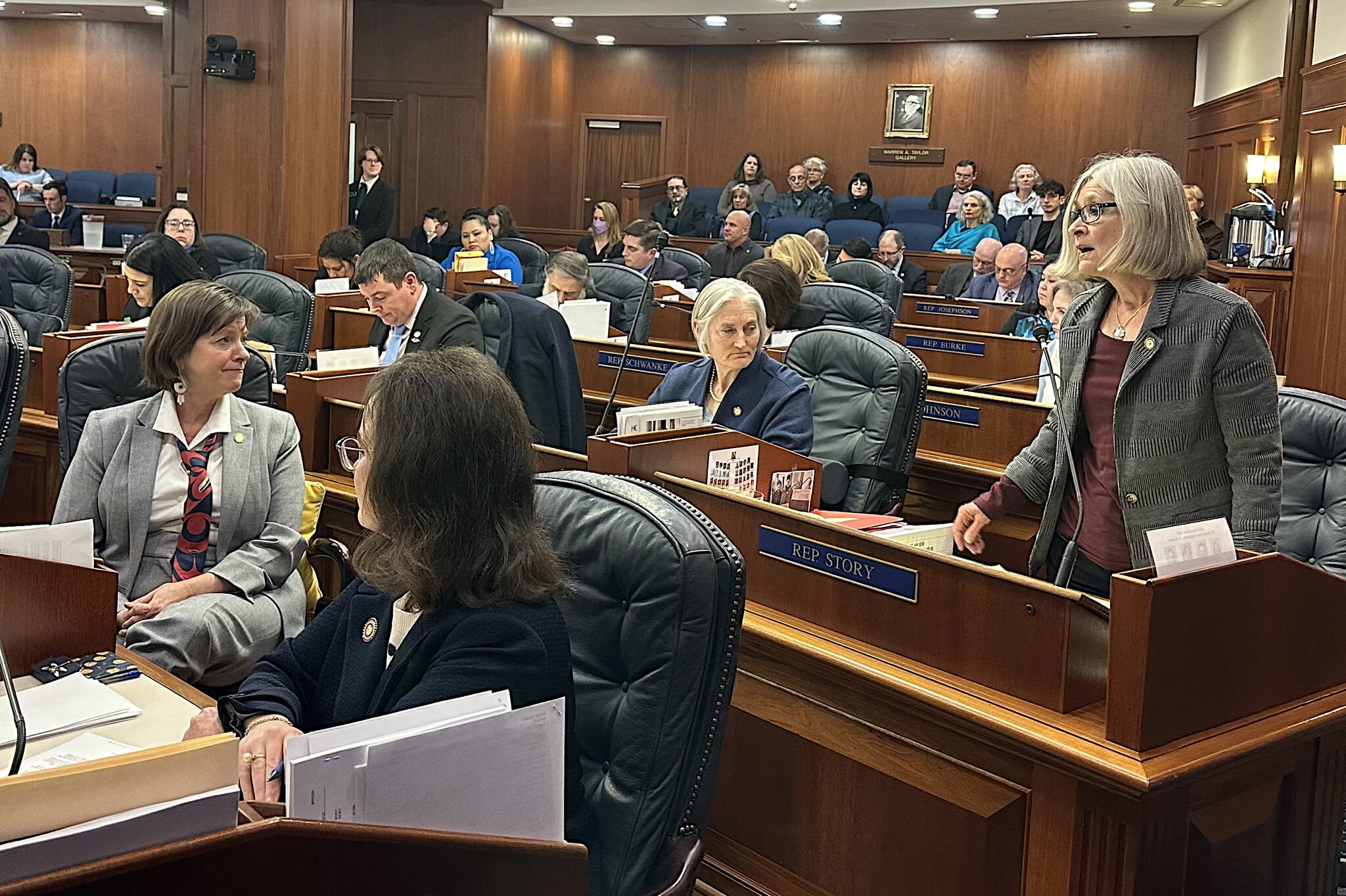
Rep. Andi Story (D-Juneau), co-chair of the House Education Committee, speaks in favor of overriding Gov. Mike Dunleavy’s veto of an education funding bill during a joint session of the Alaska Legislature on Tuesday. (Mark Sabbatini / Juneau Empire file photo)
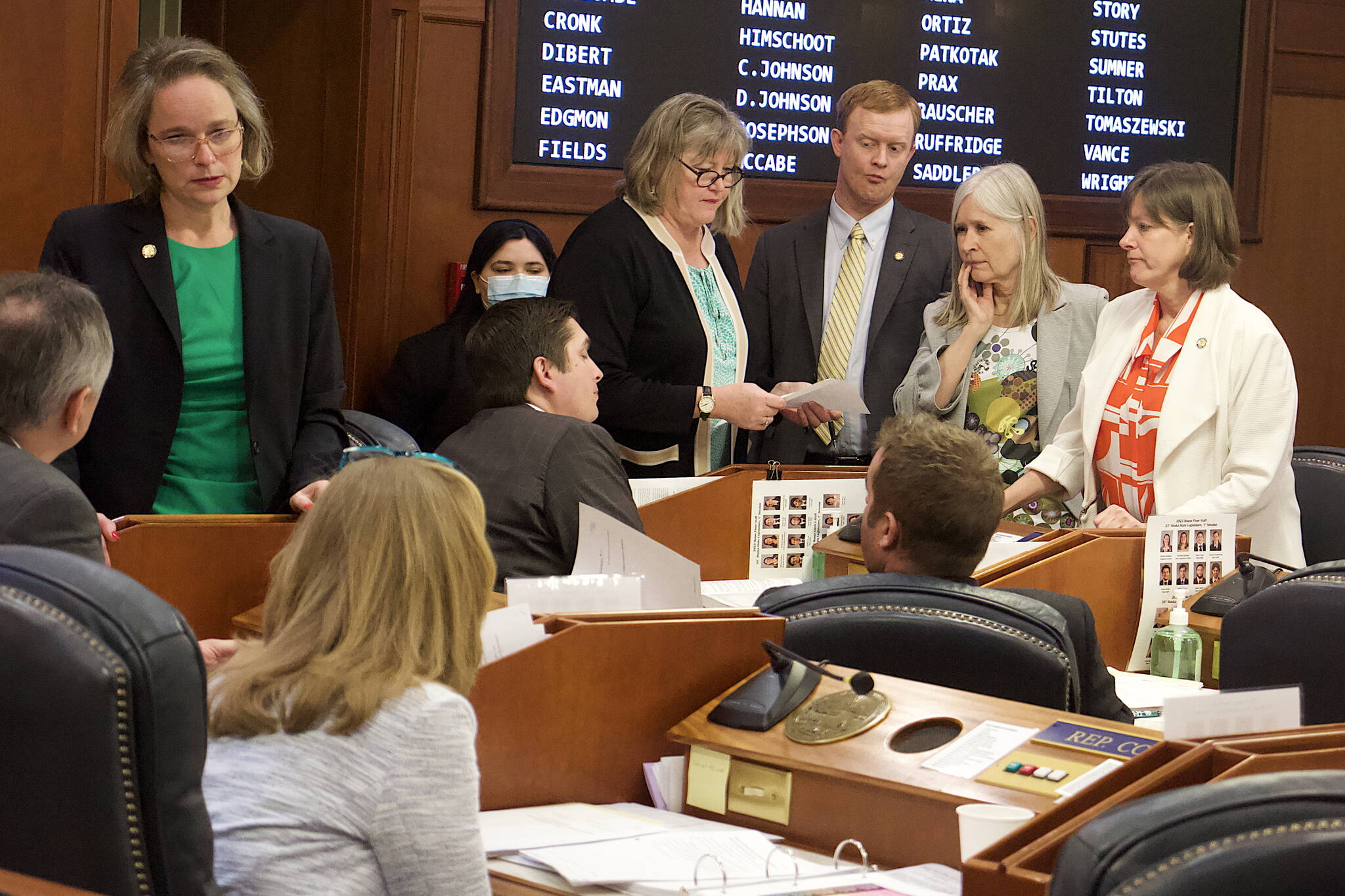
State House members with wide-ranging views on a so-called “fentanyl bill,” including both of Juneau’s representatives, discuss proposed amendments during Wednesday’s floor session. Standing from left to right are Sarah Vance, R-Homer, Sara Hannan, D-Juneau, David Eastman, R-Wasilla, Andi Story, D-Juneau, and Alyse Galvin, D-Anchorage. The bill passed by a 35-5 vote Thursday, with Story voting in favor and Hannan against. (Mark Sabbatini / Juneau Empire file photo)
