
Instead of Alaska getting a third of its money from oil, imagine somebody paying that much for the state not to log its forests.
Gov. Mike Dunleavy is envisioning such a future — which in reality would involve other “green” earnings to reach that sum — and predicting substantial debt as the alternative. His 10-year plan released last week along with his proposed budget for the coming fiscal year projects annual deficits exceeding $1 billion a year by 2029 unless the state is earning $900 million a year by 2027 from ”monetizing carbon credits.”
There’s no specific plans for getting such funds or calculations of how much income is realistically possible. Also, no other state relies on such funds as a key element of their budget. So what exactly are carbon credits and how would they earn the state millions?
What are carbon credits?
The concept at its simplest: If companies are allowed to emits 300 tons of carbon a year, and an oil company emits 400 tons while a geothermal company emits 200 tons, then the oil company can avoid a fine or other punishment by purchasing 100 tons of credits from the geothermal company. Or if the geothermal company wanted to proclaim itself a “net zero” carbon emitter, it could purchase 200 tons of credits from other entities to offset its pollution.
There’s of course variables in that, such as who’s enforcing the emissions rules and what conditions might apply to carbon swaps. But it essentially comes down to governing bodies that have passed “cap-and-trade” regulations, which exist in numerous countries and some states/territories, setting limits where exchanges are permitted.
How is Alaska supposed to make money from this?
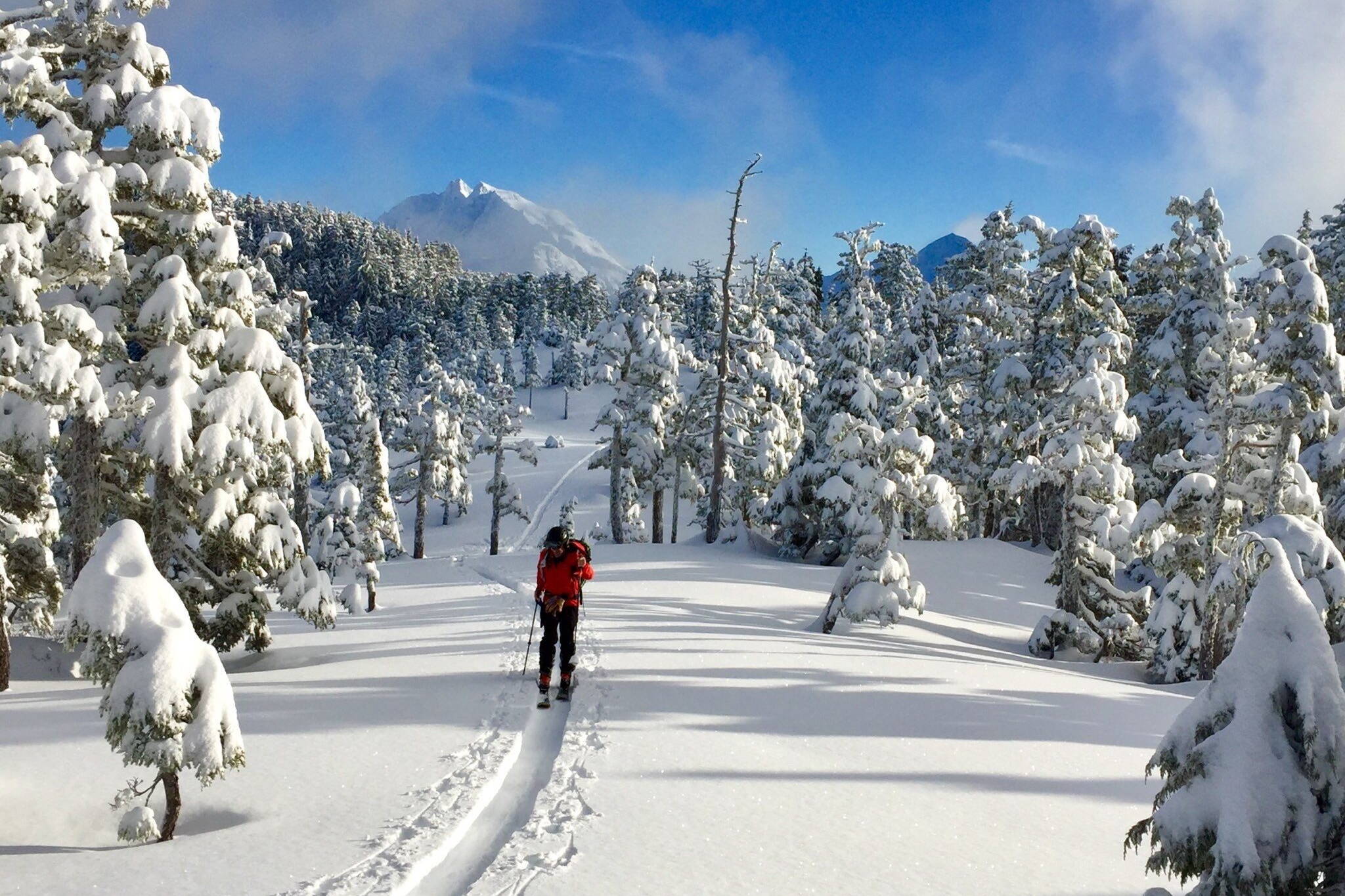
Sealaska Corp. is among three Alaska Native corporations who for the past several years have implemented good examples of one method. Each has put tracts of timber holdings into California’s carbon credits markets, which is paying the corporations to keep the lands unharvested for 100 years. The three corporations report more $100 million in earnings since 2016.
What specifically is the governor planning to do?
Besides leaving forests uncut, Dunleavy talked about “the potential for seaweed sequestration off our coasts,” and sequestering carbon in depleted oil and gas basins such as Cook Inlet since “Alaska probably has more capacity to sequester carbon underground than anywhere on the West Coast.” The specifics of such things would be worked out with lawmakers and stakeholders the state would negotiate with beginning during the next session — and presumably future years.
Who’s willing to pay massive sums of money for that and why?
Countries and companies interested in lowering their carbon footprint are purchasing such credits, according to the United Nations Carbon Offset Platform. Dunleavy said last week a company involved in carbon markets told state officials Alaska could earn more than $30 billion over 20 years by leaving at least some forests unharvested.
Would that mean sealing off the forests entirely?
No. They could still be used for non-harmful recreational purposes.
Wait, isn’t the governor also saying maximizing oil, mining and other industrial activity is a priority?
Yes, but Alaska is a big state. So it can tap some areas while leaving vast areas elsewhere untouched for long periods of time.
Is Alaska attempting a reasonable fix for its financial future?
It’s not as far-fetched as, say, counting on cryptocurrency to save the day. Carbon offset transactions in the U.S. increased from $190 million in 2016 to more than $1 billion in 2021 and by 2030 the market could be anywhere between $5 billion and $50 billion, according to the Taskforce for Scaling Voluntary Carbon Markets. The key factor is who will be paying and what Alaska can do to rake in a share of that income.
Is any other state making carbon credits a funding cornerstone of their budget?
No. California has the most significant carbon market in the U.S. due to having stricter environmental protection regulations than other states. But virtually all of its budget revenues come from income/sales/corporate taxes. That said, it’s not an obscure concept. “Some 40 countries and more than 20 cities, states and provinces already use carbon pricing mechanisms, with more planning to implement them in the future,” according to The World Bank. “Together the carbon pricing schemes now in place cover about half their emissions, which translates to about 13 percent of annual global greenhouse gas emissions.”
Are any large governing bodies anywhere on Earth doing this?
Aside from smaller entities such as municipalities and tribal organizations, implementing carbon credits as a financial cornerstone is being pursued by some territories and countries globally. European nations in particular are seen as active traders on the so-called compliance market, according to the International Emissions Trading Association. The U.S. federal government also is pursuing incentive and coordination efforts.
Why isn’t the governor considering more traditional revenue sources such as an income or sales tax?
“The governor firmly stands by his comments throughout the four years he’s been in office: he does not support an income tax or reducing the PFD because these solutions are all impositions on Alaskans and take money out of Alaskans’ pockets,” Shannon Mason, the governor’s deputy press secretary, stated in an email last week. “Carbon measures generate new economic activity which can financially support the state. So instead of taking money from Alaskans, it’s creating a new revenue source. Alaska has always prided itself in using its natural resources, and this is a modern way of managing our natural resources to the maximum benefit of all Alaskans.”
What’s been the reaction from state legislators?
As with much of the budget, comments can be summarized as “interesting, but needs further discussion.”
• Contact reporter Mark Sabbatini at mark.sabbatini@juneauempire.com
