
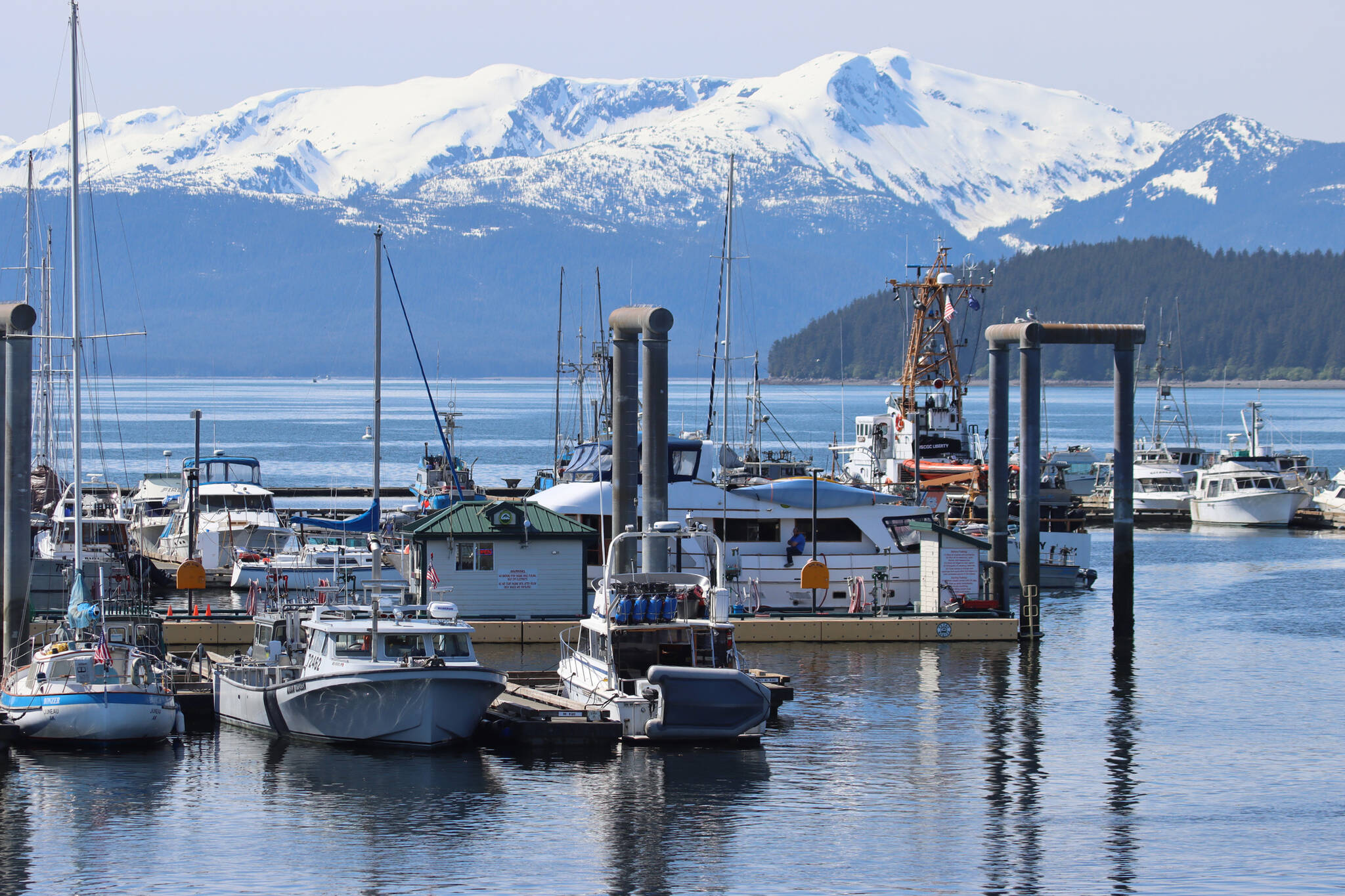
Last year’s boating casualties were down from 2020’s nationwide spike, according to the Coast Guard’s 2021 Recreational Boating Statistics report.
Alaska, which doesn’t have a mandatory boating education requirement, is nevertheless seeing a lot of people learn safety voluntarily, said Joe McCullough, the state’s boating law administrator for the Division of Parks and Outdoor Recreation.
“We’re heading in the right direction. We’re seeing more people take classes,” McCullough said in an interview. “The partners, the attitudes — I think there’s a cultural shift and I hope people keep it up.”
There were only 14 boating fatalities in Alaska last year, said District 17 boating safety specialist Mike Folkerts in an interview. Five of those casualties were in the Southeast, according to the report.
“We don’t have high numbers of fatalities,” Folkerts said. “We have high percentages because we have a low population.”
Of the 658 deaths for recreational boaters in 2021 across the U.S. and its far-flung territories, the highest total was Florida with 61, followed by Texas with 58, according to the report.
“Our numbers are never that high. Anything in the 20s range is high for us. But that’s nothing for somewhere like Florida, California, Michigan,” McCullough said. “Overall we’ve seen a marked decrease from when the boating safety act was passed in 1998. We were averaging close to 30 fatalities a year. Now we’re closer to 15 a year.”
[Boating safety, better lake than never]
Through knowledge, seapower
Both McCullough and Folkerts pointed out how programs like Kids Don’t Float are reflected in Alaska’s flotation device use numbers and in declining casualties over the years.
“Our (life jacket) wear rate for 13-18 year olds is 4-5 times the national average. That was not the case in 2000,” McCullough said. “Now, we’re seeing it go to adults. Those kids are growing. It’s like seatbelts. We’re seeing a change in the culture.”
Casualties have been shifting from motorboats to more paddlecraft, such as stand-up paddleboards, kayaks and canoes, Folkerts said.
“I base our programs around our fatality demographics,” Folkerts said. “That’s why we’re shifting a little more toward paddlecraft.”
Paddlecraft are not required to be registered in the state of Alaska, which is also one of the only states without a mandatory boater safety education program, Folkerts said. However, many adults have voluntarily reached out for boater safety courses, McCullough said.
“Education isn’t mandatory but we have people begging for training. I was afraid we were going to lose staff this spring because we were so overworked. We were kind of prepared for the schools to reengage after two years,” McCullough said. “That was what put them over the top — all the requests for adult training.”
Alaska’s first recreational boater casualty of the year was a kayaker near Chitina, according to Folkerts — a very late date in the year for the first casualty, especially considering the number of people on the water.
“I was pleasantly surprised that was our first fatal, given how many people on the water,” McCullough said. “We’re seeing more boating in the last couple years than we saw before.”
Both the Coast Guard and the state try to train as many people as request training as possible, McCullough said, even if it’s in a hard-to-reach location.
“We don’t turn down any reasonable request. We don’t turn down these communities just because they’re small or expensive,” McCullough said. “We don’t show up uninvited. We’re always demand-based; we’re invited out there. So if Sand Point or Clark’s Point ask, we show up.”
The next major step would be a state regulation mandating boater education, Folkerts said.
“We’re doing what we can with what we have,” Folkerts said. “Once we get some mandatory education, that’s really going to make a difference.”

• Contact reporter Michael S. Lockett at (757) 621-1197 or mlockett@juneauempire.com.