
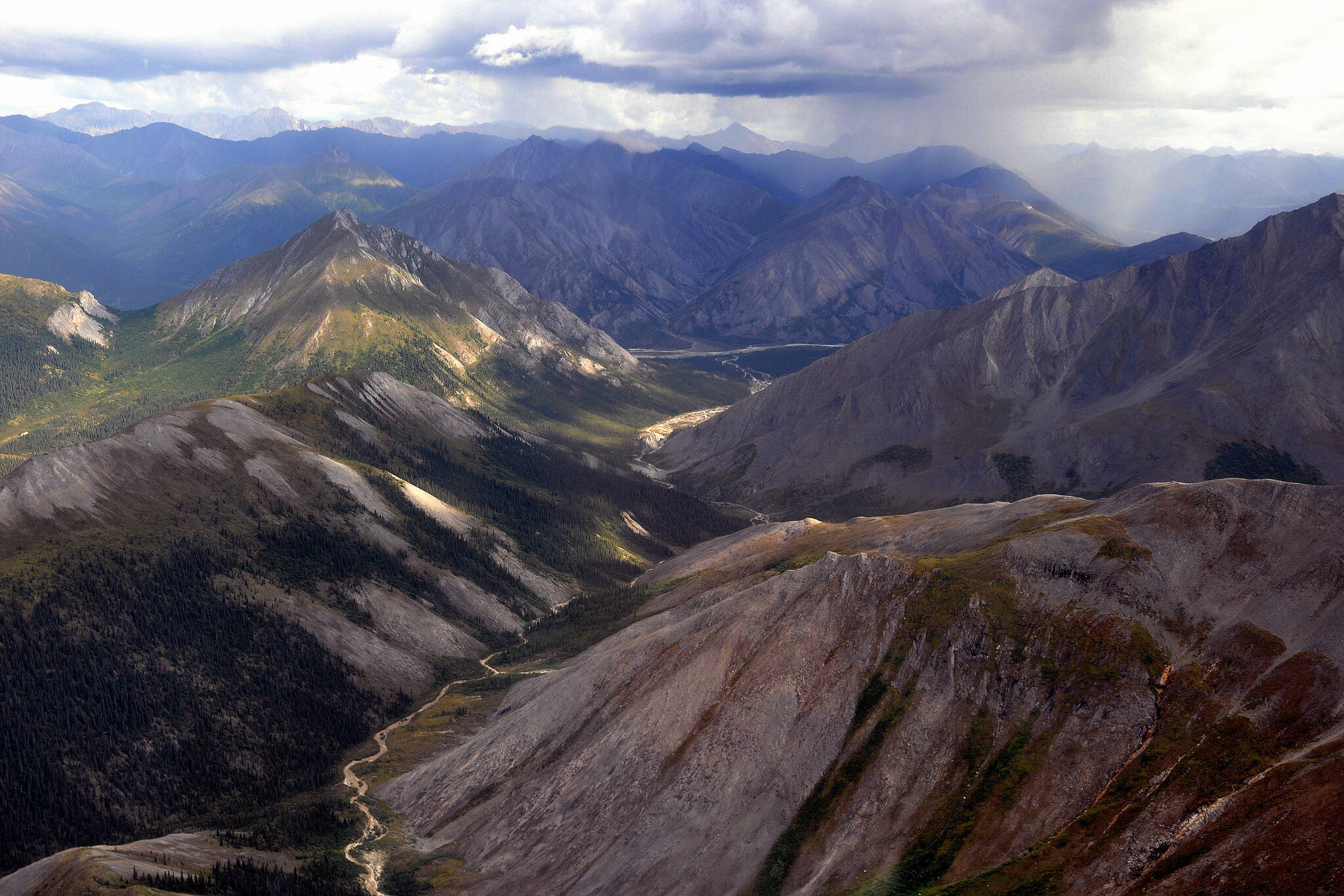
The Biden administration is expected to deny permission for a mining company to build a 211-mile industrial road through fragile Alaskan wilderness, handing a victory to environmentalists in an election year when the president wants to underscore his credentials as a climate leader and conservationist.
The Interior Department intends to announce as early as this week that there should be “no action” on the federal land where the road known as the Ambler Access Project would be built, according to two people familiar with the decision who asked not to be named because they were not authorized to discuss the decision. A formal denial of the project would come later this year, they said.
The road was essential to reach what is estimated to be a $7.5 billion copper deposit buried under ecologically sensitive land. There are currently no mines in the area and no requests for permits have been filed with the government; the road was a first step.
Blocking the industrial road would be an enormous victory for opponents who have argued for years that it would threaten wildlife as well as Alaska Native tribes that rely on hunting and fishing.
Environmentalists, including many young climate activists, were infuriated last year by President Joe Biden’s decision to approve Willow, an $8 billion oil drilling project on pristine federal land in Alaska. The proposed road would be several hundred miles south of the Willow project.
The move comes as the Biden administration tries to find a balance between two different and sometimes opposing goals.
Biden is intent on bolstering clean energy in the United States to fight climate change. Ambler Metals, the mining venture behind the proposed road, has said the copper it seeks is critical to make wind turbines, photovoltaic cells and transmission lines needed for wind, solar and other renewable energy. But the president is also determined to conserve environmentally sensitive lands, and has been expanding the footprint of national monuments around the country while also blocking off some public lands from oil and gas drilling.
David Krause, the interim executive director of the National Audubon Society’s Alaska office, said protecting the wilderness around the Ambler area is a “huge deal.”
“This is one of the most ecologically intact and functional landscapes on the planet,” Krause said.
As proposed, the Ambler project would consist of a $350 million two-lane, all-season gravel road that would run through the Brooks Range foothills and the Gates of the Arctic National Park and Preserve, crossing 11 rivers and thousands of streams before it reached the site of a future mine.
The Interior Department found that a road would disturb wildlife habitat, pollute spawning grounds for salmon and threaten the hunting and fishing traditions of more than 30 Alaska Native communities. In its final analysis, the agency is expected to say that any version of an industrial road would “significantly and irrevocably” hurt the environment and tribal communities, the two people said.
“The caribou is struggling, the fish are struggling,” Julie Roberts-Hyslop, the first chief of the Tanana Tribe, said in an interview last year. A road would exacerbate those troubles, she said.
A spokesperson for the Interior Department declined to comment.
Kaleb Froehlich, the managing director of Ambler Metals, said the company was “stunned” that the Interior Department would deny the project.
“If true, this decision ignores the support of local communities for this project, while denying jobs for Alaskans and critical revenues for a region where youth are being forced to leave because of a lack of opportunity,” Froehlich said in a statement. He called it “an unlawful and politically motivated decision” and urged the government to reconsider.
Because Ambler Road would cut through federal land, it required a right of way permit from the Interior Department. The Trump administration approved the permit in 2020, citing the potential for the road to provide access to significant copper and cobalt deposits.
After Biden was elected, Interior secretary Deb Haaland ordered a new analysis, saying the road’s environmental impact had not been adequately studied. In October, her agency issued a draft review that found “significant deficiencies” in the Trump-era study.
For example, the new review identified 66 communities that could be impacted by the road, compared with 27 identified by the Trump administration. The review found that many of those communities depend on local caribou and fish and that an industrial road would harm the migration and survival rates of caribou that are already threatened by climate change.
It also found that building the road could speed the thawing of the permafrost, ground that has been frozen in some cases for hundreds or thousands of years. When permafrost melts, ground can become unstable, causing rockslides, floods and damage to Indigenous communities. Melting permafrost can also release carbon dioxide into the atmosphere, contributing to global warming.
“The ice-rich soils in the proposed corridors would warm and potentially thaw with or without construction,” the review found. “However, with construction, the site-specific area soils are anticipated to experience amplified or accelerated thawing,” the agency wrote.
Without the road, the copper deposits would likely remain untouched. The decision is expected to draw an angry backlash from Alaska’s two U.S. senators, both Republican, and its sole member of Congress, a Democrat, all of whom support the road.
Alaska leaders argue the Alaska National Interest Lands Conservation Act of 1980 guaranteed a right of way across federal lands for the proposed Ambler Road.
The Alaska Industrial Development and Export Authority, the state’s development bank, filed for federal permits to build the road in 2015 and has approved about $44.8 million toward the project. Ambler Metals has described the road as an “urgent” necessity to provide domestic minerals for national security and clean energy to address climate change.
It has estimated that the road and an associated mine would create more than 3,900 jobs in an area of high unemployment, while generating more than $300 million in annual wages, adding revenue to state and local coffers.
Tribes and environmental groups have questioned those assumptions as overly optimistic and said there are larger reserves in parts of the country that are less ecologically sensitive.
• This article originally appeared in The New York Times.
