
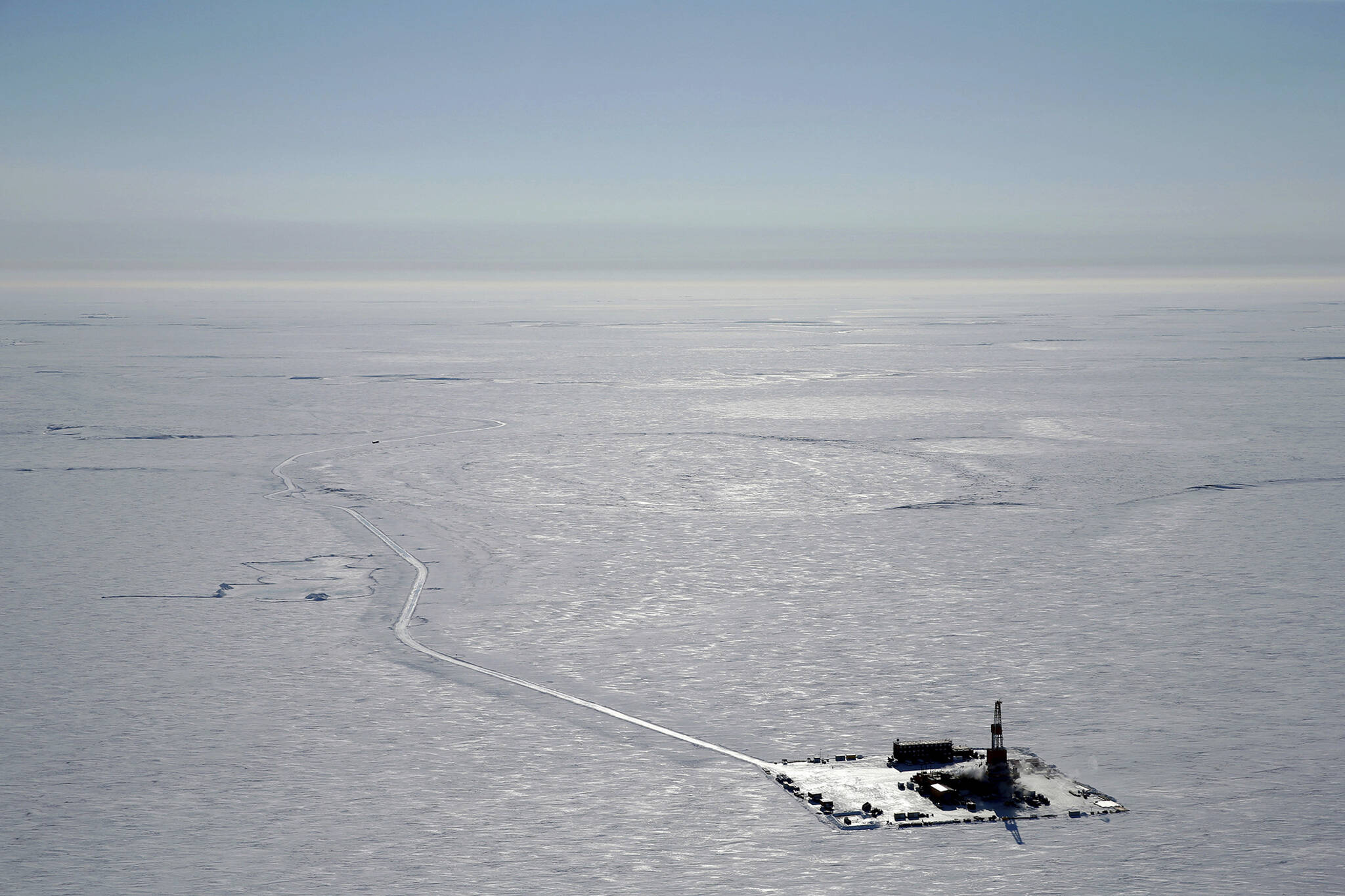
WASHINGTON — The Biden administration said Monday it is approving the major Willow oil project on Alaska’s petroleum-rich North Slope, one of President Joe Biden’s most consequential climate choices that is drawing condemnation from environmentalists who say it flies in the face of the Democratic president’s pledges.
The announcement comes a day after the administration, in a big move toward conservation, said it would bar or limit drilling in some other areas of Alaska and the Arctic Ocean.
Biden’s Willow plan would allow three drill sites initially, which project developer ConocoPhillips has said would include about 219 total wells. A fourth drill site proposed for the project would be denied. The company has said it considers the three-site option workable.
Houston-based ConocoPhillips will relinquish rights to about 68,000 acres of existing leases in the National Petroleum Reserve-Alaska.
[Reports: Willow approval expected]
Climate activists have been outraged that Biden appeared open to greenlighting the project, which they said put Biden’s climate legacy at risk. Allowing oil company ConocoPhillips to move forward with the drilling plan also would break Biden’s campaign promise to stop new oil drilling on public lands, they say.
The administration’s decision is not likely to be the last word, with litigation expected from environmental groups.
ConocoPhillips Alaska’s Willow project could produce up to 180,000 barrels of oil a day, create up to 2,500 jobs during construction and 300 long-term jobs, and generate billions of dollars in royalties and tax revenues for the federal, state and local governments, the company says.
The project, located in the federally designated National Petroleum Reserve-Alaska, enjoys widespread political support in the state. Alaska Native state lawmakers recently met with Interior Secretary Deb Haaland to urge support for Willow.
But environmental activists have promoted a #StopWillow campaign on social media, seeking to remind Biden of his pledges to reduce planet-warming greenhouse gas emissions and promote clean energy.
Christy Goldfuss, a former Obama White House official who now is a policy chief at the Natural Resources Defense Council, said she was “deeply disappointed” at Biden’s decision to approve Willow, which NRDC estimates would generate planet-warming greenhouse gas emissions equivalent to more than 1 million homes.
“This decision is bad for the climate, bad for the environment and bad for the Native Alaska communities who oppose this and feel their voices were not heard,” Goldfuss said.
Anticipating that reaction among environmental groups, the White House announced on Sunday that Biden will prevent or limit oil drilling in 16 million acres in Alaska and the Arctic Ocean. The plan would bar drilling in nearly 3 million acres of the Beaufort Sea — closing it off from oil exploration — and limit drilling in more than 13 million acres in the National Petroleum Reserve.
The withdrawal of the offshore area ensures that important habitat for whales, seals, polar bears and other wildlife “will be protected in perpetuity from extractive development,” the White House said in a statement.
The U.S. Bureau of Land Management, as part of an environmental review, advanced in February a development option for Willow calling for up to three drill sites initially, which it said would include about 219 total wells. ConocoPhillips Alaska said it considered that option workable.
Alaska’s Republican U.S. senators warned any further limits could kill the project, rendering it uneconomic.
Alaska’s bipartisan congressional delegation met with Biden and his advisers in early March to plead their case for the project, while environmental groups rallied opposition and urged project opponents to place pressure on the administration.
City of Nuiqsut Mayor Rosemary Ahtuangaruak, whose community of about 525 people is closest to the proposed development, has been outspoken in her opposition, worried about impacts to caribou and her residents’ subsistence lifestyles. The Naqsragmiut Tribal Council, in another North Slope community, also raised concerns with the project.
But there is “majority consensus” in the North Slope region supporting the project, said Nagruk Harcharek, president of the group Voice of the Arctic Iñupiat, whose members include leaders from across much of that region.
The conservation actions announced Sunday complete protections for the entire Beaufort Sea Planning Area, building upon President Barack Obama’s 2016 action on the Chukchi Sea Planning Area and the majority of the Beaufort Sea, the White House said.
Separately, the administration moved to protect more than 13 million acres within the petroleum reserve, a 23-million acre chunk of land on Alaska’s North Slope set aside a century ago for future oil production.
The Willow project is within the reserve, and ConocoPhillips has long held leases for the site. About half the reserve is off limits to oil and gas leasing under an Obama-era rule reinstated by the Biden administration last year.
Areas to be protected include the Teshekpuk Lake, Utukok Uplands, Colville River, Kasegaluk Lagoon and Peard Bay Special Areas, collectively known for their globally significant habitat for grizzly and polar bears, caribou and hundreds of thousands of migratory birds.
Abigail Dillen, president of the environmental group Earthjustice, welcomed the new conservation plan, but said if the Biden administration believes it has authority to limit oil development in the petroleum reserve, officials should extend those protections to the Willow site.
“They have the authority to block Willow,” she said in an interview Sunday.
