
The Biden administration released a long-awaited study Wednesday that recommends allowing a major oil development on Alaska’s North Slope that supporters say could boost U.S. energy security but that climate activists decry as a “carbon bomb.”
The move — while not final — drew immediate anger from environmentalists who saw it as a betrayal of the president’s pledges to reduce carbon emissions and promote clean energy sources.
ConocoPhillips Alaska had proposed five drilling sites as part of its Willow project, and the approach listed as the preferred alternative by the U.S. Bureau of Land Management in the report calls for up to three drill sites initially. Even as the land agency released its report, the U.S. Interior Department said in a separate statement that it has “substantial concerns” about the project and the report’s preferred alternative, “including direct and indirect greenhouse gas emissions and impacts to wildlife and Alaska Native subsistence.”
The Bureau of Land Management, which falls under the Interior Department, also said in the report that identifying a preferred alternative “does not constitute a commitment or decision” and notes it could select a different alternative in the final decision.
Opponents have raised concerns about the impacts of oil development on wildlife, such as caribou, and efforts to address climate change.
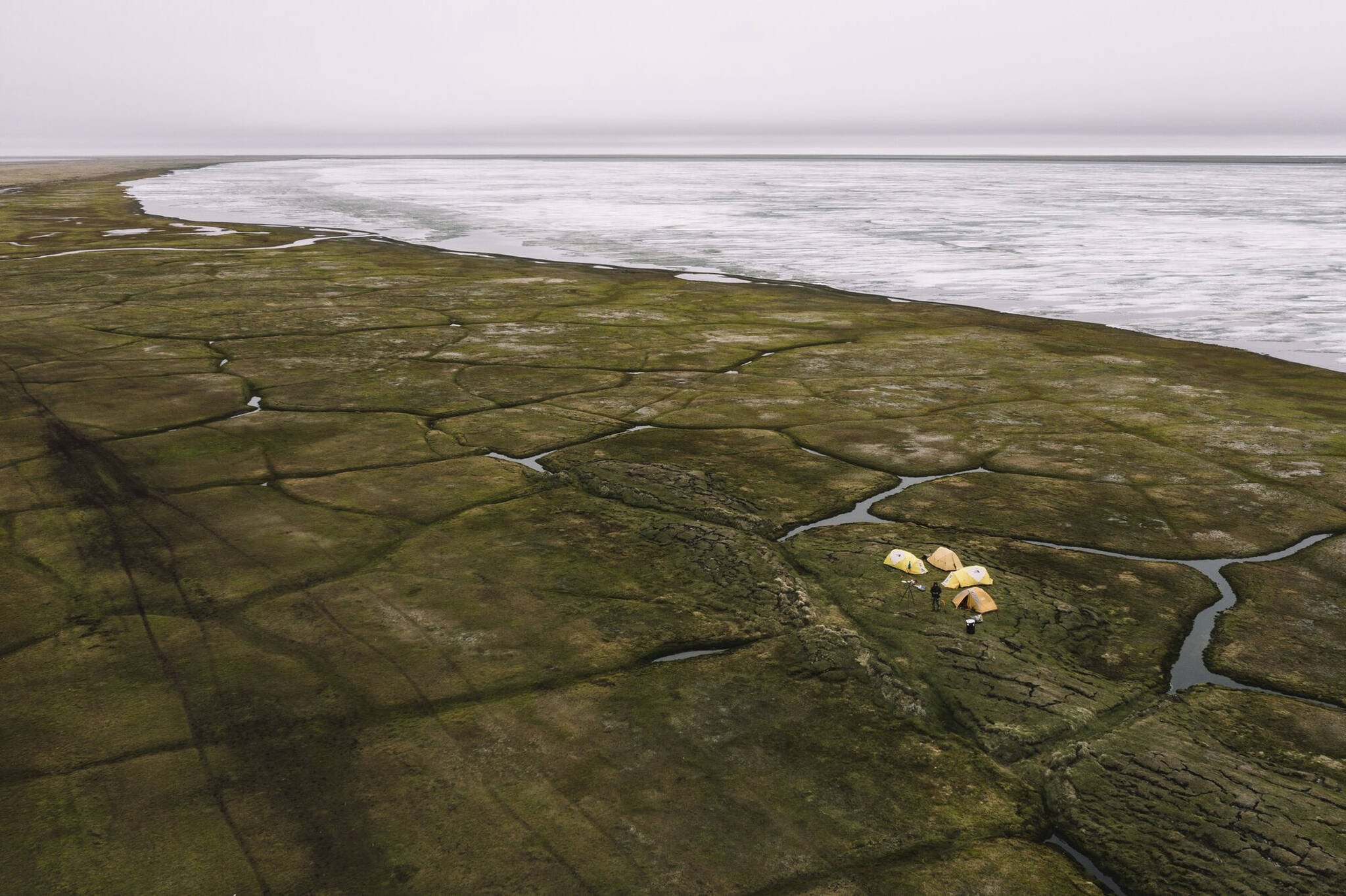
The project is in the National Petroleum Reserve-Alaska, a vast region roughly the size of Indiana on Alaska’s resource-rich North Slope. ConocoPhillips Alaska says the project, at its peak, could produce an estimated 180,000 barrels of oil a day.
The Arctic Slope Regional Corporation, an Alaska Native corporation, and the Iñupiat Community of the Arctic Slope joined the North Slope Borough in praising the proposed alternative and calling on the administration to move ahead on the project. In a joint statement, they said advancing the project “is critical for domestic energy independence, job security for Alaskans and the right of Alaska Natives to choose their own path.”
Other Alaska Native groups have expressed concerns.
Leaders of the Native Village of Nuiqsut and city of Nuiqsut in a recent letter said they do not feel like the Bureau of Land Management is listening. The community is about 36 miles (58 kilometers) from the Willow project, in a remote region of Alaska’s far north.
The Bureau of Land Management’s “engagement with us is consistently focused on how to allow projects to go forward; how to permit the continuous expansion and concentration of oil and gas activity on our traditional lands,” Native Village of Nuiqsut President Eunice Brower and City of Nuiqsut Mayor Rosemary Ahtuangaruak wrote in a letter dated last week.
ConocoPhillips has estimated the project would create as many as 2,000 jobs during construction and 300 permanent jobs and generate between $8 billion and $17 billion in federal, state and local revenue in an area more than 600 miles (965 kilometers) from Anchorage.
Erec Isaacson, the president of ConocoPhillips Alaska, said in a statement the company believes the project will “benefit local communities and enhance American energy security while producing oil in an environmentally and socially responsible manner.” He said the review process “should be concluded without delay.”
The members of Alaska’s congressional delegation — Republican Sens. Lisa Murkowski and Dan Sullivan and Rep. Mary Peltola, a Democrat — all said they welcomed Wednesday’s environmental review and urged the administration to allow the project to move forward.
The project would bring miles of roads and hundreds of miles of pipeline to the area, disrupt animal migration patterns and erode habitat if it goes forward, said Earthjustice, an environmental group.
Jeremy Lieb, an attorney with the group, said Willow is currently the largest proposed oil project in the U.S. He said it is “drastically out of step with the Biden administration’s goals to slash climate pollution and transition to clean energy.” President Joe Biden campaigned on pledges to end new drilling on public lands and has set an ambitious goal to cut greenhouse gas emissions in half by 2030.
Biden “will be remembered for what he did to tackle the climate crisis, and as things stand today, it’s not too late for him to step up and pull the plug on this carbon bomb,” Lieb said.
U.S. Interior Secretary Deb Haaland, who fought the Willow project as a member of Congress, has the final decision on whether to approve it, although top White House climate officials are likely to be involved. Haaland has multiple options, including outright approval or rejection or a middle ground that allows some drilling but blocks other development. A final decision is expected no sooner than early March.
Federal agencies have within the last week made two major decisions around resources in Alaska. Last week, the U.S. Department of Agriculture said it was reinstating restrictions on road-building and logging on the country’s largest national forest in southeast Alaska, the Tongass National Forest.
And on Tuesday, the U.S. Environmental Protection Agency said it was exercising its so-called veto authority under the federal Clean Water Act to block plans for a proposed copper and gold mine in a mineral-rich area of southwest Alaska because of concerns about its environmental impact on a rich Alaska aquatic ecosystem that supports the world’s largest sockeye salmon fishery.
