
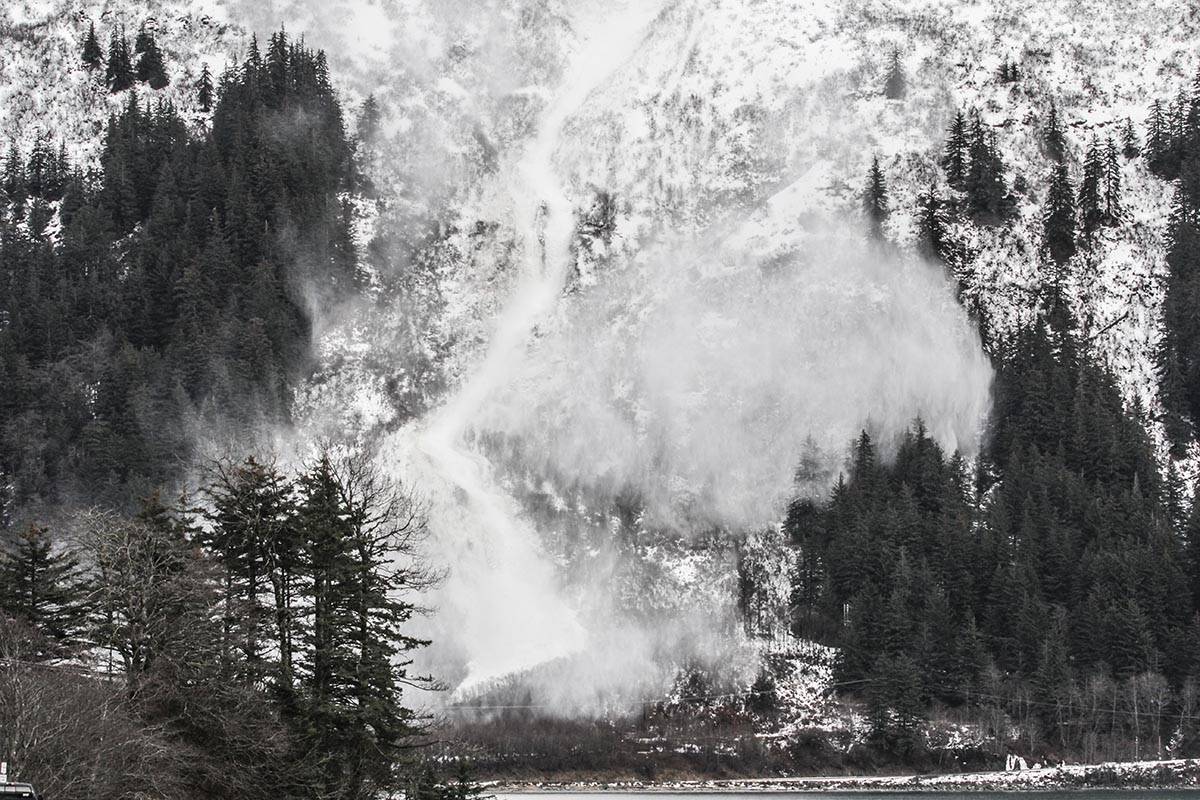
The Alaska Department of Transportation uses the DaisyBell device to precisely trigger controlled avalanches above Thane Road, reducing the chances of a catastrophic natural avalanche, Feb. 11, 2020. (Michael S. Lockett | Juneau Empire)

The Alaska Department of Transportation uses the DaisyBell device to precisely trigger controlled avalanches above Thane Road, reducing the chances of a catastrophic natural avalanche, Feb. 11, 2020. (Michael S. Lockett | Juneau Empire)

An ounce of prevention: Alaska DOT triggers avalanches above Thane Road

A small noise with a big effect: using tech to trigger avalanches

An ounce of prevention is worth a pound of cure, an old saying goes. The same must certainly be true of avalanches.

“We had a significant amount of snow in the past 24 hours,” said Pat Dryer, an avalanche forecaster for the Alaska Department of Transportation & Public Facilities. “It’s all snow above 1,100 feet and above. This is not out of the ordinary for our snowpack in any way. We try to do this as much as we can when the weather warrants.”

DOT has been doing avalanche reduction for Juneau since the ‘70s, Dryer said. Juneau is one of the vanishingly few urban avalanche threat areas in the country.

Since 2018, DOT has been using a device called the DaisyBell, carried beneath a helicopter, called slingloading, as a more precise and inexpensive alternative than the previous option, a 105mm howitzer fired from Sandy Beach.

“It mixes hydrogen and oxygen to make an explosion,” Dryer said, speaking about the DaisyBell. “We’re more mobile with it. We can place the shot anywhere in the slide path.”
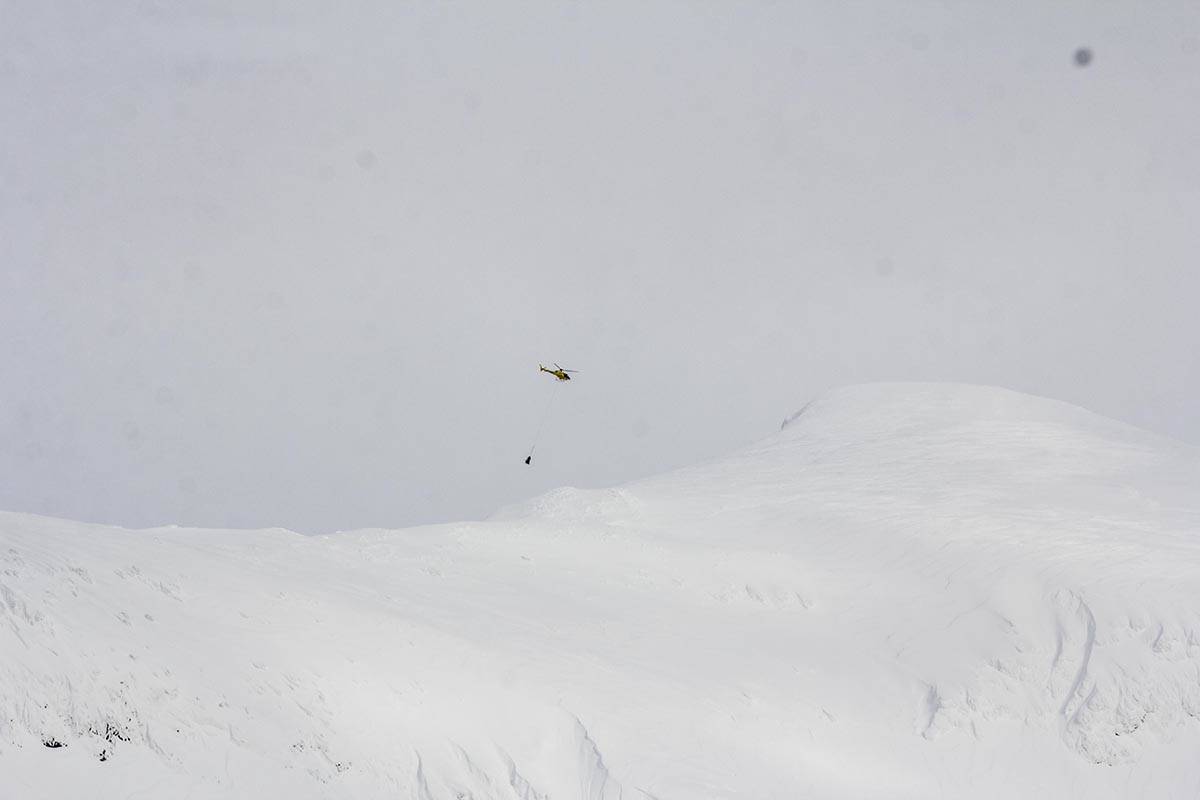
The Alaska Department of Transportation uses the DaisyBell device to precisely trigger controlled avalanches above Thane Road, reducing the chances of a catastrophic natural avalanche, Feb. 11, 2020. (Michael S. Lockett | Juneau Empire)

The Alaska Department of Transportation uses the DaisyBell device to precisely trigger controlled avalanches above Thane Road, reducing the chances of a catastrophic natural avalanche, Feb. 11, 2020. (Michael S. Lockett | Juneau Empire)

The flight Tuesday was flown due to optimal weather conditions, with clear, sunny skies being good for flight operations. Dryer says that they keep an eye on the conditions of the snowpack and with the new dependence on flight operations to reduce the avalanche hazard, the weather.

“A lot of that with the DaisyBell is based on flyable weather,” Dryer said. “We’re just a little more dependent on the weather. We try to give Thane residents at least 24-48 hours notice.”

While firing the 105 was less weather-dependent, Dryer said, each shot from the DaisyBell costs less than $5, and they can employ it with considerably more precision.

“The helicopter is a lot less expensive than using the howitzer,” Dryer said.

Coastal Helicopters contracts with DOT to fly the DaisyBell, which doesn’t require any particular training beyond flying with slingloads, as opposed to artillery, which requires a certain level of specialized training and ordinance.

According to Dryer, there are only five DaisyBells in the United States, three of which are in Alaska and two of which are right here in Juneau. One is with DOT and the other is with Alaska Electric Light and Power.

More in News

The northern lights are seen from the North Douglas launch ramp late Monday, Jan. 19. A magnetic storm caused unusually bright northern lights Monday evening and into Tuesday morning. (Chloe Anderson/Juneau Empire)
Rare geomagnetic storm causes powerful aurora display in Juneau

The northern lights were on full display Monday evening.

teaser
Juneau activists ask Murkowski to take action against ICE

A small group of protesters attended a rally and discussion on Wednesday.

Cars pass down Egan Drive near the Fred Meyer intersection Thursday morning. (Clarise Larson / Juneau Empire file photo)
Safety changes planned for Fred Meyer intersection

DOTPF meeting set for Feb. 18 changes to Egan Drive and Yandukin intersection.

Herbert River and Herbert Glacier are pictured on Nov. 16, 2025. (Mari Kanagy / Juneau Empire)
Forest Service drops Herbert Glacier cabin plans, proposes trail reroute and scenic overlook instead

The Tongass National Forest has proposed shelving long-discussed plans to build a… Continue reading

A tsunami is not expected after a 4.4-magnitude earthquake northwest of Anchorage Wednesday, Feb. 4, 2026. (U.S. Geological Survey)
No tsunami expected after 4.4-magnitude earthquake in Alaska

U.S. Geological Survey says 179 people reported feeling the earthquake.

ORCA Adaptive Snowsports Program staff member Izzy Barnwell shows a man how to use the bi-ski. (SAIL courtesy photo)
Adaptive snow sports demo slides to Eaglecrest

Southeast Alaska Independent Living will be hosting Learn to Adapt Day on Feb. 21.

Cars drive aboard the Alaska Marine Highway System ferry Hubbard on June 25, 2023, in Haines. (Photo by James Brooks)
Alaska’s ferry system could run out of funding this summer due to ‘federal chaos problem’

A shift in state funding could help, but a big gap likely remains unless a key federal grant is issued.

Photo by James Brooks/Alaska Beacon
U.S. Sen. Dan Sullivan stands with acting Coast Guard Commandant Adm. Kevin Lunday during the after the commissioning ceremony for the Coast Guard icebreaker Storis on Sunday, Aug. 10, 2025, in Juneau, Alaska.
Coast Guard’s new Juneau base may not be complete until 2029, commandant says

Top Coast Guard officer says he is considering whether to base four new icebreakers in Alaska.

Students from the Tlingit Culture Language and Literacy program at Harborview Elementary School dance in front of elders during a program meeting in 2023. (Clarise Larson / Juneau Empire file photo)
Sealaska adds more free Tlingit language courses

The new course is one of many Tlingit language courses offered for free throughout the community.

Most Read