
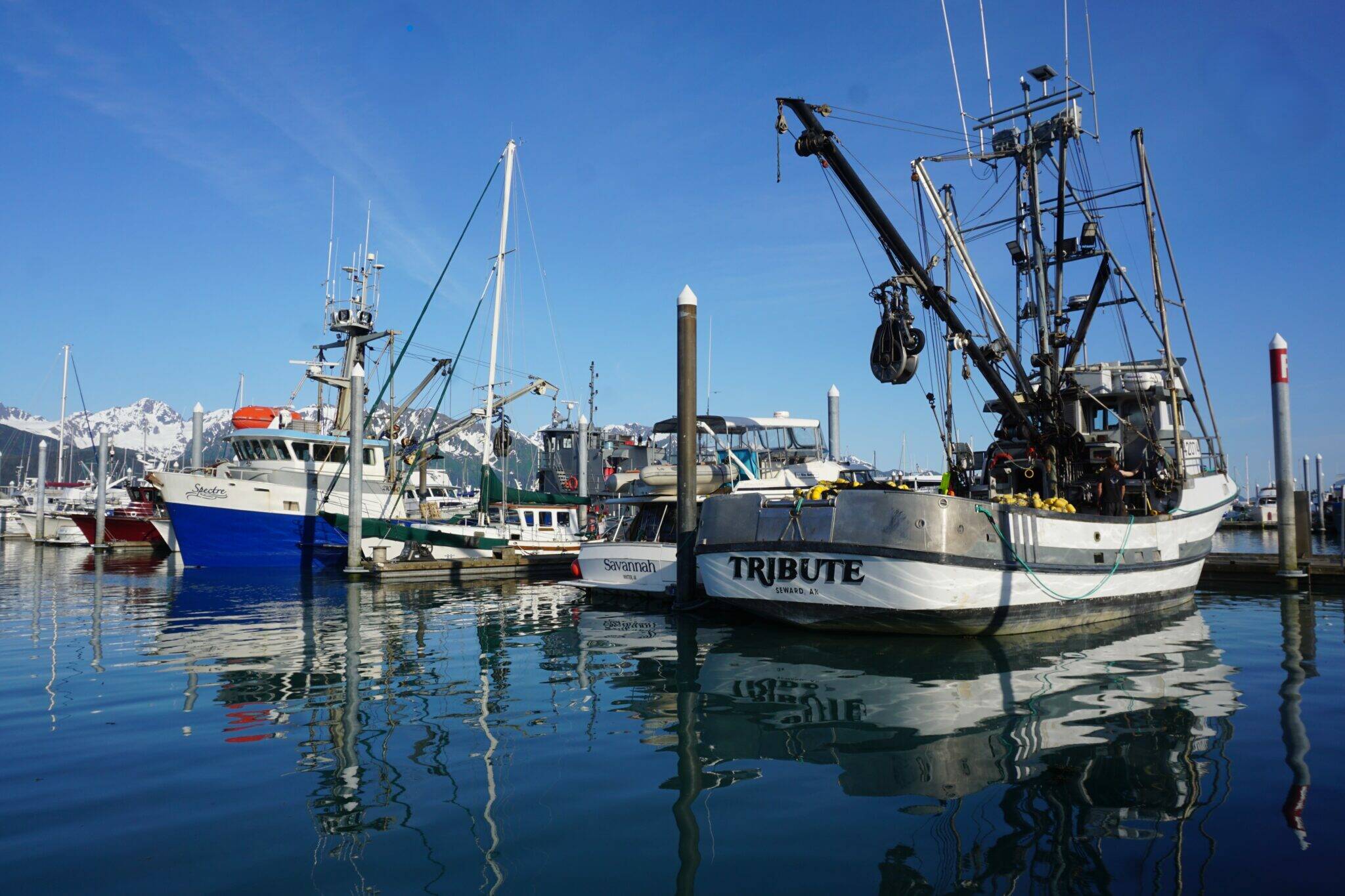
A variety of market forces combined with fishery collapses occurring in a rapidly changing environment caused Alaska’s seafood industry to lose $1.8 billion from 2022 to 2023, a new federal report said.
The array of economic and environmental challenges has devastated one of Alaska’s main industries, said the report, issued by the National Oceanic and Atmospheric Administration. And the losses extend beyond economics, casting doubt on prospects for the future, the report said.
“For many Alaskans the decline of their seafood industry affects their pocketbooks, presents food security concerns, and impacts their way of life, sense of place, community, and identity. In the face of evolving climate-driven impacts to ecosystems and fisheries in the region, these recent market disruptions undermine the capacity of all segments of the seafood industry and associated fishing communities to be resilient and survive in fisheries now and in the future,” the report said.
The losses also extend beyond Alaska.
Nationwide, Alaska’s seafood industry woes caused the loss from 2022 to 2023 of more than 38,000 jobs and a $4.3 billion decline in total U.S. output, the report said. There was also a loss of $269 million in combined state and local tax revenues, the report said. The states most affected beyond Alaska were those on the West Coast.
The report breaks down the dollar losses.
For harvesters, lower dockside prices, higher costs and reduced catches resulted in a $617 million decline from 2022 to 2023 in payments for fish delivered from their vessels, a first payment known as ex-vessel value. For the sales level known as first wholesale — the first step beyond ex-vessel sales — the year-to-year loss was about $1.2 billion, the report said. Added together, those year-over-year losses totaled $1.8 billion.
The factors causing the losses were numerous.
Among them: direct competition from massive Russian harvests, closure of processing plants, trade challenges created by a high dollar and numerous tariffs, high fuel and labor costs, residual effects of the COVID-19 pandemic, and the lack of any kind of federal revenue insurance program for fishers that is similar to that available from the U.S. Department of Agriculture for farmers.
Commercially important fish populations have been battered by successive marine heat waves in the Gulf of Alaska and Bering Sea, affecting salmon and crab stocks, the report noted. Fishery collapses that led to harvest disruptions have been linked to climate change, the report said.
The Alaska seafood problems have exacerbated some social inequities and even contributed to physical health problems, the report said.
The burden is borne disproportionately by residents of small and mostly Native communities who are dependent on fishing income and on fish as a dietary staple and cultural touchstone, the report said.
Fishers have also admitted that they sometimes try to harvest in dangerous weather to make up for losses, thus putting their safety at risk, or neglect medical problems because they lack the money to pay for treatment, the report said.
There have been some government responses to the multifaceted Alaska seafood industry crisis. One mentioned in the new NOAA report is a newly created Alaska legislative task force that is due to make policy recommendations by January. The report also cites the numerous disaster-aid infusions tallied at $385 million over recent years at the time the report was compiled, with more funding pending to come, from the Department of Commerce, which oversees NOAA.
However, none of the losses caused by global market forces are eligible for federal disaster aid, the report noted.
While much of the local and state-level debate over fisheries in Alaska has focused on the interception of salmon and other fish that are caught when other species are targeted, the report mentioned bycatch only once. If put more focus on economic forces affecting the seafood industry.
• Yereth Rosen came to Alaska in 1987 to work for the Anchorage Times. She has reported for Reuters, for the Alaska Dispatch News, for Arctic Today and for other organizations. She covers environmental issues, energy, climate change, natural resources, economic and business news, health, science and Arctic concerns. This article originally appeared online at alaskabeacon.com. Alaska Beacon, an affiliate of States Newsroom, is an independent, nonpartisan news organization focused on connecting Alaskans to their state government.
