
As time runs out for Alaska lawmakers to address a recent court ruling that rattled the state’s correspondence education programs, a proposal has emerged for state officials to track their spending for the first time in a decade.
The Alaska Department of Education and Early Development does not track whether or not correspondence school allotment money is spent constitutionally. That duty falls to districts, said Commissioner Deena Bishop.
“That is not a function of the Department of Education,” she said, adding that there are no regulations or statutory requirements that it do so.
Bishop said there are no reporting requirements, either, so districts do not have to give an account of the spending back to the state. That means the education department does not have a tally of how much state money has gone to materials from private organizations in the last decade.
That could change if lawmakers adopt a proposal aimed at stabilizing the programs in the wake of a Superior Court ruling that threw out two provisions of the law that governs the program. House Bill 400, a proposal from the House Education Committee, would temporarily set guidelines for the programs that allow two key components of the correspondence program, individualized learning plans and allotments of state money for educational materials, to continue.
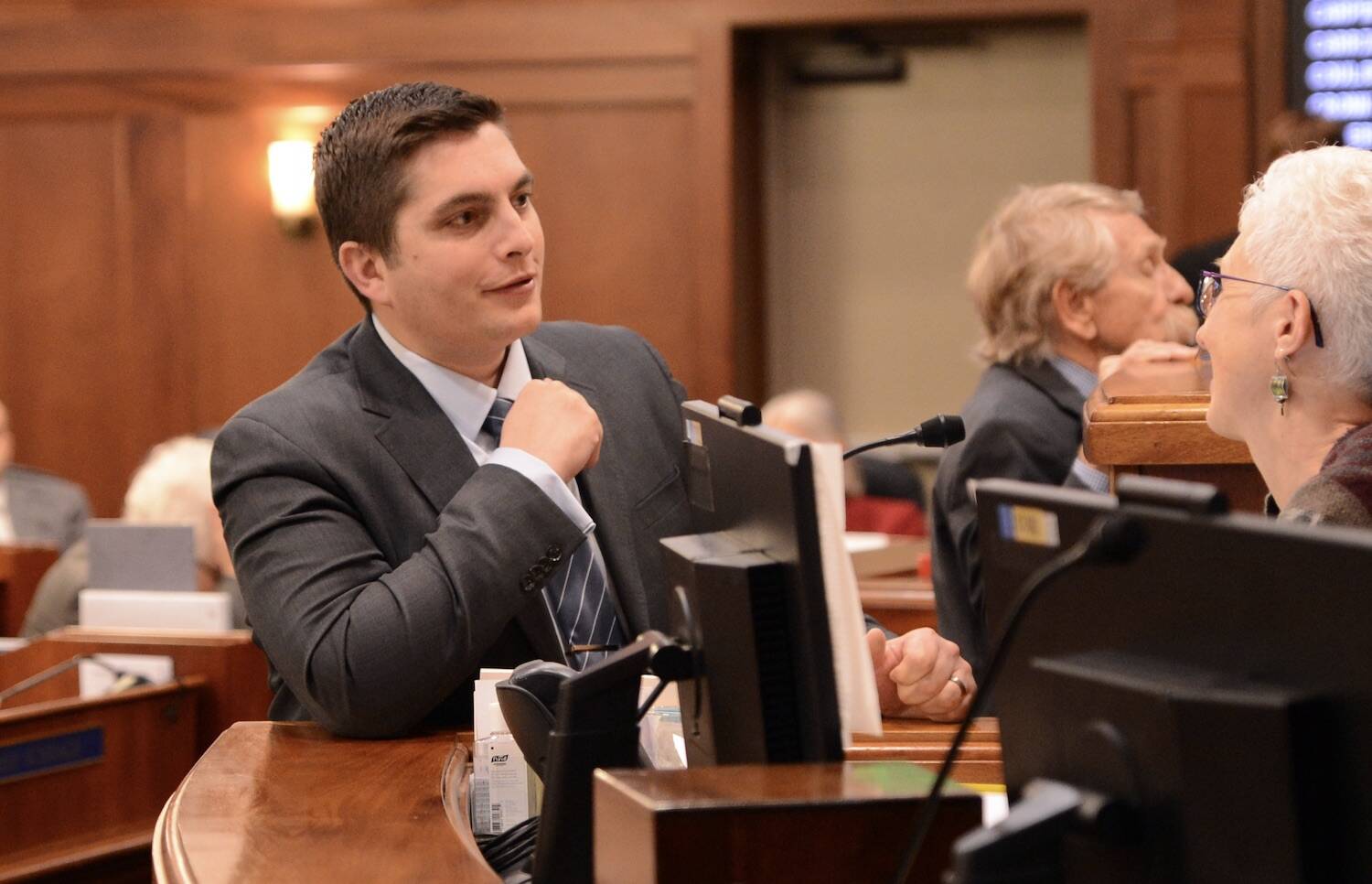
House Education Committee Co-Chair Rep. Justin Ruffridge, R-Soldotna, said his intent is that it would also establish parameters to conduct audits. “DEED used to perform audits — regularly, actually — of correspondence programs,” he said, and added that the requirement was taken out of statute in 2014.
Superior Court Judge Adolf Zeman ruled that state allotment money could not be used to pay for private school tuition, a growing practice following changes to state law that green-lit spending at private and religious institutions. The ruling raised the question of how much state allotment money went to private school tuition.
Ruffridge’s office could only come up with an anecdotal answer in the absence of state oversight. “We’ve done a lot of phone calls with different programs. They don’t think it’s a large sum. But it’s more than zero. So, more than zero is — needs to be looked at,” he said.
It is now up to the Supreme Court to decide what kind of spending is constitutional for these programs in Alaska. The language in HB 400 is such that the law would be relevant even if a constitutional amendment to allow allotment spending on religious materials, which has been proposed by members of the House, were approved. The legislation would sunset at the beginning of next July.
The Senate has also proposed a solution, Senate Bill 266, which would also preserve allotments and learning plans. It differs from the House proposal in that it proposes additional student testing requirements and allotment spending restrictions.
Gov. Mike Dunleavy and Bishop have indicated they favor the House version. Bishop praised its “simple language” and said she has been in communication with the state’s correspondence program principals to keep them apprised of the potential changes and the department’s position.
The Supreme Court has scheduled a June 25 court date to hear the state’s appeal to the ruling, five days before Zeman’s ruling would take effect. Dunleavy has indicated he may call a special session of the Legislature after the ruling to make clear what is available through correspondence programs.
• Claire Stremple is a reporter based in Juneau who got her start in public radio at KHNS in Haines, and then on the health and environment beat at KTOO in Juneau. This article originally appeared online at alaskabeacon.com. Alaska Beacon, an affiliate of States Newsroom, is an independent, nonpartisan news organization focused on connecting Alaskans to their state government. Reporter James Brooks contributed reporting to this article.
