
So many Alaskans are in crisis this month. Villages closed to outside travel. Restaurants and “non-essential” businesses shut down. People who have lost their jobs, who can’t find work. The growing threat of the COVID-19 pandemic. And one of the most difficult things about this time of necessary social distancing is that if we, or our loved ones, are suffering, it’s harder, or impossible, to be with them and support them — except at a distance.
One of the biggest helps for me, in all of this, is the vast outdoors and clean air, water and land we have all around us in Alaska. I’ve spent too much time recently staring at my computer, reading news articles and worrying about people I love. So this last weekend, during an incredibly welcome blue sky day in Southeast Alaska, my partner, our baby, our dog and I set out on a walk into some sunlit, snowy alpine meadows in the Tongass National Forest.
The area we chose to hike isn’t the most pristine in the Tongass. It was heavily logged and mined more than 100 years ago, and lower down, many trees are small and sickly looking. But the trail leads up into vast, open, snowy meadows. For that reason, it’s a favorite of cross country skiers, snow machiners, and us — walkers who carry snow shoes. To the right are views of Grandchild Ridge, a line of mountains where we camped on one of my recent birthdays. To the left is Lynn Canal and the perpetual view of islands and water that any Southeast Alaska hiker knows.

Bjorn Dihle carries 1-year-old Shiras Dihle on a recent hike. (Courtesy Photo | Mary Catharine Martin)
As we walked, I thought about a few things, but foremost among them was how lucky we are to live in Alaska, where this kind of outdoors experience is even a possibility. Down south and in some more crowded locations, people are being advised to avoid trails — so many people are flocking to them that it’s the opposite of social distancing.
The calendar may say it’s spring, but here in Southeast Alaska, we’re only just starting to see and hear the signs of it. Crocuses emerging from frozen soil. Flocks of pine siskins twittering overhead. The call of the varied thrush, which a Juneau poet I know once referred to as “the rusty gates of spring re-opening,” is something that fills me with contentment to hear. I keep waiting for the hooting of a sooty grouse; each year, I look forward to walking up into the forest in search of them and making grouse soup and grouse stock — a wilder and healthier version of chicken soup.
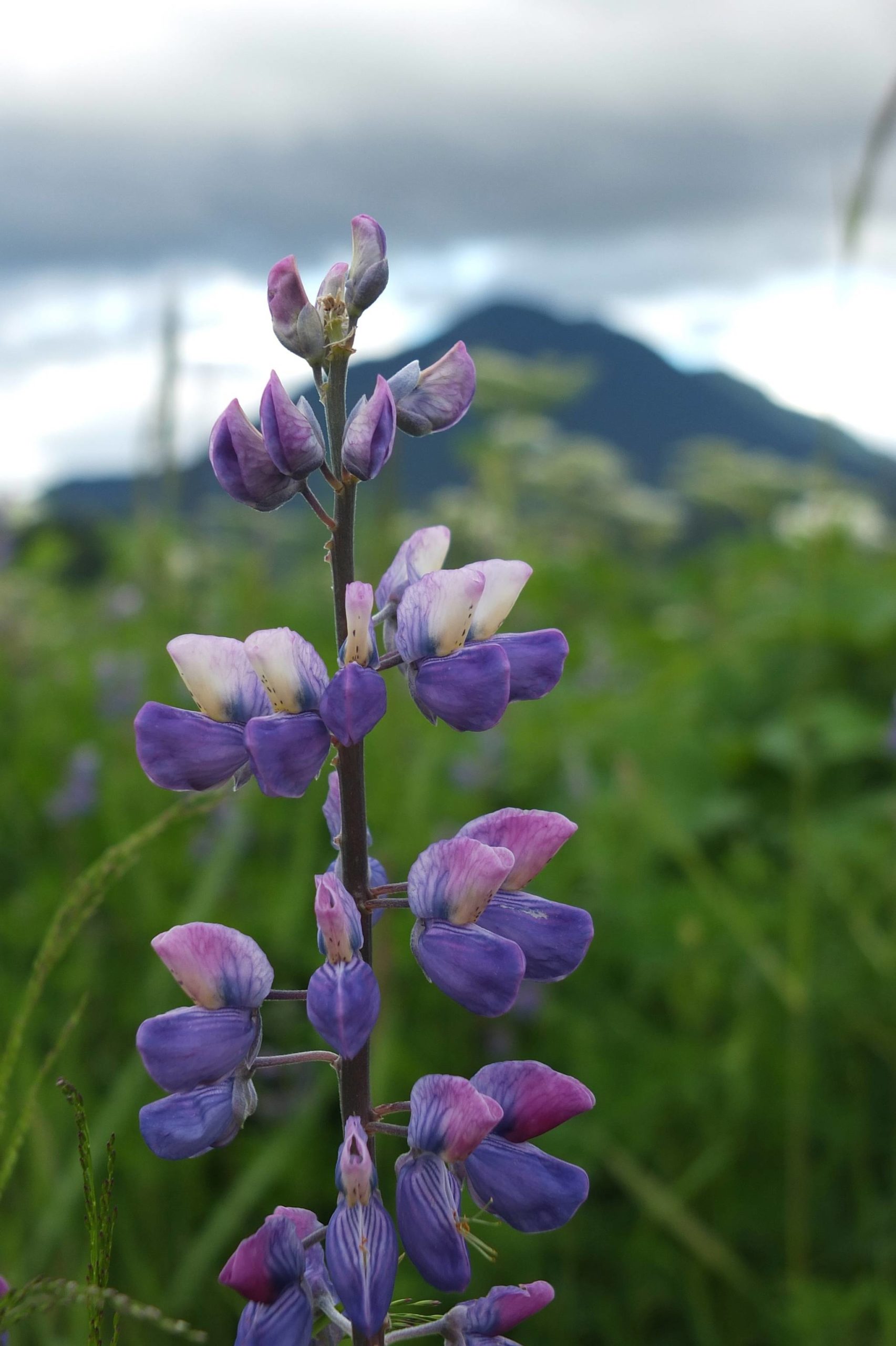
Lupine on a Southeast Alaska wetland during a recent summer. (Courtesy Photo | Catharine Martin)
We Alaskans, Americans and the rest of the world face uncharted waters in the months ahead. Hardworking Alaskans whose businesses, and jobs, are suddenly uncertain. Fisheries that might not be able to find essential workers for canneries and processors, and who face challenges trying to sell their fish once they catch it. Tourism-focused businesses that might not have clients. And that’s thinking only of the economic consequences of the pandemic, not the health consequences, which are very real and are growing. I’m worried for the elderly people I love. I’m worried for the many, and incredibly selfless and brave, family and friends who work in Alaska hospitals.
Some things, though, are constant as long as we allow them to be. Each spring, spruce tips will emerge from the trees. Sooty grouse will soon begin hooting in the Tongass again. And each year, millions upon millions of salmon will return to Alaska’s rivers and streams, feeding all of us — people, bears, wolves. Even the trees are fed by the nutrients they bring back. There’s something healing in this thought: that no matter what is happening in the world of humans, as long as we take care of and respect salmon and what they need to live, they will return to us. They will feed us. They will nourish us in so many ways, just as they always have.
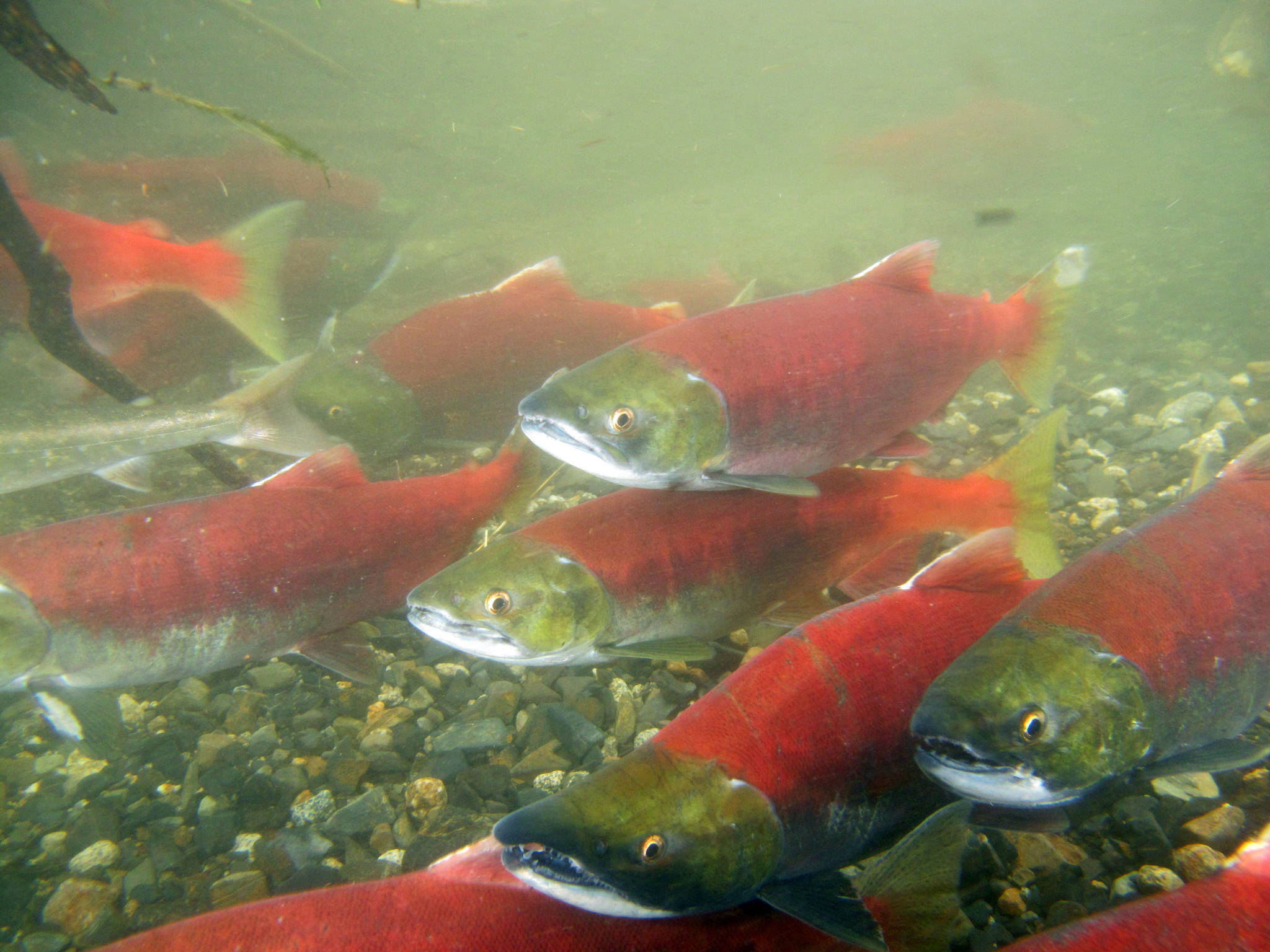
Sockeye salmon school in a small Bristol Bay creek in the summer of 2018. (Courtesy Photo | Mary Catharine Martin)
Even if we are quarantined, and we can only see spring arrive from our window, how lucky we are to live here, in this place, where we can breathe fresh air, drink clean water, hear the croaking of sandhill cranes as they return — and where, year after year, salmon swim up thousands of rivers and streams and feed us all.
• SalmonState is a free column provided by the namesake organization, which is an advocacy group that works to keep Alaska a place where wild salmon thrive. Mary Catharine Martin is the communications director of SalmonState.
