
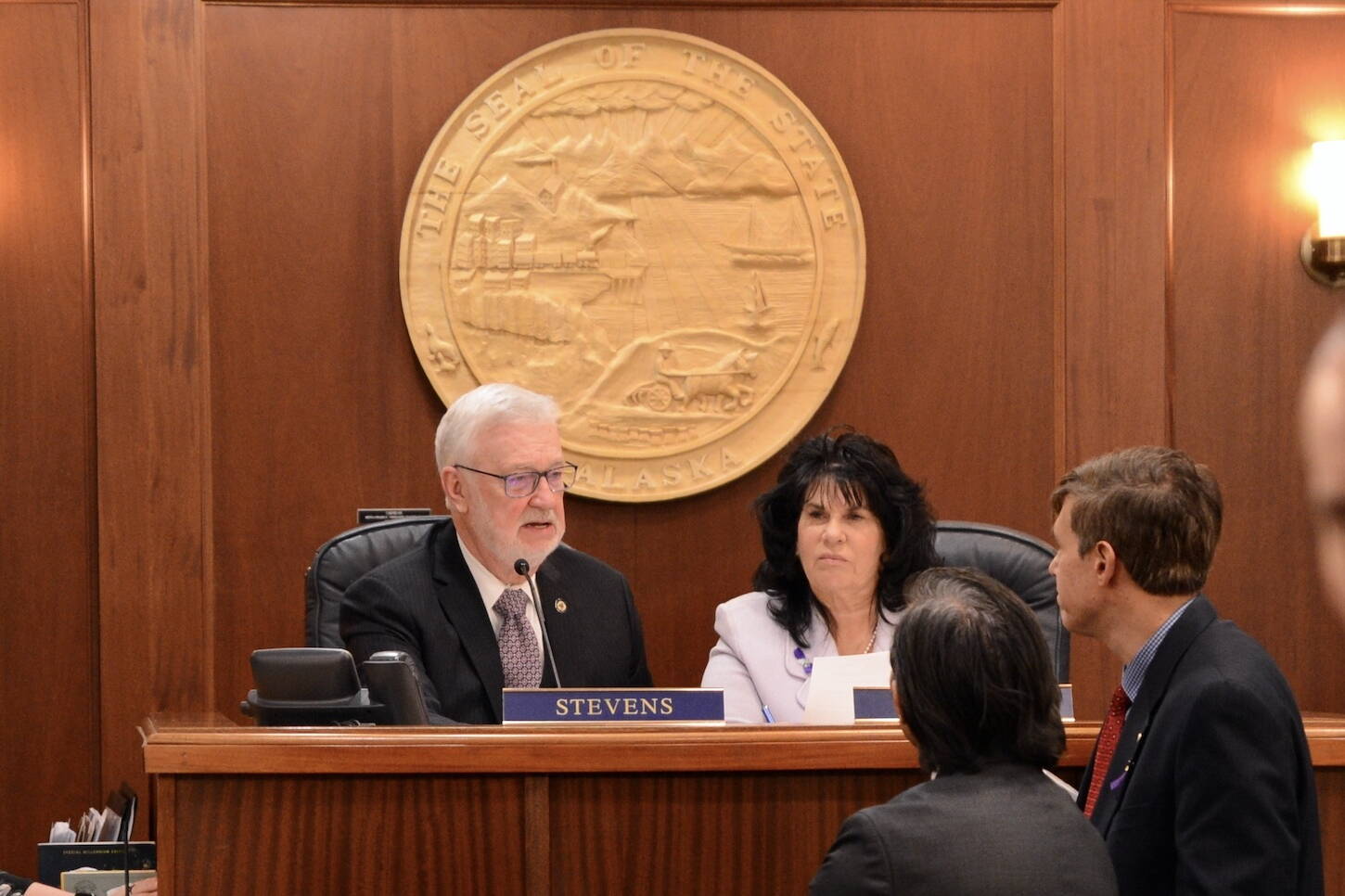
As the Alaska Senate prepared on Wednesday to launch a legislative blitz intended to quickly fix a looming problem with the state’s remote education programs, the Alaska House of Representatives signaled that it is so split that it may need more than a year to act on the topic.
House lawmakers spent more than three hours on Wednesday debating an informal declaration that asks Anchorage Superior Court Judge Adolf Zeman to postpone until June 30, 2025, the implementation of a court ruling that struck down two laws that govern programs used by 22,289 Alaska students.
The House voted 20-18 to pass the declaration, which states that the House should file a friend-of-the-court brief amid ongoing debates about whether Zeman’s ruling should be temporarily stayed from coming into effect.
This year’s regular legislative session is scheduled to end in three weeks, and members of the House said they don’t think they can address the issue in that time.
“It should be clear to the judiciary that we are divided and we do not have our collective act together … and we need more time,” said Rep. Ben Carpenter, R-Nikiski.
Some House members would like to maintain pre-existing practices, others are pursuing a constitutional amendment on the issue, and an additional group would like to focus public spending on learning materials. Many say they’d like to wait until the Alaska Supreme Court weighs in.
Members of the Senate’s majority caucus feel they can act quickly. Sen. Löki Tobin, D-Anchorage, said she has cleared the schedule of the Senate Education Committee in order to take up a bill that would allow the state’s correspondence programs to continue running without the struck-down law.
“We anticipate holding as many hearings as we need to have that piece of legislation thoroughly vetted and moved along in the process,” Tobin said. “I know that this is my leadership’s priority, so we will make sure that it gets through the Senate — I don’t anticipate headwinds — and this heads over to the House for consideration there.”
The three members of the Senate’s minority caucus say they’d like to wait for the Supreme Court: Zeman’s decision could impact other parts of the state education system, they believe, and those parts might need legislative attention as well.
Since Alaska’s territorial days, Alaska has run correspondence programs that allow students in remote places to receive a public education.
In recent decades, those programs — run by local school districts for either statewide or local use — have also become popular with parents who homeschool their children.
In 2016, following the enactment of a law written by then-Sen. Mike Dunleavy, the state revised the “allotment program” that distributes money to parents whose children are enrolled in correspondence programs. That money can be used for curriculum and equipment.
After Dunleavy became governor, the Alaska Department of Law issued a legal memo declaring that the Dunleavy-written law allows parents to use the state allotments for “one or two” classes at private and religious schools.
Jodi Taylor, the wife of attorney general Treg Taylor, published a widely read column explaining how she used the program to pay for tuition at her children’s religious school.
It isn’t clear how many of the state’s estimated 5,000 private-school students followed suit, but the state spends almost $120 million per year on correspondence programs, including the allotment program. After the state’s legal opinion was published, the state’s largest teachers’ union backed a lawsuit alleging that the allotments represented an unconstitutional use of public education funds.
More than a year later, Zeman issued an order siding with plaintiffs and concluding that there was no constitutional way to implement the Dunleavy-written law.
The state is appealing Zeman’s decision to the Alaska Supreme Court and has asked that it be taken up under the court’s fast-track process.
In the meantime, the state has asked Zeman to postpone the effective date of his ruling, fearing an instant stop to ongoing correspondence programs.
Unusually, plaintiffs have also asked Zeman to stay his ruling, but only until June 30, 2024, the end of this fiscal year. A longer stay, plaintiffs’ attorneys have said, runs the risk of the state continuing to spend money on an unconstitutional program.
The next state budget, already in an advanced stage of drafting within the Legislature, contains money for the allotment program. If a stay isn’t granted past July 1, that money might be unavailable, affecting parents’ plans for the 2024-25 school year.
Zeman’s ruling said in part that “if the legislature believes these expenditures are necessary — then it is up to them to craft constitutional legislation to serve that purpose — that is not this Court’s role.”
While some lawmakers have said they prefer to wait and see whether the Alaska Supreme Court agrees with Zeman, Tobin and other members of the Senate are taking Zeman’s declaration as an invitation to take action.
Operating under legal guidance from legislative attorneys, they’re preparing a bill that would put into law the regulations that governed the correspondence program before Dunleavy changed it.
Could the state school board also re-enact those regulations on an emergency basis?
“The short answer is yes,” legislative attorneys wrote.
But thus far, there’s been no action by the Department of Education and Early Development or the state school board, meaning legislative action is required for fast changes.
“I think it’s really important that we remember that the State Board of Education has the ability to propagate regulation to help stabilize the system right now,” Tobin said. And I will be continuing to encourage them to do so while also introducing legislation to provide guardrails.”
Speaking Wednesday, some members of the House advocated similar action.
“We have recourse right now to stabilize the system. We do not need another year. We can take action right now,” said Rep. Rebecca Himschoot, I-Sitka.
Rep. Bryce Edgmon, I-Dillingham, said House lawmakers — if they don’t believe they can act in the next three weeks — could begin planning for a special session later this year instead.
“I argue that we should come back in special session,” he said.
But those arguments were opposed by a majority of the members of the House present on Wednesday. The final tally saw Rep. David Eastman, R-Wasilla, join 19 Republican members of the House’s majority caucus in favor of the declaration asking for a 14-month delay.
Opposing it were the House’s Democrats, independents, and Republican Rep. Louise Stutes of Kodiak. Reps. Laddie Shaw, R-Anchorage, and Neal Foster, D-Nome, were excused absent from the vote.
Wednesday’s declaration is formally known as a “Sense of the House,” and the close decision left Rep. Dan Ortiz, I-Ketchikan, to declare, “It’s clear it’s not a sense of the House. The House is fundamentally divided.”
The vote is merely a statement of intent — actually filing a friend-of-the-court brief would require 21 votes, a majority of the House, and as of 6 p.m. Wednesday, it wasn’t clear whether the House would attempt a vote with binding power.
Rep. Craig Johnson, R-Anchorage, proposed Wednesday’s declaration and supported its passage, but he left lawmakers with a note of caution: Despite its success, there’s no guarantee that judges will heed legislators’ request.
“The court doesn’t have to agree with us, but I do believe this will carry weight,” he said.
• James Brooks is a longtime Alaska reporter, having previously worked at the Anchorage Daily News, Juneau Empire, Kodiak Mirror and Fairbanks Daily News-Miner. This article originally appeared online at alaskabeacon.com. Alaska Beacon, an affiliate of States Newsroom, is an independent, nonpartisan news organization focused on connecting Alaskans to their state government.
