It is early February, about the date Glenn Shaw once noted as the first day at Fairbanks’ latitude you could feel the tickle of the sun on your cheek.
Northern Alaskans don’t want to expose their faces today (Glenn, a retired atmospheric scientist at the Geophysical Institute is fine — his cheeks are now in Tucson).
From a comfy sub-Arctic chair inside four walls, a quick check of active weather stations north of the Alaska Range shows temperature readings are all below zero Fahrenheit; Nuiqsut takes the prize at minus-56.
Another number that stands out: A minus 91 F windchill at the Howard Pass weather station. I don’t know how it keeps working in sustained 45 mile-per-hour winds with an ambient temperature of minus 43, but that lonely instrument with pocked metal legs is a favorite of meteorologists who can imagine what it’s like there without being flash-frozen.
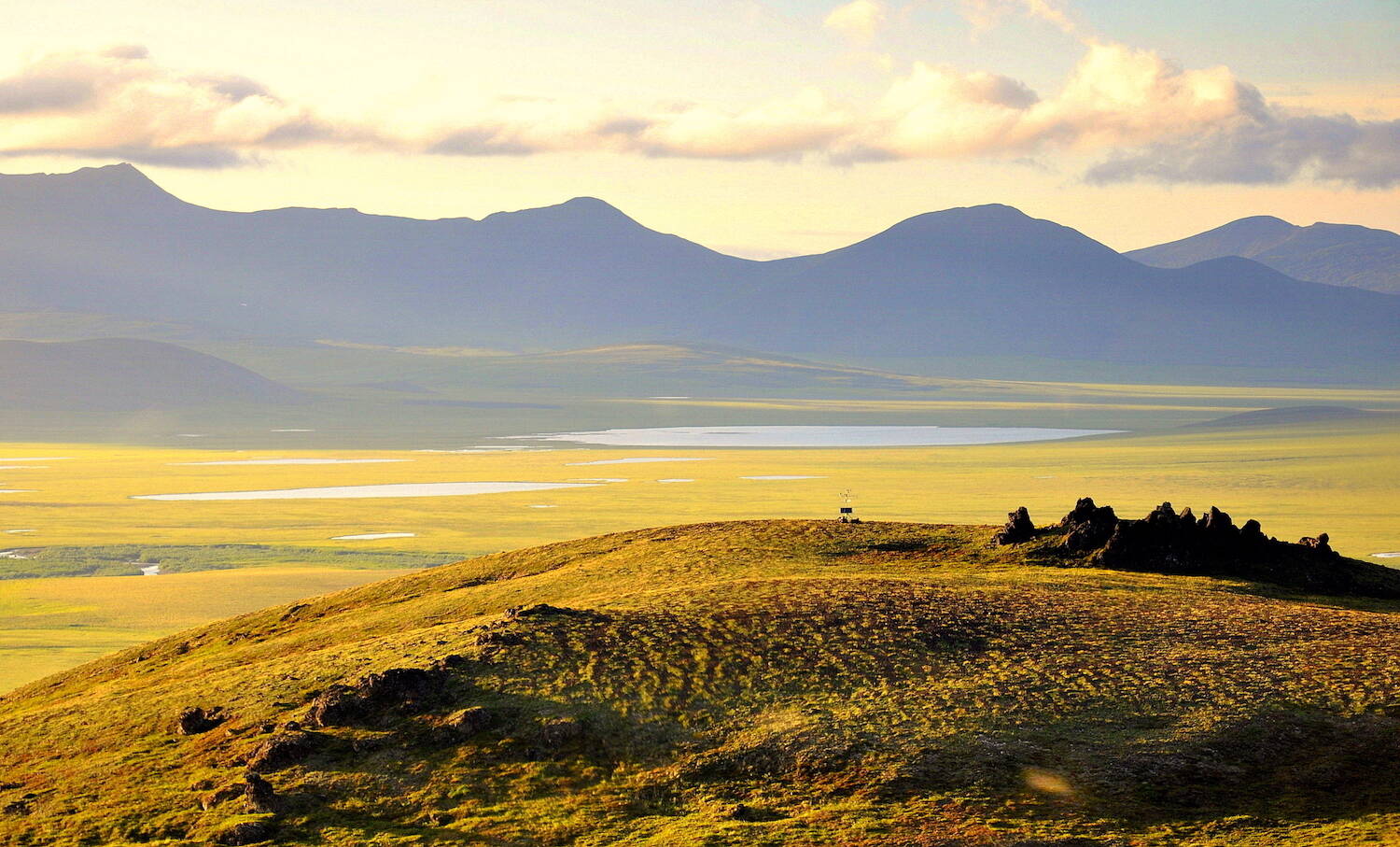
A National Park Service climate-observing station sits in Howard Pass, a broad crossing of the Brooks Range between Alaska’s North Slope and the Noatak River drainage. (Courtesy Photo / Ken Hill, National Park Service)
Howard Pass is a wind funnel through the western Brooks Range about 100 miles north of the villages of Ambler and Kobuk.
Thanks to Pam Sousanes and Ken Hill of the National Park Service, who every summer replace the wind monitor in the Howard Pass weather station, we know that minus 70 wind chills happen there most every winter.
Archeologist Jeff Rasic of the National Park Service points out that Howard Pass is rich in ancient dwellings, some of which people used in winter. He knows of the dark-season living from the design of the subterranean living spaces, which featured cold-trap tunnels at the entrances.
A few years ago, Rasic explained why Howard Pass — where there are no people living right now — might have been a favored spot:
“It’s a reliable place to harvest caribou, and there are lakes with fish,” Rasic said. “If you are someone trying to escape clouds of mosquitoes, winds aren’t necessarily bad. And maybe a windswept place is good for winter travel — hard and crusty, good to get around on.”
* * *
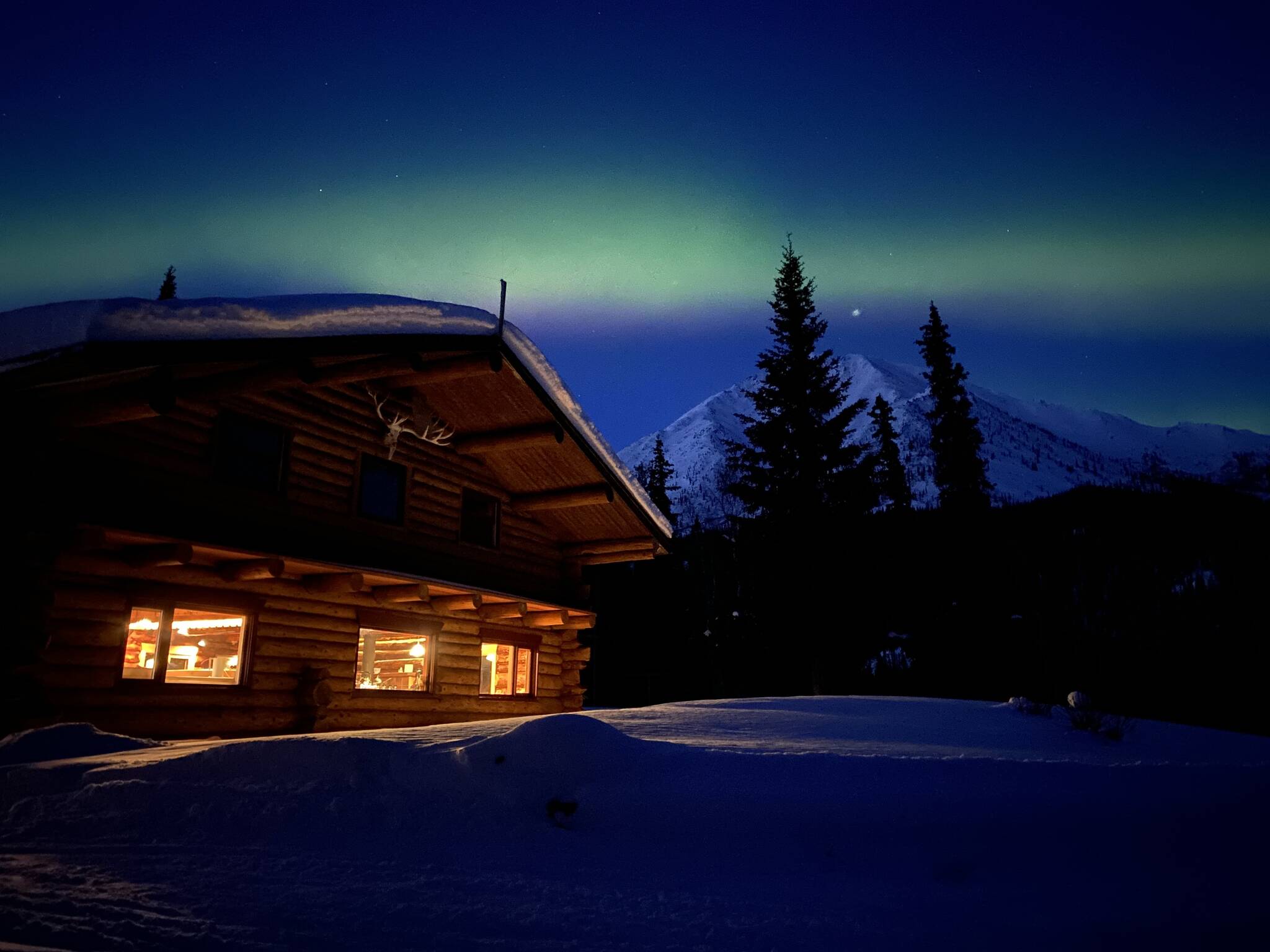
In other cold-related news, John Gaedeke’s beer is somehow remaining liquid outside his lodge at Iniakuk Lake in the Brooks Range, where it was minus-21 this morning.
He explained that he once buried a defunct chest freezer in the ground after removing its compressor. He sank the freezer to its lid in soil that is permafrost (ground that has been frozen for a long time, but by definition at least two summers).

The top of a freezer John Gaedeke sank into permafrost ground at his lodge in the Brooks Range. Warmish permafrost surrounding the freezer keeps the temperature stable enough that beers left inside for the entire frigid winter do not freeze. (Courtesy Photo / Alice Bailey)
“In the summer the inside of the coolers does not go above 40 degrees F or below 35 degrees, so they are excellent electricity-free refrigerators,” Gaedeke wrote.
“At the end of the season if I have extra beer or soft drinks I put them in the broken freezer in the ground and close the lid. When I return the next summer nothing has ruptured or frozen. I have even come in the winter, dug down through the snow, opened the freezer in -40, and taken out an unfrozen beer that I can immediately drink.
“How the heck is that possible?”
Vladimir Romanovsky, now enjoying his first week of retirement after 30 years studying permafrost at the Geophysical Institute, replied:
“The permafrost (around Iniakuk Lake) is very warm (about 1 degree below freezing — unlike in Utqiagvik, where permafrost that is 5 degrees colder would freeze the beer).
Romanovsky continued: “The insulation of snow plus the very good insulation of the freezer box walls and also the air in the freezer box makes the seasonal variation of the temperature in the freezer minimal.
“In this case, the temperature in summer will be just slightly warmer than the mean annual temperature, and in the winter slightly cooler than the mean annual temperature. So, it is not cold enough to freeze the beer (5% alcohol beer freezes at -2.8 Celsius, or 27 Fahrenheit).”
• Since the late 1970s, the University of Alaska Fairbanks’ Geophysical Institute has provided this column free in cooperation with the UAF research community. Ned Rozell is a science writer for the Geophysical Institute.
