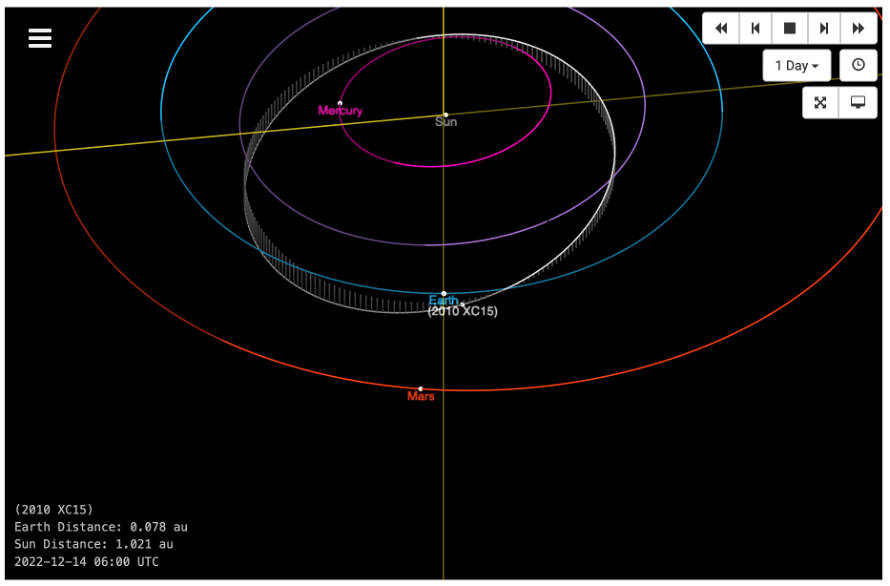
This image from an animation shows the projected path of the asteroid 2010 XC15 as it passes by Earth. (Photo Courtesy National Aeronautics and Space Administration/Jet Propulsion Laboratory Caltech)

This image from an animation shows the projected path of the asteroid 2010 XC15 as it passes by Earth. (Photo Courtesy National Aeronautics and Space Administration/Jet Propulsion Laboratory Caltech)

Alaska research site to send radio signal to asteroid

The purpose of the experiment is to probe the interior of the asteroid

KENAI —A research site in Alaska is partnering with the National Aeronautics and Space Administration to send a radio signal to an asteroid, the University of Alaska Fairbanks’ Geophysical Institute recently announced.

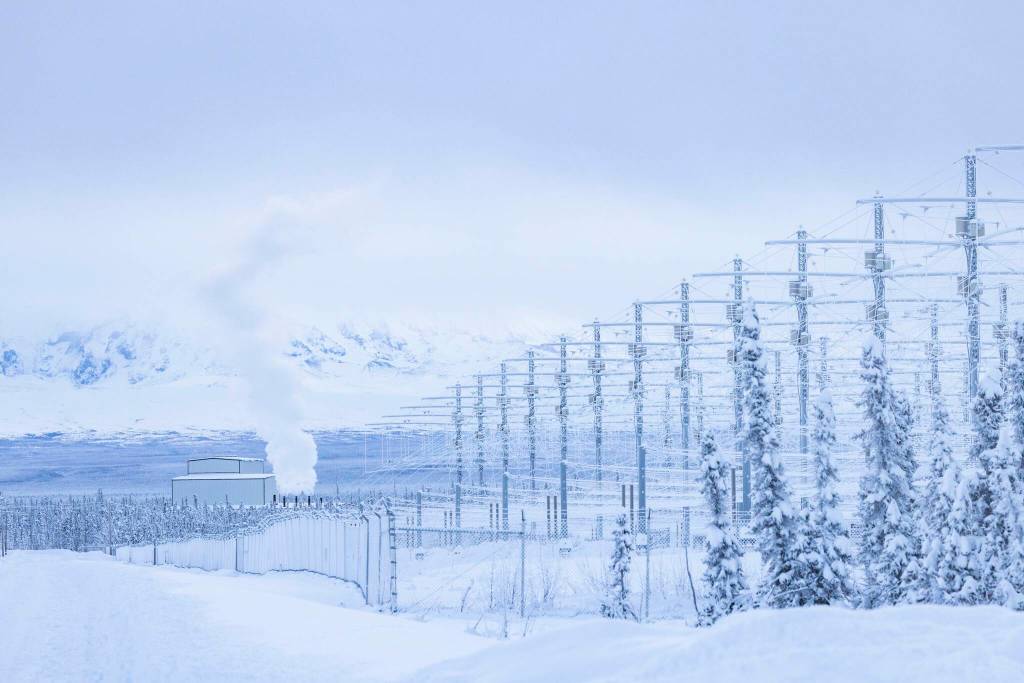
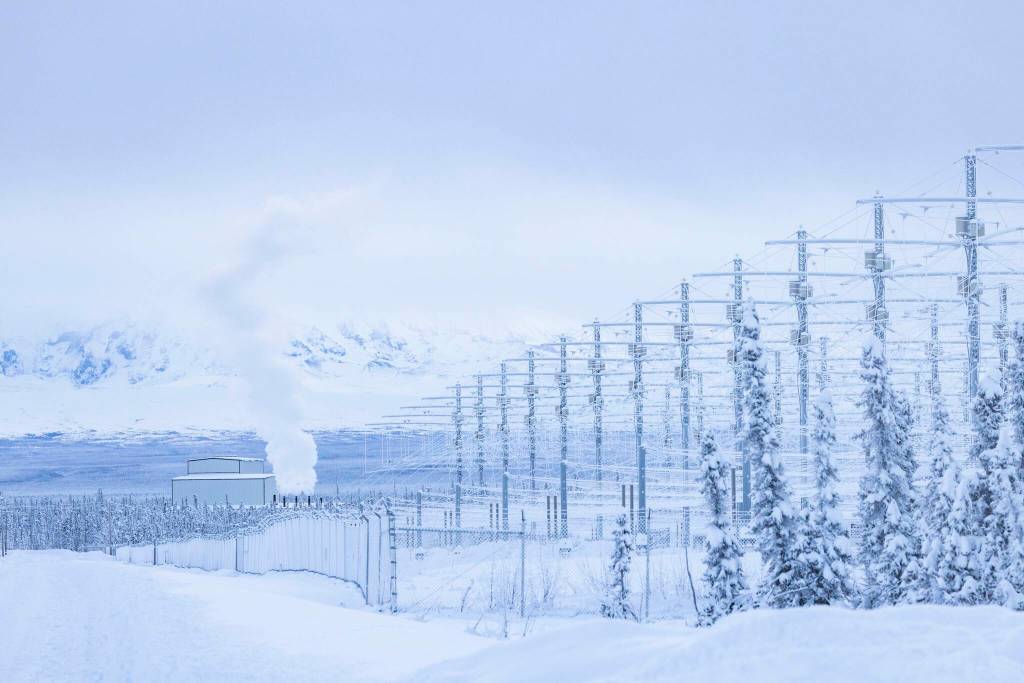
In Gakona, located in the Copper River area northeast of the Kenai Peninsula, the High-frequency Active Auroral Research Program’s research site will be used to bounce a radio signal off asteroid 2010 XC15. HAARP was developed by the United States Air Force, but transferred to the University of Alaska Fairbanks in 2015.

That signal will be received by the University of New Mexico’s Long Wavelength Array near Socorro, New Mexico, and the Owens Valley Radio Observatory’s Long Wavelength Array near Bishop, California.

The purpose of the experiment is to probe the interior of the asteroid, NASA investigator Mark Haynes explained in a news release from UAS. This will allow the scientists to learn the distribution of mass, information useful for defending against an asteroid impact.

NASA has a long history of detecting and mapping asteroids using telescopes and radar, but using longer wavelength signals to map the insides is a new development.

The HAARP will transmit a signal around 9.6 megahertz at two-second intervals. That signal will travel farther than the distance to the moon to reach the asteroid. The resulting signal will be recovered in New Mexico and California and interpreted to learn more about the makeup of the body.

Tuesday’s test of the system follows tests earlier this year conducted at the moon, and is itself only preparation for a repeat of the process on a much larger asteroid that will pass by Earth in April of 2029.

That asteroid, named Apophis, is predicted to pass within 20,000 miles of Earth, thousands of miles closer than geostationary satellites and around 200,000 miles closer to Earth than the moon. Apophis is nearly four football fields across, with a diameter of around 1,100 feet. The release says that at one time the asteroid was thought to be a threat to Earth — though predictions have evolved and the threat was disproven.

The release explains that asteroids hit the earth every year, though most are so small that they simply burn up. NASA has long worked to find ways to mitigate risk of a more significant collision, such as through the development of other technologies that have successfully redirected small asteroids. Use of radio signals for interior sensing is planned for continued use in the coming years.

“If we can get the ground-based systems up and running, then that will give us a lot of chances to try to do interior sensing of these objects,” Haynes says in the release. In 2019, 80 known asteroids passed between the moon and Earth.

““HAARP is excited to partner with NASA and (Jet Propulsion Laboratory) to advance our knowledge of near-Earth objects,” said Jessica Matthews, HAARP’s program manager, in the release.

More information about the experiment and about HAARP can be found via the University of Alaska Fairbanks’ Geophysical Institute at gi.alaska.edu and at haarp.gi.alaska.edu.

• Contact reporter Jake Dye at jacob.dye@peninsulaclarion.com.

The High-frequency Active Auroral Research Program conducts a preflight checklist before the Asteroid Bounce campaign Tuesday, Dec. 20, 2022, in Gakona, Alaska, as temperatures hit 40 below. The mission is slated for Dec. 27. (Photo courtesy UAF/GI photo by JR Ancheta)

The High-frequency Active Auroral Research Program conducts a preflight checklist before the Asteroid Bounce campaign Tuesday, Dec. 20, 2022, in Gakona, Alaska, as temperatures hit 40 below. The mission is slated for Dec. 27. (Photo courtesy UAF/GI photo by JR Ancheta)

More in News

CBJ sign reads “Woodstove burn ban in effect.” (City and Borough of Juneau photo)
CBJ issues air quality emergency in Mendenhall Valley

All woodstove and fireplace burning in the valley is prohibited until further notice.

A dusting of snow covers the Ptarmigan chairlift at Eaglecrest Ski Area in December 2024. (Eaglecrest Ski Area photo)
Update: Waterline break forces closure at Eaglecrest Friday, Saturday

The break is the latest hurdle in a challenging opening for Juneau’s city-run ski area this season.

Patrick Sullivan stands by an acid seep on July 15,2023. Sullivan is part of a team of scientists who tested water quality in Kobuk Valley National Park’s Salmon River and its tributaries, where permafrost thaw has caused acid rock drainage. The process is releasing metals that have turned the waters a rusty color. A chapter in the 2025 Arctic Report Card described “rusting rivers” phenomenon. (Photo by Roman Dial/Alaska Pacific University)
Ecosystem shifts, glacial flooding and ‘rusting rivers’ among Alaska impacts in Arctic report

NOAA’s 2025 report comes despite Trump administration cuts to climate science research and projects

The U.S. Capitol in Washington, D.C., on Oct. 1, 2025. (Photo by Jennifer Shutt/States Newsroom)
Moderate US House Republicans join Dems to force vote on extension of health care subsidies

WASHINGTON — Republican leaders in the U.S. House will face a floor… Continue reading

The National Weather Service Juneau issues a high wind warning forDowntown Juneau, Southern Douglas Island and Thane due to increased confidence for Taku Winds this afternoon. (National Weather Service screenshot)
Taku winds and dangerous chills forecast for Juneau

Gusts up to 60 mph and wind chills near minus 15 expected through the weekend.

Chloe Anderson for the Juneau Empire
Fallen trees are pictured by the Mendenhall river on Aug. 15, 2025. Water levels rose by a record-breaking 16.65 feet on the morning of Aug. 13 during a glacial outburst flood.
Lake tap chosen as long-term fix for glacial outburst floods

The U.S. Army Corps of Engineers and Juneau leaders agreed on the plan.

Gift card displays, such as this one in a CVS in Harlem, N.Y., have been a source of concerns for lawmakers hoping to combat gift card fraud. “Card draining,” or stealing numbers from poorly packaged cards, is one of the costliest and most common consumer scams, and states are trying to combat it with consumer alerts, arrests and warning signs on store displays. (Photo by Robbie Sequeira/Stateline)
Alaskans targeted by scammers posing as government officials, FBI warns

The FBI reports Alaskans lost over $26.2 million to internet-based scams in 2024, with $1.3 million of those losses due to government impersonation scams

A buck enters the view of an Alaska Department of Fish and Game trail camera on Douglas island in November 2020. (Alaska Department of Fish and Game courtesy photo)
Douglas deer: The island’s hunt faces calls for new rules

Board of Game is seeking public comment on regulation changes that would affect Juneau.

A cat says hello at Juneau Animal Rescue in February 2025. (Jasz Garrett / Juneau Empire file photo)
New animal shelter site approved by Juneau Assembly

Juneau Animal Rescue secures eight-acre lease, but fundraising remains.

Most Read