
When the shaking stops, Alaska’s seismologists have a goal: 10 minutes.
That’s the time it should take for them to consult their instruments, run calculations, and determine the exact spot an earthquake happened. Ideally, it happens faster.
Lives will be at stake. Emergency response is based on need. Where the worst shaking occurs, the worst damage will be.
On Monday morning, when Southeast Alaska and the Yukon were rattled by a series of magnitude-6 earthquakes, the scientists at the Alaska Earthquake Center in Fairbanks didn’t need 10 minutes to identify their epicenters.
They needed 31.
“I hate talking about that number, because that reflects poorly on us,” state seismologist Michael West said by phone on Monday. “It would’ve been a hell of a lot faster in California.”
Since 2013, the budget of Alaska’s earthquake watchdog has been slashed.
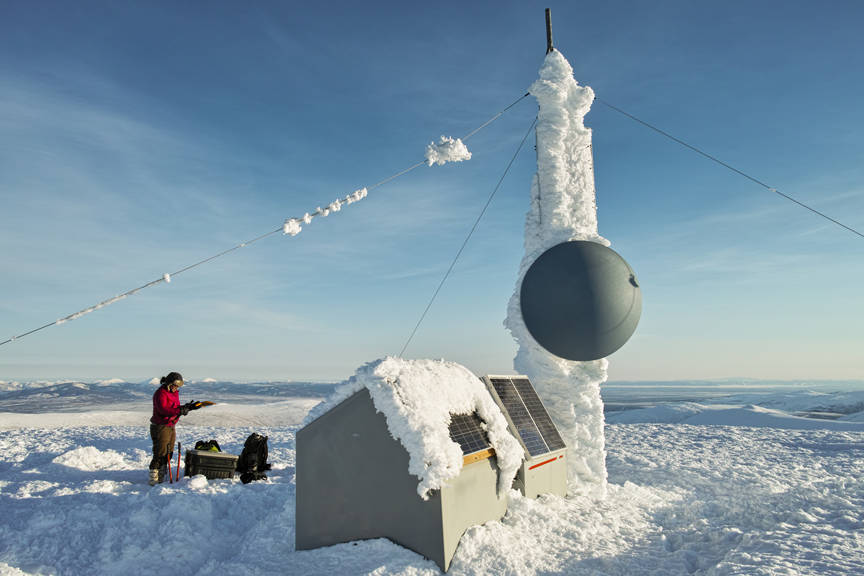
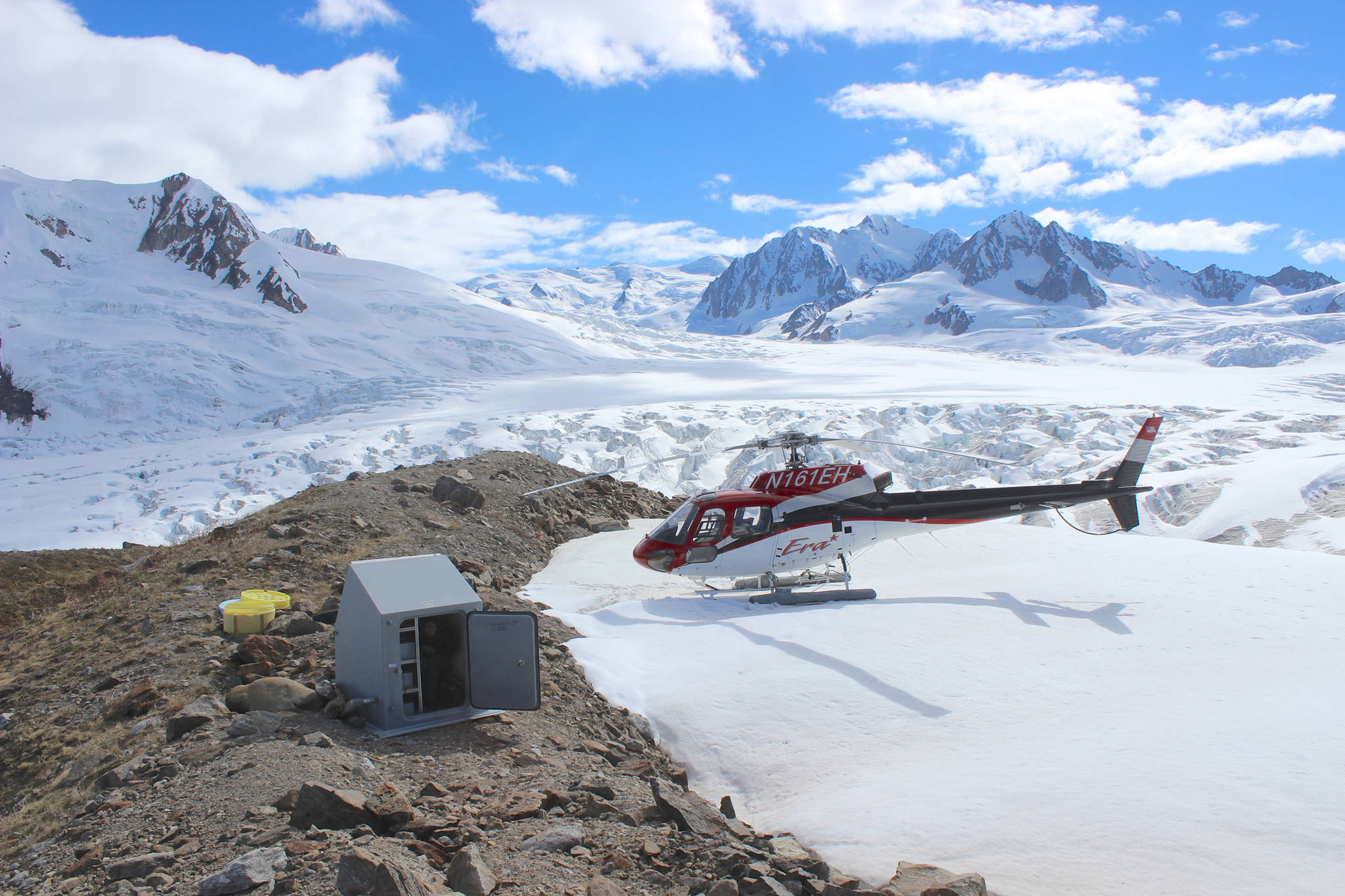
Last summer, it could no longer afford to maintain its network of 150 seismic instruments spread across the state. The results have been worrying.
“The suspension of most maintenance has begun to directly impact the performance of the network,” West wrote in a letter to network users on March 16. “As of March 1, 2017, more than one quarter (27 percent) of the Alaska Regional Seismic Network is offline.”
Since 2013, the center has cut its staff from 20 to 14 people. It has cut travel and stopped buying new equipment. “Perhaps most insidious, we have ceased hiring the graduate students and postdocs who are largely responsible for converting raw earthquake data into observations that reduce earthquake risk,” West wrote in August.
Worse may be coming.
“I won’t lie. We are not that far here from stopping 24/7 response,” West said on Monday, a few hours after the Southeast earthquakes.
In other words, if an earthquake happens in the middle of the night or on a weekend, the state may no longer have someone on duty to read the data. Response would be handled by a computer.
“That’s a last-ditch effort, but we’re not that far away,” West said.
Since 1987, the University of Alaska has been in charge of the network of scientific instruments that monitors Alaska’s earthquakes. It’s not a small challenge: Alaska has more earthquakes, and more large earthquakes, than any other place in the United States.
Large earthquakes can be detected around the world, but precision and accuracy require proximity. It’s the difference between having someone peer at an object through a telescope from a mile away, then having someone look at the same object with a magnifying glass a foot away.
Peter Haeussler, a research geologist for the U.S. Geological Survey in Anchorage, said his agency relies on the state center, just as it relies on regional centers across the country.
“We depend on them as the authoritative seismic network for a significant part of Alaska,” he said. “Without that seismic network in place, we wouldn’t know where those earthquakes occurred, what has happened.”
When the Legislature ordained the university to monitor earthquakes, it did so because the Alaska Department of Resources didn’t have the funding anymore. In 1987, the state was enduring an oil-driven budget crunch, and it couldn’t even afford to employ a state seismologist.
The pattern is repeating.
“No single agency is responsible. Rather, a perfect storm of reductions from many directions have coincided to compromise the shared funding model,” West wrote in an August 2016 memo.
Cuts in federal funding from the U.S. Geological Survey and the National Oceanic and Atmospheric Administration (which monitors tsunamis) have hurt.
The earthquake center had also sold its services as a contractor to organizations performing seismic studies. One of its biggest customers was the Susitna-Watana hydroelectric dam. When Gov. Bill Walker abandoned that program in 2015, he also abandoned funding for the earthquake center.
The center has also seen its state support dwindle.
“We operated for many years on $800,000 from the state of Alaska. We are currently figuring out how to work at something under $600,000,” West said by phone.
According to figures provided by Alesia Kruckenberg, director of the University of Alaska office of strategy, planning and budget, the earthquake center received $800,000 from the state in 2013. That has fallen to $684,000 in the current fiscal year. The projection for next year is $588,000. Those figures do not include cuts to university services the earthquake center shares, things like computer support or building maintenance.
Compared with the size of the state’s overall budget, the share granted to the earthquake center is small. It’s nonetheless typical of what’s happening to the university system as a whole.
On July 1, 2013, the state was contributing $371 million in unrestricted support to the University of Alaska. That figure fell to $325 million by July 1, 2016.
Gov. Bill Walker and the House of Representatives have proposed holding that figure flat. The Senate has proposed reducing it to $303 million, a figure almost 20 percent smaller in four years.
On Saturday, Rep. David Guttenberg, D-Fairbanks, organized a Legislative hearing to address university budget cuts. More than four hours of public testimony followed, and the first person to speak was seismologist Helena Burrman of the earthquake center.
“An earthquake occurring right now will take longer to detect, longer to assess, and we will do a poorer job,” she said. “(Our) budget impacts are measured not in years or decades, but in seconds.”
Speaking Tuesday, Guttenberg said the center’s costs have risen even as it has taken cuts. He pointed to the bill for the broadband Internet connections needed to link the seismic sensors into a network. Those costs have risen, as have the costs of health care and other utilities.
“What’s more important, the person that reads the monitors or having the monitors in place?” Guttenberg asked.
If cuts continue, the earthquake center might not be able to afford either.
“You can’t cut the legs out of one thing and have it still survive,” Guttenberg said.
In Fairbanks, West said Alaskans need to realize that budget cuts at the university don’t just mean esoteric things disappear.
“Much of what we call research has direct, measurable, economic and life-safety implications for the state,” he said.
Engineers depend on the measurements taken by the earthquake center to design bridges, roads, dams and other infrastructure. The information created by the center is available freely and influences building codes applied to the homes of Alaskans across the state.
The data collected from Monday’s quakes will have a tangible impact on the lives of Alaskans, West said.
“Next time we build a road there, next time we build a bridge on the Haines Highway, it’s going to be built differently because of these earthquakes,” he said. “We are in trouble. We’re not in a good place here funding-wise.”
• Contact reporter James Brooks at james.k.brooks@juneauempire.com or call 419-7732.
CRQ site in Wrangell-St. Elias National Park is seen in 2014. (Photo courtesy of the Alaska Earthquake Center)
