
Families who use Alaska’s homeschool program will soon have clarity on how they may spend their allotments of state education money.
Lawmakers directed Alaska’s Board of Education and Early Development to write temporary regulations for the state’s correspondence school program that comply with the state’s constitution on Wednesday night. The law also requires that the education department begin to monitor allotment spending for the first time in a decade. It was approved unanimously by both the House and Senate.
The move comes after a Superior Court ruling found two components of the laws that govern the state’s correspondence program to be unconstitutional in April, which left the families of more than 22,000 students unsure of how to pay for curriculum, tutoring and physical education. The state has appealed the decision; the Supreme Court scheduled the hearing for June 25.
Lon Garrison, director of Alaska Association of School Boards, said the advocacy group supports the new law. “It is simple and similar to what existed prior to 2014,” he said by text on Wednesday. He referred to the year then-Sen. Mike Dunleavy changed state law to allow families to spend homeschool allotments on materials from private and religious institutions — the pieces of statute a judge found to violate constitutional prohibitions against spending state money on private education.
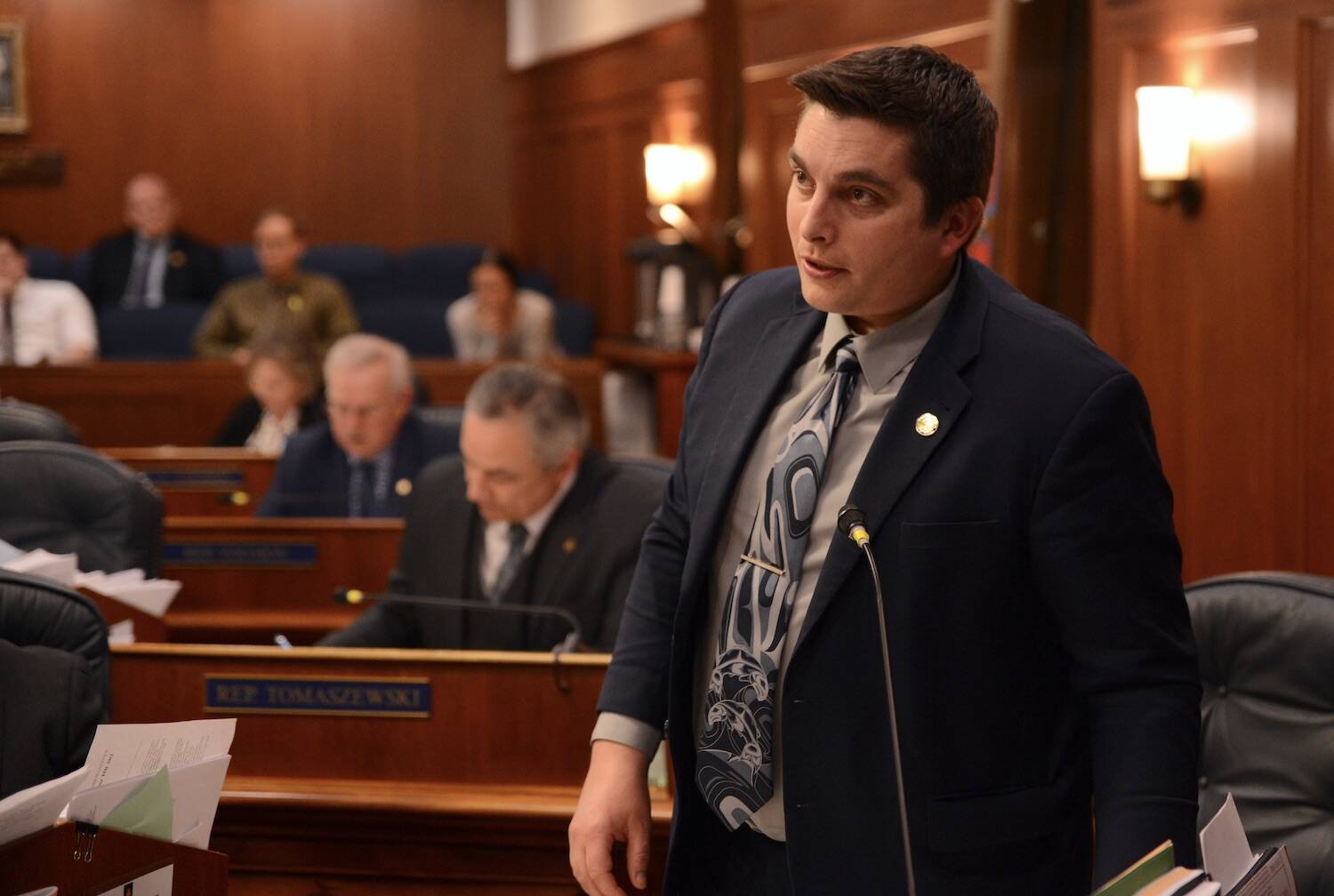
House Education Committee Co-Chair Rep. Justin Ruffridge, R-Soldotna, initially proposed the language in House Bill 400 and said his office worked into the wee hours of the morning to get approval between the bodies without drama and contention. “I think it’s a good fix,” Ruffridge said after the Senate approved it. “I think it’ll be important to come back next time around and continue to take up the question,” he added.
Gov. Mike Dunleavy and the education department signaled support for the bill.
Its language was rolled into a widely supported bill to require opioid-overdose-reversing drugs in schools in a late-session amendment.
Senate Education Committee Chair Sen. Löki Tobin said she supports the change “cautiously” with the recognition that lawmakers have more work to do to make the programs viable after a Supreme Court decision.
The law does not include some changes proposed in the Senate’s proposal.
Sen. Jesse Bjorkman, R-Nikiski, told lawmakers that unspent homeschool allotment money would rollover to the next year and that students would not be required to take standardized tests. Those items generated pushback from families that use the program.
“I would hope that homeschool students would like to show off and showcase what they know and how much they know,” he said. State data shows less than 20% of correspondence school students choose to take standardized tests, which has led to questions about how well the programs work.
Sen. Shelley Hughes, R-Palmer, underlined two popular effects of the fix that led to the compromise: “It is important to have stability and the removal of the disruption and anxiety for the families. But I also selfishly appreciate the fact that this will avoid a special session.”
• Claire Stremple is a reporter based in Juneau who got her start in public radio at KHNS in Haines, and then on the health and environment beat at KTOO in Juneau. This article originally appeared online at alaskabeacon.com. Alaska Beacon, an affiliate of States Newsroom, is an independent, nonpartisan news organization focused on connecting Alaskans to their state government. Alaska Beacon reporter James Brooks contributed reporting to this story.
