
Photos by Yereth Rosen/Alaska Beacon
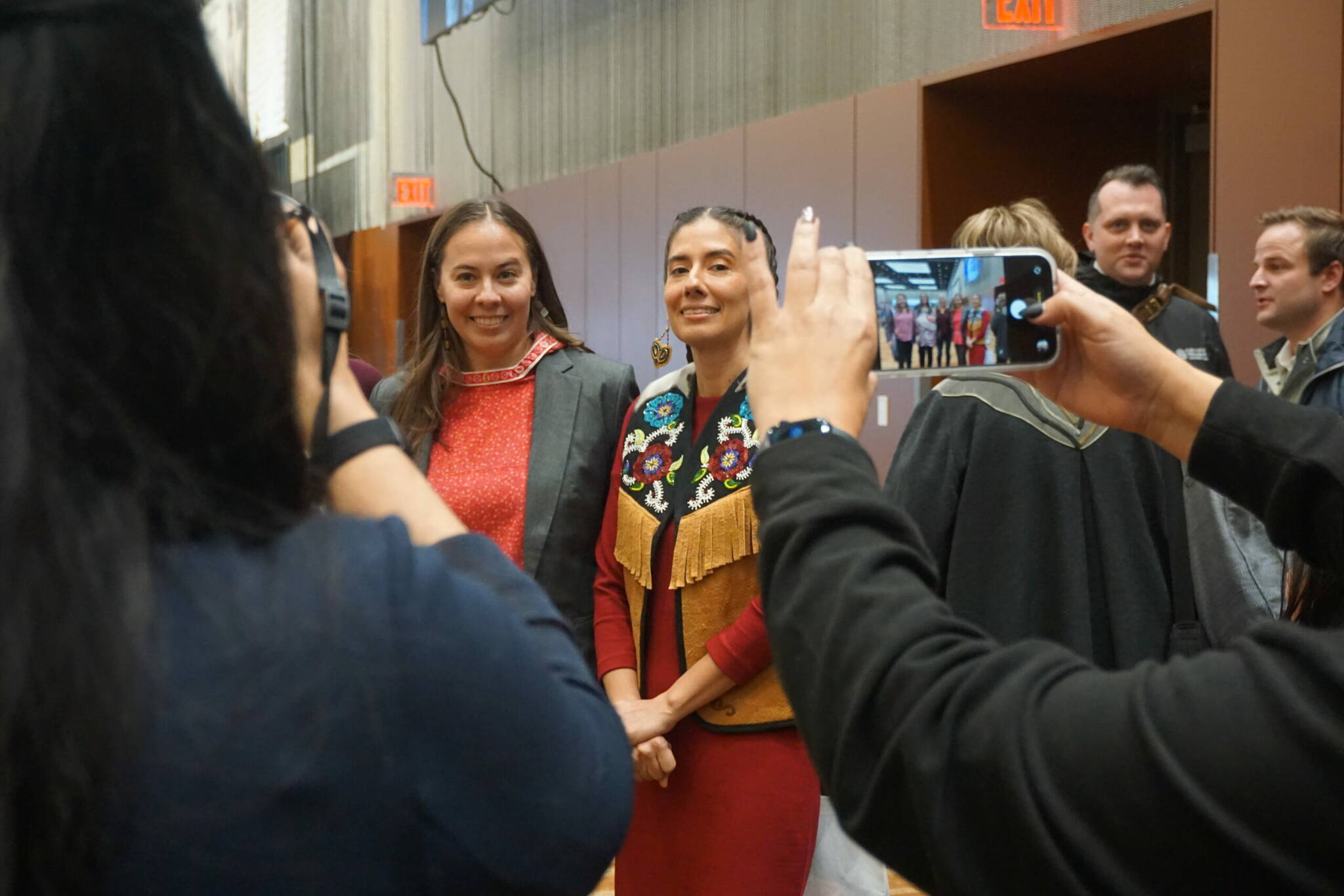
Natasha Singh poses for photos in the hallway of the Dena’ina Civic and Convention Center, site of the Alaska Federation of Natives annual convention. Singh, who is president of the Alaska Native Tribal Health Consortium, had just delivered her keynote speech on the opening morning of the convention.

Photos by Yereth Rosen/Alaska Beacon Natasha Singh poses for photos in the hallway of the Dena’ina Civic and Convention Center, site of the Alaska Federation of Natives annual convention. Singh, who is president of the Alaska Native Tribal Health Consortium, had just delivered her keynote speech on the opening morning of the convention.

Alaska Federation of Natives convention highlights typhoon response and Indigenous cultures

Attendees discussed policies and celebrated Indigenous cultures, but much of focus was on the flood.

  • By Yereth Rosen Alaska Beacon
  • Wednesday, October 22, 2025 6:30am
  • News

The Alaska Federation of Natives convention in Anchorage, while it featured the usual cultural celebrations, socializing and discussions of state and federal policies, had a strong focus this year on a particular subject: the ravages on the Yukon-Kuskokwim Delta of ex-Typhoon Halong.

Speaker after speaker at the convention, the largest annual convention of any kind in Alaska and one of the largest Indigenous gatherings in the nation, referenced the storm. It has displaced more than 1,500 people, killed at least one person and dislodged houses from their foundations. Residents of stricken villages have been airlifted away, with hundreds getting temporary residency in Anchorage. The state’s largest city is about 490 miles east of the evacuees’ home villages, and vastly different in culture and character from the highly rural Indigenous communities.

“My heart with everyone impacted by the recent coastal storms,” Natasha Singh, the president of the Alaska Native Tribal Health Consortium and the keynote speaker on the first day of the convention, said at the start of her address.

“While the damage is so vast, the love for our people is even greater. And even as we feel the pain and the loss, I also feel a sense of inspiration to see so many people reach out to help,” she continued.

A special feature of the convention was a second-floor room at the Dena’ina Civic and Convention Center that was set aside to collect donations headed to the storm victims. Over two days, as convention proceedings unfolded in the third-floor ballroom, the collection room became filled with boxes of diapers, toiletries, clothing items, shelf-stable food and other necessities that were sorted by volunteers.

On Saturday, the final day, delegates passed a resolution seeking an immediate national disaster declaration, and investment by the federal government in better infrastructure in rural Alaska to protect against future disasters.

The ravages of the remnants ofTyphoon Halong demand more than an emergency response, the resolution said. The disaster “has continued to expose vulnerabilities in infrastructure, housing, and emergency preparedness for rural Alaska/extreme remote America, and highlights the need for stronger tribal-state-federal collaboration,” it said.

The call for a national disaster declaration and the aid that would come with it was among a packet of resolutions passed on Saturday. Many of the resolutions concerned food security and efforts to ensure that Alaska Natives can safely practice their traditional fishing and hunting practices.

One highly anticipated convention speaker was former U.S. Rep. Mary Peltola, D-Alaska, who is considered a possible candidate for governor or U.S. Senate.

But Peltola made no campaign announcement.

“I want to preface everything I’m saying with: This is going to be very anticlimactic for everybody, I think,” she said at the start of her speech. “No big announcements, no big declarations.”

Instead, she discussed subsistence – the traditional harvests of wild foods and arts materials – and the legal and environmental threats to its continued practice.

She spoke about the way subsistence ties Alaska Natives to their home regions.

“Those spots, the places that we hunt and fish, they’re like another personality to us,” Peltola said.

She referred to a close friend who recently died. When she was on her deathbed, her family gathered around, Peltola said. “And at one point, they just talked about places. They just said the names of the places where they pick berries, or get whitefish, gather greens. And it was one of the most beautiful moments I’ve ever experienced, just reciting names.”

Yereth Rosen came to Alaska in 1987 to work for the Anchorage Times. She has been reporting on Alaska news ever since, covering stories ranging from oil spills to sled-dog races. She has reported for Reuters, for the Alaska Dispatch News, for Arctic Today and for other organizations. Alaska Beacon is part of States Newsroom, the nation’s largest state-focused nonprofit news organization.
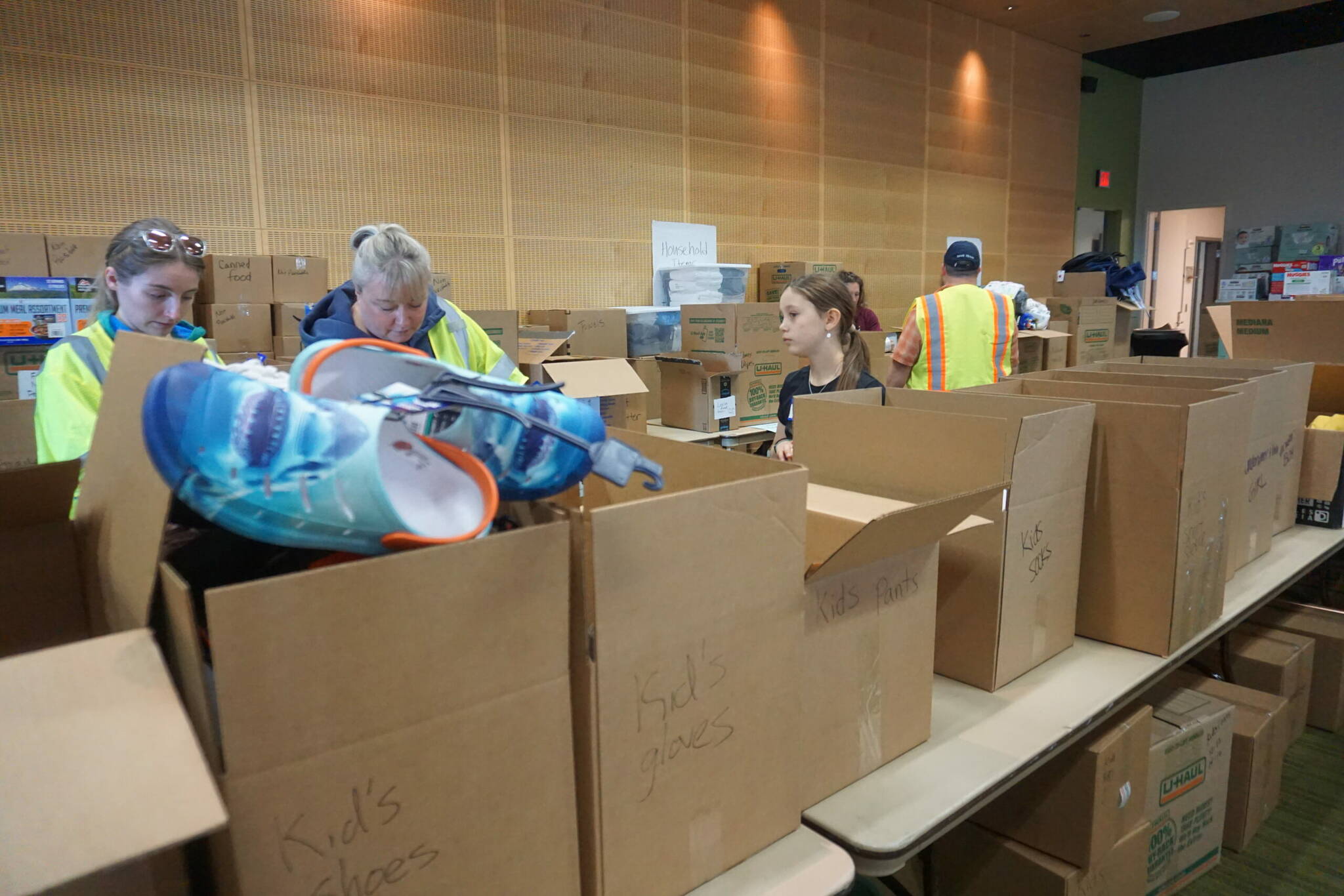
Volunteers work on Oct. 18, 2025, to sort donated items being collected in a room in the Dena’ina Civic and Coonvention Center, site of the Alaska Federation of Natives annual convention. Donations of diapers, clothing, hygiene products, bottled water, shelf-stable food and other items were being collected for Yukon-Kuskokwim Delta residents displaced by the remnants of Typhoon Halong.
Volunteers work on Oct. 18, 2025, to sort donated items being collected in a room in the Dena’ina Civic and Coonvention Center, site of the Alaska Federation of Natives annual convention. Donations of diapers, clothing, hygiene products, bottled water, shelf-stable food and other items were being collected for Yukon-Kuskokwim Delta residents displaced by the remnants of Typhoon Halong.

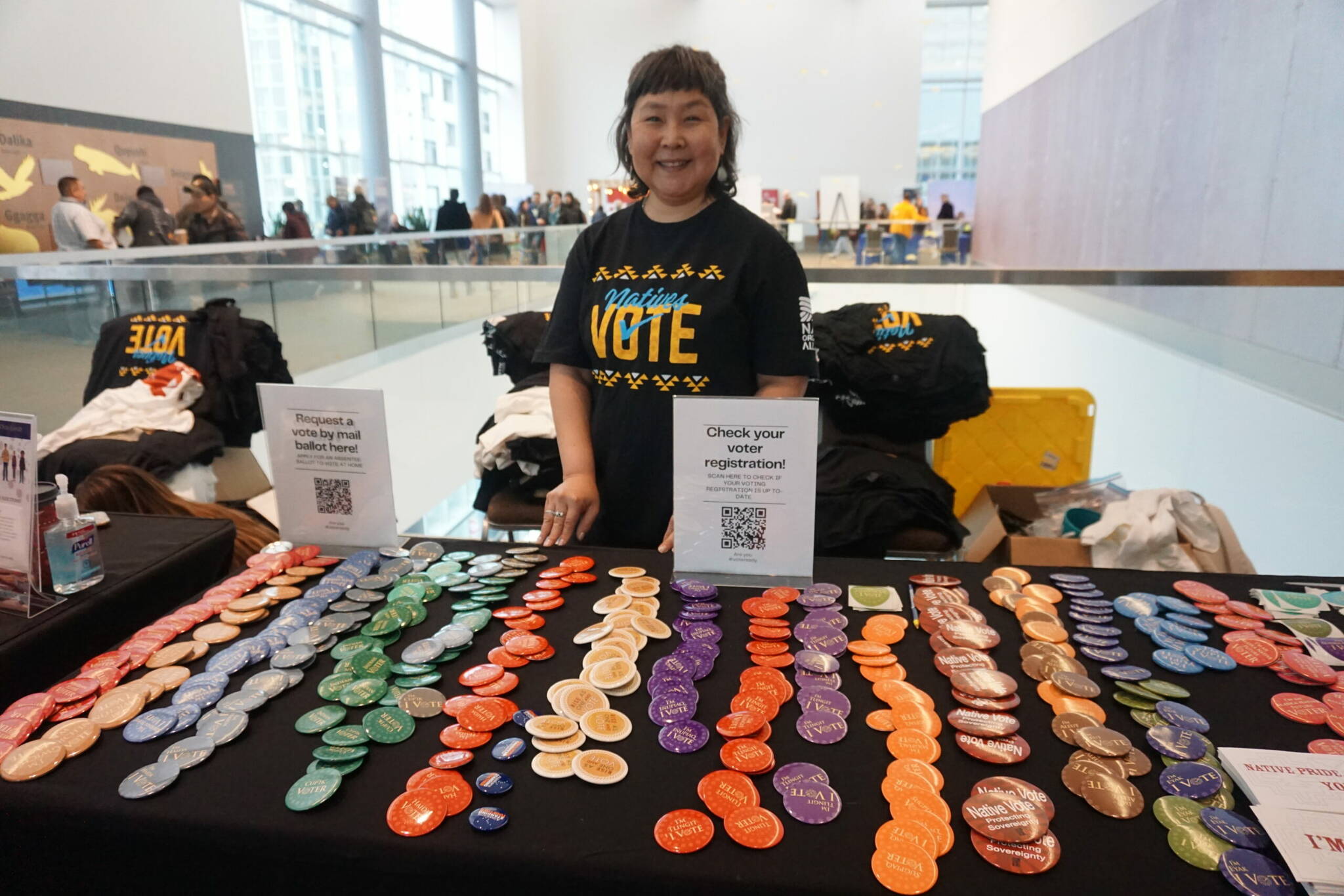
Kendra Berlin mans a pro-voting table at the Alaska Federation of Natives convention on Oct. 16, 2025. Berlin, originally from Bethel but now living in Palmer, was distributing T-shirt and buttons promoting the Natives Vote cause.
Kendra Berlin mans a pro-voting table at the Alaska Federation of Natives convention on Oct. 16, 2025. Berlin, originally from Bethel but now living in Palmer, was distributing T-shirt and buttons promoting the Natives Vote cause.

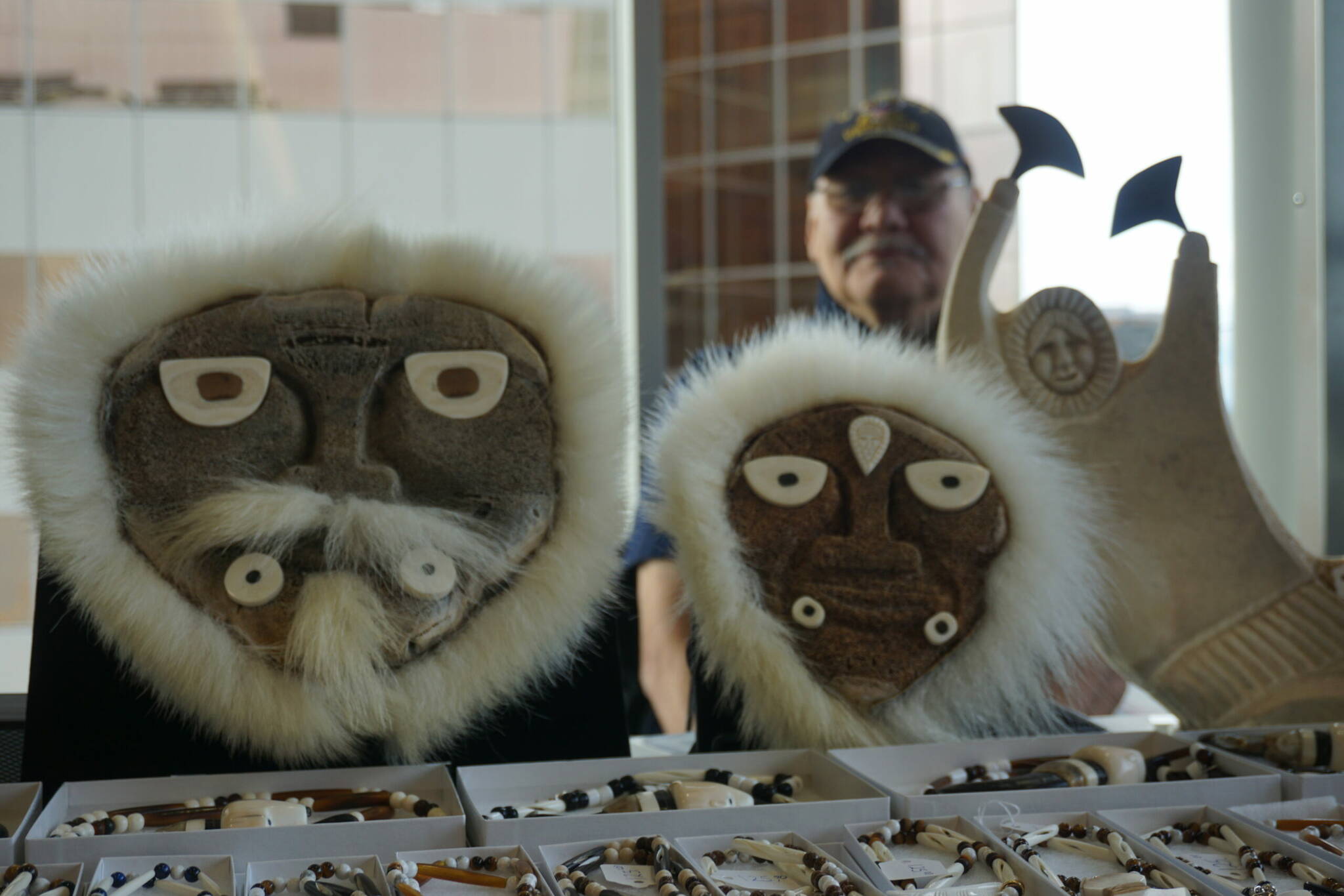
Victor Geffe sits behind a table displaying his artwoork on Oct. 16, 2025, at the Alaska Federation of Natives convention in Anchorage. Geffe, from Kotzebue, has been honored for his carvings of whalebones and other materials. He was one of the many artists displaying and selling work at the convention.

Victor Geffe sits behind a table displaying his artwoork on Oct. 16, 2025, at the Alaska Federation of Natives convention in Anchorage. Geffe, from Kotzebue, has been honored for his carvings of whalebones and other materials. He was one of the many artists displaying and selling work at the convention.

More in News

Downtown Juneau experiences its first significant city-level snow fall of the season as pictured on Saturday, Dec. 6, 2025. (Mari Kanagy / Juneau Empire)
Sub-zero temperatures to follow record snowfall

The National Weather Service warns of dangerous wind chills as low as -15 degrees early this week.

A truck rumbles down a road at the Greens Creek mine. The mining industry offers some of Juneau’s highest paying jobs, according to Juneau Economic Development’s 2025 Economic Indicator’s Report. (Hecla Greens Creek Mine photo)
Juneau’s economic picture: Strong industries, shrinking population

JEDC’s 2025 Economic Indicators Report is out.

Map showing approximate location of a 7.0-magnitude earthquake on Saturday, Dec. 6, 2025. (Courtesy/Earthquakes Canada)
7.0-magnitude earthquake hits Yukon/Alaska border

Earthquake occurred about 55 miles from Yakutat

A commercial bowpicker is seen headed out of the Cordova harbor for a salmon fishing opener in June 2024 (Photo by Corinne Smith)
Planned fiber-optic cable will add backup for Alaska’s phone and high-speed internet network

The project is expected to bring more reliable connection to some isolated coastal communities.

Gustavus author Kim Heacox talked about the role of storytelling in communicating climate change to a group of about 100 people at <strong>Ḵ</strong>unéix<strong>̱</strong> Hídi Northern Light United Church on Wednesday, Dec. 3, 2025. (Mari Kanagy / Juneau Empire)
Author calls for climate storytelling in Juneau talk

Kim Heacox reflects on what we’ve long known and how we speak of it.

The Juneau road system ends at Cascade Point in Berners Bay, as shown in a May 2006 photo. (Michael Penn / Juneau Empire file)
State starts engineering for power at proposed Cascade Point ferry terminal

DOT says the contract for electrical planning is not a commitment to construct the terminal.

Members of the Alaska Air and Army National Guard, Alaska Naval Militia, and Alaska State Defense Force work together to load plywood onto a CH-47 Chinook helicopter, in Bethel, Alaska, Nov. 2, 2025, bound for the villages of Napaskiak, Tuntutuliak, and Napakiak. The materials will help residents rebuild homes and restore community spaces damaged by past storms. (U.S. Army National Guard photo by Spc. Ericka Gillespie)
Gov. Dunleavy approves Alaska National Guard assisting ICE in Anchorage

The National Guard said five service members will assist with administrative support; lawmakers and civil rights advocates worry that the move signals a ramping up of immigration enforcement operations in Alaska

A cruise ship, with several orange lifeboats visible, is docked in downtown Juneau. (Laurie Craig / Juneau Empire file photo)
CBJ seeks input on uses for marine passenger fees

Public comment period is open for the month of December.

Browsers crowd into Annie Kaill’s gallery and gift shop during the 2024 Gallery Walk. (Juneau Empire file photo)
Gallery Walk guide for Friday, Dec. 5

The Juneau Arts & Humanities Council and the Downtown Business Association announced… Continue reading

Most Read