
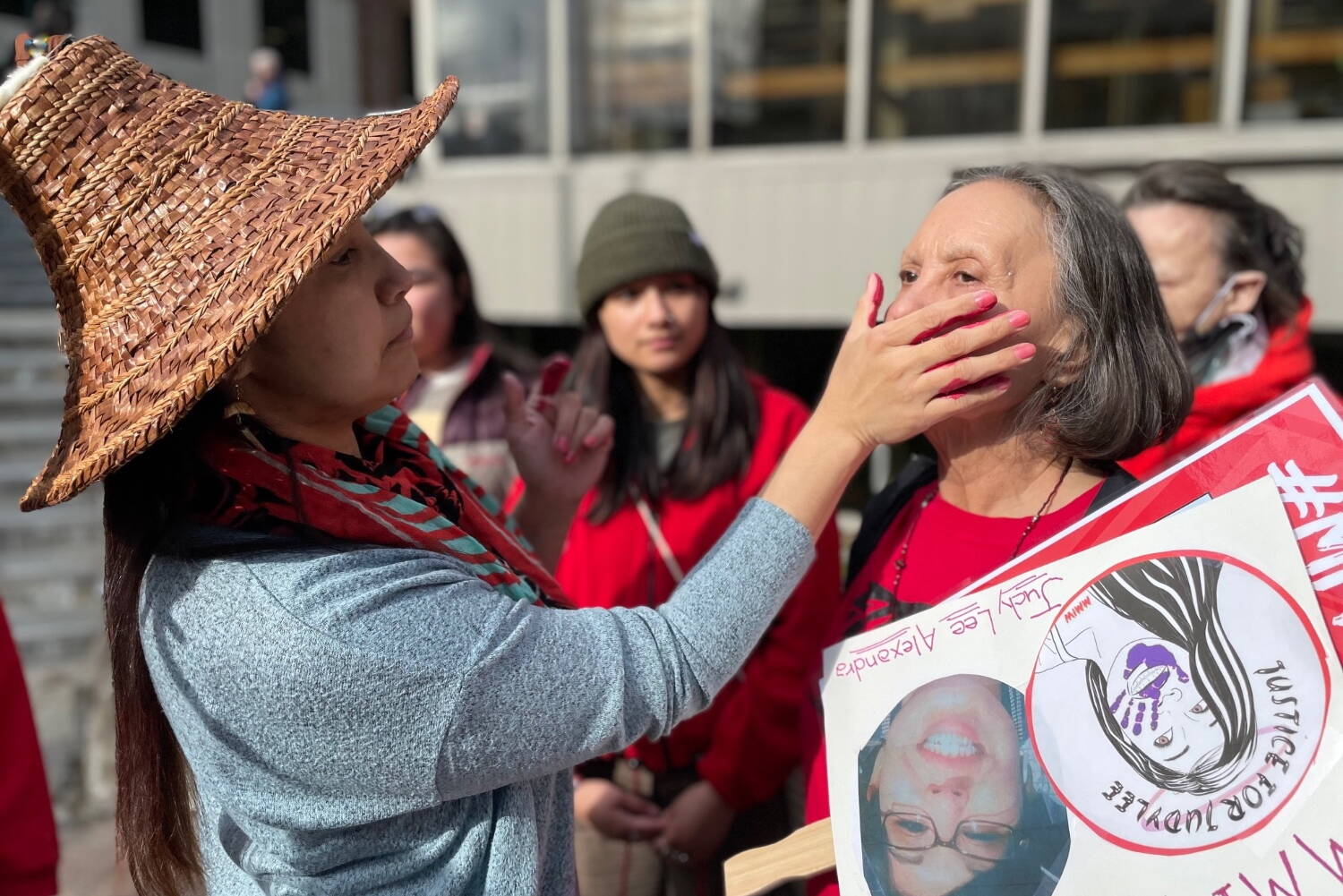
Despite Alaska’s small population, a 2018 report by the Urban Indian Health Institute identified it as the state with the fourth-highest number of missing and murdered Indigenous women and girls, and Anchorage as the city with the third-highest number of such cases in the nation.
A new law aims to address some of the reasons for those high rates.
Experts say the causes are complex but clearly the lack of any law enforcement in a third of rural Alaska villages is an issue. Then, where there is law enforcement, there are various layers, including: Alaska police departments, village public safety officers, Alaska state troopers, and sometimes the Federal Bureau of Investigation.
In a 2021 report, the nonprofit Data for Indigenous Justice said when jurisdictions overlap, the result is not dual coverage, but an “unwillingness by either system to assume responsibility for the safety of Indigenous people.”
“One sentiment that illustrates the issue is that law enforcement and criminal prosecution often mobilize to address hunting violations more quickly than they do for cases of homicide against Indigenous people,” the report stated.
In an effort to change course, Alaska has a new law addressing missing and murdered Indigenous persons (MMIP).
Kendra Kloster, who is Tlingit, is co-director of law and policy with the Alaska Native Women’s Resource Center. The center is part of the Missing and Murdered Indigenous Women, Girls, and Two-Spirit Relatives (MMIWG2S) Working Group. The other group members are the Alaska Native Justice Center, Alaska Native Heritage Center, Data for Indigenous Justice and Native Movement.
Kloster said the bill addresses issues identified through working with and listening to Indigenous peoples. “So these ideas and these things that have come up are things that we’ve talked with our tribes about, we’ve talked about with our communities. And these were kind of some of the things that rose to the top that we really needed to do to really look into cases to develop our resources, to really understand what else we can do better.”
She continued, “we collaborate with a lot of other organizations across the state that are doing really great work on this as well, and talking with families who we really appreciate them sharing stories and their information. It’s really hard to do that. But without them, we wouldn’t be able to identify all the different things that really need to be addressed and kind of the loopholes. And so it really takes our whole communities coming together to make this change.”
Kloster said much more is needed — for example, 911 services that are available and responsive, better and more accessible data, and wellness and trauma services—but this new law is the result of efforts beginning in 2018.
Gov. Mike Dunleavy signed Senate Bill 151 into law on Sept. 3. In a prepared statement he said, “this legislation is a continuation of Alaska’s mission to recognize and solve missing and murdered Indigenous persons cases. My administration will continue to support law enforcement, victim advocacy groups, Alaska Native Tribes and other entities working together to solve these cases and bring closure to victims’ families.”
“Senate Bill 151 represents a pivotal moment in our fight to end the crisis of Missing and Murdered Indigenous Peoples,” bill sponsor Sen. Donny Olson (D-Golovin) said in the prepared statement. “By bringing diverse voices together and enhancing our investigative efforts, we are making a clear statement: every life matters, and we will not rest until justice is served for all our missing and murdered loved ones. This legislation is a critical step in the state’s dedication towards healing our communities and ensuring that no family is left without answers.”
“The Alaska Department of Public Safety has led the local, state, and federal government efforts in Alaska of reducing instances of missing and murdered indigenous persons and will continue to invest resources into all of our MMIP initiatives,” Alaska Department of Public Safety Commissioner James Cockrell said in the statement. “With Senate Bill 151 becoming law today many of the initiatives that we started within DPS will now be codified into Alaska Statute and carried on into the future. Your Alaska State Troopers are committed to continuing to aggressively investigate cold case homicides and suspicious missing persons cases that involve Alaska Native victims.”
The prepared statement states the new law:
• Creates a nine-member MMIP Review Commission to review unsolved cases and submit a report to the Legislature every three years with its recommendations and findings;
Requires indigenous cultural training for new police officers;
Requires the Alaska Department of Public Safety to conduct a one-time assessment of its protective and investigative resources for identifying and reporting MMIP cases; and
Requires the Department of Public Safety to file a missing persons report to the National Missing and Unidentified Persons System database within 60 days after the first report is filed with state and local law enforcement.
The legislation takes effect Jan. 1.
• ICT News originally published this article. ICT is an an independent, nonprofit, multimedia news enterprise. ICT covers Indigenous peoples.
