
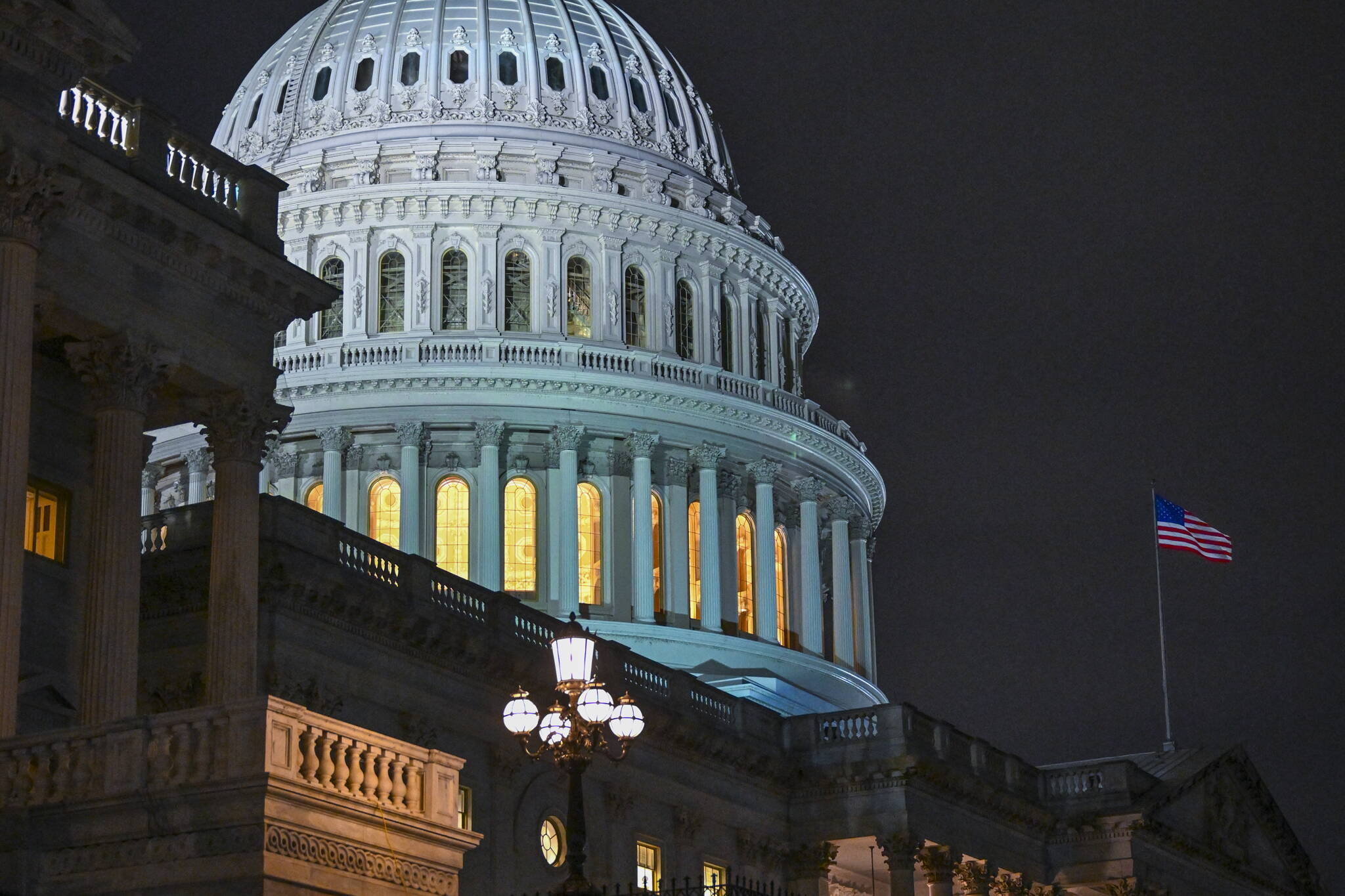
There have been more than 20 gaps in federal government funding since 1976, with varying levels of shutdowns that have affected agencies — and the public — in different ways. During Donald Trump’s first term as president, roughly 800,000 of the federal government’s more than 2 million employees were sidelined for more than a month starting in December 2018. The economy took a major hit.
As lawmakers raced to secure a funding deal that would keep the government open beyond Friday’s deadline of 8 p.m. Alaska time, Washington and its large federal workforce braced for a potentially disruptive holiday season. Travel would still likely proceed without major interruptions, as Transportation Security Administration employees and air traffic controllers would largely continue to work. But like during the late 2018 shutdown, travelers could face delays at airports.
Carter Langston, a Transportation Security Administration spokesperson, said Thursday that 59,000 of the agency’s 62,000 employees were considered “essential,” meaning they would continue working without pay during a shutdown. The agency expects to screen 40 million passengers over the holidays.
“While our personnel have prepared to handle high volumes of travelers and ensure safe travel, an extended shutdown could mean longer wait times at airports,” Langston said.
A shutdown would cause enormous strain on furloughed government workers and those required to still work, most of whom would do so without pay until funding is restored.
How does the federal government prepare?
The White House’s Office of Management and Budget maintains a collection of plans that federal agencies have developed in the event of a shutdown. Other Washington institutions, like the National Gallery of Art, have also developed plans as part of that list.
Federal agencies organize their employees by the urgency of their work in a shutdown, using categories such as “necessary to perform activities expressly authorized by law”; “necessary to the discharge of the president’s constitutional duties and powers”; and “necessary to protect life and property.” Departments provide estimates of how many employees in those categories would be likely to work during a shutdown.
The Health and Human Services Department would keep roughly 50,000 of its employees working through a shutdown, and would furlough more than 40,000 people by the second day of a break in funding. Divisions within the department with workers more urgent to human health would keep going.
The National Institutes of Health’s clinical center would care for and admit new patients “for whom it is medically necessary,” while the Food and Drug Administration would monitor and respond to food-borne illnesses and flu outbreaks. But some core food safety work would be “reduced to emergency responses.” Like in past shutdowns, government labs could close, halting research.
More than 150,000, or over half, of the Homeland Security Department’s workforce would keep working because of their status as “necessary to protect life and property.”
How are federal workers’ lives affected?
Federal employees, including those who are furloughed, will receive back pay once the president signs legislation funding the government. And employees who worked overtime can typically claim extra wages after a shutdown concludes.
Those protections are not necessarily guaranteed for the many contractors who keep government agencies running, such as janitors and cafeteria workers. They may still be entitled to unemployment compensation if they were furloughed or could not work.
A break in pay would affect a wide swath of workers, potentially delaying paychecks for members of the military. Many federal employees do clerical or administrative work that keeps agencies functioning, and do not have large salaries. Past shutdowns have led to scenes of anguish and desperation among federal workers who struggled to afford food and essentials. In 2019, as the more than monthlong shutdown extended well past New Year’s Day, there were long lines at Washington-area food banks, where federal workers waited for brown bags of meals.
The U.S. Office of Personnel Management has published a shutdown guide for federal workers.
How is the public affected?
Some aspects of a shutdown would be more noticeable to Americans, like changes in the operations of national parks and museums. Some would be harder to spot: In past shutdowns, inspections of chemical factories, power plants and water treatment plants ground to a halt, while some routine food safety inspections were paused.
Social Security and Medicare benefits continue uninterrupted, as does medical care for veterans. Because of how the Postal Service is funded, regular mail operations would continue.
Depending on the length of a shutdown, low-income Americans who rely on food stamps or WIC — the Special Supplemental Nutrition Program for Women, Infants, and Children — could see access lapse.
• This article originally appeared in The New York Times.
