

A 9,000-year-old child’s tooth has reshaped scientific understanding of Alaska’s ancient people.
Analyzed in a paper published Thursday, the tooth is just the second known discovery of human remains from a group of Alaska migrants known as Ancient Beringians. The group is thought to be the ancient ancestors of Alaska Natives who crossed the Bering Land Bridge that once connected Asia and Alaska, then migrated south over time.
Believed to be from a 1 1/2-year-old child, the tooth was stored unanalyzed in Copenhagen, Denmark, until 2016, when Fairbanks-based National Park Service archeologist Jeff Rasic rediscovered it. Through radiocarbon dating, Rasic discovered something remarkable: the tooth was more than twice as old as any other human specimen found in the North American Arctic.
The discovery has rewritten the Arctic’s ancient history.
“This one small tooth is a treasure trove of information about Alaska’s early populations, not only their genetic affinities but also their movements, interactions with other people and diet,” Rasic said.
Rasic’s findings formed part of a study published in the journal Science on Thursday. The study included DNA analysis of 15 bone samples from across North and South America. The work broadened understanding of how early inhabitants populated the Americas. When looked at side-by-side, analysis of the bone samples deepens the picture of how humans settled the western hemisphere.
“Through that, you can unlock a view of the human family tree. The family tree of ancient Native Alaskans and Native Americans,” Rasic said.
Danish archeologists first discovered the tooth in 1949 at a Seward Peninsula site known as the Trail Creek Caves. The archeological site has since fallen by the wayside as an area of study, Rasic said. An old technical report clued him into the tooth’s existence. Rasic traveled to Denmark to track it down.
The tooth gathered dust in a collection stored down the hall from a cutting-edge DNA analysis lab, Rasic said. Analysis showed that it did indeed belong to an Ancient Beringian, a member of a population that’s related, but genetically distinct from, modern Native Alaskans.
It’s believed the people were mobile and lived in small groups, Rasic said. Some evidence shows they may have also conducted purposeful burials, indicating they led a developed spiritual life.
“These were complicated, social people. They have really sophisticated technology,” Rasic said.
Matthew Wooller, a University of Alaska Fairbanks professor, was able to infer something about the child’s diet by analyzing elements in the tooth. Wooller runs UAF’s stable isotope facility. Using world-class technology there, he identified chemical signatures which point to a certain diet. The Seward Peninsula was surrounded by ocean on three sides, but curiously, isotope analysis pointed to a land-based food source.
“Geographically speaking, surrounded by the marine environment, and yet we see no evidence there of the presence of marine derived sources of food in this child, and by proxy, its mother,” Wooller said.
Archeologists have dated arrowheads and other human artifacts from the caves. Those are at least as old as the tooth, Rasic said. A team led by University of Alaska Fairbanks professor Ben Potter discovered the only other known traces of Ancient Beringians in 2013 at a site in Alaska’s Interior.
“Human remains are exceptionally rare, much rarer than organic artifacts. … With this find, we’ve been able to connect that genetic side, the biological side, to the archeological side,” Rasic said.
Rasic worked with tribal officials in Deering, Alaska, a small town near the Trail Creek Caves, to make sure they were OK with the research.
“These are really the broadest strokes of the human family tree and the history of Native Americans on a global scale that we’re sketching out in front of our eyes,” Rasic said.
• Contact reporter Kevin Gullufsen at kevingullufsen@gmail.com or (907) 321-6584. Follow him on Twitter at @KevinGullufsen.
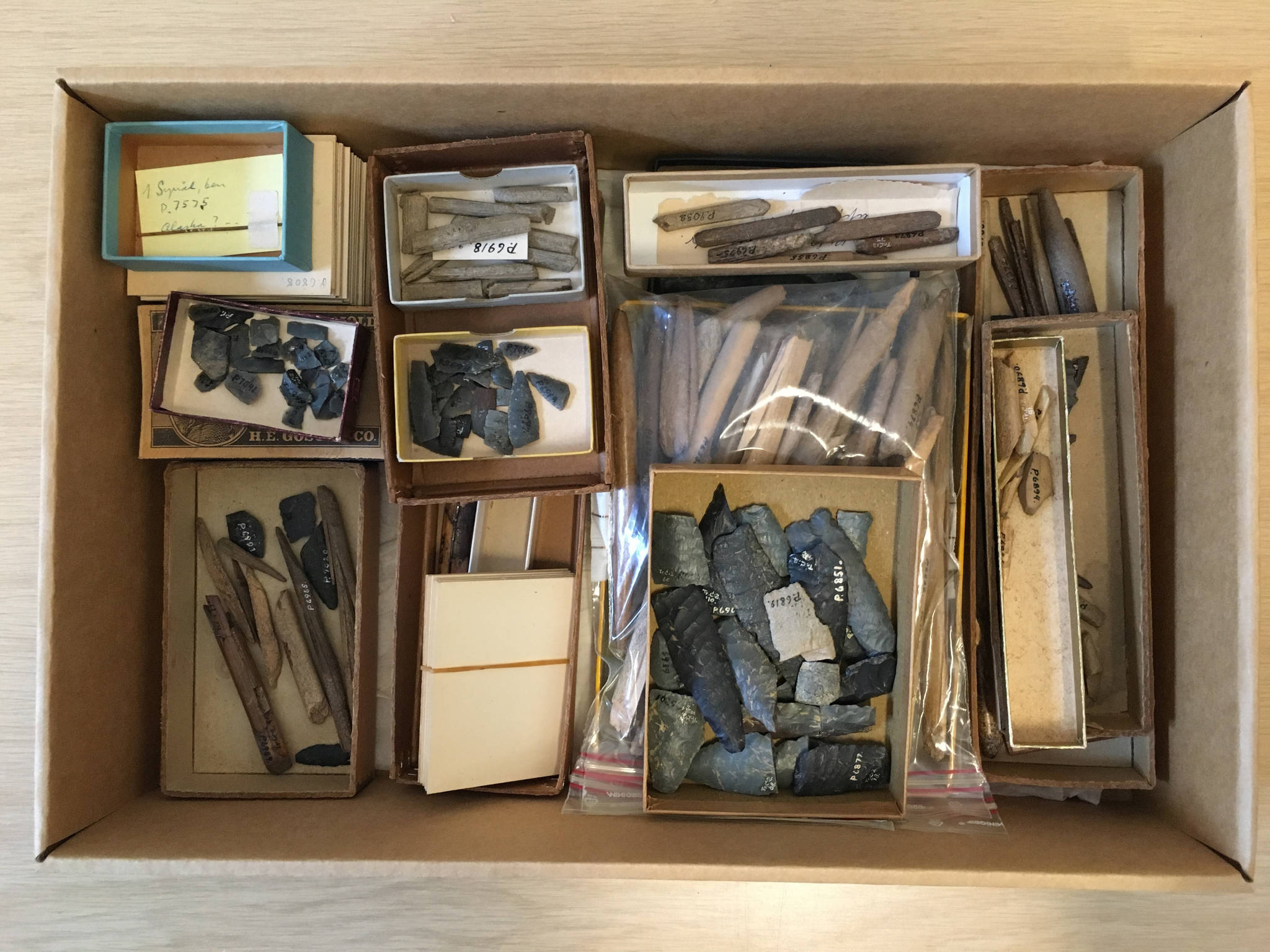
Artifact collections from Helge Larsen’s 1949-50 excavations housed at the Danish National Museum in Copenhagen. (Courtesy Photo | Jeff Rasic/NPS).
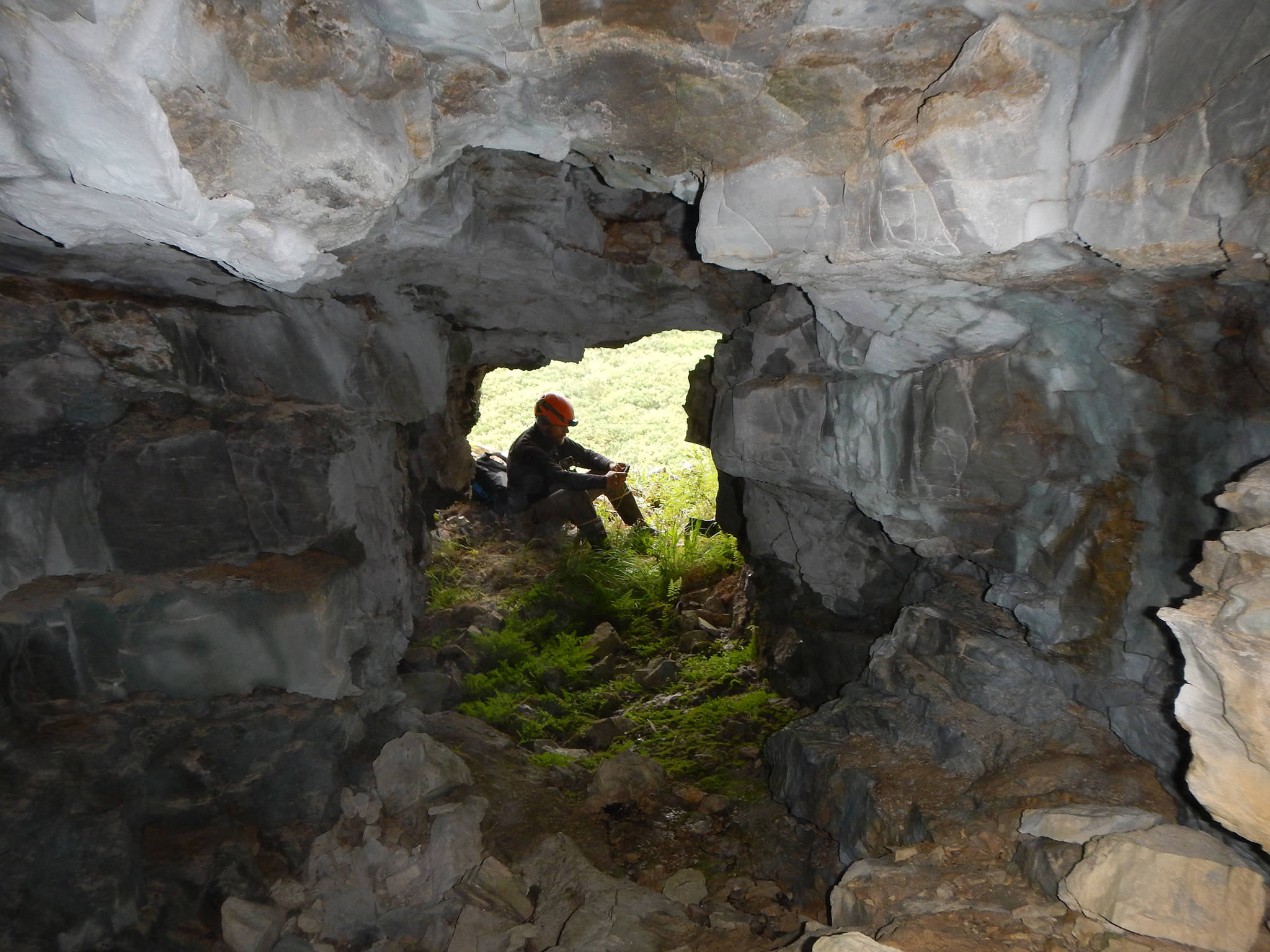
View from the interior of Trail Creek Cave 2. (Courtesy Photo | Andy Tremayne/NPS)
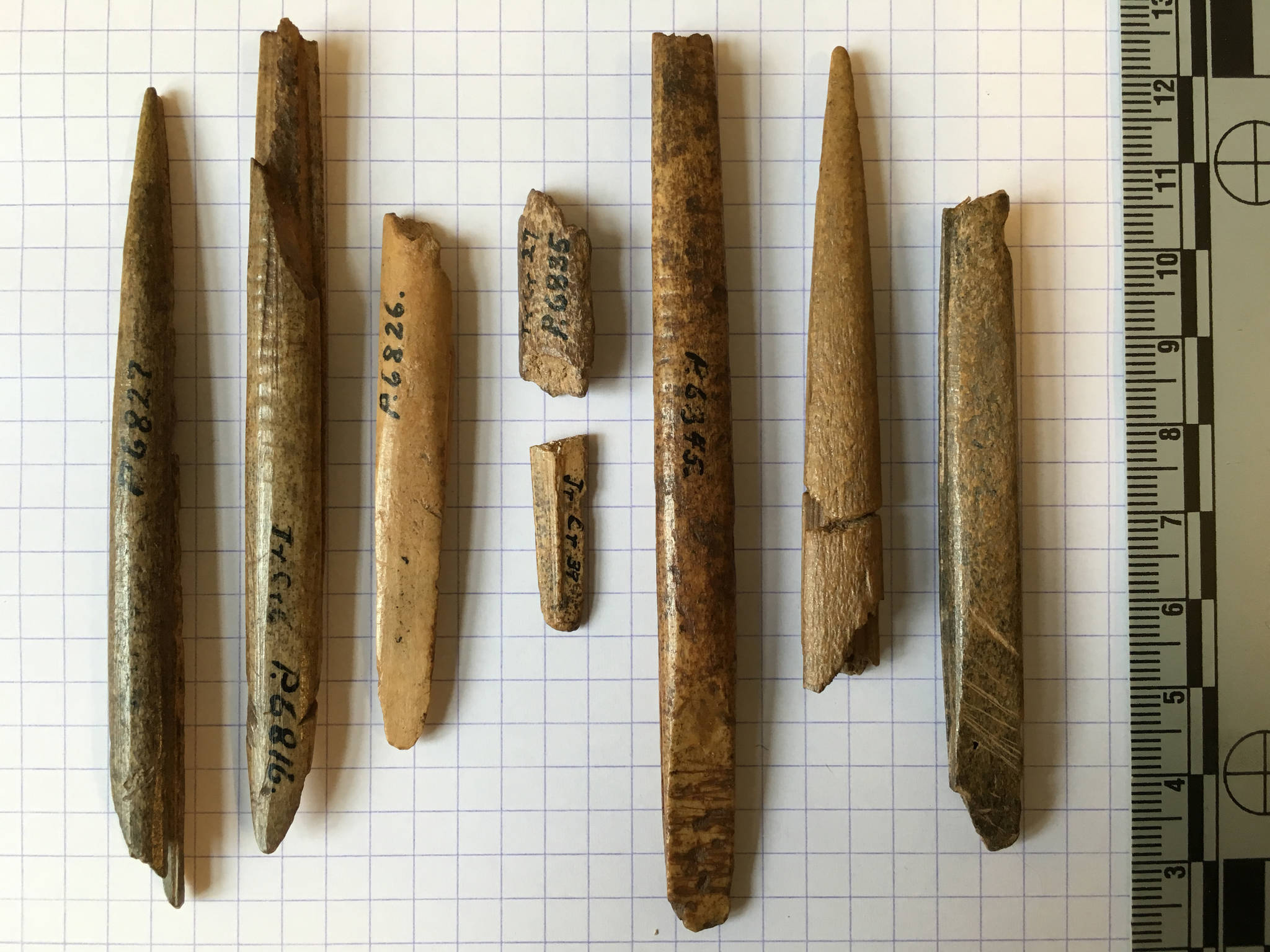
Artifact collections from Helge Larsen’s 1949-50 excavations housed at the Danish National Museum in Copenhagen. These antler weapon tips are the oldest artifacts from the site, dating to roughly 9,000 to 10,000 years ago and coincident with period of occupation that resulted in deposition of the tooth. (Courtesy Photo | Jeff Rasic/NPS)
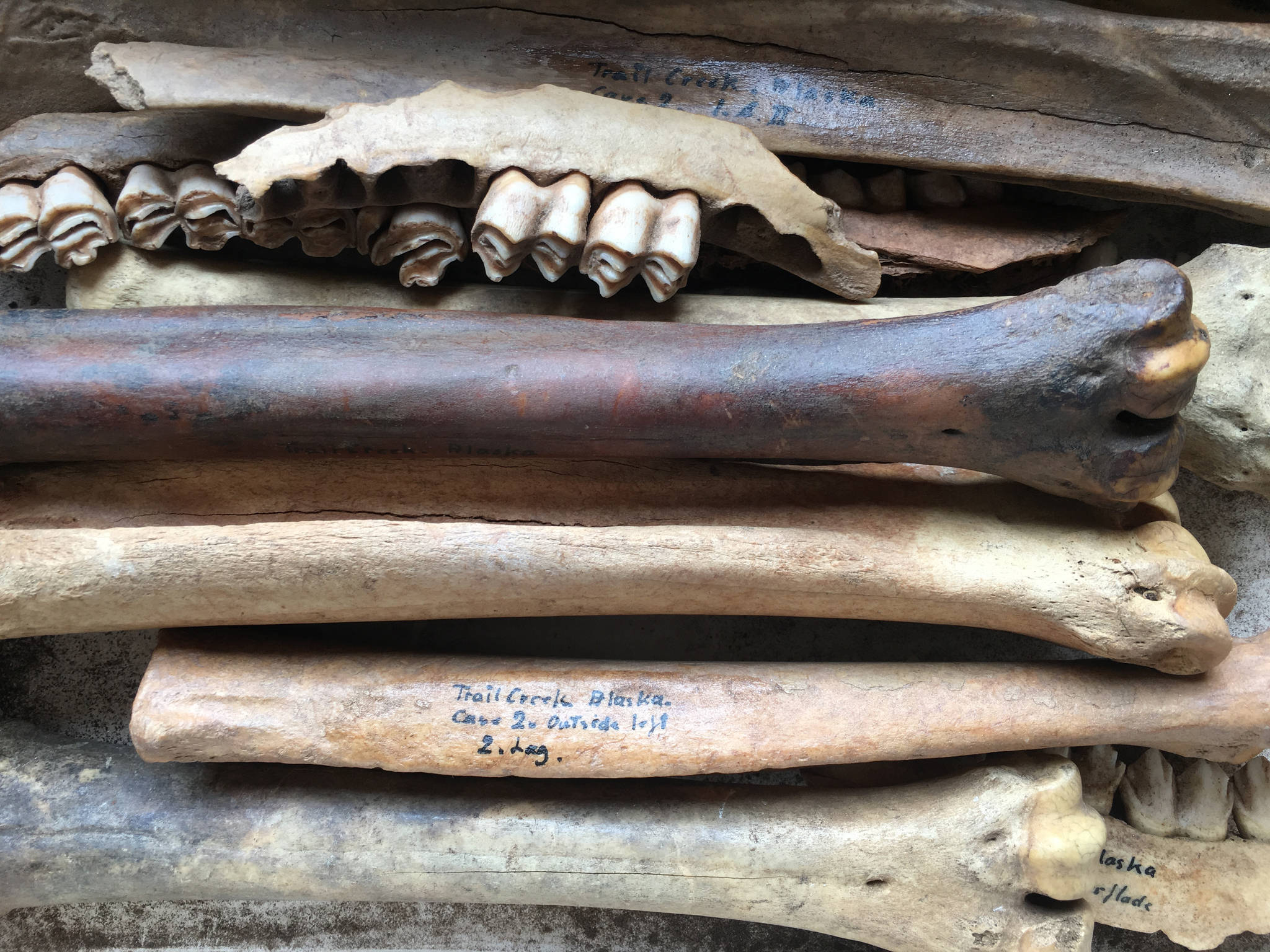
Animal bones from Helge Larsen’s 1949-50 excavations housed at the Danish National Zoological Museum in Copenhagen. Courtesy Photo | Jeff Rasic/NPS)
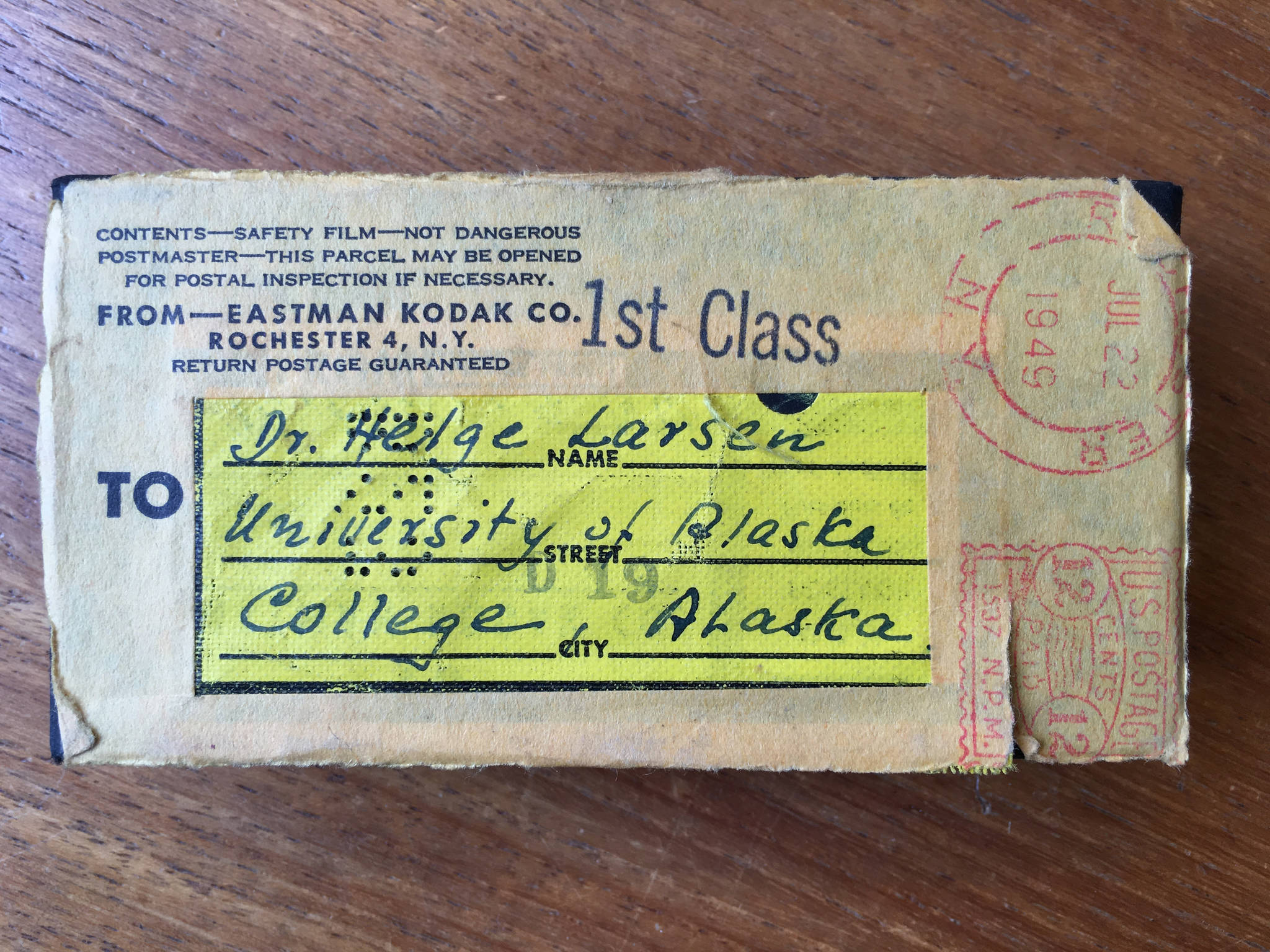
Artifact collections from Helge Larsen’s 1949-50 excavations housed at the Danish National Museum in Copenhagen. This is an orginal artifact storage box from Larsen’s work. He collaborated closely with University of Alaska Museum researchers during this time. (Courtesy Photos | Jeff Rasic/NPS).
