
More than 50 years after Alaska Natives were unable to apply for their rightful 160 acres of in-state land because they were fighting in Vietnam, a way of doing so is finally in place that overcomes laws and regulations passed since then that stifled efforts for decades.
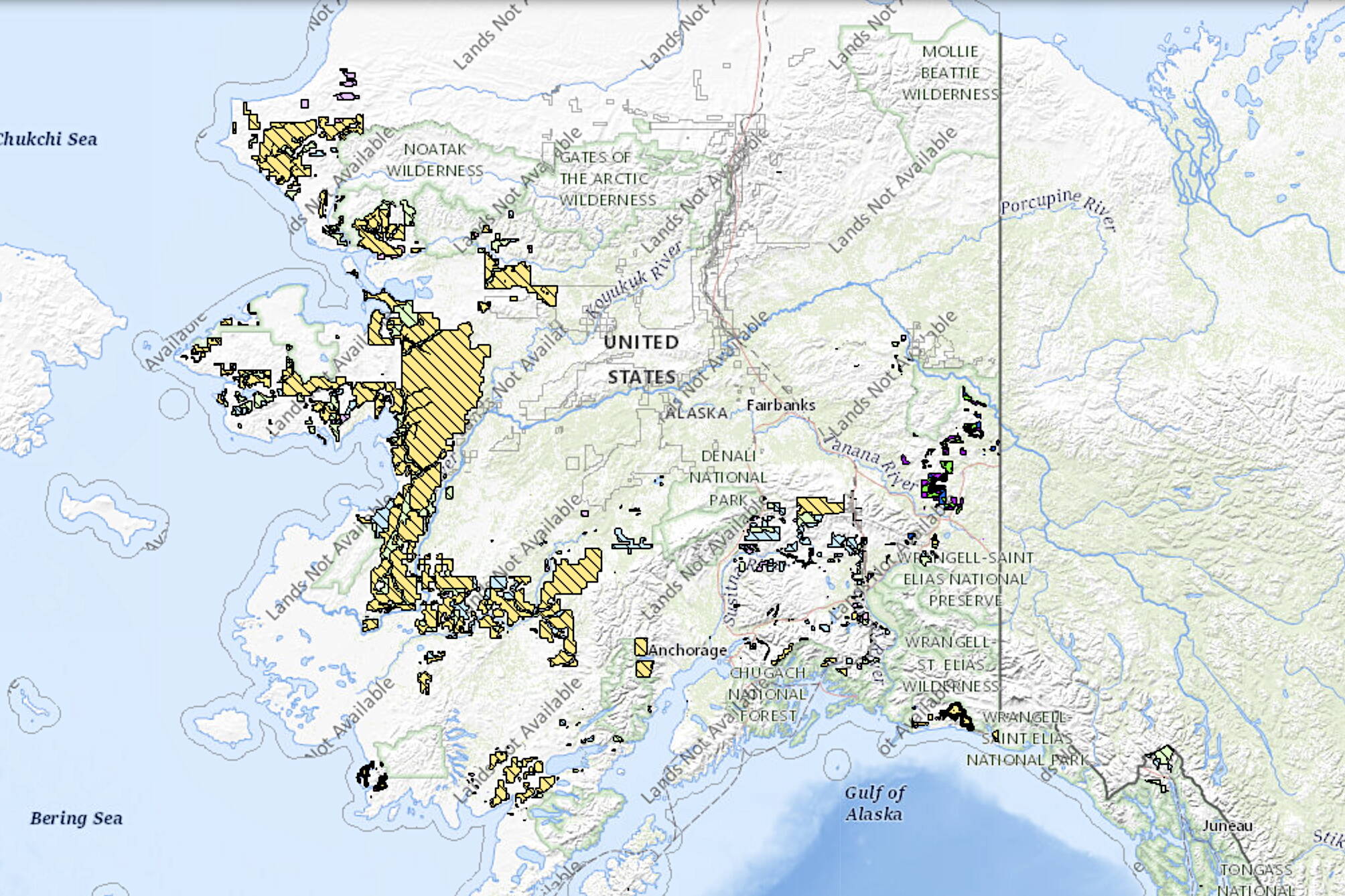
About 27 million acres of public land managed by the Bureau of Land Management are being made available, with details and applications available online, according to an order filed Monday in the Federal Register. The parcels are mostly in the Kobuk-Seward Peninsula, Ring of Fire, Bay, Bering Sea Western Interior, and East Alaska planning areas, with a relatively small number of lots in Southeast Alaska in the vicinity of Skagway and Haines also available.
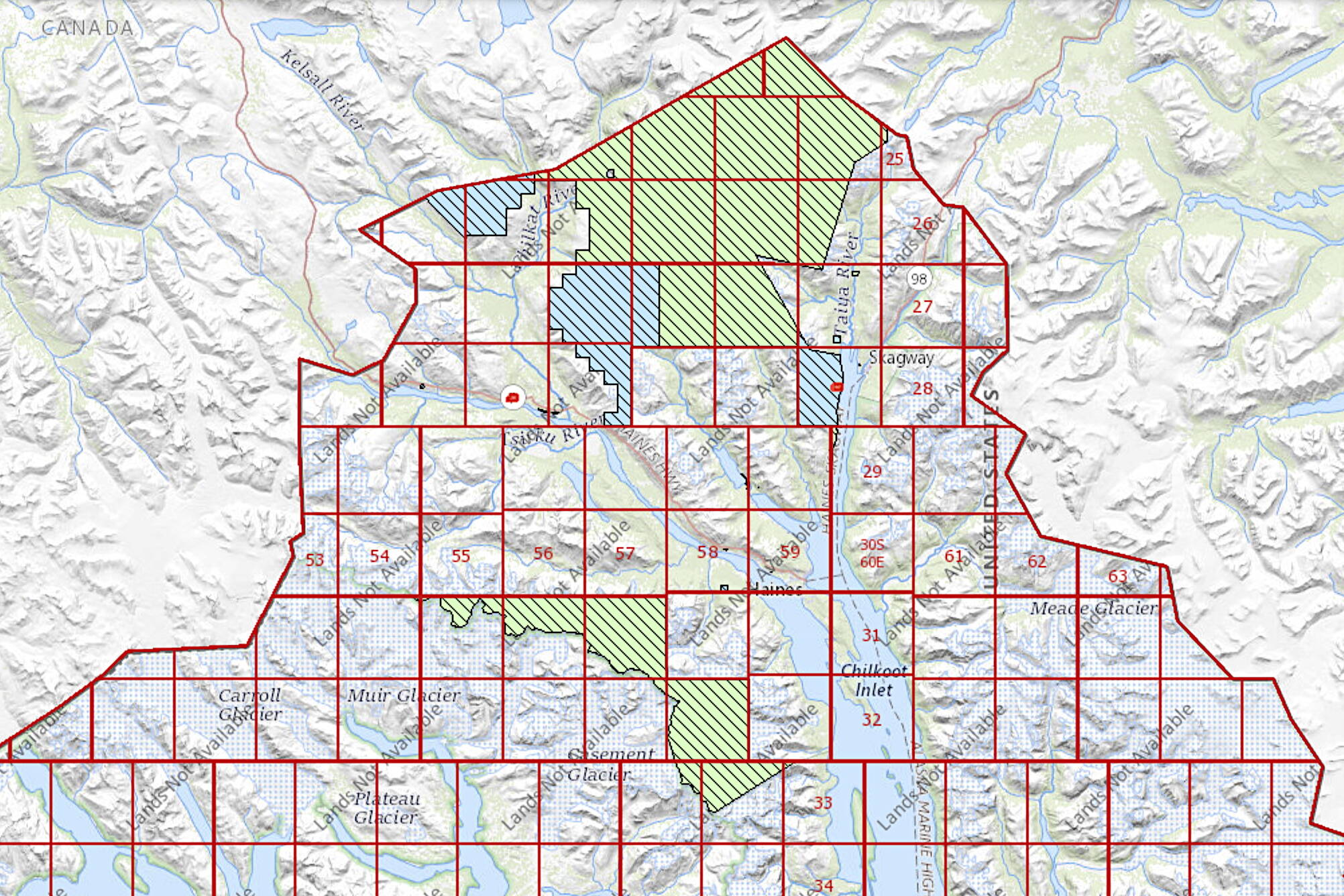
Land parcels available in Southeast Alaska through an allocation program for Alaska Native Vietnam veterans are shown in a map by the U.S. Bureau of Land Management, which is administering the program. About 28 million acres are being made available statewide due to a 1906 law promising Alaska Natives 160 acres of land — a process interrupted by the passage of the Alaska Native Claims Settlement Act in 1971, but many Natives serving overseas during the 1960s were unable to make their claims then. (U.S. Bureau of Land Management)
“This announcement is a significant accomplishment in honoring our sacred obligation to America’s veterans,” Department of the Interior Secretary Deb Haaland said in a prepared statement. “The Department is proud to move forward expeditiously so that Alaska Native Vietnam-era veterans are able to select the land allotments they are owed, with an expansive selection area.”
Haaland’s order vastly expands the 1.2 million acres of federal land made available for the program under former President Donald Trump, authorized when Congress passed a bill in 2019 sponsored by Republican Sen. Lisa Murkowski. It also removes some bureaucratic complications in the application and evaluation process, including some of the original lands being put under a stay in 2021 when President Joe Biden called for a review of orders issued by Trump.
The stay received significant criticism from veterans and Alaska Republicans when it was announced and prompted a state land swap proposal from Gov. Mike Dunleavy.
Enthusiasm for the new order was expressed by George Bennett Sr. an Alaska Native Vietnam veteran in Juneau who in April expressed frustration about the ongoing wait for his land transfer.
“That’s probably going to be a big plus for a lot of our veterans to finally have a choice beyond the original lands they gave us to choose from,” he said Thursday, referring to the 1.2 million acres previously allotted.
Bennett said one of his hopes going forward is efforts will be made to obtain land parcels for heirs of veterans who were killed while serving overseas during the 1960s.
“I’m just hoping some of our Native corporations start doubling up to help Natives that have passed away,” he said. “Those who were married to veterans that are no longer with us, I just hope somebody is able to help them with probate.”
Alaska Natives were promised 160 acres of land in the 1906 Alaska Native Allotment Act, but restrictions prevented many people from applying until the 1960s, when it wasn’t possible to many serving in Vietnam and elsewhere overseas. The process was interrupted by the passage of the Alaska Native Claims Settlement Act in 1971.
Haaland’s order this week partially revokes 15 orders issued in 1972 and 1973 in accordance with ANCSA, and a 1952 Executive Order related to the withdrawal or reserving of U.S. lands for public purposes. She announced the intent to open the lands during a visit to Anchorage in April.
“Subject to valid existing rights, the lands described in the Public Lands Order will be open to selection and application processing starting at 8 a.m. AKST on Sept. 14, 2022,” the Bureau of Land Management announced in a statement. “The BLM has already received approximately 203 applications for allotments on these lands. All valid applications received prior to the opening date shall be considered simultaneously filed at that time. Those received thereafter shall be considered in the order of filing.”
Eligible veterans can apply for allotments until Dec. 29, 2025.
The decision by Haaland has resulted in some opposition and discontent from people saying it was discriminatory by denying other Vietnam War veterans the right to apply for land, despite the frequent reminders and rebuttals Alaska Natives were granted the parcels under the 1902 agreement.
Some discontent was also expressed by Murkowski, despite her embrace of the overall land allocation, who in a statement issued in April when the decision was announced said she wants to see additional measures.
“To truly do right by our veterans and all Alaskans, the Biden administration must take two additional steps,” she said. “First, they need to help us open already-identified refuge and Forest Service lands so that hundreds of veterans — especially in Southeast and Southwest — can select allotments closer to where they actually live. Second, the Department of the Interior needs to admit (federal Public Land Orders) are obsolete, serving no valid purpose, and lift them across Alaska in their entirety.”
Public Land Orders “are implemented by the Secretary of the Interior to make, modify, extend, or revoke land withdrawals under the authority of the Federal Land Policy and Management Act of 1976,” according to the Bureau of Land Management’s website. Virtually all of the land specified in Haaland’s order, including the parcels in Southeast Alaska, is listed as “potentially available after PLO Review.”
The PLO process has been the cause of complaints, including by Republican Sen. Dan Sullivan when the expanded allocation was announced, asserting it means further delays in decades-old efforts.
Among the Bureau of Land Management’s criteria in determining which land parcels are eligible is “excepting any lands within 500 feet of the Iditarod National Historic Trail, and any lands within 1⁄4 mile of cultural resource sites,” according to the order published Monday.
“The exact locations of these sites are withheld in order to limit the risk of harm to the cultural resource or site where the resource is located,” the order states. “If an applicant is interested in a particular location, they should contact the BLM in order to ensure that their application does not overlap with areas excluded from this PLO as a result of known cultural resource sites or the Iditarod National Historic trail.”
• Contact reporter Mark Sabbatini at mark.sabbatini@juneauempire.com.
