

I am a scholar in a system that was not meant for people like me. During my graduate studies, I collaborated directly with Tribal governments, interweaving knowledge systems for the benefit of the people I served. This was during a period when many of my colleagues overlooked the profound expertise held by these communities and Tribes.
Western knowledge systems are erroneously considered a single universal truth, and my work challenged this misconception, advocating for the values, justice, and stronger academic outcomes, inherent in recognizing diverse knowledge systems.
Having personally navigated that academic landscape and understanding the challenges faced by students from these backgrounds, I now dedicate myself to supporting Native students and allies through mentorship and wellness initiatives. A positive response I received that personally struck me was from Mike Jackson, “You had the heart to include our community, and our children, most important of all.” This gratitude for inclusion permeates all levels — from education and research to management — and raises critical questions: Whose voices and knowledge are being excluded?
The Sustainable Southeast Partnership (SSP), whose Steering Committee I joined in 2024, coalesces around the value of “intentional collaboration” and continually asks, “Who is missing from our table?” Our Partners work to bridge knowledge systems across our communities and institutions by listening deeply, challenging their own notions of what is useful and meaningful to communities, and rolling up their sleeves to do work in a respectful and relational way.
Sonia Ibarra, Fisheries Ph.D., is a University of Alaska Fairbanks postdoctoral fellow, Tamamta program coordinator and Sustainable Southeast Partnership steering committee member.
Learn about some of the ways our Partners are advancing the co-production of knowledge, including through Tamamta, a graduate training program Dr. Ibarra helps coordinate.
Tamamta: Uplifting “all of us”
The Tamamta program, named after a Yup’ik and Sugpiaq word meaning “all of us,” is a graduate training program funded by the National Science Foundation, focused on merging Indigenous and Western sciences to advance graduate education and research in fisheries and marine sciences.
The program was established to address the persistent inequities within education and resource management systems across the state, including fisheries management practices that prioritize fish as a commodity and disregard their significance as relatives. It also recognizes the challenges faced by Indigenous students in academia who seek to conduct place-based research with their Tribal communities.
Tamamta provides mental, physical, and spiritual wellness support for scholars throughout their academic journey, acknowledging the difficulties of being among the few who are trying to reform the system
Currently, the program has 16 scholars with 3 recent graduates across the state pursuing masters and PhDs. In Southeast Alaska, scholars are based in Sitka and Metlakatla, with another working alongside Tribes in Haines.
Studying the savior fish: Saak (hooligan)
Eugene Peltola III is studying saak (hooligan) alongside the Chilkoot Indian Association (CIA) in the Tamamta program at the University of Alaska Fairbanks (UAF). His study is focused on reproduction patterns.
The small, silvery fish known as saak, ooligan, or hooligan migrate from the Pacific Ocean to freshwater each spring to spawn. Celebrated by coastal Tribes, they are called “savior” or “salvation fish” due to their role as the first harvest after a long winter. These fish belong to the smelt family and measure 4 to 8 inches in length.
While they once thrived from northern California to southwest Alaska, southern populations have significantly declined, with some becoming extinct. However, the river systems of upper Lynn Canal, including the Chilkoot River, still support subsistence fishing due to strong saak runs.
For over 13 years, the Chilkoot Indian Association (CIA) has monitored saak populations in the Chilkoot River and expanded its efforts to include other rivers flowing into Lynn Canal. This program is rich in partnerships and integrates both Indigenous and Western science.
Following traditional practices, researchers avoid disturbing the first “scouts” that arrive and wait 24 hours after observing fish before beginning the mark-recapture portion of the study. Their environmental DNA research has also enabled them to detect and monitor the early winter run of saak, which has been documented in traditional knowledge. This collaboration at the Chilkoot Indian Association aims to understand saak abundance and guide their protection.
Through Eugene’s work, CIA will also incorporate traditional knowledge about changes in the male-to-female ratio during the run to explore whether saak may spawn more than once.
Reviving clam gardens in Keex’ Kwaan
In August 2023, Kake completed the foundation of the state’s first contemporary clam garden, a historic achievement in revitalizing Indigenous marine resource management. Clam gardens, once integral to the diets and economies of coastal Tribes such as the Lingít, Haida and Tsimshian, enhance shellfish productivity by creating rock-walled terraces that support local ecosystems. Colonization disrupted these food systems, but efforts led by the Organized Village of Kake (OVK) are reclaiming this knowledge, with Ethan Kadake as the Clam Gardens Coordinator.
Ethan’s journey began with the Alaska Youth Stewards (AYS), a Tlingit & Haida program fostering Indigenous youth in environmental stewardship. The Kake clam garden started as a food security project during the pandemic and evolved into a broader food sovereignty initiative, integrating traditional ecological knowledge with Western science by reviving a traditional resource management method and enhancing productivity and monitoring methods with modern technology. Beyond enhancing a vital food source, the garden strengthens community bonds, offers educational opportunities and career pathways for local youth, and serves as a replicable model for other communities.
Resilience Circles
Seeking an opportunity to scale Native business and well-being in Alaska, Spruce Root and Jump/Scale launched Alaska Native Resilience Circles, a year-long cohort based program to support Indigenous entrepreneurs.
This initiative strengthens the capacities of Alaska Native enterprises for ecosystem guardianship, long-term economic resilience, comprehensive well-being, and community mental health.
Resilience Circles takes a holistic approach to entrepreneurship, recognizing that healthy communities rely on strong local businesses, and business success is deeply connected to personal and cultural well-being.
Participants engage in a series of in-person and virtual workshops that cover a wide range of topics: personal and business financial planning, marketing and branding, physical health and nutrition, mental health, and Indigenous culture and values.
By integrating financial knowledge with cultural grounding and wellness practices, the program fosters sustainable growth for both individuals and their businesses.
By the end of the year, Resilience Circles participants emerge with enhanced business skills and a stronger support network of fellow Indigenous entrepreneurs. This program is more than business training — it is a movement to reclaim and sustain Indigenous knowledge, wellness and economic sovereignty across Alaska.
Spruce Root and Jump/Scale are honored to cultivate this space, empowering Native entrepreneurs to thrive in a way that reflects their values, strengthens their communities and ensures long-term resilience.
Seacoast Indigenous Guardians Network
Tlingit & Haida’s Seacoast Indigenous Guardians Network (SIGN) is a collaborative partnership of Tribal governments, Federal government agencies, Alaska Native corporations, and environmental non-government organizations created to empower every Southeast Alaska Tribe and community with the tools and resources they need to steward and restore balance to their traditional homelands and waters. SIGN works to strengthen Southeast Alaska communities through job creation, professional training opportunities, youth programs, outreach, and collaborative stewardship of traditional homelands and waters.
SIGN was established through an agreement between the USDA and the Central Council of the Tlingit & Haida Indian Tribes of Alaska (Tlingit & Haida) — launching publicly in 2023. The partnership identifies strategic priorities that meet the needs of Indigenous communities who depend on marine and terrestrial resources for food security, health and sustainable economies.
The Indigenous Peoples of Southeast Alaska have long served as stewards and guardians of their homelands and waters. Through the preservation and continuation of profound knowledge systems and sustainable practices, Alaska Native communities have worked for over 10 thousand years to ensure traditional lands and waters thrive and continue to maintain the well-being of their people. SIGN was developed to support and strengthen the self-determination of Alaska Native communities with its primary mission being the incorporation of Indigenous place-based knowledge into the monitoring, protection, restoration, and management of cherished territories.
In 2024, SIGN expanded to include seven communities with three additional communities in the preparation phase. They also partnered with all four Alaska Youth Stewards crews (a Tlingit & Haida youth stewardship program) and the Ocean Conservancy to remove about 4,000 pounds of ocean debris during cleanups.
“Woven Peoples and Place” is the monthly column of the Sustainable Southeast Partnership (SSP). SSP is a dynamic collective impact network uniting diverse skills and perspectives to strengthen cultural, ecological, and economic resilience across Southeast Alaska. Follow along at sustainablesoutheast.net; on Linkedin, Instagram and Facebook at @sustainablesoutheast; and on YouTube @SustainableSoutheastAK.
Editor’s note: This article has been updated to correct the full name of Eugene Peltola III.
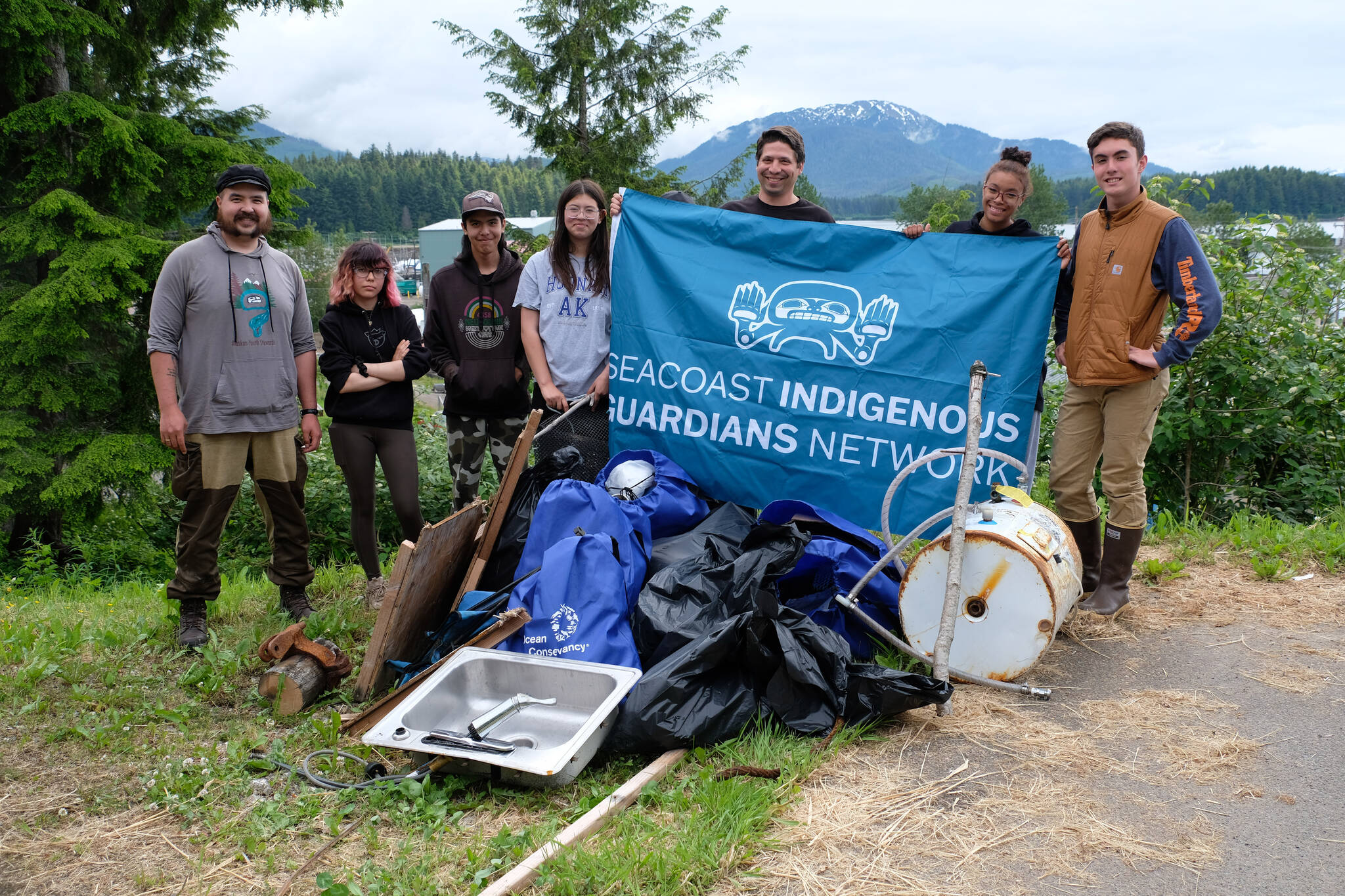
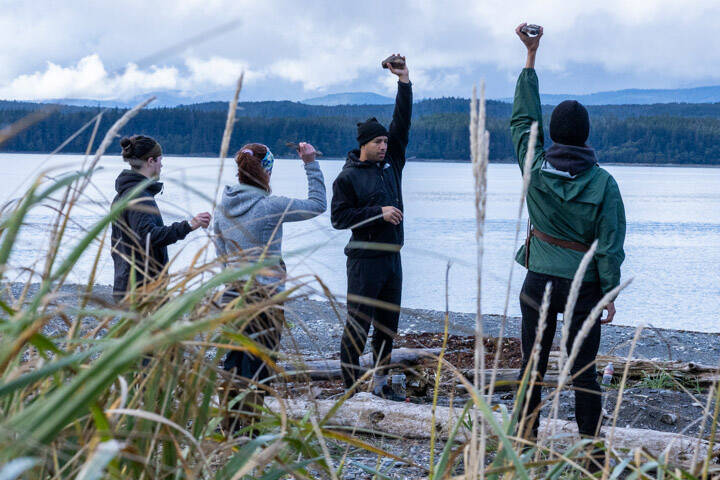
Photo courtesy of Seacoast Indigenous Guardian’s Network Hoonah Alaska Youth Stewards Crew are photographed at Seacoast Indigenous Guardian’s Network trash cleanup.
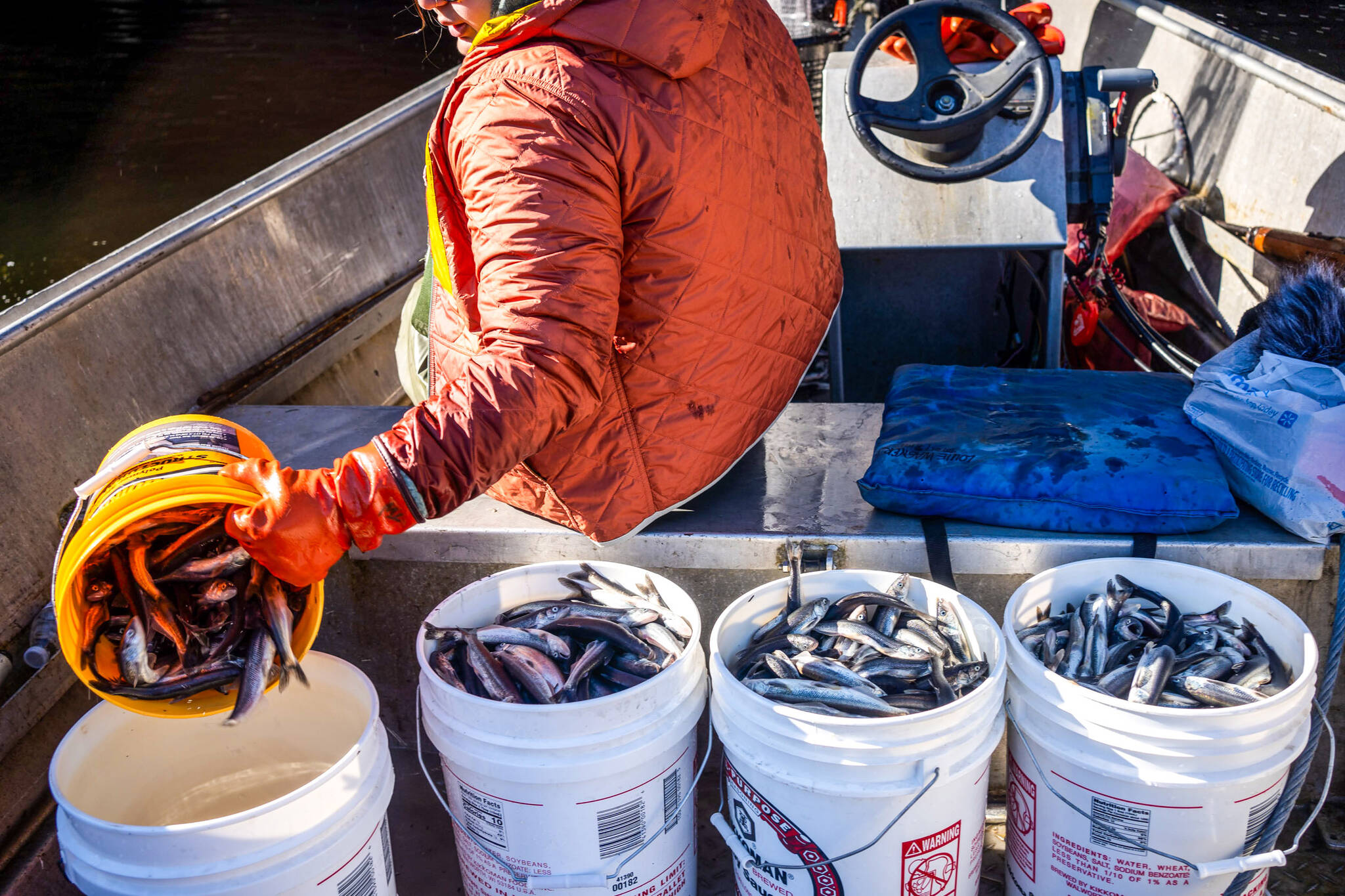
Photo courtesy Tazia Wagner Hooligan is harvested in the Chilkat Valley.
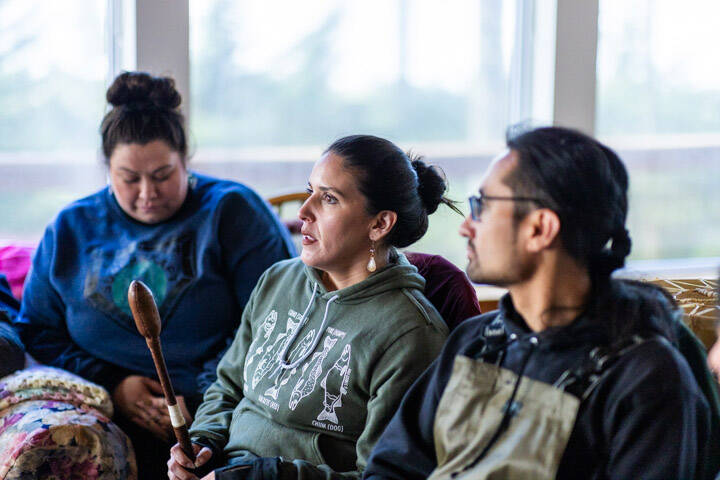
Photo courtesy Scott Burton The first Resilience Circles cohort gathers in Juneau for a cohort retreat.
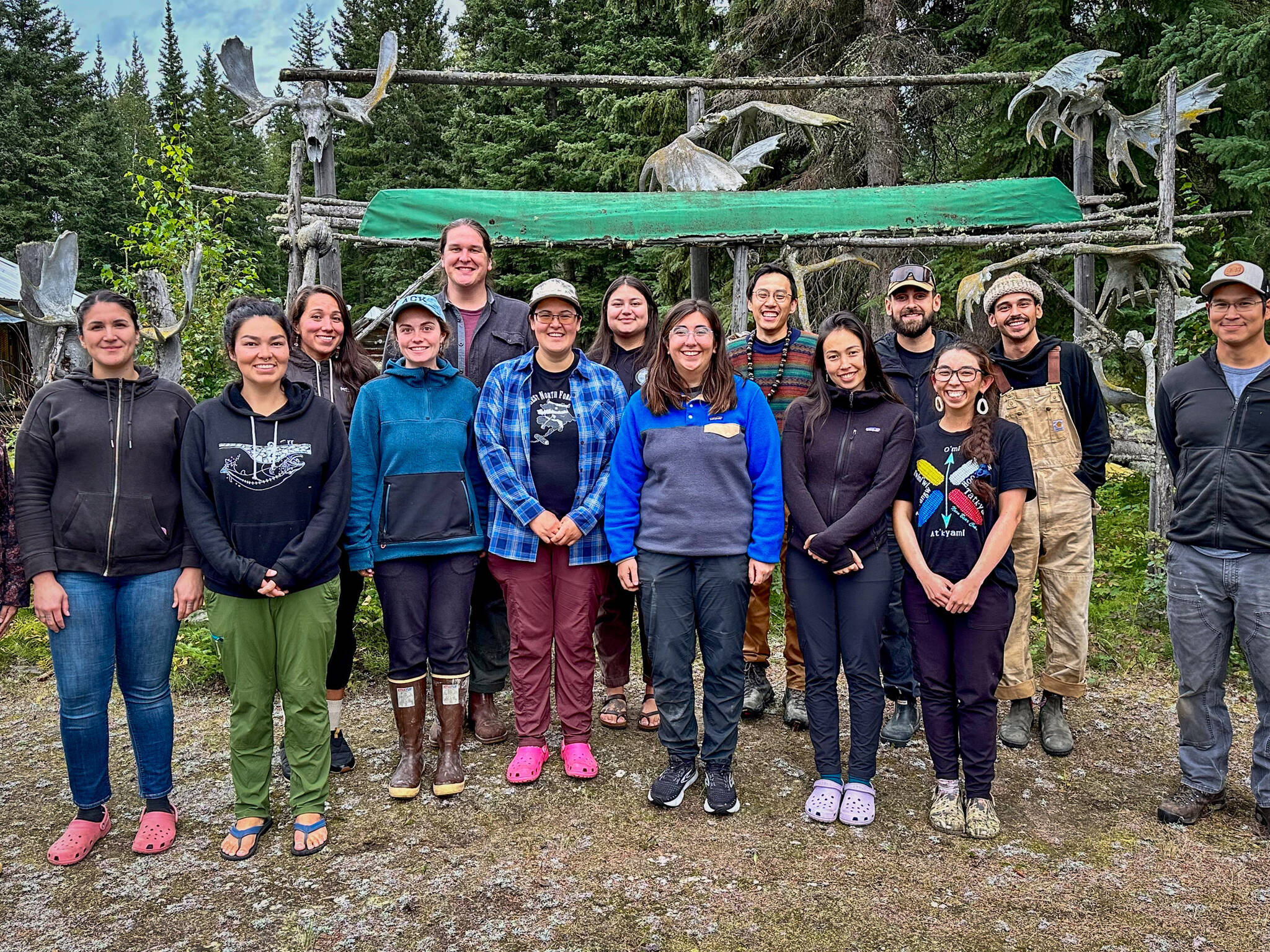
Photo courtesy Courtney Carothers Tamamta Fellow gather in Fairbanks as a whole cohort.
The first Resilience Circles cohort gathers in Juneau for a cohort retreat. (Photo courtesy Scott Burton)
