
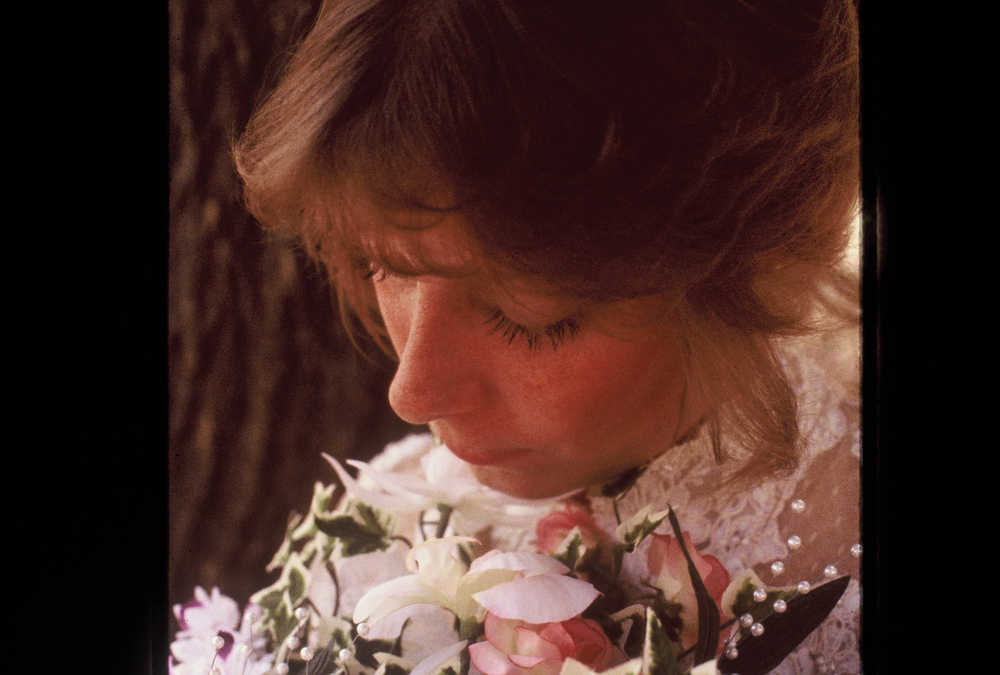
It was 5:15 a.m. Years of being in private practice and living 3,000 miles away from family had taught me that very early or very late phone calls usually meant an emergency.
Through tears, my granddaughter told me that my only daughter had been hit by a car on her way to work. A Dodge Neon traveling north at 75 miles per hour on a foggy country road crossed into her southbound lane, hitting her head-on, and exploded into flames.
My breathing ceased.
I cradled the phone. My legs buckled and I collapsed onto the floor in a heap. Doubled over, I railed against the words, “She didn’t make it, she didn’t make it,” screaming and wailing, pushing against the overwhelming wretchedness that was devouring me whole. Bits and pieces of what had happened skipped like falling confetti through my brain.
I was gutted.
My breath did not come. My daughter Deirdre is dead. How do I survive this truth seeping into the marrow of my bones? I had to call my son. But how do I tell him his sister, his best friend, is gone? The house was eerily quiet. She was my firstborn. She was a big sister. She was a mother. She was a nurse.
She was….
Cradling the phone, I dialed my son’s number. An audible gasp flew through the slender wire at hearing the awful words. We were muted in our disbelief. We hung up. I attempted to make plans to leave Juneau, but couldn’t think of what to do. I had to get out of Juneau. I had to notify friends and colleagues. I could think of nothing except that my daughter is dead and I had to get to her.
Deirdre graduated nursing school in 1986, and immediately began her career at Huntsville Medical Center as an ob-gyn nurse working in both delivery and nursery. Six months prior to her death, she had resigned from Huntsville Medical Center and joined the staff at Houston Herman Hospital. It had added an additional 45 minutes to her morning commute.
I remember little of the day she died. I remember making one or two calls. My phone began to ring, one call after another. Someone took care of the ticket to Dallas. I was given flight information by a colleague and friend who had taken up the task of making arrangements for my departure early the next morning. But I didn’t sleep that night. What played before my mind’s eye were the last seconds of her life and what fear she must have experienced when she saw what was suddenly in front of her. A piece of me died.
The next morning while waiting for the flight to leave, a colleague walked up and sat down beside me, offering a sympathetic hand. Seats were exchanged so that our seats were together for the flight to Seattle. Upon arrival, I was grateful for the helping hand to my departing flight. The plane lifted off into an azure sky. On a continuous loop was the thought: I am going home to bury my daughter.
My son met me at the baggage carousel. When I spotted him, I couldn’t speak. Instead, in the middle of the fray of people and surrounded by a cacophony of laughter and friendly conversation, we stood and hugged silently, the pain for both palpable. It was late when we reached his house. We drove to the Huntsville Funeral Home the next morning.
The drive to Huntsville was a laborious three-hour drive. We met my granddaughter and her fiancé in Trinity, Texas, a few miles outside Huntsville. The funeral home looked like any brick home in a quiet neighborhood.
But it wasn’t.
Behind the lead glass front door laid the remains of my daughter. No words were spoken as we entered the facility. Met by the funeral director, we were told she was not ready for viewing because the damage was greater than what had been anticipated. My heart ceased to beat. We were encouraged to return in two hours.
The wait seemed excruciatingly long. We went into the viewing room, then walking into the room, where my daughter lay on a steel gurney, dressed in a hospital gown, pale and still, her hair brushed away from her face. I leaned over and kissed her on the forehead, her cheeks and put my hand over hers, lacing our fingers together. My eyes settled on her face. The lower part of her face was misshapen. It was clear the lower half of her face had needed extensive reconstruction. Her wrist had been broken and her hand lay at an odd angle. Only her forehead and nose had been spared. Her body had suffered great insult. According to the funeral director, she died from blunt force trauma. Few of her bones had been left untouched by the impact. I kept staring at her face thinking surely we will wake from this nightmare. My son and I stood in silence. He wrapped his arm about my shoulders. I could not cry. The pain had fallen into a great well of blackness, numbing me. I was aware of holding her, touching her, as if I could will life into her again. It was late when we left the funeral home. I was loathe to leave her there. I wanted as much time as possible with her.
The next day, sitting on a couch in her house, surrounded by her things, I wrote her obituary. You expect to send out wedding invitations, or the announcement of a birth, but never expect to write your child’s obituary. You expect to pick out a baby bed or bassinet for your child; you don’t expect to pick out a casket.
Deirdre was buried June 18, 2013, under the hot Texas sun in a small cemetery where most of our family have been buried for generations.
I returned to Juneau filled with questions. How did this happen? How could someone get into the wrong lane of a highway? I am dazed and confused at the depth of my anger that runs through my mourning. I wanted answers. I requested information on the accident. The man driving the Dodge Neon tested positive for meth and alcohol, as was the other person in the car. The two burned in the Dodge Neon. I contacted one of the firefighters who had responded to the call. He was on his way home and came up on the scene. He was followed closely by a second responder. They both knew my daughter, and told me they were desperate to get the two cars separated. The concern was that Deirdre’s car would catch fire.
Three people died on that early morning in June because someone made the unconscionable decision to drive impaired. The ripple effect from that crash is still felt. One was an innocent victim on her way to work. As a result of a person’s reckless decision, three families were left without their loved ones.
Our family has had happy moments, but we’re aware one of us is missing. We’ve experienced three Christmases without her — none easy, just manageable. I have long since given over planning Christmas holidays to my children since I live so far away. Deirdre and Cody made the plans based on their schedules of work. The first Christmas without Deirdre was absent joy, but we stumbled through. Because she was a December baby, Christmas was the highlight holiday for her. Her house always looked like a grand store in full bloom with Christmas finery. She never got to experience and revel in her daughter’s wedding. Her daughter will never know the joy of having “Grammy” babysit. My son, thinking it would always be the two of them at the top of the family hierarchy, knows only one carries that mantle now. He has said that not only did he lose his best friend, but she carried some of his history and childhood memories, just as he did for her.
I have come to realize how much this experience has changed my driving. Driving to my office in the Mendenhall Valley, I see the scourged medium separating the lanes of Glacier Highway. I can’t help but wonder if those people who made those tire marks were impaired.
And if they were, why did they make the unthinkable decision to crawl into a lethal weapon and point it at others? And if they were impaired when they took the vehicle into the medium, did they hurt anyone, themselves included? Why don’t they call a cab or a friend, or sleep it off in their parked car to spare the rest of us the pain and suffering of losing a loved one because of their choice?
My daughter did not have to die that day, nor did the other two people. All three should still be here, enjoying family and friends. But instead, my family has suffered greatly over the loss of a bright and delightful woman of whom I am proud to say I was her mother. My heart aches for what I know I cannot have. I feel her loss every day, with every breath.
Death is not easily digested. It takes a long time for the sharp corners to become softer. Memories of the event are less painful now. I try not to think about those last seconds of Deirdre’s life. But at times, when I hear of car accidents and people losing their lives due to an impaired driver, that day creeps into my consciousness and I wonder: How many more innocents will die because of a choice to drive impaired?
• Sondra Sexton-Jones lives in Juneau.
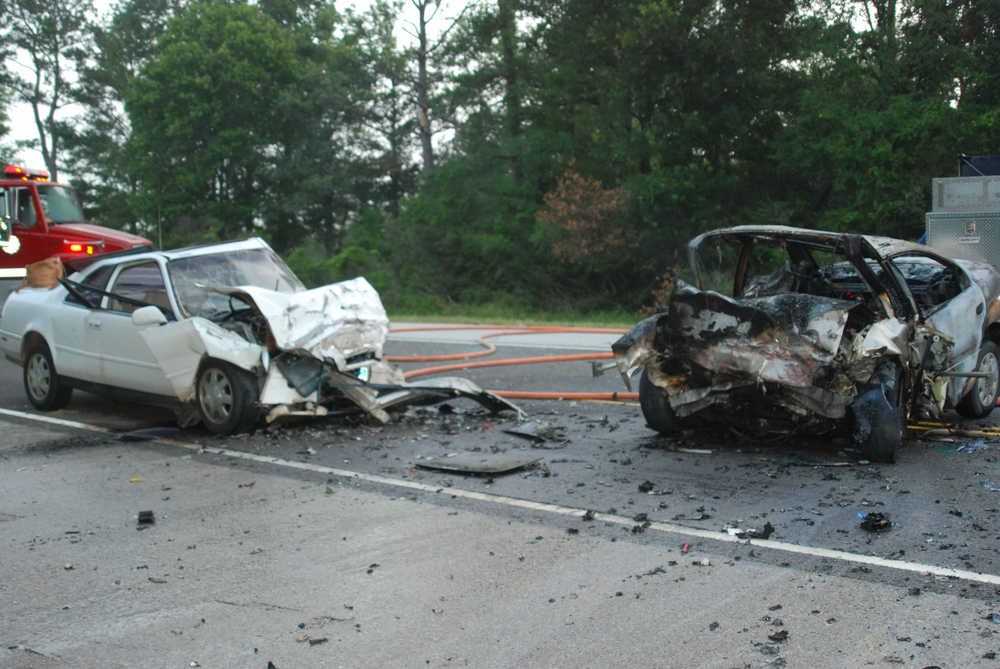
Deirdre’s car is on the left, and her purse can be seen resting on the trunk area. To the right is the Dodge Neon which hit Deirdre and then caught on fire.
