
I’m trying to declutter.
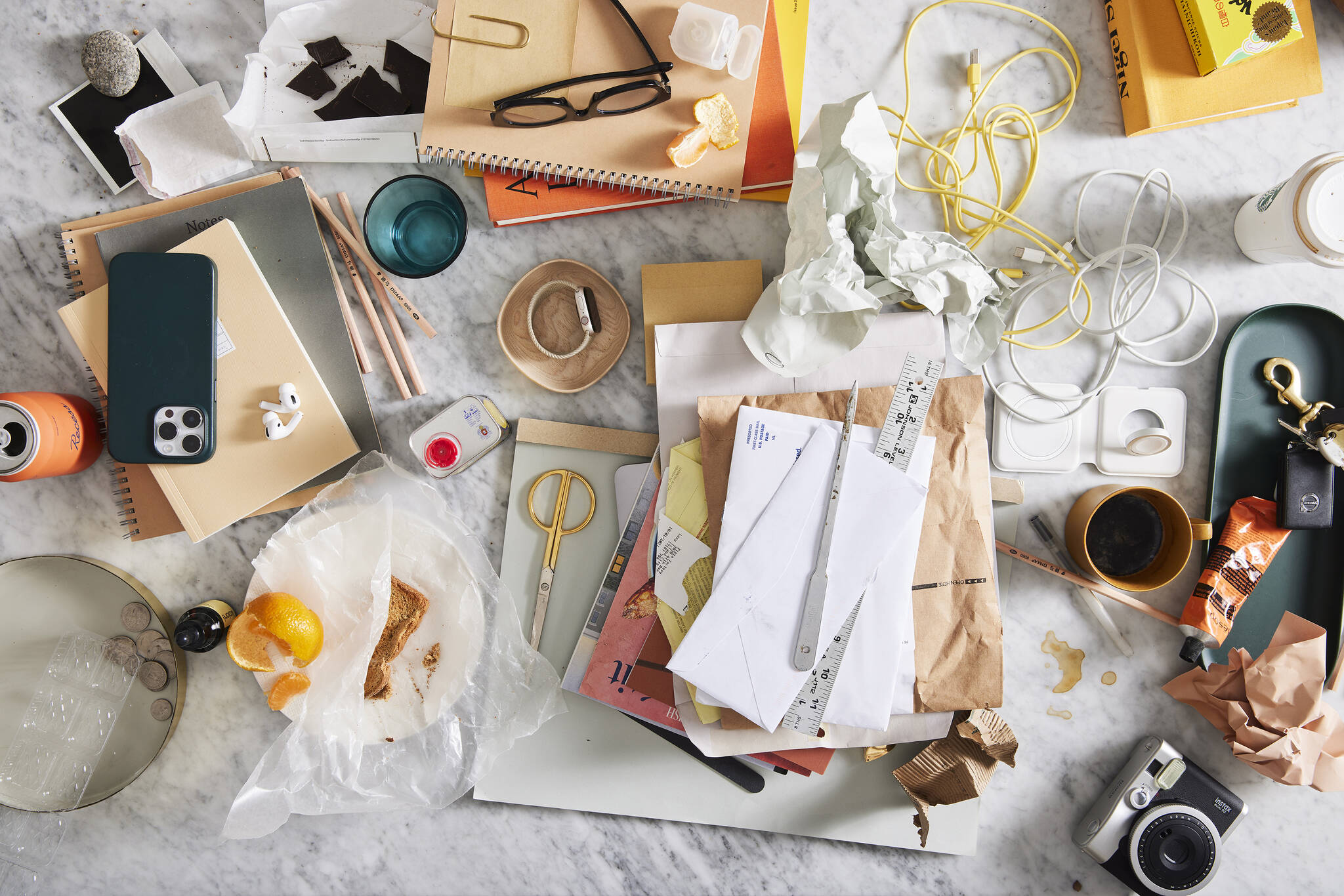
I pronounce those words in the same abashed tone I might use to say, “I’m trying to lose weight.” In either case, there’s a problem of excess poundage that requires a commitment from me. My goal is to lose 200 pounds. Don’t worry about my health — I’m not talking about my body weight so much as all the stuff in my house. With 25 years’ worth of stuff spread amongst five people, that’s a lot of excess poundage.
My plan is to get at least one thing out of the house every day. Clothes that don’t fit, user manuals for appliances that we no longer own, tote bags from every event I have ever attended, today’s junk mail — it all counts. If I only achieve one thing a day, I will need to live as long as Methuselah to get to the bottom of all this stuff. Better get started!
Here’s my process for decluttering. I pick a bin to go through, unearthing each item, one by one. I try Marie Kondo’s method of decluttering — hold each item in your hand for a moment and see if it brings you joy. First, I have to figure out what it is, where I got it, if it has sentimental attachments, what usefulness it might have in my daily life, and if I will need it desperately five minutes after the garbage truck drives away if I allow myself to throw it out. The pressure’s on!
Today’s bin has old tax forms in it. The received wisdom says you should keep tax forms for three years. Or is it eight? Could be forever — I don’t know. I have them all. The problem is, they’re not just proof that I paid my taxes like a good little citizen. They’re also history. They record a career’s worth of annual salaries, the moments when our family gained tax deductions in the form of children and a house, and the vagaries of tax law on a national level. Historians can track inflationary trends through my tax returns. It wouldn’t be fair to deny them that trove of historical data, right? I guess I shouldn’t purge anything from this bin.
Well, that was a fail. I didn’t succeed in getting even one thing out of the house.
Try again. Here’s a bin full of random papers, newspaper clippings, and bits of mail that have hopefully at least been opened. With this bin, my method is less what gives me joy and more about sorting into three piles: keep, discard, and maybe. Why is the “maybe” pile the biggest one of all?
I resist the impulse to check through the items in the discard pile one more time, and quickly toss them in the trash before I change my mind. I have two piles left. By this time, my brain is fried by the emotional effort of sorting through these remnants of my personal history. I shove the “keep” pile back into the bin. I can find homes for these things later. The “maybe” pile can hang out on the floor of the living room until I come back to it with fresh eyes and renewed resolve. But I might have guests over in the meantime. I shove the pile back into its original bin while tidying up the living room. In the darkness of the bin, the “maybe” pile comingles with the “keep” pile, and the whole process must be repeated at some later date.
How many more bins are in this house?
There’s another category of excess stuff that can’t be weighed on the bathroom scale. My computer is a cesspool of clutter. There are literally thousands of unread emails in my inbox. I didn’t think it was a problem until my son mentioned that storing them on my computer uses electricity through some weird cyber process that I don’t understand. Even if I don’t bother to read my emails, I am wantonly consuming electricity for no good purpose. Okay, now I feel guilty. Nothing joyful about that. Those emails have got to go.
Time to get back to work. I just deleted 17 junk emails. Only 24,362 left to go.
• Peggy McKee Barnhill is a wife, mother, and author who writes cozy mysteries under the pen name “Greta McKennan.” She likes to look at the bright side of life.
