
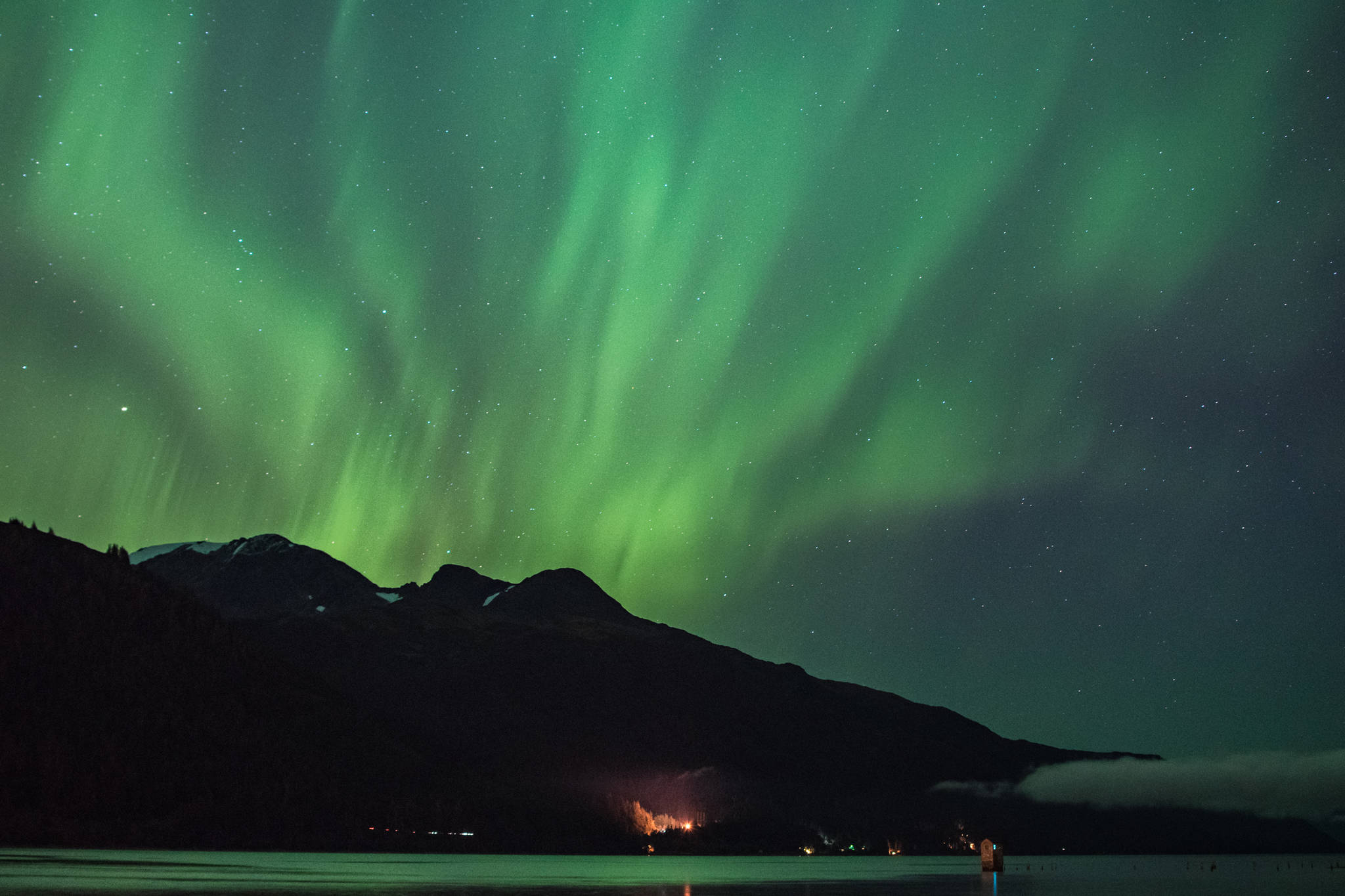
When my sister Megan, who lives in Miami, escaped Hurricane Irma by flying up to visit us here in Alaska, she may have jumped out of the frying pan and into the fire.
Although she is invariably positive and levelheaded, and she was taking in her stride the threat to her new home and art studio — at that time the meteorologists were predicting that Miami would take the full brunt of a Category 4 or 5 hurricane — she suddenly found herself having panic attacks and mood swings that made her feel like a stranger to herself.
We’ve always joked about her sensitivity to electricity: she gets shocked at the gas pump and at the freezer doors in grocery stores; she has a hard time getting automatic faucets and soap dispensers to work on the one hand and on the other they can come on when she walks by them; her watch batteries die quickly; and her hair stands noticeably on end during thunderstorms. We blame it on my mom having been zapped by an electrified fence when she was pregnant with Megan.
The bush of Southeast Alaska seemed like a far better choice for someone with electricity issues than being in thunderstorm-prone Florida that was being battered by a historically major hurricane. Yet her nerviness made me wonder if being in Alaska was causing her more problems.
My dad pointed out that an X9.3-class solar flare, an extremely strong flare, was hitting the earth at the same time Irma was on the rampage and could have an effect on animals and humans, and all the more so the closer they got to the poles. I did some research and found that he was onto something.
According to Associate Professor of Environmental Health at Lincoln University in New Zealand, Dr. Neil Cherry, “There is a large body of research correlating S-GMA [Solar-Geomagnetic Activity] with biological effects and human health effects.” Robert J. Gegear, then a postdoc at the University of Massachusetts Medical School, reported in a study that “humans may be genetically pre-disposed to the influence by geomagnetic flux as it relates to the Earth’s magnetic field and charged particles such as solar flares, coronal mass ejections, gamma rays, and galactic cosmic rays.”
Looking into it further, I found a 2011 government-funded National Institutes of Health study on the subject. Its results were summarized under the title “Sunspot Dynamics Are Reflected in Human Physiology and Pathophysiology.” It notes that: “Increases in sunspots are accompanied by changes in the amount of light and a range of other types of radiation that reach Earth, as well as changes in weather patterns, all of which, due to complex causal chains of various lengths, complexity, and duration, might affect the physiology of the individual…. [For example] a study of more than 320,000 citizens over a 29-year period found that those born near peaks of solar cycles lived an average of 1.5 years less than those born in non-peak years.” (Emphasis theirs.)
Elsewhere, a Russian study conducted between 1948 and 1997 discovered that during periods of peak, solar-based geomagnetic activity there was an increased incidence of anxiety, depression, bipolar disorder, and suicide in the city of Kirovsk. Physiological effects included headaches, palpitations, mood swings, seizures, and feeling generally unwell.
Over the holiday season this year, many space watching stations are reporting the likelihood of auroras caused by a coronal hole in the sun ejecting a high-speed stream of solar wind at the earth. Here in Alaska one group of people who suffer from a traumatic brain injury (TBI) have been studying the effects of these solar streams on their health. In addition, they’re noticing that animals are also being affected.
Bill Laughing-Bear, author of “An Alaskan Adventure: Tales of a Musher” is the leader of his Kenai Peninsula TBI peer support group, who call themselves “The Deadheads.” They’ve been monitoring and charting the cause and effect of migraines and seizures that affect them and have tied them to solar wind events and geomagnetic storms that affect the earth’s magnetic field.
They noticed that sled dogs are having seizures at the same time people are. He writes, “During the last solar storm that has been pounding the northern regions, I was contacted by another sled dog owner who had one of her dogs experience its first seizure that lasted a couple of minutes. This event happened in conjunction with the solar storm…. The dog was taken to a vet and given a complete battery of tests that revealed absolutely nothing wrong that would bring about a seizure. The dog was given a perfect bill of health.”
He adds: “At our Deadhead TBI (Traumatic Brain Injury) meeting, 100 percent of members there had been battling either seizures or cognitive function problems such as memory, dizziness or migraines.”
I’ve been keeping track of solar activities and have discovered that my sister, even though she’s back in Florida and not so close to the pole, reports the same kinds of mood swings and headaches she had up here whenever solar activity interacts with the earth’s geomagnetic field. It appears that people who are more sensitive to electromagnetism are more consistently affected than anyone else; some people might barely be affected or not at all, even those right at the poles.
All of the credible sources I found said that more studies need to be conducted to prove these effects, but if you periodically find yourself subject, like my sister, to unexplained mood swings, headaches, and strong negativity, you might want to check solar activity news. It could be more than just Alaska’s short winter days getting to you.
• Tara Neilson lives in a floathouse between Wrangell and Ketchikan and blogs at www.alaskaforreal.com.

The sun is reflected in a forest stream. Photo by Tara Neilson | For the Capital City Weekly
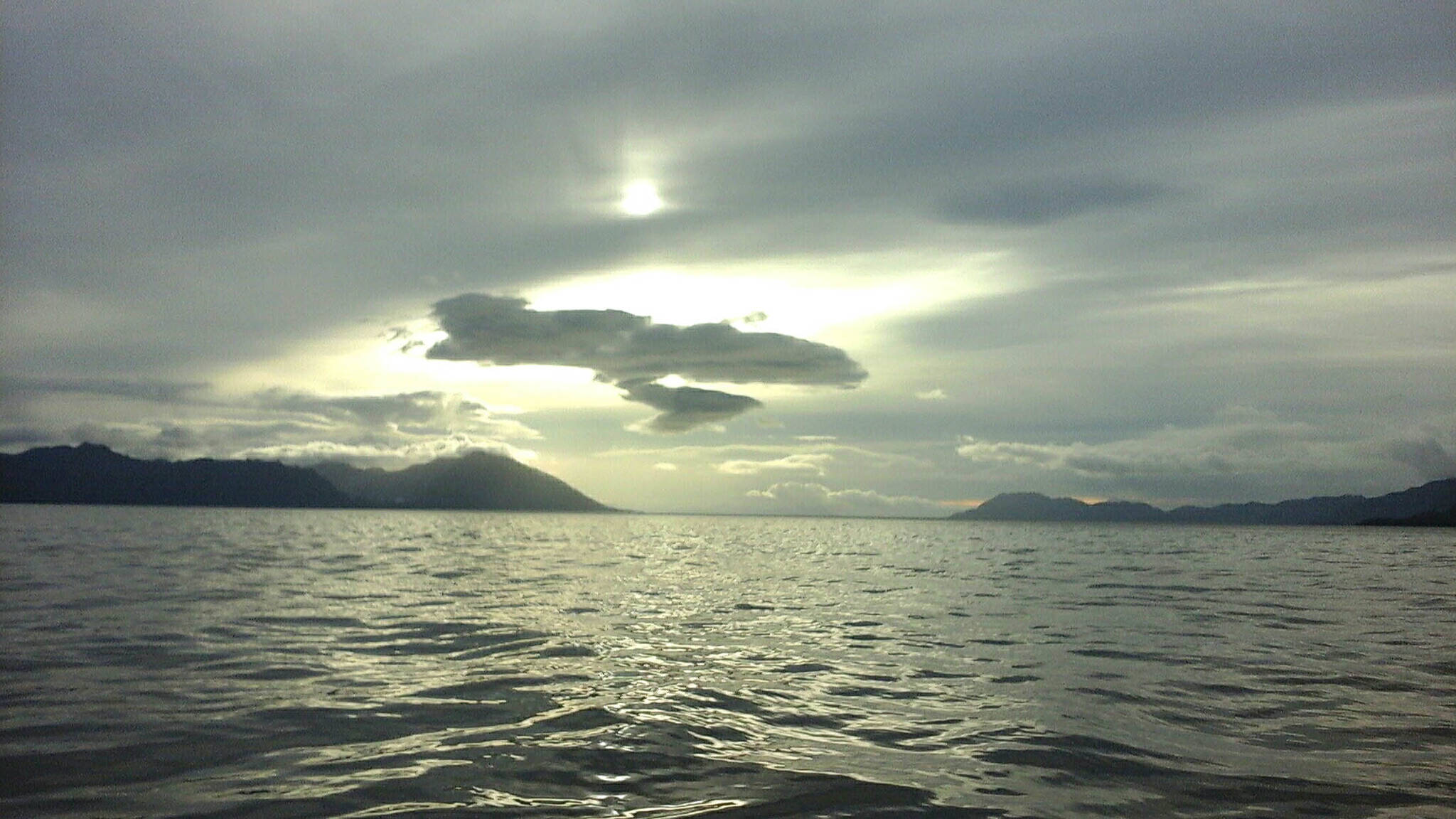
The sun is blocked by clouds over Clarence Strait. Photo by Tara Neilson | For the Capital City Weekly
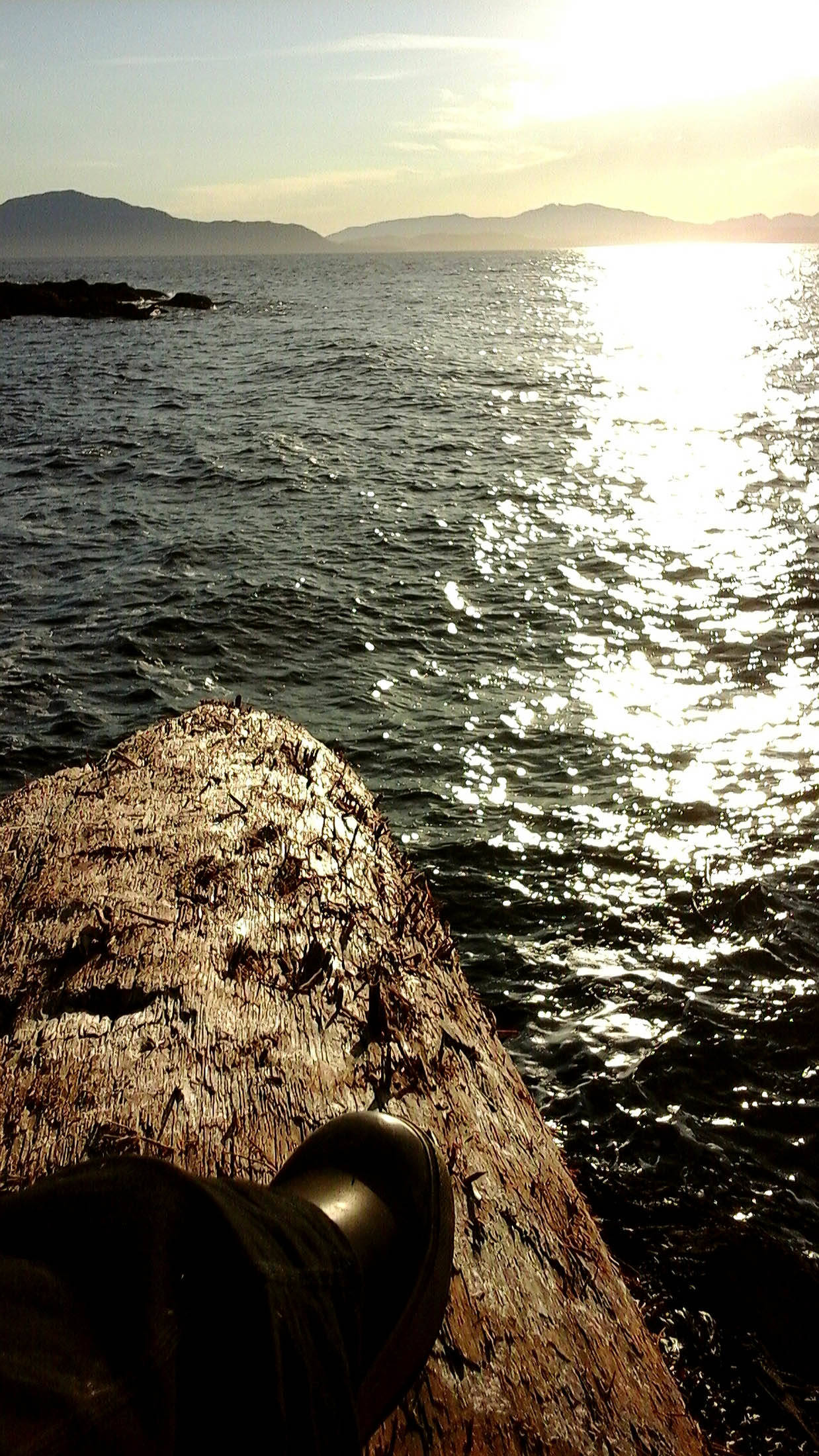
The author contemplates the sun’s reflection on Clarence Strait. Photo by Tara Neilson | For the Capital City Weekly
