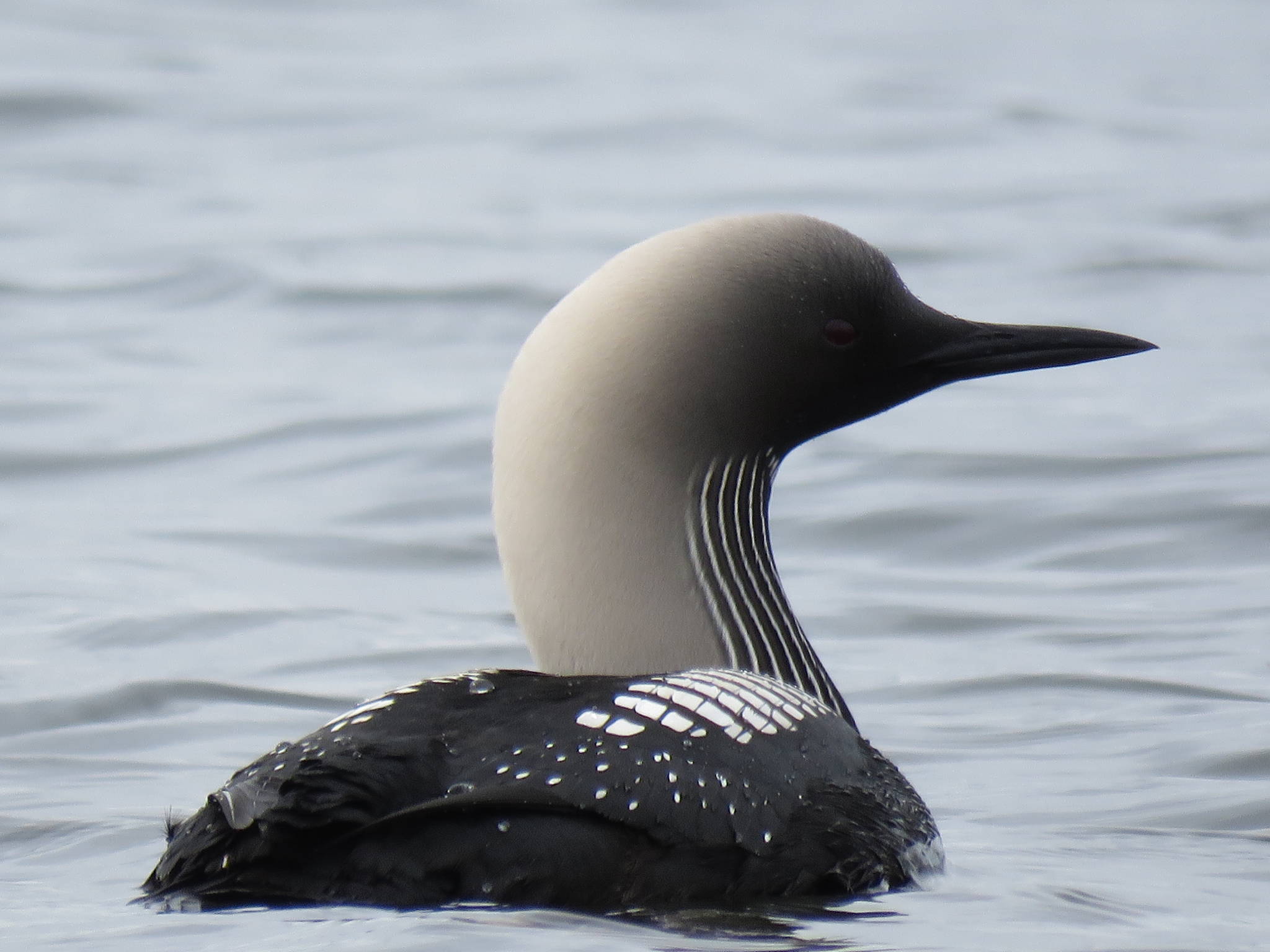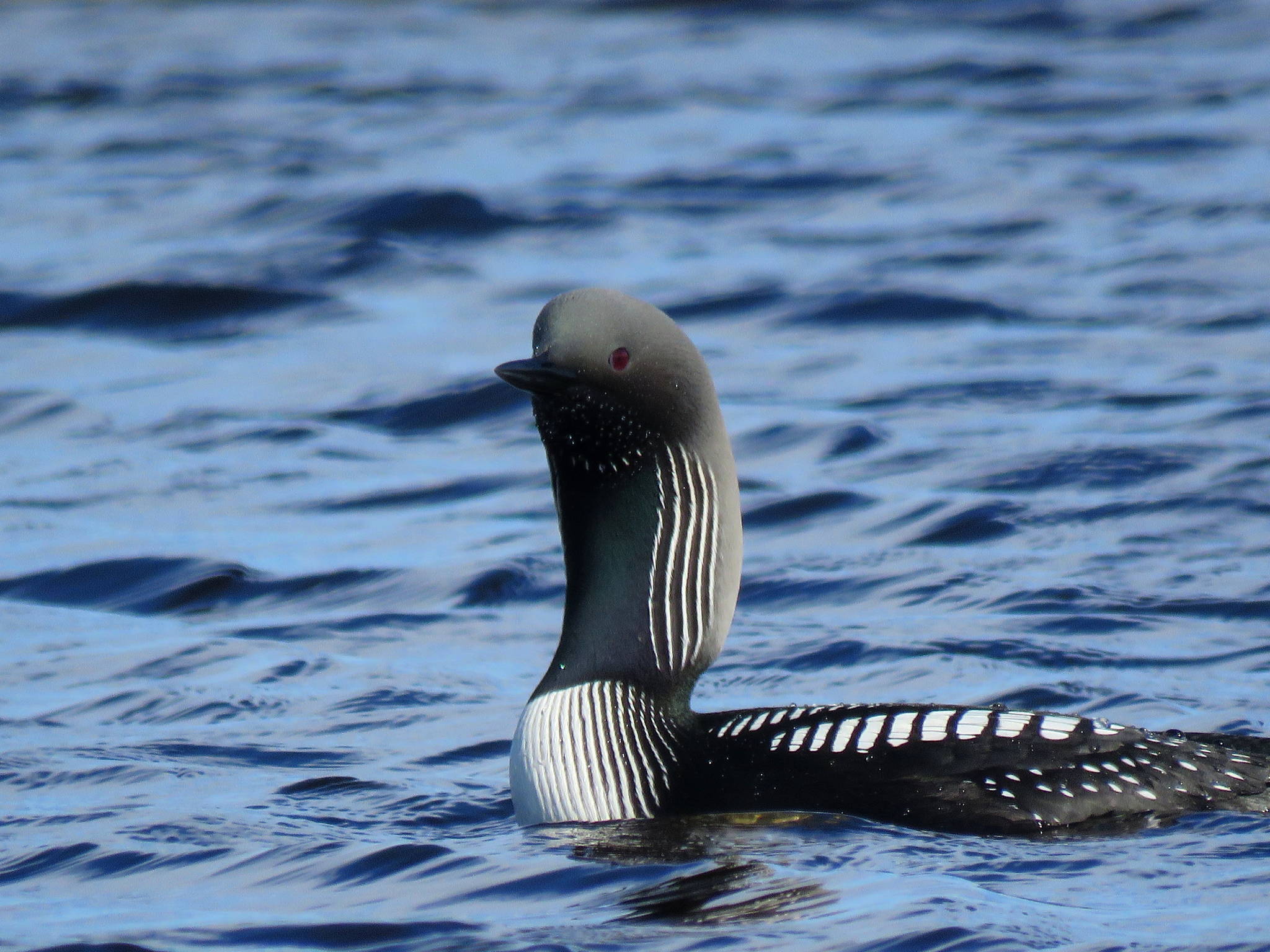
Loons are a boon for bioresearch. Much like the canary in the coalmine, the health of these top aquatic predators can translate to an entire ecosystem.
“If there are changes in the environment, from way down to fish and plankton, it will bio-accumulate to a loon,” explained Hannah Uher-Koch, a graduate student in biological sciences at University of Alaska Anchorage. That makes these migratory birds – like the yellow-billed loon, which frequently flirts with inclusion on the endangered species list – a valuable research subject in a changing landscape.
For the past three summers, Uher-Koch has traveled to the North Slope Borough to monitor loon behavior on the 22.8-million-acre National Petroleum Reserve-Alaska (NPR-A). Unlike the Arctic National Wildlife Refuge to the east, NPR-A is federally earmarked for responsible resource development. In 2015, the Bureau of Land Management (BLM) approved the area’s first drilling permits.
But before any drills bore below the surface, oil companies must demonstrate how they will minimize impact on the environment, per the 1970 National Environmental Policy Act, and document that plan in their leasing agreement. That means both conservationists and corporations are looking to the loon for direction.
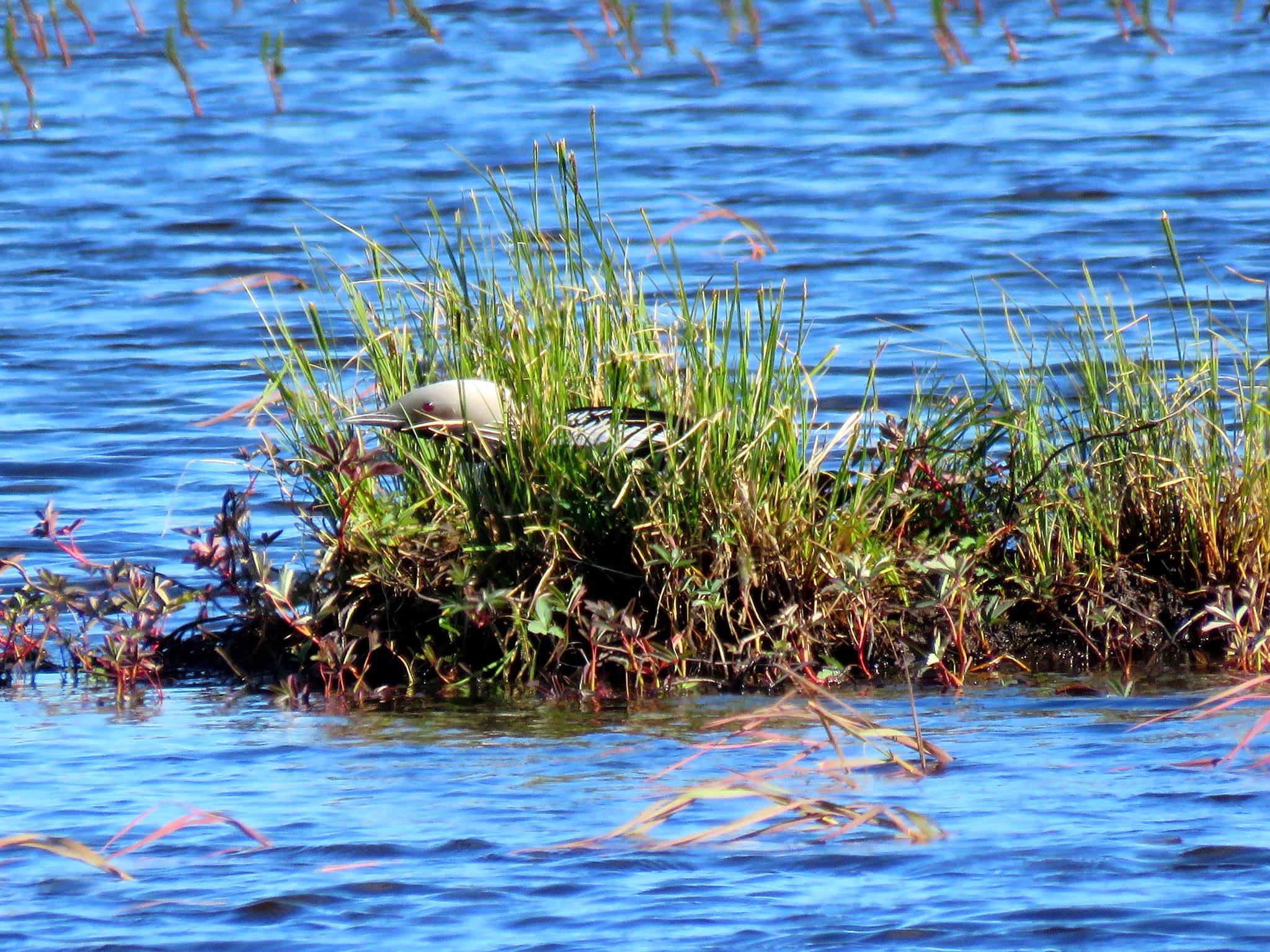
Loons are study-worthy subjects because they’re highly specialized birds, and thus more prone to disturbance. With feet far back on the body, loons are anatomically built for swimming and diving. A minor disturbance can jolt a loon into the relative safety of the water, leaving eggs on the shoreline vulnerable to predators. A series of major disturbances—like the abrupt introduction of a round-the-clock oil pad—could force enough loons from nests to affect an entire generation. Industry and wildlife can coexist, though. Habituated loons now nest near the oilfields of Kuparuk and Alpine. That just makes the sustainable and managed introduction of industry even more important in the NPR-A.
With development imminent, the BLM is recording environmental data today to measure any impact on wildlife in the future. Through a cooperative agreement, the agency is sponsoring Uher-Koch’s research at UAA as she seeks to establish baseline behavior for loons in the nation’s largest reserve.
Learning what causes nest failure “can be a decision tool for BLM to use,” Uher-Koch explained. “We want to get ahead of the curve and essentially create management buffers.”
This is Uher-Koch’s second summer managing the observation project, and the opportunity to monitor bird behavior was a great fit. For several years, she spent summers in Alaska working with loons for the U.S. Geological Survey, then migrating south each winter to take blood samples of wintering birds in Louisiana, measuring the impact of 2010’s Deepwater Horizon oil spill.
This graduate project provided a chance to return to Alaska, and pursue a degree that was becoming increasingly important in her biology career. Plus, she could work with her favorite bird.
“I love loons!” she laughed. “It was really serendipitous.”
After a one-week visit in 2015, Uher-Koch began her research in full last summer. She returned with a BLM field team to establish baseline behavior, observing undisturbed nesting loons in eight-hour intervals under the midnight sun.
Her project records observations at three sites: the BLM’s main research camp at Inigok, with frequent supply drops, propane-heated showers and generator power; a remote site, where Uher-Koch’s team is introducing mild disturbances to see how loons react; and a third site where cameras record nesting loons with zero disturbances. Undisturbed populations are a biological novelty in most areas of the U.S. today, but not in Alaska, where students can still view pure natural processes.
At the remote site, technicians are introducing doses of calibrated disturbance—like helicopter flybys at standardized speed and altitude, or walks past known nests at a predetermined range—to monitor what causes loons to leave their nests, and how long they part from their eggs. If intentionally spooking loons seems incongruous, think of it as a behavioral vaccine—a small, directed threat introduced in the service of long-term protection.
After the season ends in August, Uher-Koch will pack up her tent and head back to UAA to report her findings. Data collected over the past two years will help the BLM better protect these vulnerable birds, and allow oil companies to minimize interference on wildlife as potential development spreads pad to pad toward the pipeline.
But for now, it’s another uniquely Alaska summer for the research team on the North Slope — recording notes in field journals, reading research papers on Kindles and falling asleep to loon calls in a private tent on the tundra. The team seeks to make an ecological impact by leaving as little physical impression as possible.
That opportunity to join the landscape is even more important for a loon enthusiast like Uher-Koch.
“It’s nice to sit back and look at behavior,” she said. “Knowing my research is going directly to managing this species is really important to me.”
The University of Alaska Anchorage provided this news story free to media outlets throughout the state. J. Besl highlights alumni stories and campus events at UAA.