
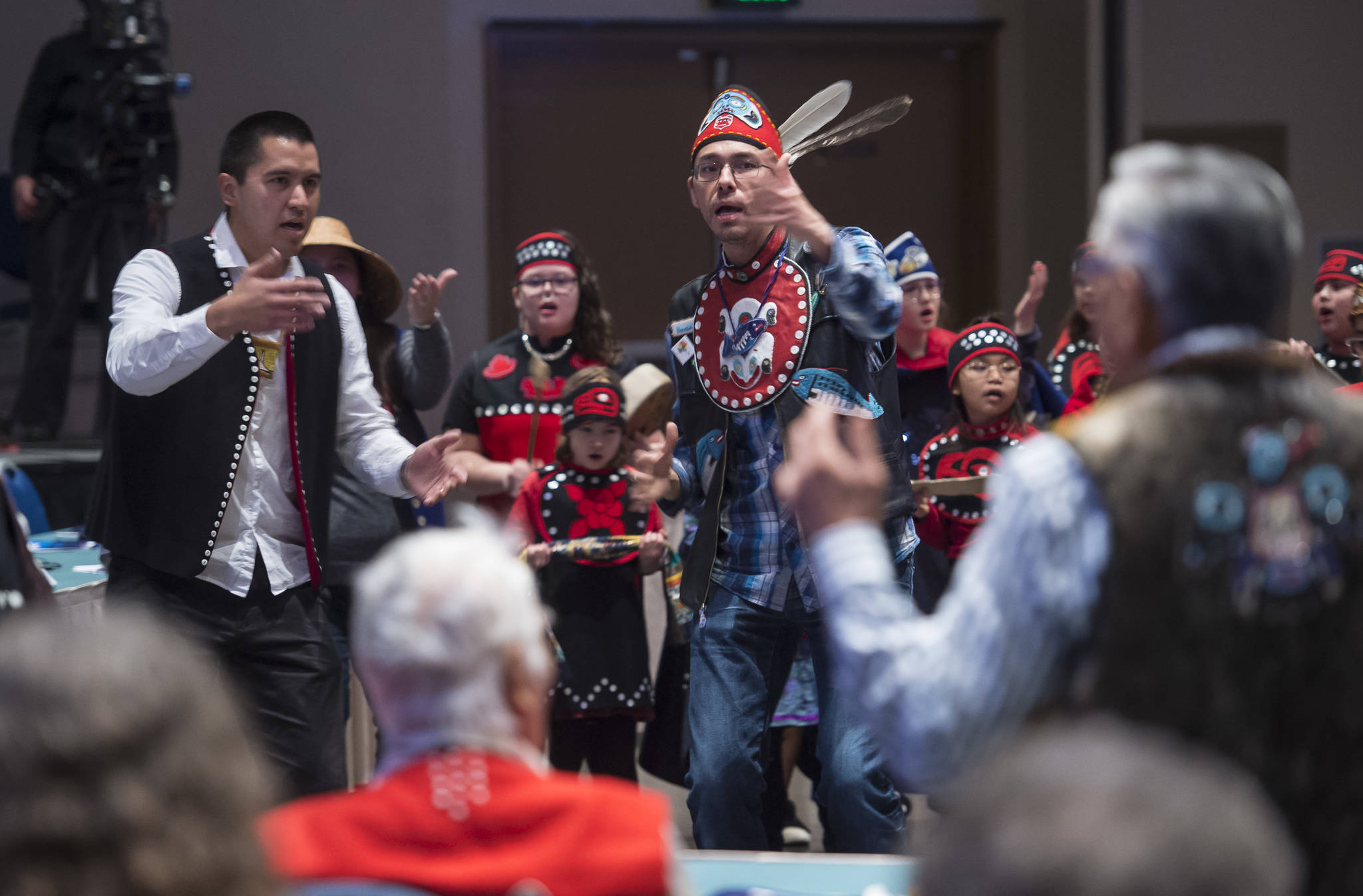
Centennial Hall echoed Tuesday with the sound of centuries-old languages.
The first-ever Voices of Our Ancestors language summit brought together dozens of speakers fluent in Lingít, Xaad Kíl and Sm’algyax — the respective languages of Tlingit, Haida and Tsimshian people — for three days of focus on Alaska Native languages.
“Our Native languages define us as a people and a culture,” said Sealaska Heritage Institute President Rosita Worl. “Our languages contain our history, our way of living, our ancient knowledge and values.”
Worl spoke passionately about the importance of the fluent speakers present, many of whom were elders.
“We are here to celebrate our fluent speakers who kept our languages alive,” Worl said. “We honor you. We cherish you. We thank you for carrying our languages in spite of all that you endured and for keeping our ancestors’ voices on the land.”
[Language celebrated during Indigenous Peoples Day]
Well over 100 people were in attendance for the opening of the three-day summit presented by Sealaska Heritage in partnership with Goldbelt Heritage Foundation.
Voices of Our Ancestors began with a repudiation of the idea that the languages aren’t vital or are relegated to the old.
A performance by Tlingit Culture Language and Literacy Dance Group, which consisted of Harborview Elementary School students infused the summit’s opening with energy.
Plain-clothed members of the audience joined in dancing with the regalia-clad students.
Several youngsters also took the lectern to deliver remarks in Native languages.
“This morning already, we had at least 15 young people on this stage, talking on this microphone, doing what we have done forever,” said Joe Nelson, chairman for Sealaska’s board of directors. “The thing that’s most empowering is school is in session right now. Those are public school kids.”
Nelson said the embrace of Native languages in public schools is a stark contrast from the memories many in attendance had of their public school days.
In past decades, Alaska Native students were discouraged, punished or forbidden from speaking their languages.
“I was part of the pitiful generation that did not learn our language,” Worl said.
Speaker scarcity and working together
In part because of past suppression, the fluent speakers present for the summit make up a sizable portion of all the Alaska Native language speakers in the world.
[Walker asked to declare emergency for Alaska Native Languages]
Most of those who took to the lectern Tuesday talked exclusively in Native languages, and the audience reacted to anecdotes and jokes well ahead of hearing English translations.
However, in one case, speakers of a language are so scarce that remarks about it were mostly delivered in English.
Gavin Hudson, one of the founders of the language preservation nonprofit Haayk Foundation based out of Metlakatla, said there are fewer than 100 fluent speakers of Sm’algyax and no fluent speakers younger than 6o.
He acknowledged ongoing efforts by people such as artist David A. Boxley to create a new generation of Sm’algyax speakers.
Hudson said he was pleased by the collaboration about Tlingit, Haida and Tsimshia and called for continued cooperation among indigenous peoples in Canada and the U.S.
“Let this be a renewed jumping off point of transborder cooperation,” Hudson said. “I’ve always seen the borders as invisible lines drawn by colonizers that separate our territory.”
Reaching the summit
Fluent speakers in attendance traveled from around the Southeast and Interior to be present.
George Bennett of Sitka, was in town for both a Veterans Day ceremony and Voices of Our Ancestors. He wore both a Vietnam Veterans hat and regalia.
“We haven’t had a gathering like this in a long time,” Bennett said. “You wonder how many fluent speakers are left. I think the exposure of this aspect is the most important.”
Childhood in Hoonah is when and where Bennett learned to speak the Tlingit language. Unlike many in attendance, he said children didn’t encounter much resistance or suppression from authority figures.
“Hoonah was a very traditional community when I was growing up,” Bennett said. “If you look at other communities, they had their difficulties.”
Bennett said he was impressed by the students who spoke during the event.
“They’ve got a long way to go, but they’ve got a start,” he said. “These kids who showed up, you can see they want to be their best.”
Bennett said with practice and making the language part of their lives, the students will master the subtle differences in emphasis that can change words’ meanings.
“I think you have to make them realize how to make language living,” Bennett said. “Get up and walking and talking. Put the action to word.”
Starting in the cradle
There were several infants in the crowd at Centennial Hall. That included 6-week-old Chooneit Buller, son of Yakutat Thlingit Tribal Council President John Buller. The Buller boys were joined by John’s wife, Kim.
“Our goal is to have a Tlingit language speaking baby,” John Buller said.
Kim Buller said there hasn’t been one in several decades.
The Bullers said it was good to hear the language being spoken — for them as well as their infant son.
“I’m just here to be as immersed as I can be,” John Buller said.
He said there is a Tlingit language early childhood education program in Yakutat, but there is only one fluent speaker.
“Many of these elders are few in their communities,” Kim Buller said.
The Bullers are making progress toward being part of a new crop of Native language speakers.
“I’m getting close to being a fluent listener, and I can conversate,” John Buller said.
Kim Buller said their other children, aged 4 and 5, are also learning the language.
“Something I wish I had growing up,” John Buller said.
• Contact arts and culture reporter Ben Hohenstatt at (907)523-2243 or bhohenstatt@juneauempire.com.
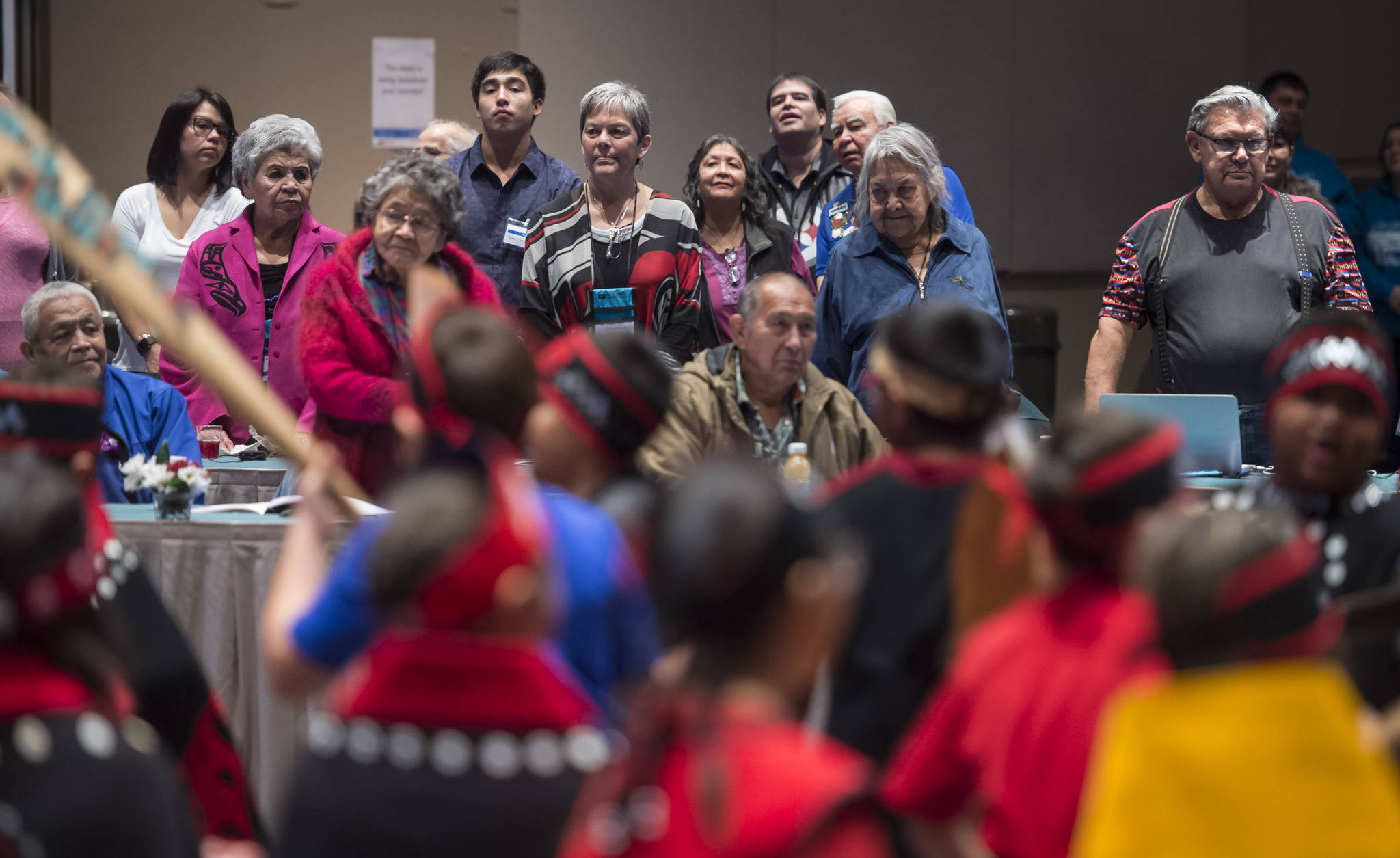
Native speakers stand to watch the Tlingit Culture Language and Literacy Dance Group from Harborview Elementary School dance during the Voices of Our Ancestors Language Summit at Centennial Hall on Tuesday, Nov. 13, 2018. (Michael Penn | Juneau Empire)
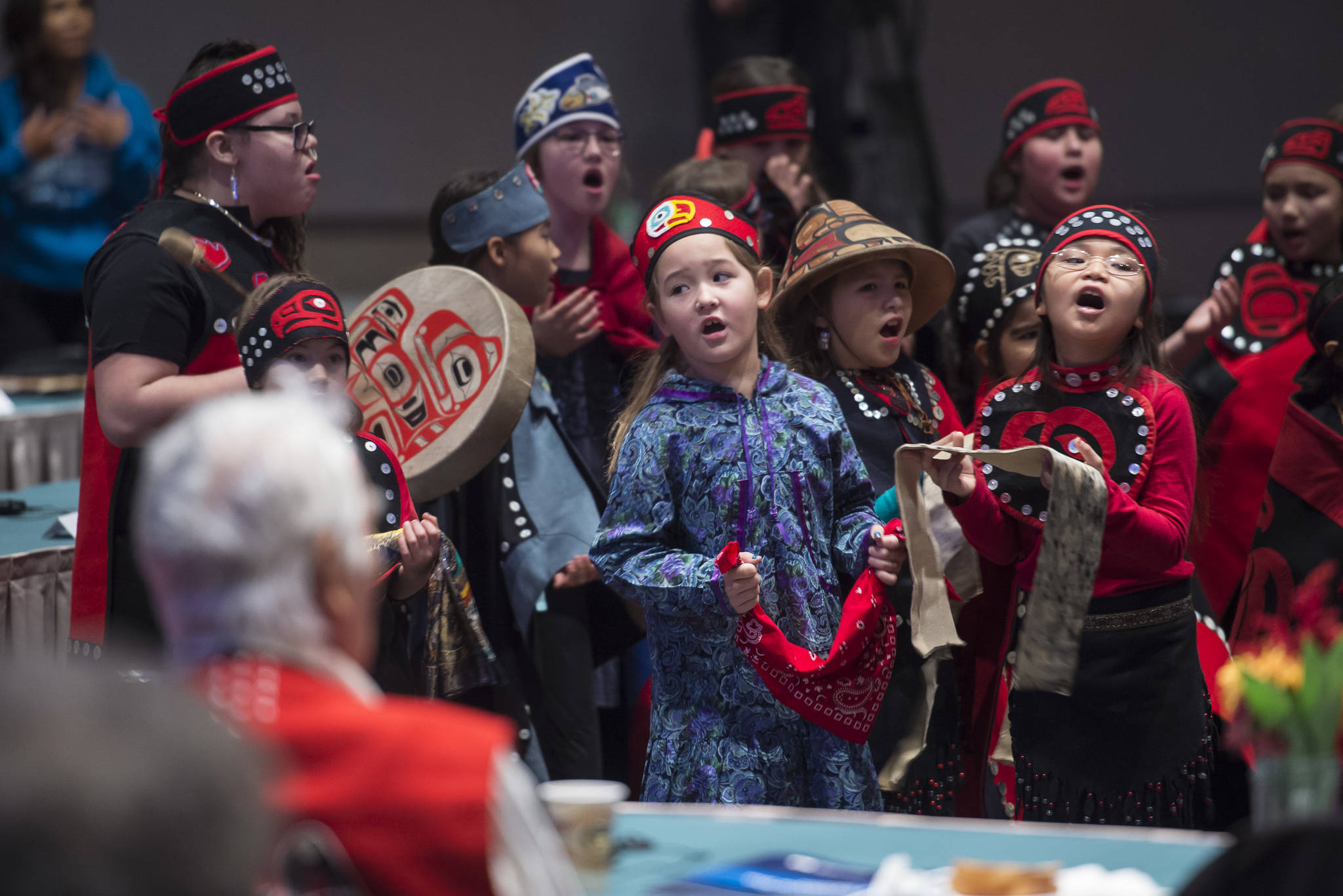
Members of the Tlingit Culture Language and Literacy Dance Group from Harborview Elementary School dance during the Voices of Our Ancestors Language Summit at Centennial Hall on Tuesday, Nov. 13, 2018. (Michael Penn | Juneau Empire)
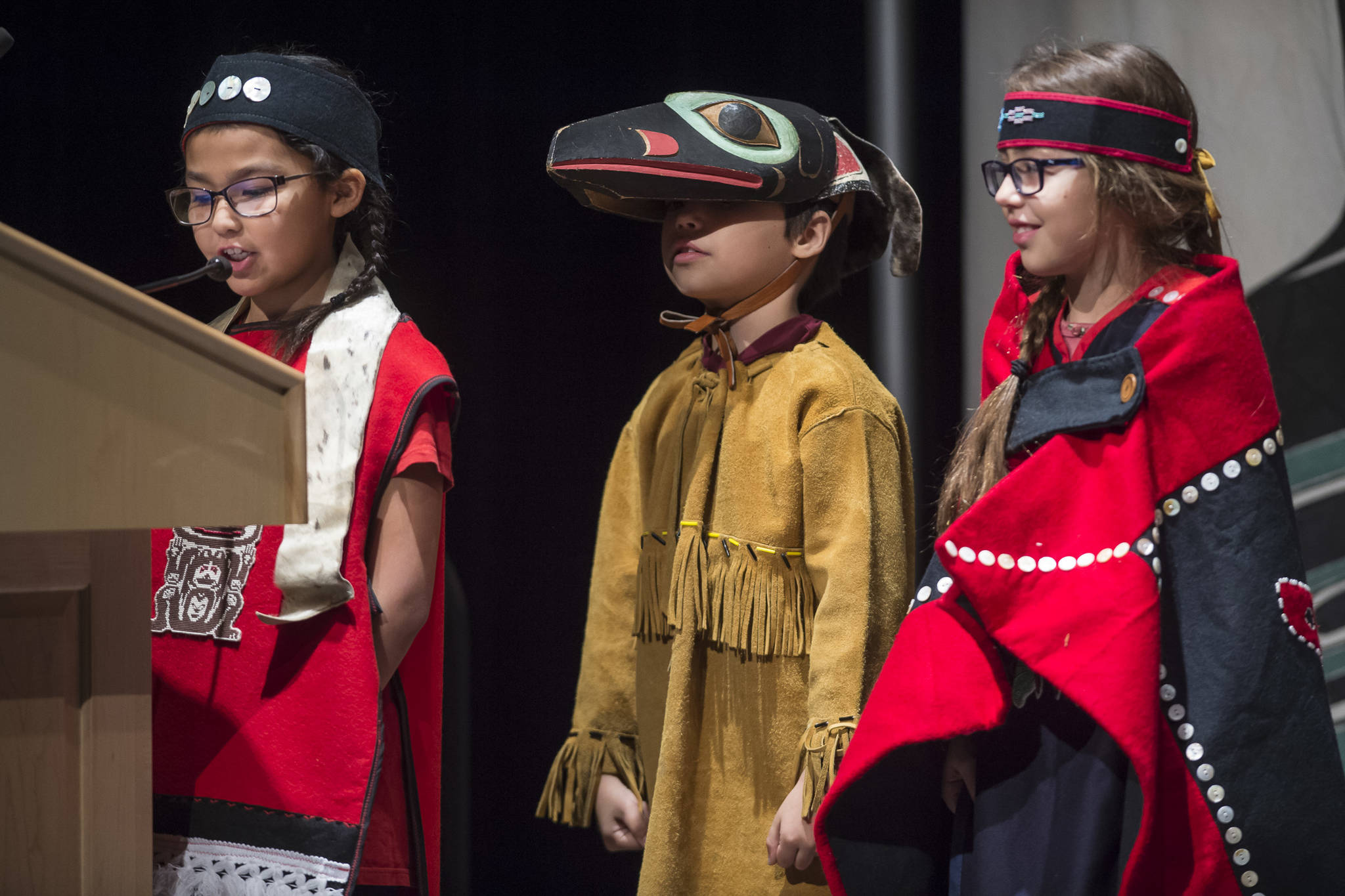
Torianna Johnson, left, Aiden Hood, center, and Marigold Lindoff of the Tlingit Culture Language and Literacy Dance Group from Harborview Elementary School address elders at the Voices of Our Ancestors Language Summit at Centennial Hall on Tuesday, Nov. 13, 2018. (Michael Penn | Juneau Empire)
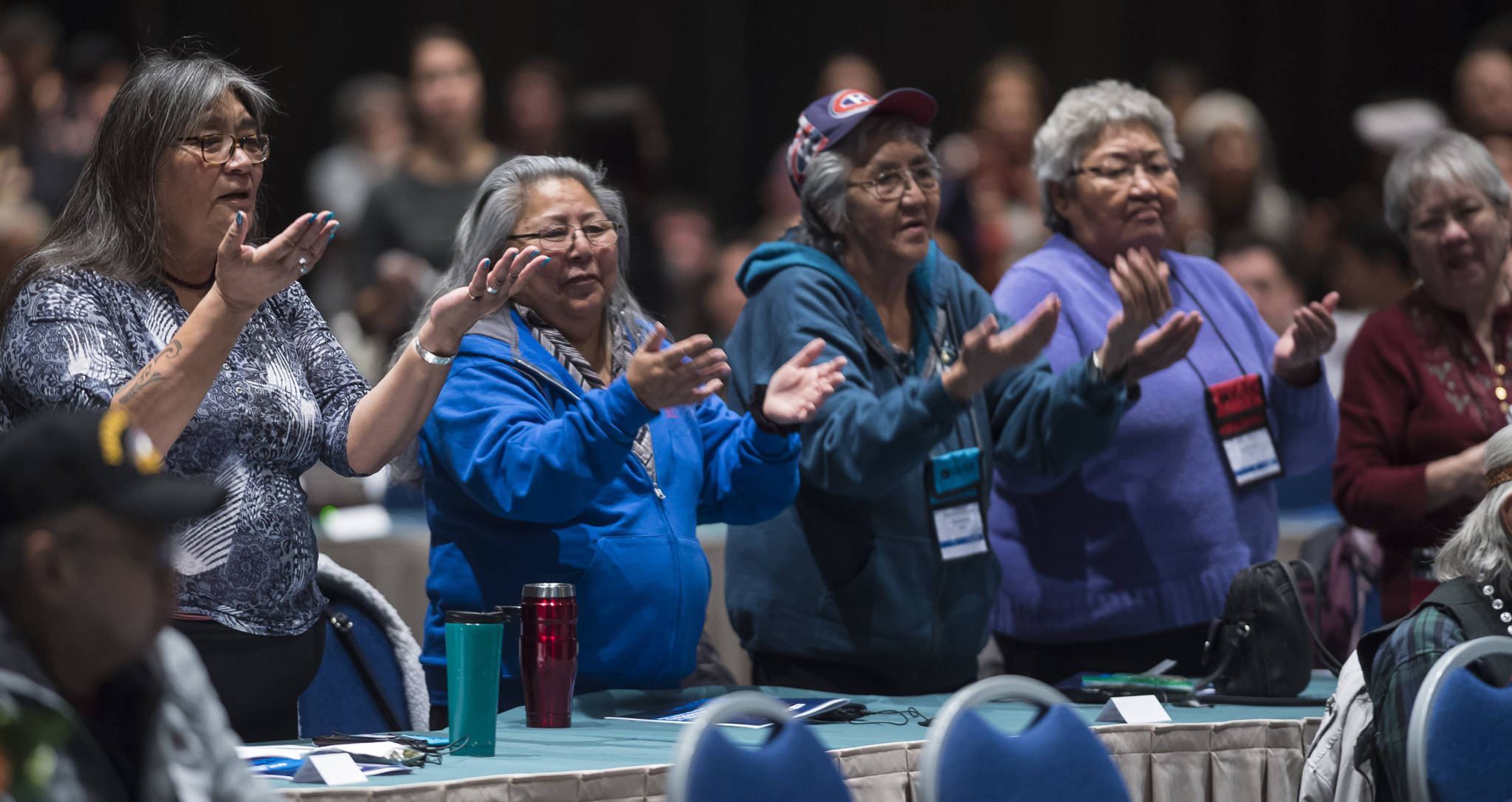
Women dance with the Tlingit Culture Language and Literacy Dance Group from Harborview Elementary School during the Voices of Our Ancestors Language Summit at Centennial Hall on Tuesday, Nov. 13, 2018. (Michael Penn | Juneau Empire)
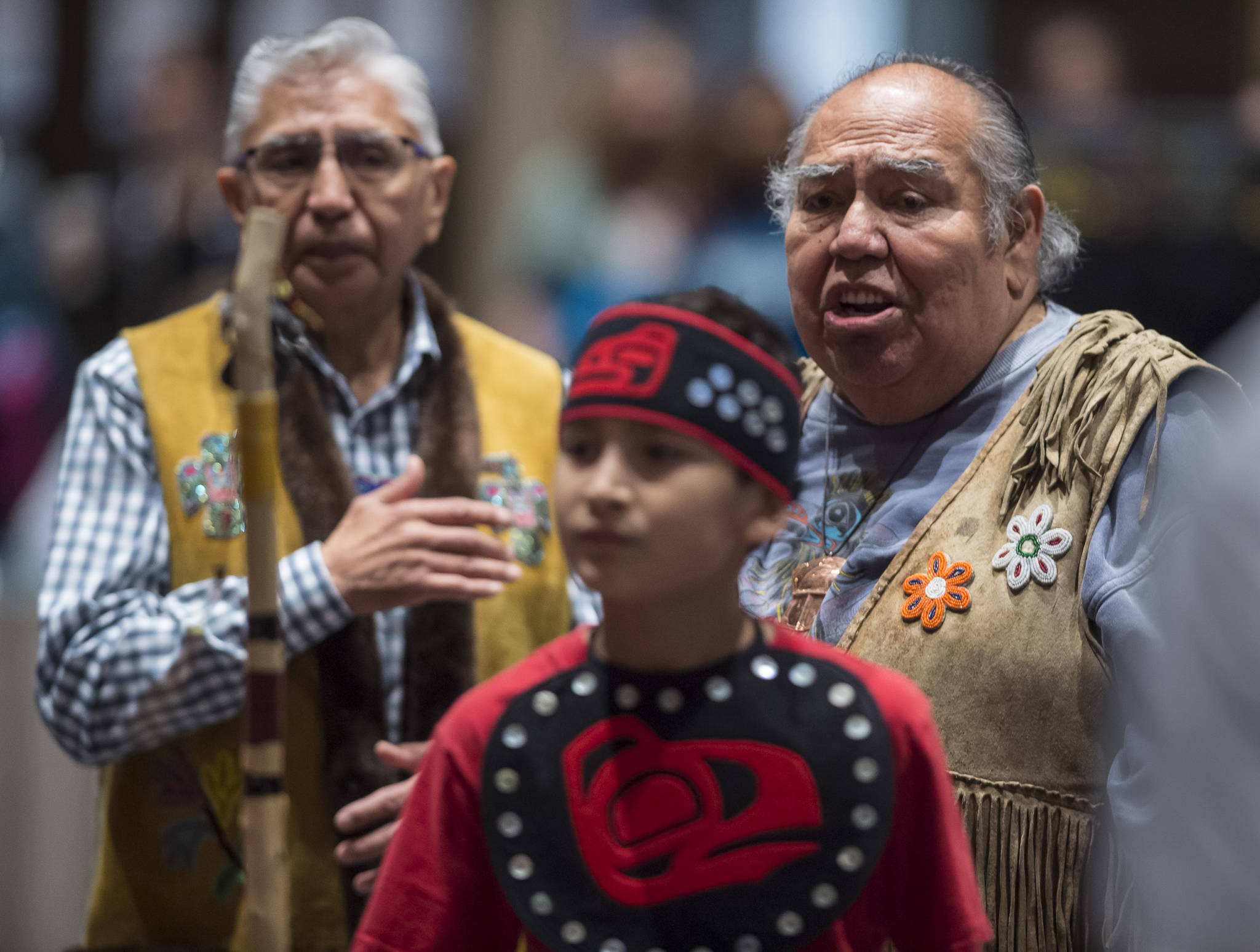
Tlingit elders David Katzeek, right, and Paul Marks, left, watch as Tyler Frisby, a member of the Tlingit Culture Language and Literacy Dance Group from Harborview Elementary School dance exits during the Voices of Our Ancestors Language Summit at Centennial Hall on Tuesday, Nov. 13, 2018. (Michael Penn | Juneau Empire)
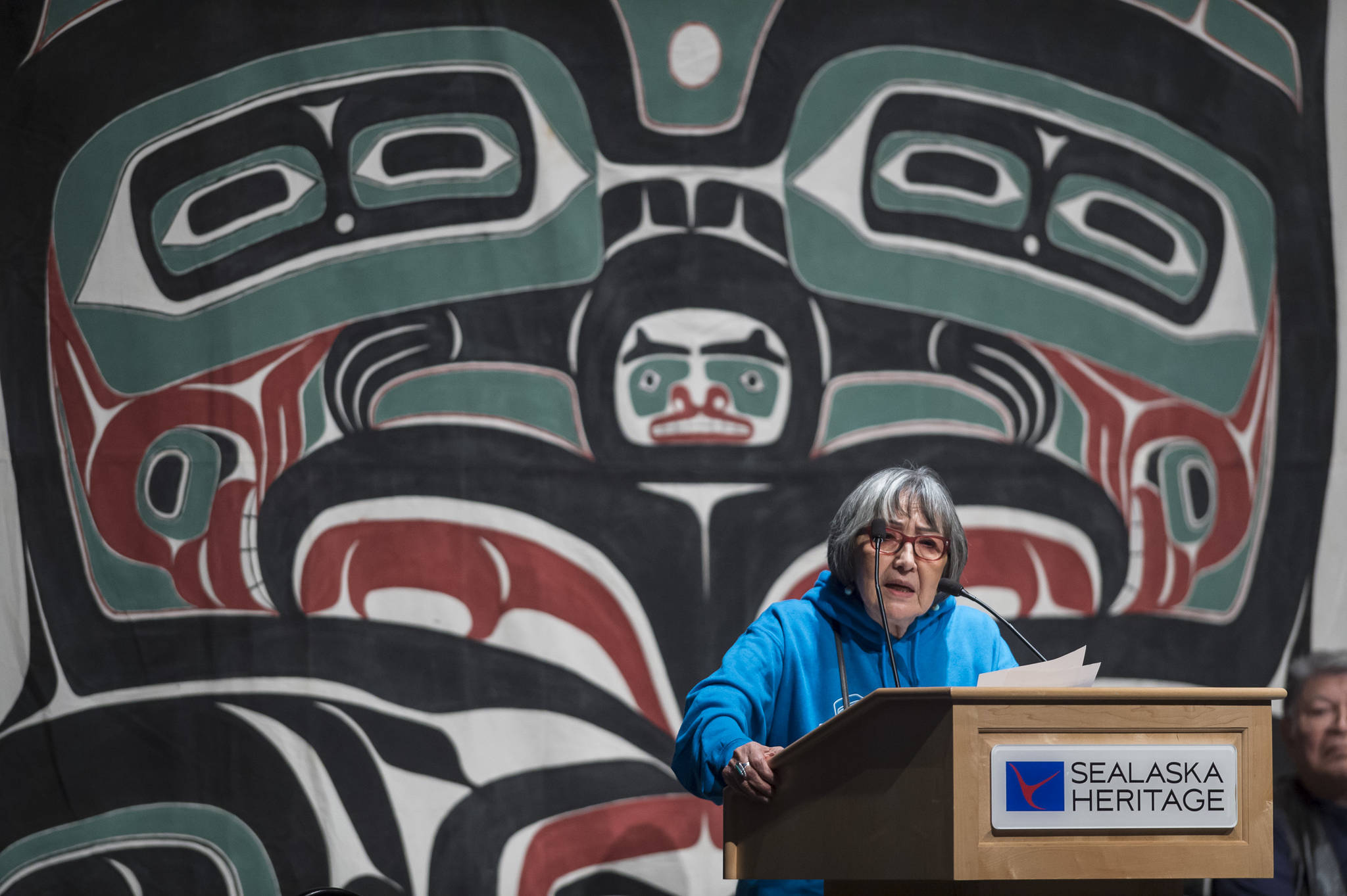
Sealaska Heritage Institute’s President Rosita Worl gives a welcoming address at the Voices of Our Ancestors Language Summit at Centennial Hall on Tuesday, Nov. 13, 2018. (Michael Penn | Juneau Empire)
