
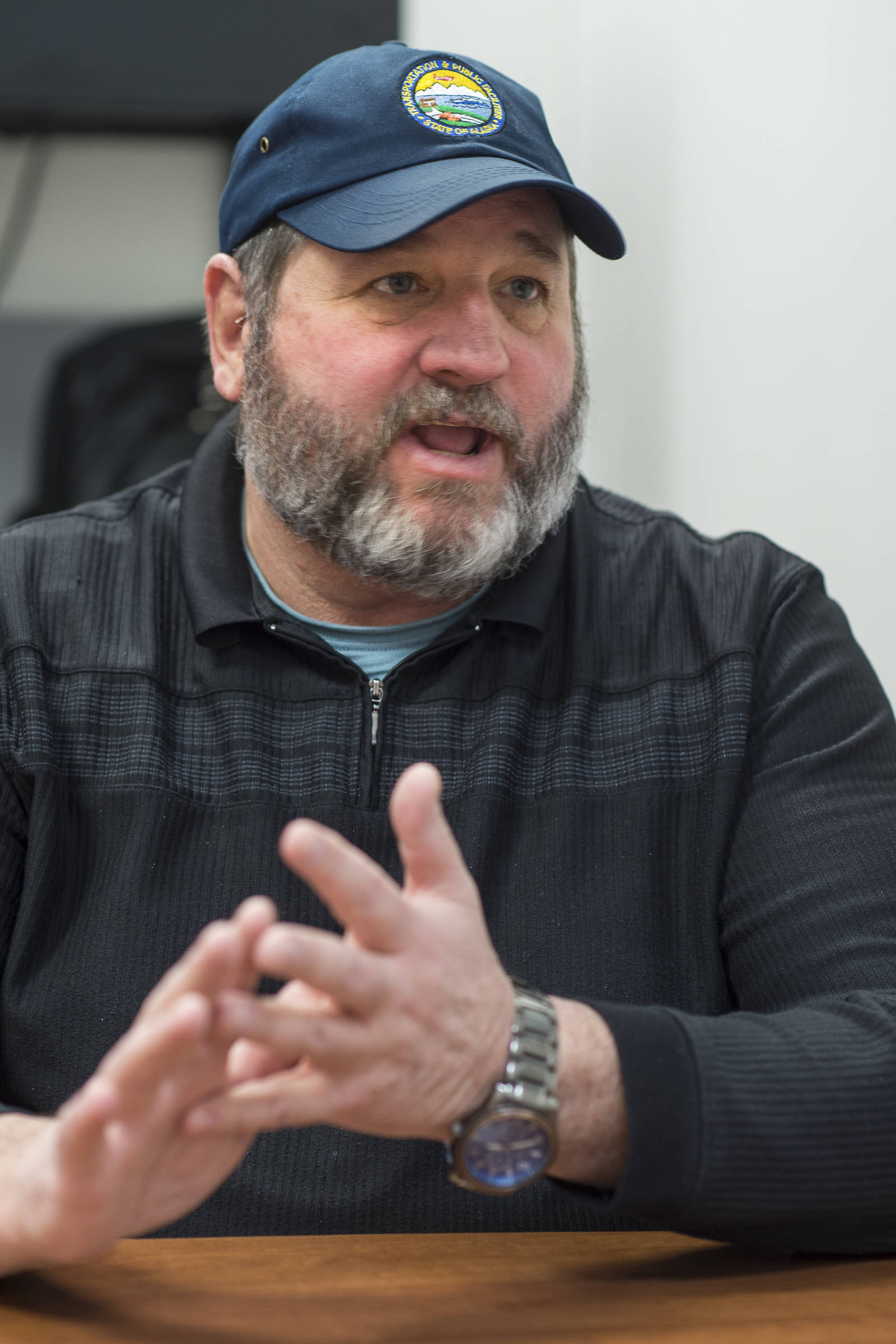
Tom Renninger has seen his share of natural disasters — tornadoes, wildfires, floods, snowstorms — but never an earthquake.
That’s why Renninger, a deputy regional director for the Alaska Department of Transportation and Public Facilities, was so bewildered when the ground started shaking in Anchorage last week.
Renninger is based in Juneau, but was flown up to Anchorage just hours after a 7.0 earthquake rattled the city and opened up wide cracks in roads and earth for miles around. Aftershocks continued for days, and Renninger said that when he felt his first one, he wasn’t sure what to do.
“When the first one hit and everybody bailed underneath the desk,” Renninger recalled, “I was like, ‘What’s going on?’”
Renninger quickly adapted. He had to, because he had volunteered to be the nighttime incident commander of the DOT&PF’s Emergency Operations Center for the days following the earthquake. He was in charge from 6 p.m. to 6 a.m. as crews from the department monitored roads, bridges and buildings and worked to repair them if they were damaged.
Renninger was one of 10 people sent from the Juneau DOT&PF staff to help with the department’s response to the earthquake. Maintenance and Operations employees who went up — Richard Asplund, Mike Rivera and Eric Wilkerson — got back to Juneau at the beginning of this week. Steve Bell from Sitka also went up. They helped run equipment and direct traffic on roads as the repairs were going on.
Bridge inspectors — Jesse Escamilla, Ben Fetterhoff, Jared Levings, Sara Manning, Nick Murray and Ben Still — were still up in Anchorage as of Wednesday. From their arrival last Friday, the bridge inspectors helped examine 243 bridges in the Anchorage area and were scheduled to finish their inspections Wednesday. Some of them went to the Kenai Peninsula on Wednesday to inspect bridges there, DOT&PF Public Information Officer Aurah Landau said.
There was a great deal of pride in people from all over the state coming together to get the job done. During the long days and nights following the earthquake, DOT&PF Central Region Director Dave Kemp repeated the phrase, “This is who we are and this is what we do.”
Renninger, who has lived in Alaska for two years after moving up from Nebraska, said he was impressed with how everyone meshed.
“This was Alaska people making Alaska proud,” Renninger said. “It really was. It was amazing to watch.”
This was Renninger’s fifth or sixth time working on a disaster response crew, he said. This was his first time working on an earthquake response. He said it’s different being in a tornado zone when you can forecast weather conditions and can actually see the tornado approaching. Earthquakes and aftershocks, he pointed out, are unpredictable.
Running an Emergency Operations Center is fairly similar regardless of disaster, Renninger said. It’s about communicating and making sure you have the right experts at hand. The type of expert might change depending on the disaster — for example, bridge engineers were key in this case, Renninger said.
His previous experience of helping people work together helped operations go smoothly during the night shift. Responders up in Anchorage were relieved that Renninger volunteered to take the night shift, DOT&PF Public Information Officer Shannon McCarthy said. McCarthy also said Renninger’s energetic nature was extremely welcome in the middle of the night.
“There is nothing like having someone so enthusiastic at six o’clock at night, ready to do a full 12-hour shift,” McCarthy said. “It’s really reassuring for us that we were able to hand it off to him and make sure that our team got some sleep.”
Even just a couple hours after returning to Juneau on Tuesday, Renninger was still clearly full of adrenaline. He laughed as he talked about how he was sure he would crash soon, but he said he actually expected to be in Anchorage a couple days longer. Experts have praised the way the city and roads were built, saying the design of the buildings helped save lives and prevent major structural damage.
Renninger agreed, amazed with how well prepared the city and surrounding areas were for an earthquake of this magnitude. More than anything, he said his main takeaway was how focused and ready the people were in the wake of the earthquake.
“It’s a trying time,” Renninger said. “It’s hard on people. It’s hard on everything. But boy, when everybody dusted off and they all stood up, they just banded together and got a job done.”
• Contact reporter Alex McCarthy at 523-2271 or amccarthy@juneauempire.com. Follow him on Twitter at @akmccarthy.
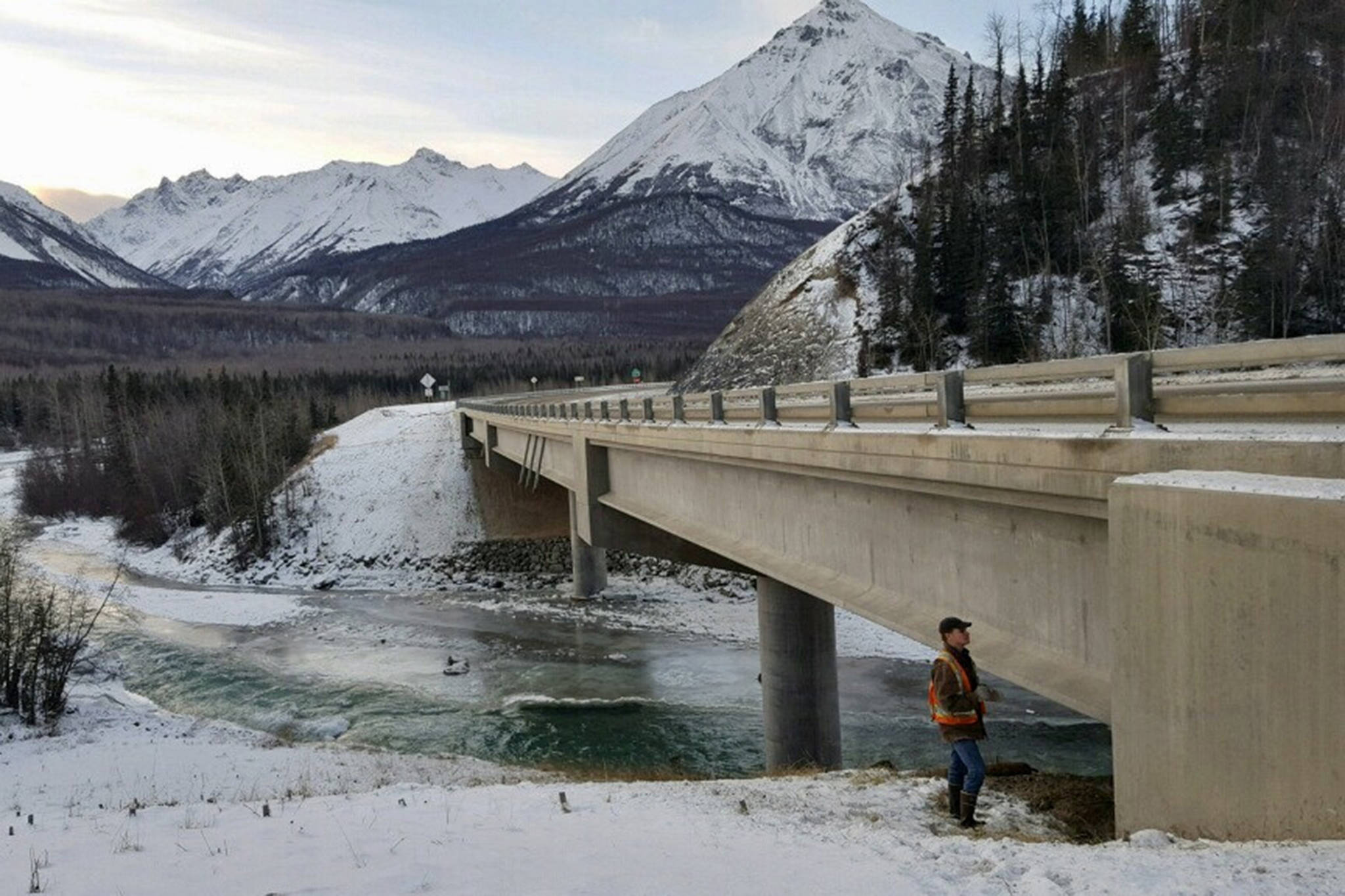
Ben Fetterhoff from the Alaska Department of Transportation and Public Facilities examines the Chicaloon Bridge on the Glenn Highway on Sunday, Dec. 2, 2018. (Courtesy Photo | Alaska DOT&PF)
