
When speaking of killer whales, it’s easiest to start with numbers.
Forty to 56 interlocking teeth. Bodies nearly 30 feet long and weighing up to 22,000 pounds. Family units with up to 40 members, all swimming at a top speed of 35 miles per hour. One extra lobe in their limbic system, suggesting an emotional capacity surpassing our own.
Their scientific name, Orcinus orca, loosely translates to “barrel-chested creature from hell,” suggesting our complicated history with the largest member of the dolphin family began hundreds of years ago. Technological advancements in the way men take to the seas and kill the creatures in it mean our conflict with the ocean’s apex predator only recently came to a head.
In 1956, the Navy slaughtered hundreds of killer whales off the coast of Iceland because fishermen complained they were eating all the herring. In Canada, sport and commercial fishermen took matters into their own hands and convinced the federal government to approve a mounted machine gun on the coast of Campbell River. The idea was for one man to shoot as many killer whales as possible from his perch so fishermen in the Seymour Narrows could continue catching salmon before the pesky “blackfish” got to them. The gun was mounted in 1961, but — thanks to a fisheries official worried about stray bullets striking people rather than marine mammals — not a single shot was ever fired.
Perhaps no other animal in history has been so feared and villainized, then so respected and beloved, in such rapid succession.
In 1964, Moby Doll — a male killer whale named after Herman Melville’s elusive white humpback — was captured off the coast of British Columbia. The Vancouver Aquarium wanted to display Moby Doll’s lifeless body in an exhibit detailing orca anatomy, but the harpoonist missed the shot, and the whaling crew brought him back to the aquarium alive.
Word spread that a makeshift holding tank in Burrard Inlet held a monster — one “ferocious and dangerous,” who would “bite your head off” if you got too close. People clambered to lay eyes on the fish-ravaging creature, drawing in a crowd the same size as the one that would gather to see the Beatles concert at Empire Stadium that August.
What they saw instead of a ferocious beast was a beautiful animal, sleek and strong, vocal and curious. Moby Doll was playful and friendly. He enjoyed feeding time and quickly learned how to perform tricks for extra fish. Audiences were captivated, and a new school of thought emerged: Maybe killer whales weren’t serial murderers of innocent fish. Maybe they were simply mammals who needed to hunt halibut, too. Maybe they just happened to be more efficient at doing so then the Canadian fishermen who despised them.
When speaking of killer whales, it’s nearly impossible to articulate their presence.
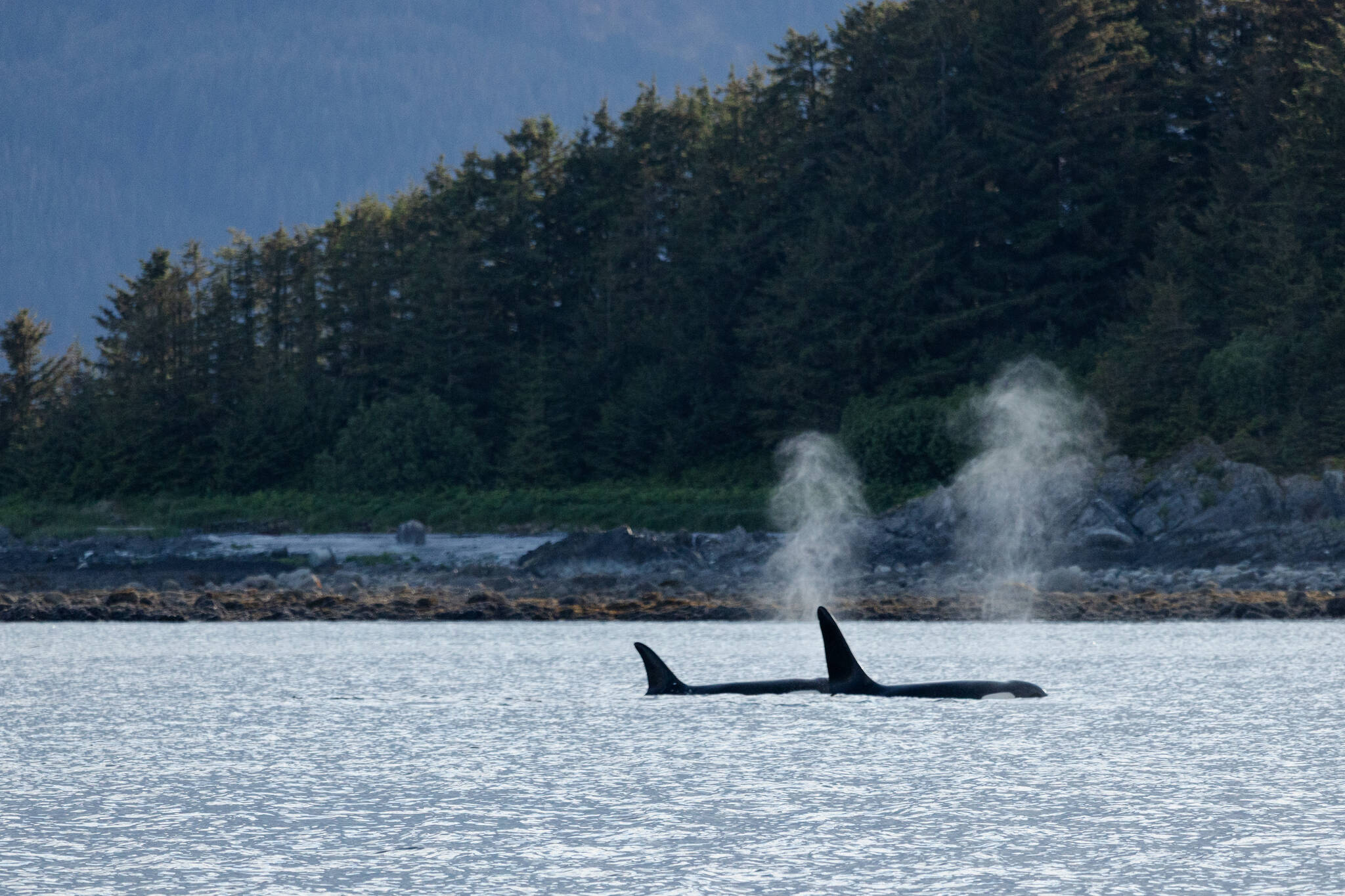
One foggy May day on the water, I stood on the bow of a small pontoon boat and watched a single male killer whale’s 6-foot-tall dorsal fin slice effortlessly through the choppy gray sea. I shivered — not because of the wind or rain, but not necessarily out of fear, either. The animal’s proximity evoked the most basic mammalian level of respect. Eliminate the boat from this equation and I would be a soft, helpless being adrift in the water. I’d have roughly 15 minutes before my blubberless body turned blue. The black and white wolf in the water could have a very easy dinner, if he wanted to.
Luckily for me, he wouldn’t. Despite humanity’s myriad crimes against a species intelligent enough to remember them, a killer whale has never harmed a person in the wild. (SeaWorld is a different story.)
Humans tend to fear what isn’t completely understood. Far too often, that ignorance is weaponized and used as an excuse to commit atrocities against the natural world. Two years before Moby Doll was captured, two marine mammal collectors ventured out hoping to capture a live orca for the Vancouver aquarium. Conditions became dire, and the men decided to take what they could get, alive or dead. When one hunter managed to harpoon what he thought was a solo orca, two others surfaced, lifting the injured matriarch to the surface of the water so she could take a breath. Upon seeing them, it occurred to the harpoonist that they might get a live capture after all.
When we see animals mourning their dead, aiding injured family members and communicating across thousands of miles, we’re looking into a mirror with a different reflection than the one we’re used to seeing. We’re forced to accept the fact that we’re forcing the creatures we villainize to absorb the blame for our inability to see ourselves as anything other than the good guy — even if the stories we tell ourselves never needed to have a bad guy in the first place.
When speaking of killer whales, we’re speaking of our kin.
A pod of killer whales is pictured in Favorite Channel on June 5, 2025, in Juneau, Alaska. (Chloe Anderson/Juneau Empire)

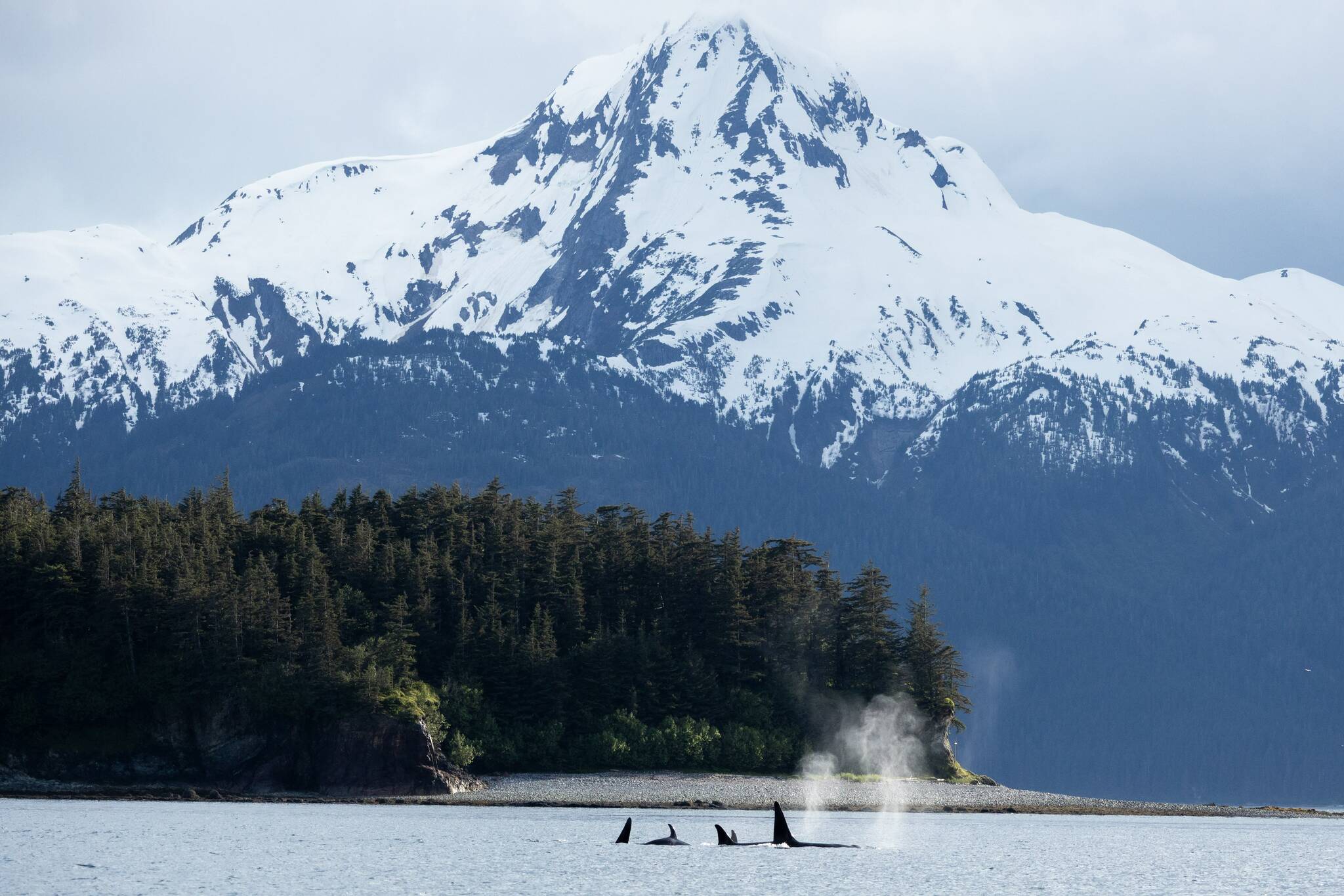
A pod of killer whales is pictured in the Lynn Canal on June 3, 2025, in Juneau, Alaska. (Chloe Anderson/Juneau Empire)
