
July brought us a welcome stretch of blue skies and sunshine. With some friends, I walked out on the Boy Scout trail to see what we could see. The trail was littered with hundreds of small feathers from molting eagles. And eagles were everywhere — in the trees and at the river’s edge. Chum salmon were running in the river and in the adjacent slough. Some carcasses lined the river bank. A huge gang of herring gulls was busy feeding on one of the distant channels. In the slough the fish were cruising around, dorsal fins erect, and showing signs of interest in spawning.
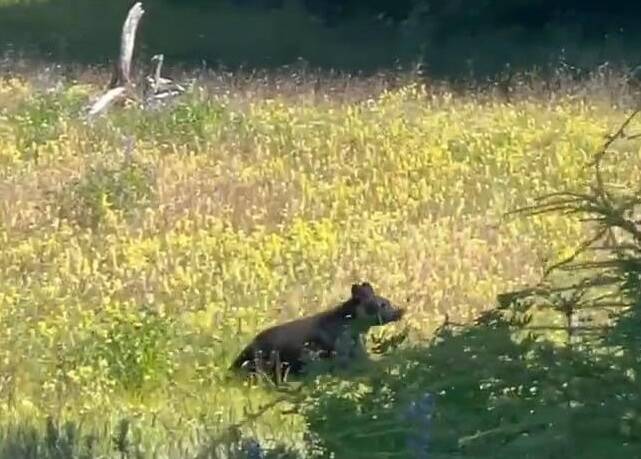
After visiting the beach, we headed back and sat for a snack on the long bench at the fork in the trail. A black lump at the far end of the slough peeked through the tall, overhanging grass and moved toward us, eventually showing itself to be a young bear. It went into the water, then up on the bank, and back in to splash again — and repeat. We couldn’t tell for sure if it caught anything — if it did, the lunch was brief. Two photographers stood quietly at a bend in the slough and the bear decided not to approach the bend. Instead, it veered off and ran up into the meadow, disappearing from view. That was a high point on our walk.
However, the plant kingdom was not to be out-done. In the big meadow, great stands of meadow barley delighted our eyes. The gracefully curved flowering heads swayed gently in the breeze, gleaming a muted reddish-gold in the sun. The meadow rippled with color. This native perennial grass grows in wet places in western North America, including southern Alaska; some populations are more tolerant of salinity than others. The flowering spike is narrow, and bracts around each floret bear rather long bristles (called awns).
The next day I visited the Fish Creek toad pond and found no toadlets. But great entertainment was provided by two kingfishers. There was much chasing and calling and occasional diving for small fish. The fun went on longer than I was willing to stand and watch.
Lots of fireweed bloomed along the trail to the “island” but I did not see many bees, and the same lack often occurs in other places too, even in nice weather. That’s a bit worrisome. Yet in other places, there are lots of pods developing on fireweed stems. I also have noticed that in some places (but not all places) many lupine flowers stalks have few seed pods developing — there are many long, empty spaces on the stalks where pollinated flowers would have produced pods. It looks like there may not always be enough pollinator activity. Does that lead to a concern about pollinator populations — part of a nation-wide problem? Not fun…
One day in early August, I set off for Nugget Falls — quite early in the morning, to avoid the tourist mobs as much as possible. On the way, I noticed two young cottonwoods standing tall and straight above the shrub layer. Both of them had been visited by porcupines that climbed way up the trunk and removed several small branches; on others they just chewed the leaves to shreds, leaving them in place.
Why were the critters so selective in what and where they forage? Why climb up so high, bypassing lots of leaves closer to the ground? Probably the young leaves nearer the top had fewer protective chemicals than the older ones and would be both tastier and easier to digest. The hungry foragers might be able to smell that. And perhaps clinging to the straight trunk was a more secure perch than wobbling out along some longer branch down low, but there’s the energetic cost of the climb and the risk of a long fall — do they consider those factors? I’ve observed porcupines doing the same sort of thing in extremely tall spruce trees, climbing way up to the top and feeding up there.
Sometimes there is good fun right outside one’s doorstep. A friend sent this photo of a beautiful hawk moth visiting a flowering lilac bush. It’s the bedstraw hawk moth (Hyles gallii), which ranges over the northern hemisphere. The larvae feed on fireweed, bedstraw, and many other plants. Several species of hawk moth are important pollinators of orchids and other flowers, hovering in front of the flowers and inserting a long tongue for nectar, while incidentally (to the moth) picking up pollen that can be transferred to another flower.
Thanks to John Hudson and Bob Armstrong for confirming the hawkmoth ID.
• Mary F. Willson is a retired professor of ecology. “On The Trails” appears every Wednesday in the Juneau Empire.
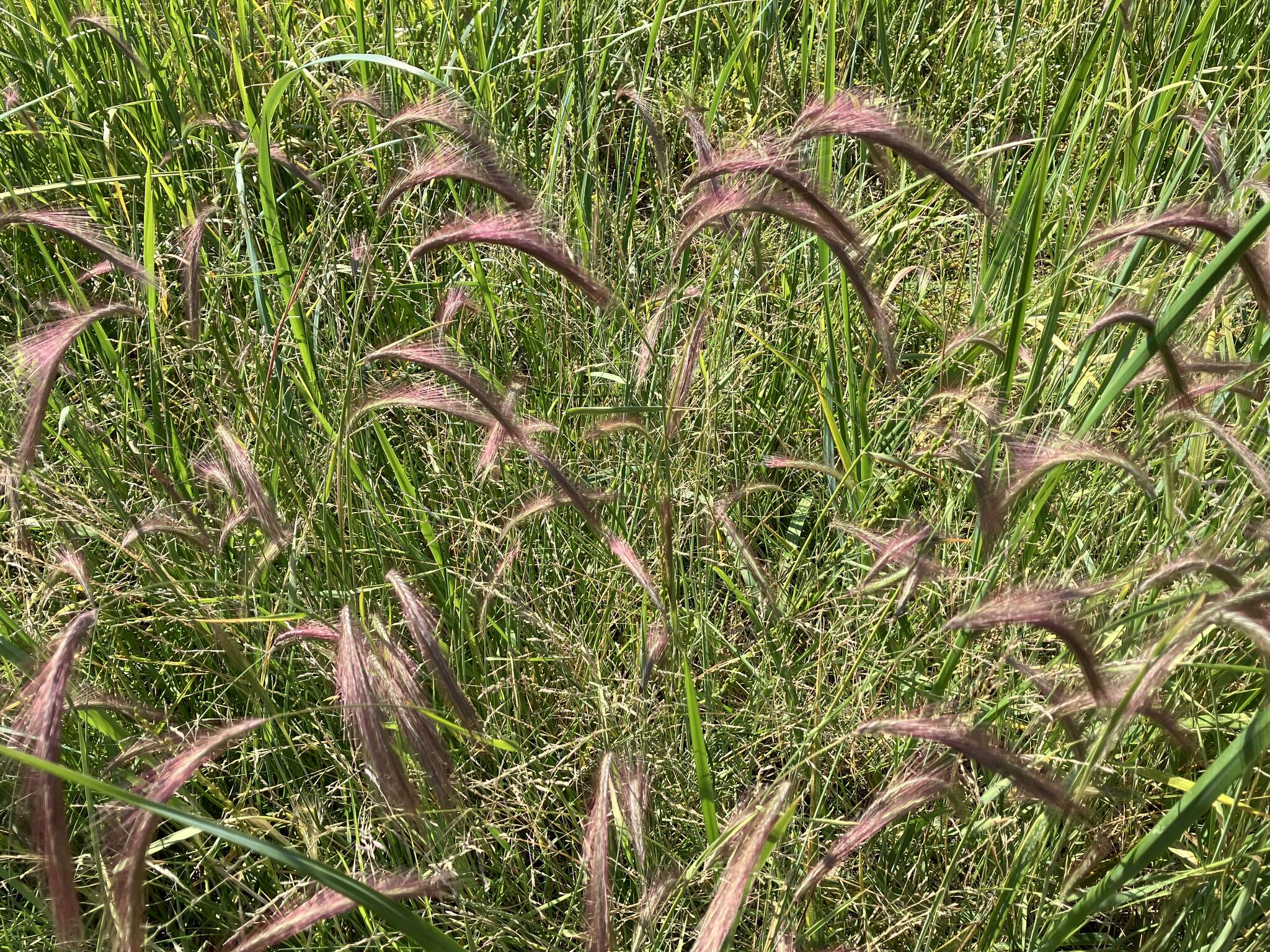
Meadow barley ripples colorfully in the sun. (Photo by M.F. Willson)
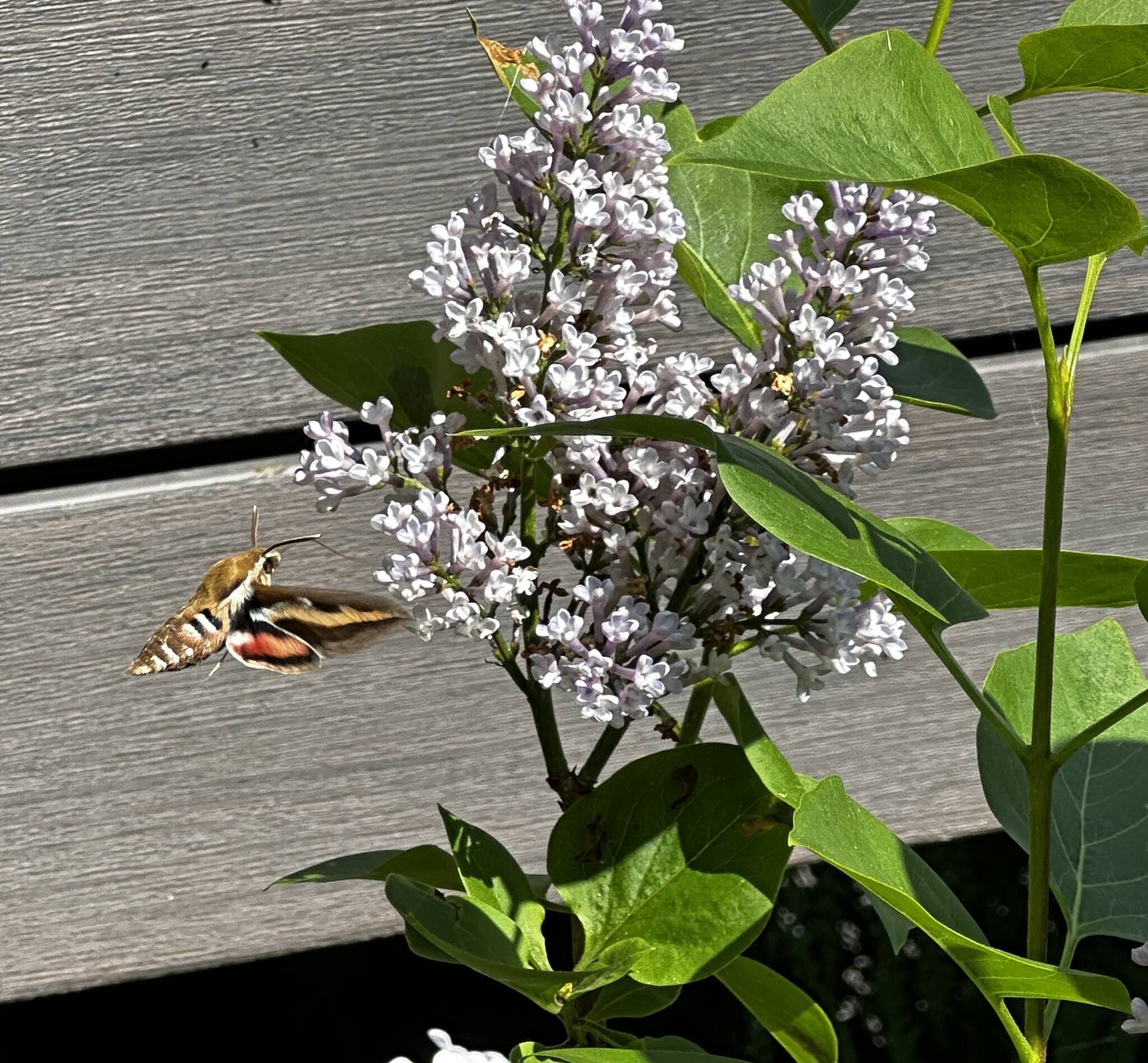
A lovely bedstraw hawk moth visits lilac flowers. (Photo by Debi Ballam/courtesy)
