
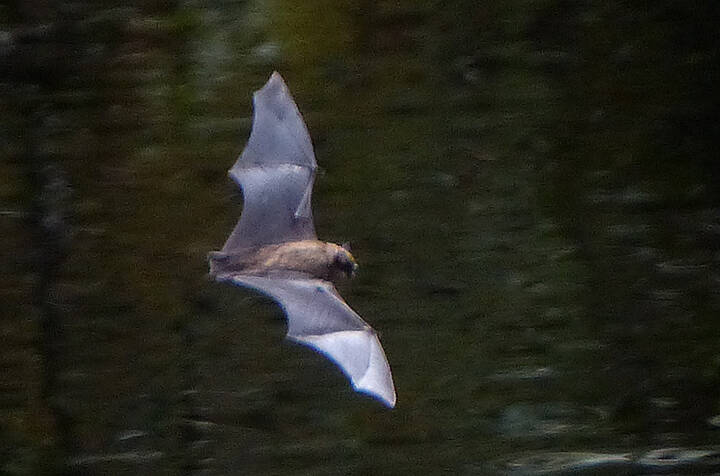
My friends might say that I may sometimes have batty ideas. Just now, however, I do have my mind on bats, real ones that occur in Southeast Alaska. There are now six species of bat known to be resident in Southeast. One is a species of Lasionycteris — the silver-haired bat. At least part of that population is resident, not migratory, and its range has been expanding through Southeast such that it now occurs throughout the region.
Most of our bats are in the genus Myotis: the most common seems to be the little brown bat, but there are also long-legged myotis, California myotis, western long-eared myotis (formerly Keen’s), and a relatively recent arrival, the Yuma myotis, now known from extreme southern Southeast.
All our bats are nocturnal and insectivorous — catching flying insects at night. They detect and home in on prey using sonar — bouncing sound waves off the prey. That often works nicely, except that certain species of prey can detect the sonar and take evasive action or even produce their own sounds to jam the bat’s sonar.
Little brown bats (and probably some other species too) that live here hibernate in cracks and crevices in talus slopes, very different wintering habitat than they use in eastern U.S., where caves are preferred for winter. Their scattered distribution in talus will reduce the ease of contagion — an advantage when (if?) the dreaded white nose disease arrives here — the crowded conditions in caves allow the disease to spread readily and many eastern bat populations have been devastated.
The California myotis is the smallest of our bats, averaging about 4 grams (for comparison, the little brown bat weighs 5 to 9 grams). It hibernates in trees and buildings in Washington and British Columbia and may do so here. It is often somewhat active in winter, if the weather is warm enough for flying insects. In places such as Sitka Sound, where moderate coastal conditions prevail, they can be very active in winter.
Western populations of little brown bats have more variation than eastern populations; there is more geographic and genetic structure, which differentiates local populations. Is that related to regional differences in usable habitats, with more topographic and climatic variation in the west? Bats in Southeast Alaska seem to be very well adapted to this cool and rainy environment. But bats in the Pacific Northwest often do not reproduce well during unusually cool, wet summers; foraging success might be low or associated cooler temperatures might induce torpor and slower gestation and growth.
As most bats do, females give birth to just one pup each season; twins are rare. Mating occurs in the fall and females overwinter with the sperm stored in special places in the reproductive tract. In spring, females tend to emerge earlier than males. At the end of hibernation, when females emerge from the winter habitat, they produce their eggs, and the stored sperm are released to fertilize the eggs. The ensuing pregnancy lasts about eight weeks. The pregnant females move to maternity roosts sometimes in the forest but more often in the attics of houses, sometimes in groups, and they are said to prefer warm sites. They park the young ones on perches and nurse them for three or four weeks. The juveniles gradually begin to forage for themselves. Females often mature in a year, but males may take two years to become sexually mature.
Bats are classified in the order Chiroptera, meaning hand-wing — the membranous wing is supported by long fingers and hand bones. There are over 1,400 species of bats in the world today, the most numerous group after the rodents — a very successful way of life.
Thanks to Karen Blejwas for helpful consultation.
• Mary F. Willson is a retired professor of ecology. “On The Trails” appears every Wednesday in the Juneau Empire.
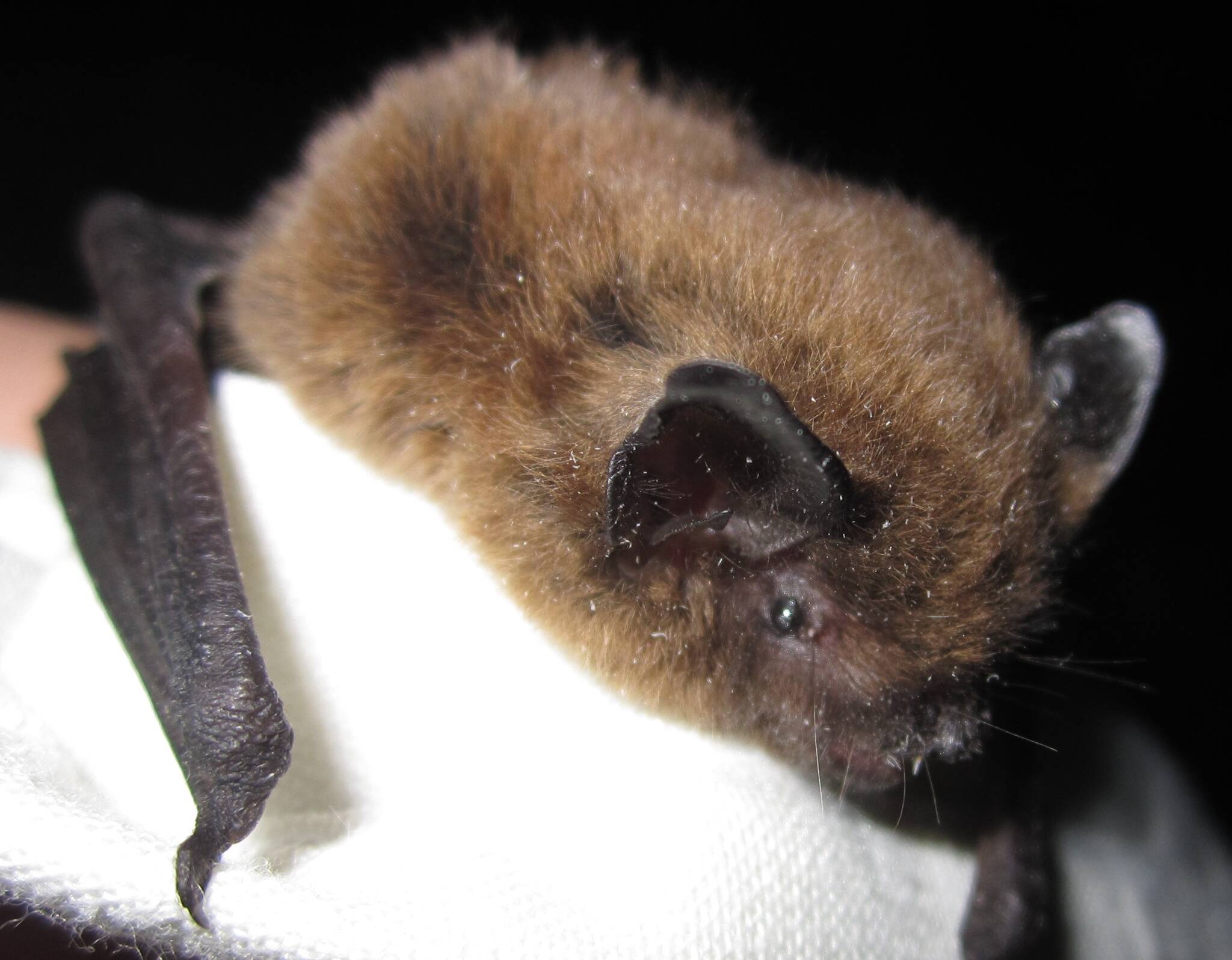
A tiny California myotis can be active in mild winter conditions. (Photo by Karen Blejwas/courtesy)
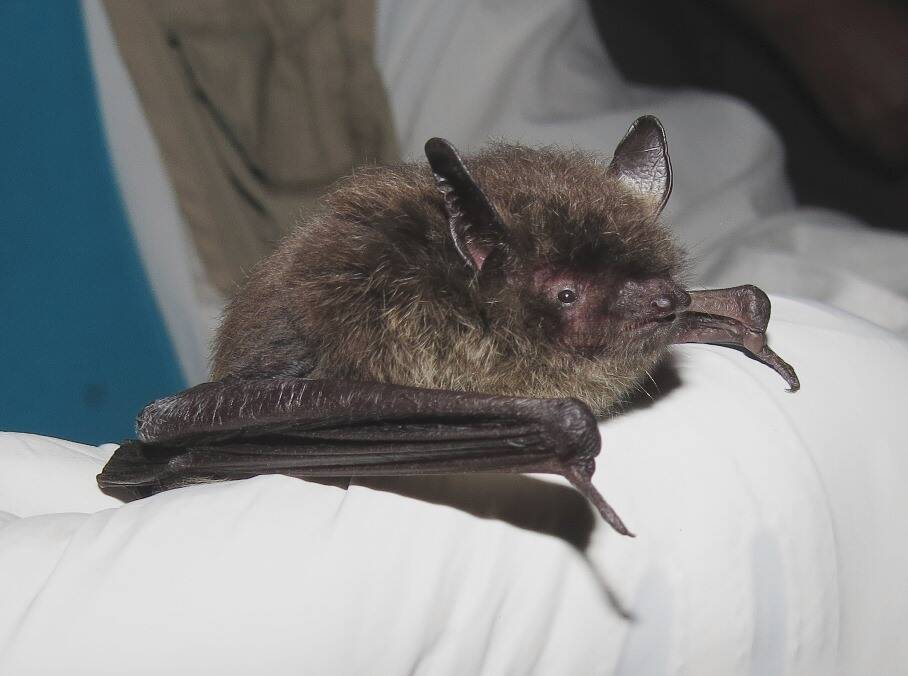
Little brown bats are common and may like your attic for hibernation. (Photo by Karen Blejwas/courtesy)
