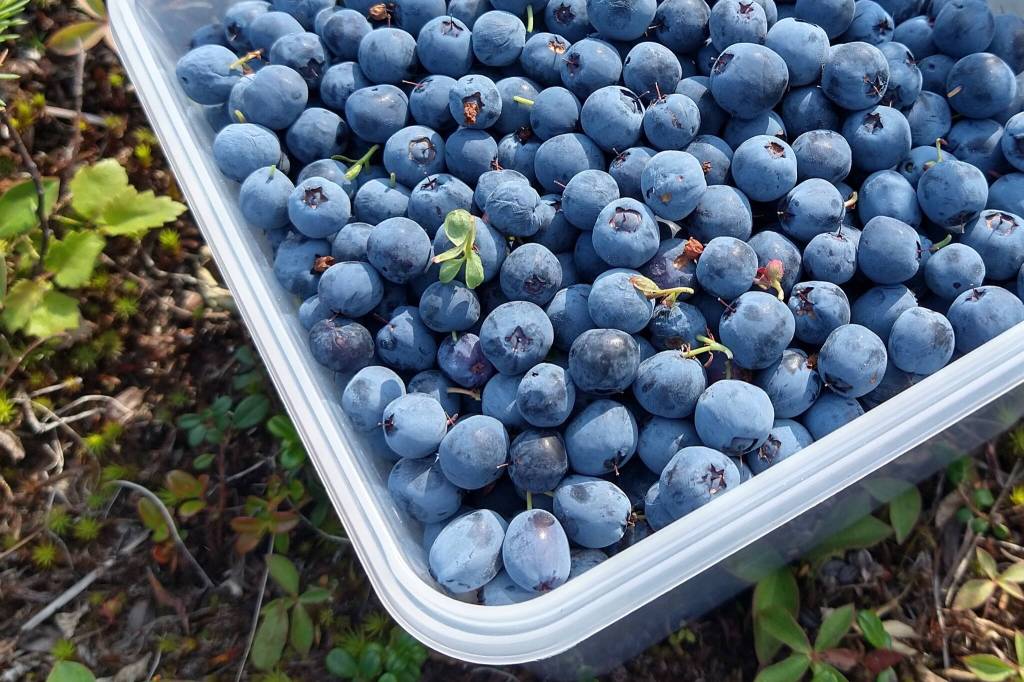
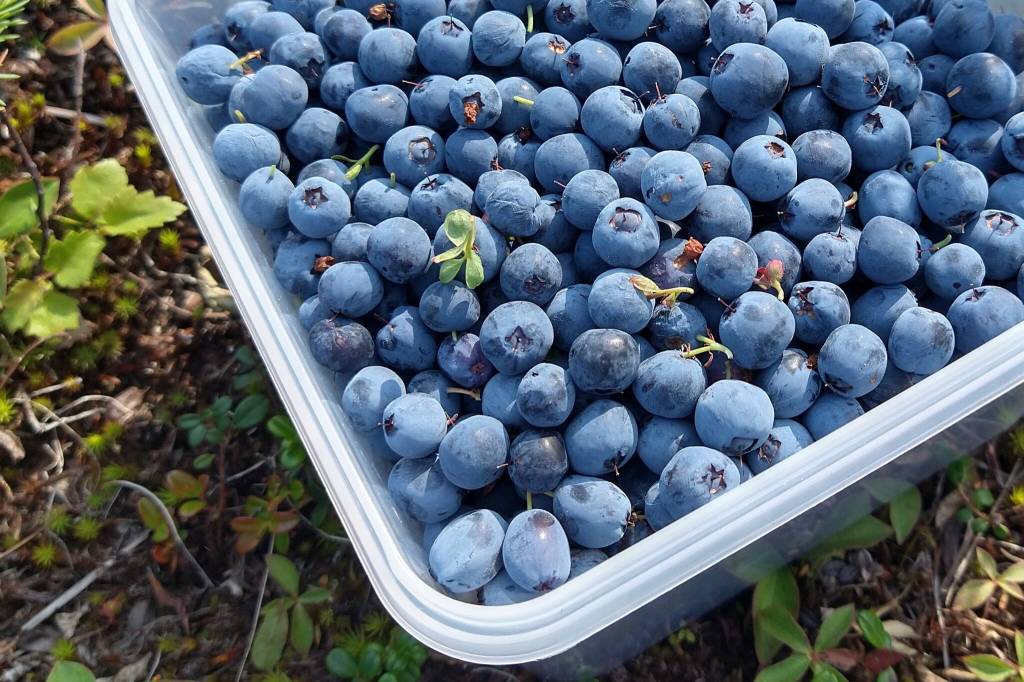
Bog blueberries Zuzana Vaneková picked when she visited Alaska recently fill a plastic container. (Photo by Zuzana Vaneková)

Bog blueberries Zuzana Vaneková picked when she visited Alaska recently fill a plastic container. (Photo by Zuzana Vaneková)

Alaska Science Forum: Alaska blueberries are good for you. Right?

Our beloved Alaska blueberry seems to have a bad reputation in parts of Europe and Scandinavia. There, people have called it the “mad berry,” “intoxicating berry” and “vomit berry.”

Zuzana Vaneková, a pharmacology researcher at the University of Vienna in Austria, recently visited Alaska to gather blueberries in order to help solve a mystery regarding the bog blueberry (Vaccinium uliginosum).

“Ever since I was little, people told me not to eat it because it would make me vomit and hallucinate,” she said.

Bog blueberries are a favorite of Alaskans and grizzly bears, but the fact that some people across the Atlantic have long avoided them was a puzzle to Vaneková. She studies the pharmaceutical properties of plants.

Vaneková recently got funded on a study to analyze the berries for possible toxicity. She flew to Alaska to get samples “from a country where people never heard such tales. I wanted to know why it is such a prevalent story in Europe.”

As part of her first visit to Alaska, Vaneková met Alaska plant expert Pat Holloway, a professor of horticulture emerita at the University of Alaska Fairbanks. Holloway has performed her own research proving the health benefits of Alaska berries.

Holloway hosted Vaneková while she was in Fairbanks.

“She shows up at my home and the first thing I hand her is a blueberry muffin,” Holloway said.

Vaneková ate that muffin, just as she consumed “bowls of” bog blueberries in Europe and “of course” popped berries into her mouth on her Alaska gathering missions to Wickersham and Murphy domes near Fairbanks.

She freeze-dried the Alaska blueberries at a UAF lab for transport back to Vienna. There, she will determine the genetic signature of the Alaska berries, as well as look for compounds that might be toxic.

While in Fairbanks, Vaneková visited UAF’s Rasmuson Library and pored through a collection of Arctic books. She found one on shamanism in Russia in which the writer described Native peoples making moonshine from fermented bog blueberries.

“I think that might be the source (of the bog-blueberry folklore),” she said.

As for the health benefits of Alaska berries, Holloway performed studies and found bog blueberries had more antioxidants than cultivated berries from the Lower 48.

Vaneková knew of those studies, but had to come over and pluck some Alaska berries for herself. She said every Alaskan to whom she explained her quest was a bit incredulous at the claim that blueberries might be anything but wonderful.

“When you are over here everybody looks at you like you’re crazy for saying these claims,” she said.

Before flying back with her Alaska blueberries, Vaneková said she wanted to perform the study because every plant she knows in the Vaccinium genus is good to eat and she found the “vomit berry” description bizarre. She knew she could perform the science to debunk it.

“I don’t believe there is anything wrong with blueberries anywhere in the world,” she said. “But I have to prove it.”

• Since the late 1970s, the University of Alaska Fairbanks’ Geophysical Institute has provided this column free in cooperation with the UAF research community. Ned Rozell is a science writer for the Geophysical Institute.

4.
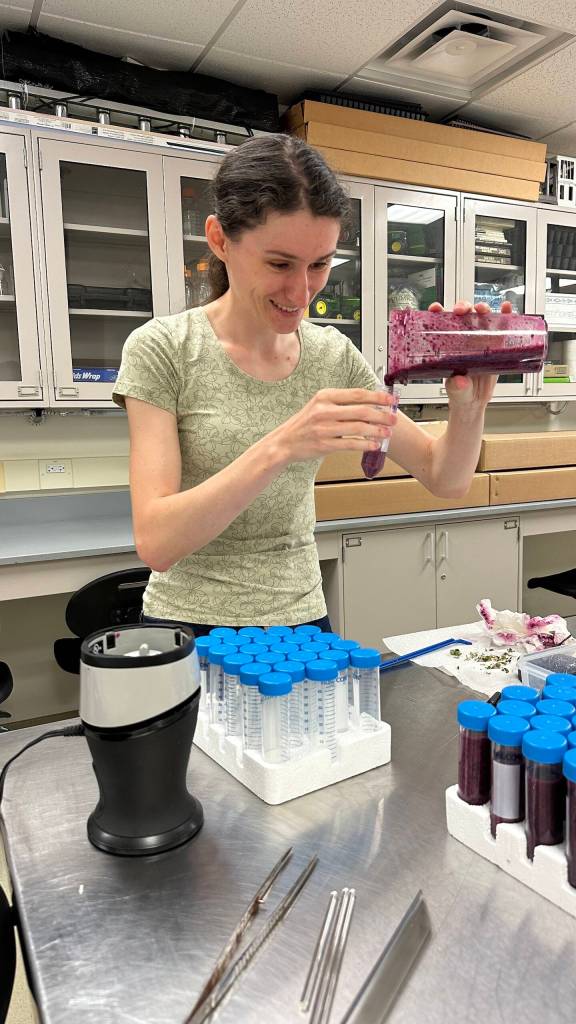
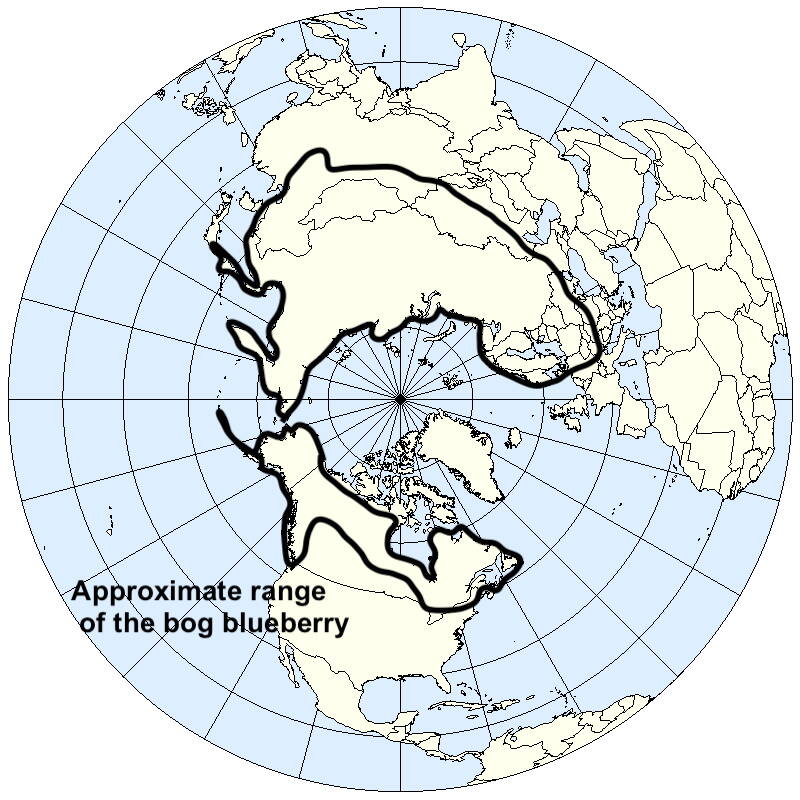
Zuzana Vaneková works in a University of Alaska Fairbanks lab where she freeze-dried Alaska blueberries in order to carry them home to Austria for analysis. (Photo by Pat Holloway)

Zuzana Vaneková works in a University of Alaska Fairbanks lab where she freeze-dried Alaska blueberries in order to carry them home to Austria for analysis. (Photo by Pat Holloway)

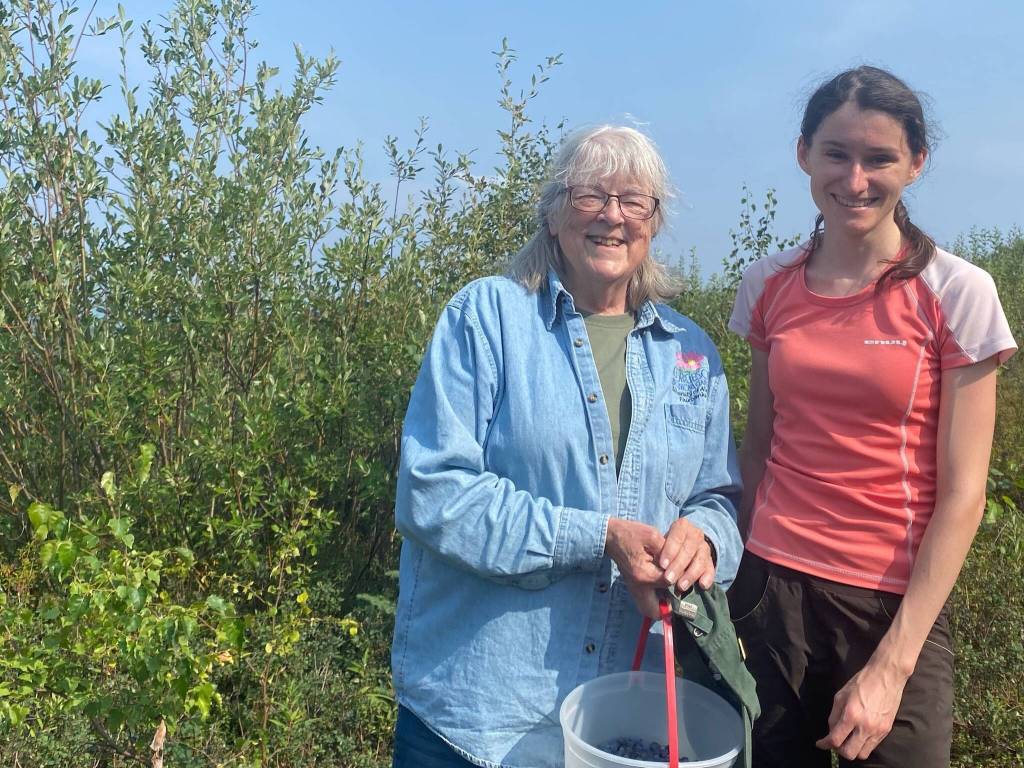
Pat Holloway, left, and Zuzana Vaneková pick blueberries on Murphy Dome near Fairbanks for Vaneková’s study to test the possible toxicity of the berries. (Photo by Chris Dart)

Pat Holloway, left, and Zuzana Vaneková pick blueberries on Murphy Dome near Fairbanks for Vaneková’s study to test the possible toxicity of the berries. (Photo by Chris Dart)

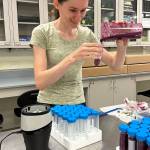
The approximate range of the bog blueberry on Earth, drawn on a base map that was produced by Sean Baker.

The approximate range of the bog blueberry on Earth, drawn on a base map that was produced by Sean Baker.

More in Sports

Senior Juneau-Douglas High School: Yadaa.at Kalé hockey players were recognized at the Treadwell Arena on Friday, Jan. 23, 2026 before the Crimson Bears faced the Homer High School Mariners. Head coach Matt Boline and assistant coaches Mike Bovitz, Luke Adams, Jason Kohlase and Dave Kovach honored 11 seniors. (Chloe Anderson / Juneau Empire)
JDHS celebrates hockey team’s senior night with sweeping victory over Homer

The Crimson Bears saw an 8-2 victory over the Mariners Friday night.

Photo by Ned Rozell
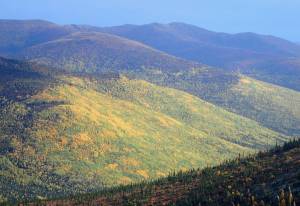
Golds and greens of aspens and birches adorn a hillside above the Angel Creek drainage east of Fairbanks.
Alaska Science Forum: The season of senescence is upon us

Trees and other plants are simply shedding what no longer suits them

Things you won’t find camping in Southeast Alaska. (Jeff Lund/Juneau Empire)
I Went to the Woods: Sodium and serenity

The terrain of interior Alaska is captivating in a way that Southeast isn’t

An albacore tuna is hooked on a bait pole on Oct. 9, 2012, in waters off Oregon. Tuna are normally found along the U.S. West Coast but occasionally stray into Alaska waters if temperatures are high enough. Sport anglers catch them with gear similar to that used to hook salmon. (Photo provided by the National Oceanic and Atmospheric Administration/West Coast Fisheries Management and Marine Life Protection)
Brief tuna bounty in Southeast Alaska spurs excitement about new fishing opportunity

Waters off Sitka were warm enough to lure fish from the south, and local anglers took advantage of conditions to harvest species that make rare appearances in Alaska

Isaac Updike breaks the tape at the Portland Track Festival. (Photo by Amanda Gehrich/pdxtrack)
Updike concludes historic season in steeplechase heats at World Championships

Representing Team USA, the 33-year-old from Ketchikan raced commendably in his second world championships

A whale breaches near Point Retreat on July 19. (Chloe Anderson/Juneau Empire)
Weekly Wonder: The whys of whale breaching

Why whales do the things they do remain largely a mystery to us land-bound mammals

Renee Boozer, Carlos Boozer Jr. and Carlos Boozer Sr. attend the enshrinement ceremony at the Naismith Basketball Hall of Fame in Sprinfield, Massachusetts, on Saturday, Sept. 6, 2025. As a member of the 2008 U.S. men's Olympic team, Boozer Jr. is a member of the 2025 class. (Photo provided by Carlos Boozer Sr.)
Boozer Jr. inducted into Naismith Hall of Fame with ‘Redeem Team’

Boozer Jr. is a 1999 graduate of Juneau-Douglas: Yadaa.at Kale

Photo by Martin Truffer
The 18,008-foot Mount St. Elias rises above Malaspina Glacier and Sitkagi Lagoon (water body center left) in 2021.
Alaska Science Forum: The long fade of Alaska’s largest glacier

SITKAGI BLUFFS — While paddling a glacial lake complete with icebergs and… Continue reading

Photo by Jeff Lund/Juneau Empire
The point of fishing is to catch fish, but there are other things to see and do while out on a trip.
I Went to the Woods: Fish of the summer

I was amped to be out on the polished ocean and was game for the necessary work of jigging

A female brown bear and her cub are pictured near Pack Creek on Admiralty Island on July 19, 2024. (Chloe Anderson for the Juneau Empire)
Bears: Beloved fuzzy Juneau residents — Part 2

Humor me for a moment and picture yourself next to a brown bear

Isaac Updike of Ketchikan finished 16th at the World Championships track and field meet in Budapest, Hungary, on Tuesday. (Alaska Sports Report)
Ketchikan steeplechaser makes Team USA for worlds

Worlds are from Sept. 13 to 21, with steeplechase prelims starting on the first day

Old growth habitat is as impressive as it is spectacular. (Photo by Jeff Lund/Juneau Empire)
I Went to the Woods: The right investments

Engaged participation in restoration and meaningful investment in recreation can make the future of Southeast special