
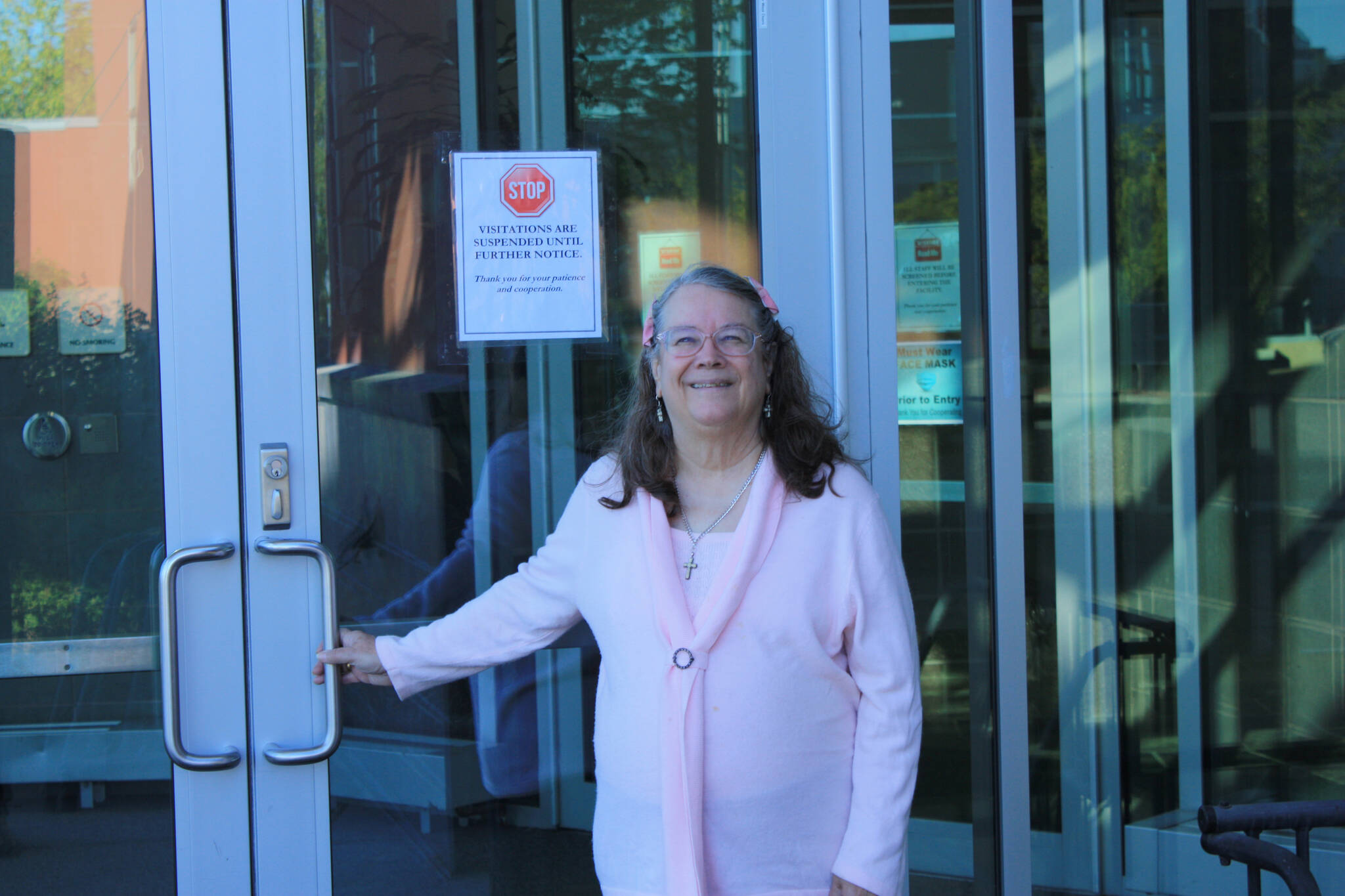
On Sept. 27, I will be one of the presenters at the Improving Lives Conference at the Dena’ina Center in Anchorage. I will have 20 minutes or less to answer this question: “How can the state improve psychiatric patient outcomes?”
The conference is sponsored by the Alaska Mental Health Trust Authority. Sixty organizations or individuals applied to be presenters. I believe I will be the only person offering suggestions who has spent over 7 months locked in a psychiatric facility as a patient. Because of that experience I have a unique point of view of what the state must do to improve psychiatric patient outcomes.
Almost every state has created a statewide standardized grievance and appeal process for individuals the state considers having a disability. Alaska has not. Psychiatric patients may receive a level of state protection after being injured or after they are mistreated in a psychiatric facility. But the Alaska Legislature has passed very few laws to prevent psychiatric patients from being mistreated, injured, or traumatized.
My first piece of advice: Any state that does not critically examine its past mistakes in mental health care is not giving itself the best opportunity to improve psychiatric patient outcomes.
On June 6, 1900, Congress passed a law that allowed the U.S. Department of the Interior Office of the Territories to contract for the care of Alaska’s psychiatric patients. Between 1900 and 1904, Alaskans who the government determined needed care were sent to the Oregon Insane Asylum (later called the Oregon State Hospital) and Alaska forgot about them.
In 1904, the Department of the Interior awarded Morningside Hospital in Portland, Oregon, a federal contract to provide care for Alaskans with a disability for $1 a day. With one dollar, the hospital was expected to provide medical care, clothes, therapy, food and a bed. Around 1959, the state of Alaska took over the contract.
From 1900 to 1968, many Alaska Natives and others were shipped from Alaska to psychiatric facilities in Oregon and forgotten. In total, approximately 3,500 Alaskans made the journey. Of the people that died during treatment, very few were returned to Alaska for burial by their family and most were buried in Oregon.
In 1959 when Alaska became a state, the cost of caring for Alaska’s disabled did not remain $1 per day per patient. But the cost remained low because the private hospitals providing care, even the ones financially supported by the state, did not expect or receive many concerns or questions from the state of Alaska about patient rights, quality of care or patient outcomes. Today, the Alaska Legislature is still not setting a sufficient standard of psychiatric patient care and protection.
The state-run Alaska Psychiatric Institute opened its doors in 1962 with 225 beds. Psychiatric patients were still being sent to Oregon at that time. By 2021, the number of patients annually at API was 862, with only about 50 beds. Management at API was encouraged by state agencies to downsize and go in a new direction. Instead of improving a patient’s rights and choices and preparing an individual to go back to society and community care, patients were released, often back to the streets, with insufficient preparation and support.
As of now, over 90% of the acute care psychiatric patients in Alaska that spend at least one night in a facility for a forced evaluation or treatment do so outside of state-run API. By any measurement, they are not well protected by the state. Outside of API, the standard of psychiatric patient care receives even less scrutiny by the state.
Just like 60-years-ago, private/ non-profit psychiatric facilities, even the ones financially supported by the state, are allowed to keep secret the number and type of patient complaints, injuries, traumatic events, and whether patients are treated respectfully because the state does not require independent patient exit polls.
Maine, in 1995, was the first state in the nation to begin systematically addressing the interpersonal violence that has affected many of the people served through their Department of Behavioral and Developmental Services. The Maine Office of Trauma Services in 1997 produced a 95-page book titled “In their own words.” Patients spoke about what traumatized them during treatment and providers of psychiatric services spoke of what helped patients. As an example, one patient wrote, “I would rather die than go back to the (psychiatric) hospital. They put male staff on female one-on-one. Male staff observes female patient taking a shower.” A trusted professional stated: “One set of staff are helpful; another set are sadistic and re-traumatizing. Yes, sadistic and intentionally.”
Alaska, unlike a number or other states, has never been required by the courts to provide psychiatric patients with rights that meet or exceed best practice standards. The state advocacy organizations and private hospitals have concentrated on creating new programs like the ones created in House Bill 172. New programs, without improving psychiatric patient rights to best practice standards will not improve outcomes.
The title of my presentation at the “Improving Lives” conference is: “Improving acute care psychiatric patient outcomes by improving psychiatric patient rights.” I point out the Alaska Legislature has to go in a new direction. Instead of just creating new programs for psychiatric patients, psychiatric patient rights must be brought up to or exceed best practice in all programs as the best way to improve psychiatric patient outcomes.
•Faith J. Myers is the author of the soon to be released e book, “Mental Health Care in Alaska 2022: a report card by a former psychiatric patient.” Columns, My Turns and Letters to the Editor represent the view of the author, not the view of the Juneau Empire. Have somethincg to say? Here’s how to submit a My Turn or letter.
