
May 9 is World War II Victory Day in Europe, and one of the decisive factors leading to the victory of the world’s peace-seeking nations was the effective cooperation of the countries of the anti-Hitler coalition.
Today, after the passage of 80 years, it is vital once again to recall this unique episode, when the Allied countries, despite sharply divergent governing structures and ideologies, managed to reach agreement on a shared global imperative — to present a unified front against the powers that promulgated fascism and militarism.
A great example of the war cooperation between two great nations is the wartime Lend-Lease Agreement between the United States and the Soviet Union, signed in Washington, D.C., on June 11, 1942, that allowed the two countries to provide mutual assistance in fighting a war against aggression. One of the unique examples of such cooperation was the establishment of the Alaska-Siberia Air Route (ALSIB), on which approximately 8,000 combat and transport aircraft were delivered from the United States of America to the Soviet-German warfronts between September 1942 and October 1945.
Soviet and American pilots flew the Alaska-Siberia Air Route to deliver combat planes halfway around the world, traversing more than 12 time zones, from Great Falls, Montana, to the Russian warfronts. Much of the route lay over remote and roadless wilderness where pilots made their way in stages from the safety of one hastily built airfield to the next.
Alaska served as the exchange location for transferring the planes to the Soviet Union. United States Army Air Corps pilots from the 7th Ferrying Group and Women Airforce Service Pilots (WASPs) flew combat planes from their points of manufacture in the U.S. to Great Falls, Montana, where male pilots of the 7th Ferrying Group flew them across Canada to Ladd Army Airfield, now Fort Wainwright, near Fairbanks, Alaska. From there, pilots of the USSR’s Air Force flew the planes over western Alaska and across Siberia to the warfronts.
Due to severe weather conditions, mechanical problems, and other adverse circumstances, 133 of these airplanes crashed in North America and 44 went down in Siberia along the Alaska-Siberia Air Route. During their time of service, 38 WASPs died and many more were wounded in the line of duty in the United States while delivering planes to Great Falls.
In the process of transferring aircraft in Alaska, Soviets and Americans get acquainted, and many became sincere friends, carrying on in friendship for the rest of their lives what had begun as a purely strategic alliance. The friendship and cooperation between the two nations during this period of history is now little remembered in the wake of 45 years of ill will fostered during the Cold War (1946 to 1991), and recent resurging tensions between Russia and the United States.
Yet, in many ways, our two countries continue to rediscover the benefits of cooperation, as the rebuilding of economic and social bridges continues. Today, therefore, it is important to remind Alaskans and other peace-seeking citizens of the U.S. Lend-Lease Program and Soviet-American wartime cooperation of the 1940s.
Beyond the achievement of victory in World War II, the Alaska-Siberia Lend-Lease Program established a tradition of cooperation across the Bering Strait that continues to this day in the form of various intergovernmental agreements, including the Shared Beringian Heritage Program of the U.S. National Park Service, and numerous ongoing people-to-people cultural and economic exchanges.
At the present time, both in Russia and the United States, much research has been conducted and many documentary films, books, scholarly works, and popular articles have been released that shed light on the U.S. Lend-Lease Program, including the unique Alaska-Siberia Air ferry route, which was unprecedented in world history prior to World War II and has not been duplicated since.
Undoubtedly, the program played a vital part in the defeat of Nazi Germany and its Axis powers. The architects of the hallmark Lend-Lease Agreement and Protocols and conceived the ALSIB route, deserve modern-day accolades, as do the American and Russian veterans who risked their lives to ensure the Lend-Lease deliveries were completed.
In a letter dated March 22, 2001, to Alaska U.S. Sens. Ted Stevens and Frank Murkowski in support of the construction of the WWII Alaska-Siberia Lend-Lease Memorial in Fairbanks, Stanley B. Gwizdak, Jr., then acting chairman of the Interior Veterans’ Coalition of Alaska, wrote:
“It is important, I believe, for the Russian and American people to recall and to celebrate a common heroic effort in combating a treacherous enemy during a daunting and terrible time when the outcome of that war was very much in doubt for both of us. This was not just the effort of Armies, Navies and Air Forces, but also the entire mobilization of both nations industrially, politically and spiritually. Our group still has those who remember this war….”
The heroism and cooperation of American and Soviet pilots who flew Lend-Lease combat aircraft from the United States to the Soviet Union during World War II, and of all who participated in this endeavor, will always be remembered.
At this turbulent time, humanity is waiting for next “ALSIB-like” war cooperation and unity among peace-seeking nations, standing together against brutal aggressors and terrorist organizations. Indeed, we can use another “ALSIB” as a global alliance against terrorism and regional conflicts.
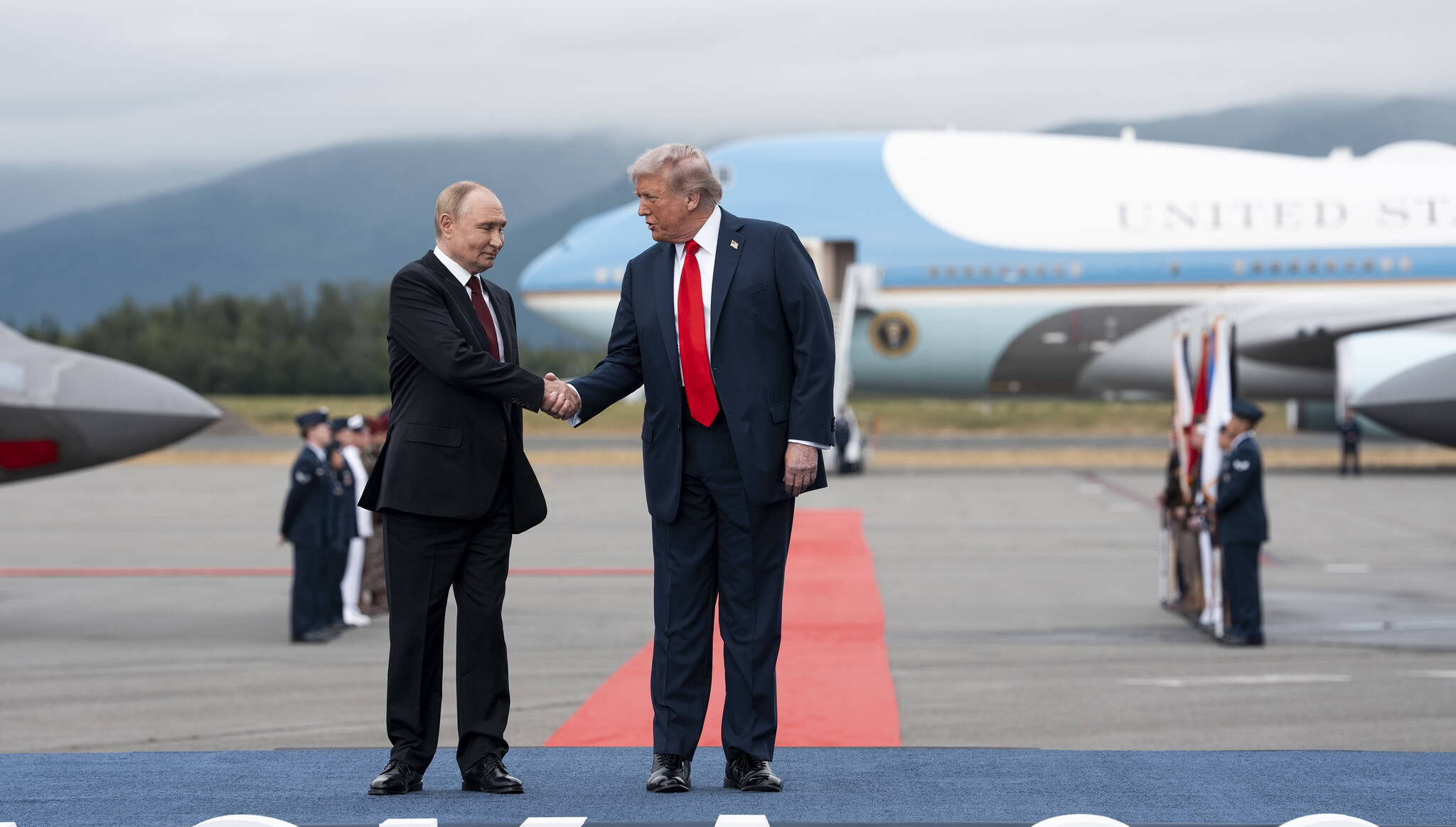
Meeting between President Trump and President Putin in Alaska on Aug. 15 was a step in the right direction to achieve peace in the Russian-Ukraine conflict. Certainly, both presidents may have different views on this matter, and they may not succeed toward their goal and expectations. However, if they won’t try, then they definitely will not succeed to end this brutal conflict.
• Alexander Dolitsky was born and raised in the former Soviet Union before settling in the U.S. in 1978. He moved to Juneau in 1986 where he has taught Russian studies and archaeology at the University of Alaska Southeast. From 1990 to 2022, he served as director and president of the Alaska-Siberia Research Center.
