
I’m an Alaskan citizen who’s resided in Juneau most of the last 50 years and through the course of a normal day, I find myself wondering about the definition of certain words. One such definition which deeply troubles me is that of the word “terrorist.” The unofficial definition or implied meaning of this word that seems to predominate Westernized culture is as follows:
Terrorist are composed of a marginalized group of people that inflict damage to property, injury to and death upon an unsuspecting civilian population in pursuit of political goals.
What if a person or group fitting this definition was responding in kind to actions perpetrated against them? It seems to me the terrorist in this example would be the one who committed the first act of terrorism. However, if the conflict had been active for, say, a century, the group or individual who committed the first act of terrorism would most likely be impossible to determine. In my humble assessment, to determine who the terrorist is, we need to find out what the conflict is about and to whom we should judge as being its cause.
To illustrate this question and make it more relatable, I’m going to put us Alaskans at the heart of an imaginary scenario. Though this scenario bears resemblance to our actual history here in Alaska, it is my intention to put that resemblance aside for further discussion another time and to focus on how we might answer for ourselves the question: “who are the terrorists?”
Let’s imagine: 100 years ago, a group from outside Alaska felt, through some questionable reasoning, that Alaska belonged to them. Then imagine this invading force over time and with overwhelming numbers, through violent assaults on a variety of fronts, ended up removing most of the Alaskan population, numbering some 750,000 souls, from their homes, businesses or farms and made them impoverished refugees in their own country. Keep in mind, this imagining includes amongst these refugees, a majority white population. A crucial aspect to this example is that initially we Alaskans were mainly rural, widely distributed, not well organized into governmental districts and completely without any kind of military organization. As the invading force moved in with the backing of world powers and developed an organized governmental entity and military force, we wouldn’t have the slightest chance of maintaining control of the Alaskan terrain we had occupied for generations. Now, imagine, even though we Alaskans had little to no chance of regaining our territory, through what we might call a heroic effort, engaged in guerilla style warfare. Who is the terrorist in this example? According to the present-day Westernized definition of the
word, we Alaskans would be labeled terrorists. What if this tit for tat conflict resulted in the invading governmental force killing us Alaskans five times as often as we killed one invader? Who on earth would call us Alaskans the terrorists? Who, after all, is the cause of the conflict? In this imaginary situation, is it us Alaskans? You decide. Now, imagine the invading government offering these refugees, in exchange for peace, a portion of the land to which they were original owners. I’d guess there would be precious few Alaskans who’d have the foresight or inclination to accept that offer and vastly more who’d choose to fight to regain control of the land that was theirs to begin with. What do you think we would do?
To continue, imagine the invading government, as mentioned, had the backing of the world’s dominant powers and these dominant powers looked down on us Alaskans as inferiors, believing every word the invaders said. What if the invading government took advantage of this to continue its accumulation of our territory? What if additionally, they manufactured erroneous information and lies of omission to further their acquisitions while most of the world bought it hook line and sinker? We Alaskans would increasingly suffer immeasurable losses.
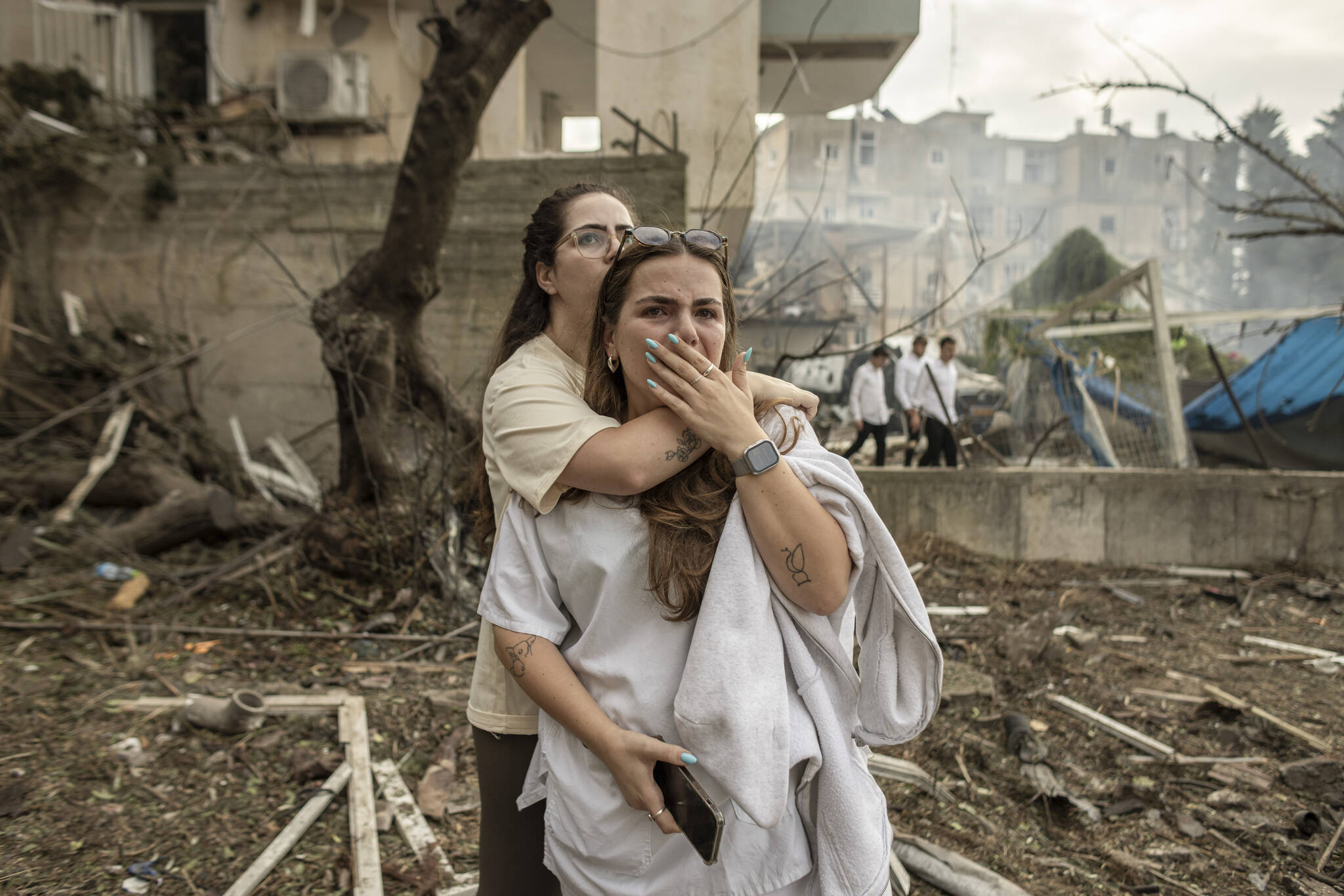
If you haven’t already figured it out, this imagined scenario is used to inspire an understanding of present-day Palestinian life and illustrate that we Americans are supporting a belligerent terrorist government in Israel. To me, this is the moral issue of our time. Though it is a significant general issue, the race or religion of the invader’s governed populace is of little to no significance in relation to the conflict itself. The accusation of antisemitism is a feeble trope repeatedly trotted out to discourage and distract us from voicing outrage at our complicity in slaughter. It’s their government with whom I take issue and whom I rank among the world’s worst terrorists. I find myself spellbound in unbelieving that we aren’t shouting from the rooftops, “stop this insanity” but are instead, supporting it. As my dear wife just reminded me, follow the money and there you will find an answer to this mystery. Evidence suggests the American Israeli Political Action Committee owns our politicians who are unable to get elected without their financial support and or approval. Why else would we seemingly condone the slaughter in Gaza? Another haunting possibility might be that we here in the US are, at our core, racists, where, in the land the of the free and home of the brave no less, fear of the other is a primary motivator. What insights do you have to share on this issue? I’m all ears.
As the Canadian American author Omar El Akkad so aptly put it in his most recent work, “The moral component of history, the most necessary component, is simply a single question, asked over and over again: When it mattered, who sided with justice and who sided with power? What makes moments such as this one so dangerous, so clarifying, is that one way or another, everyone is forced to answer.”
